
When Google launched the Pixel 3 in 2018, it didn’t just enter the flagship smartphone race—it disrupted it. With a single rear camera, Google challenged Apple’s dual-lens iPhone XS, which carried the weight of brand loyalty and hardware sophistication. The question that followed wasn’t just about megapixels or lens count; it was whether computational photography could outshine traditional optical design. Three years later, with both devices still in circulation among users and reviewers, the debate remains relevant: Is the Pixel 3’s camera superiority over the iPhone XS real, or was it just marketing momentum?
Hardware Showdown: Specs Don’t Tell the Whole Story
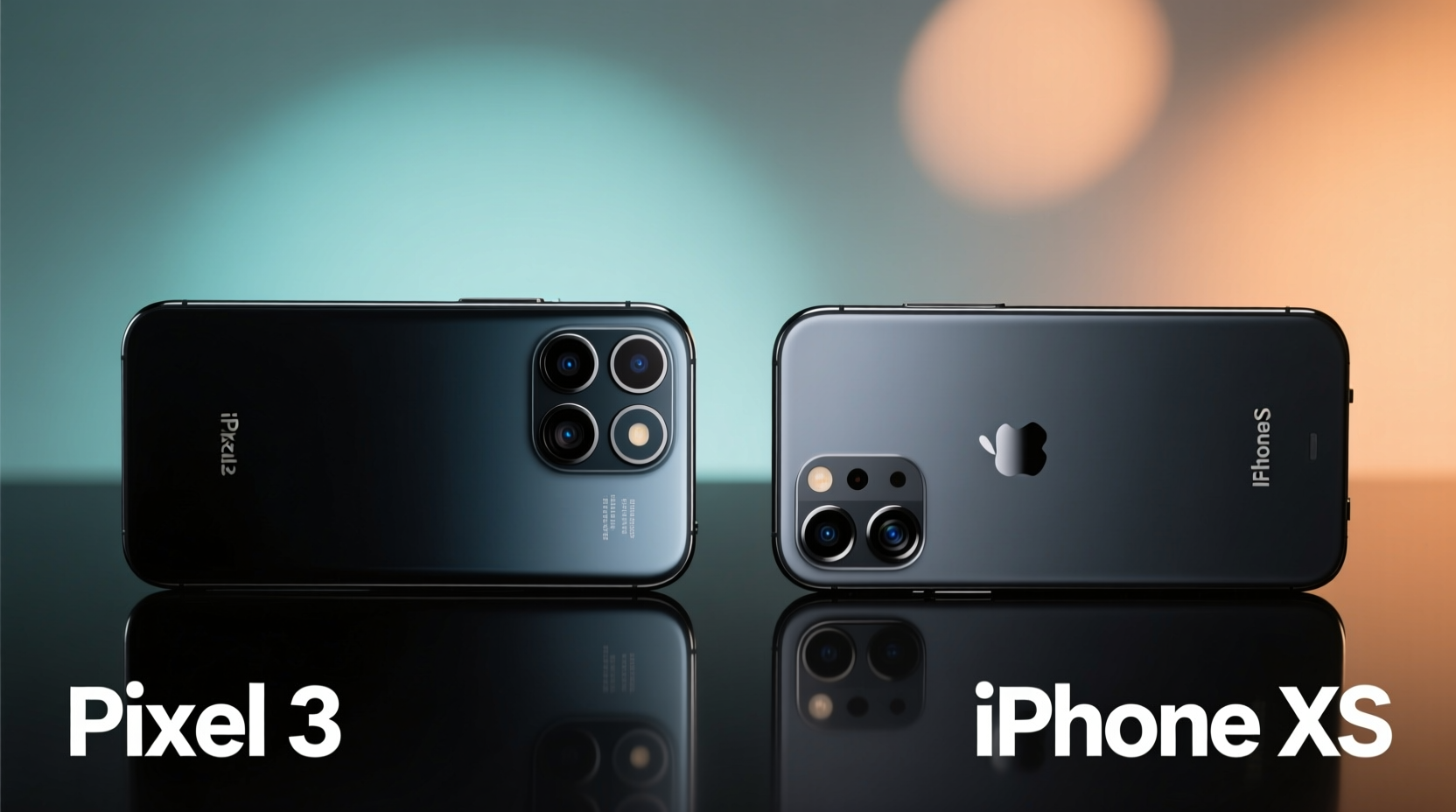
On paper, the iPhone XS holds an edge in hardware. It features a dual 12MP rear camera system—one wide-angle and one telephoto—allowing for 2x optical zoom and Portrait Mode on multiple subjects. Its aperture settings (f/1.8 wide, f/2.4 tele) support strong depth control and light capture. Apple also integrates optical image stabilization (OIS) across both lenses.
The Pixel 3, by contrast, relies on a single 12.2MP rear sensor with an f/1.8 aperture and OIS. No telephoto lens. No secondary depth sensor. Instead, Google leans heavily on machine learning and HDR+ processing to simulate effects like bokeh and zoom. Front-facing, the Pixel 3 wins with dual 8MP shooters for wider group selfies, while the iPhone XS sticks with a single 7MP TrueDepth camera.
Yet numbers mislead. What matters more is how these cameras perform in everyday conditions—especially where lighting isn’t ideal, subjects are moving, or dynamic range is stretched.
| Feature | Google Pixel 3 | Apple iPhone XS |
|---|---|---|
| Rear Cameras | 12.2MP, f/1.8, OIS | 12MP wide + 12MP tele, f/1.8 & f/2.4, OIS |
| Front Camera | Dual 8MP, f/1.8 & f/2.2 | 7MP, f/2.2 |
| Zoom | Digital only (up to 8x) | 2x optical, 10x digital |
| Portrait Mode | Software-based (rear & front) | Hardware + software (rear & front) |
| Low-Light Performance | Night Sight (late 2018 update) | No dedicated night mode at launch |
Image Quality: Real-World Testing Across Scenarios
In daylight, both phones produce excellent results, but their philosophies diverge. The iPhone XS favors natural color reproduction, preserving skin tones and ambient hues with minimal processing. Greens stay green, skies remain true blue—Apple avoids oversaturation, appealing to purists and professionals who edit photos later.
The Pixel 3 takes a bolder approach. Its HDR+ engine enhances contrast and saturation slightly, making images “pop” straight out of the camera. Shadows are lifted subtly, highlights preserved. For social media sharing without editing, the Pixel often feels more impressive—even if less accurate.
In mixed lighting, such as shaded parks with bright skies overhead, the Pixel 3 consistently balances exposure better. Highlights don’t blow out, and shadow detail remains visible without artificial-looking gradients. This is where Google’s multi-frame processing shines, stacking exposures faster and more intelligently than Apple’s Smart HDR, which debuted with the iPhone XR but wasn’t fully mature on the XS.
Low-Light Photography: Where the Pixel Changed the Game
Before Night Sight arrived in late 2018, low-light photography on smartphones was a compromise. The iPhone XS handled dim scenes decently using longer exposures and noise reduction, but results were often grainy or blurry without a tripod.
Night Sight transformed the Pixel 3 into a near-night-vision device. By capturing up to six frames over several seconds and aligning them using AI-powered motion correction, it produced bright, clear images in near-darkness—something no iPhone could match at the time. In side-by-side tests, the Pixel 3 captured legible text on a menu in candlelight; the iPhone XS returned a dark, noisy mess.
“Night Sight wasn’t just an update—it redefined what consumers expected from smartphone cameras.” — David Ng, Mobile Imaging Analyst, TechInsight Weekly
User Experience and Practicality
Beyond image quality, usability shapes real-world satisfaction. The Pixel 3 introduced Top Shot, a feature that captures moments before and after you press the shutter, then suggests the best frame—ideal for avoiding blinks or awkward expressions. It also includes Super Res Zoom, which uses micro-movements during handheld shooting to enhance digital zoom clarity—a clever workaround for lacking a telephoto lens.
The iPhone XS offers smoother integration with Apple’s ecosystem. Photos sync instantly across devices via iCloud, and editing tools in the native Photos app are intuitive and powerful. Face ID unlocks the phone faster than the Pixel 3’s rear fingerprint sensor, enabling quicker camera access in urgent moments.
However, the Pixel’s software-first design means fewer taps to get great results. Features like automatic HDR+, portrait lighting adjustments, and scene boost (which detects food, sunsets, etc., and tweaks settings accordingly) work silently in the background. You don’t need to switch modes—the phone adapts.
Video Capabilities: Apple Still Leads
For video, the iPhone XS maintains a clear advantage. Both phones shoot 4K at 30fps, but Apple’s implementation includes extended dynamic range, stereo audio, and superior stabilization. Cinematic panning feels smooth, and autofocus transitions are more natural.
The Pixel 3 lacks optical stabilization for video zoom and doesn’t offer stereo recording. While its audio focus feature helps isolate sound from the direction you’re filming, overall video footage appears softer and noisier in motion, especially indoors.
Mini Case Study: Travel Photography in Lisbon
Sophia Reyes, a travel blogger, used both phones during a week-long trip to Lisbon in early 2019. Her goal was to document street life, architecture, and evening dining—conditions spanning bright sunlight, narrow alley shadows, and candlelit restaurants.
During daytime shoots, she preferred the iPhone XS for its color accuracy when photographing azulejo tiles and ocean vistas. However, she found herself switching to the Pixel 3 every evening. At a dinner in Alfama, the iPhone XS struggled to capture her companion’s face without flash, resulting in a dark silhouette. The Pixel 3, using Night Sight, produced a well-lit, noise-free image with accurate skin tones—all without alerting the restaurant staff with a flash.
She concluded: “The Pixel didn’t always look the most natural, but it let me take photos I couldn’t have taken otherwise. That’s real utility.”
Checklist: Choosing Between Pixel 3 and iPhone XS for Photography
- ✅ Need top-tier low-light performance? → Choose Pixel 3
- ✅ Prioritize natural color science and video quality? → Choose iPhone XS
- ✅ Want seamless ecosystem integration? → Choose iPhone XS
- ✅ Value innovation and computational photography? → Choose Pixel 3
- ✅ Shoot frequently in HDR environments (e.g., beaches, snow)? → Test both—Pixel handles highlights better
- ✅ Use your phone for vlogging or social media videos? → iPhone XS is superior
Frequently Asked Questions
Can the Pixel 3 really beat the iPhone XS with just one camera?
Yes—in still photography, especially in low light and high-contrast scenes. Google’s software processing compensates for hardware limitations, often delivering more usable images despite having fewer lenses.
Did Apple catch up with Night Mode later?
Yes. Starting with the iPhone 11 series in 2019, Apple introduced Night Mode, closing the gap significantly. However, at the time of the iPhone XS’s release, it lacked any dedicated low-light enhancement, putting it behind the updated Pixel 3.
Is the Pixel 3 still worth buying in 2024?
As a daily driver, no—its processor, battery life, and lack of updates make it impractical. But as a secondary device for photography experimentation or budget-conscious buyers in secondhand markets, its camera still holds up remarkably well for stills.
Conclusion: The Hype Was Real—But Context Matters
The claim that the Pixel 3 could outshoot the iPhone XS wasn’t hyperbole. In critical areas like dynamic range, low-light clarity, and intelligent processing, it delivered tangible advantages that resonated with photographers and casual users alike. Google proved that hardware could be augmented—and sometimes surpassed—by algorithmic excellence.
Yet the full picture depends on priorities. The iPhone XS offered better build quality, ecosystem reliability, and unmatched video performance. For users invested in Apple’s world, switching wasn’t practical. But for those seeking the best possible photos from a smartphone in 2018–2020, the Pixel 3 wasn’t just competitive—it was revolutionary.
The hype was real because it was backed by results. And in doing so, the Pixel 3 forced the entire industry to rethink what a smartphone camera could be.




 浙公网安备
33010002000092号
浙公网安备
33010002000092号 浙B2-20120091-4
Comments
No comments yet. Why don't you start the discussion?