
For over a decade, Apple has set the standard for smartphone excellence—premium build, seamless software, and unmatched ecosystem integration. But with the release of the Pixel Fold, Google isn’t just entering the high-end market; it’s challenging Apple on its most sacred ground. The question is no longer whether foldables are viable, but whether Google has built something compelling enough to shift consumer loyalty in a landscape long dominated by the iPhone.
The Pixel Fold isn’t merely another Android phone. It’s a statement. A declaration that Google can innovate beyond incremental updates and deliver a device that rethinks form and function. When placed side by side with an iPhone 15 Pro, the contrast isn't just physical—it's philosophical. One represents refinement through repetition; the other, reinvention through experimentation.
Design Philosophy: Rigid Elegance vs. Flexible Ambition
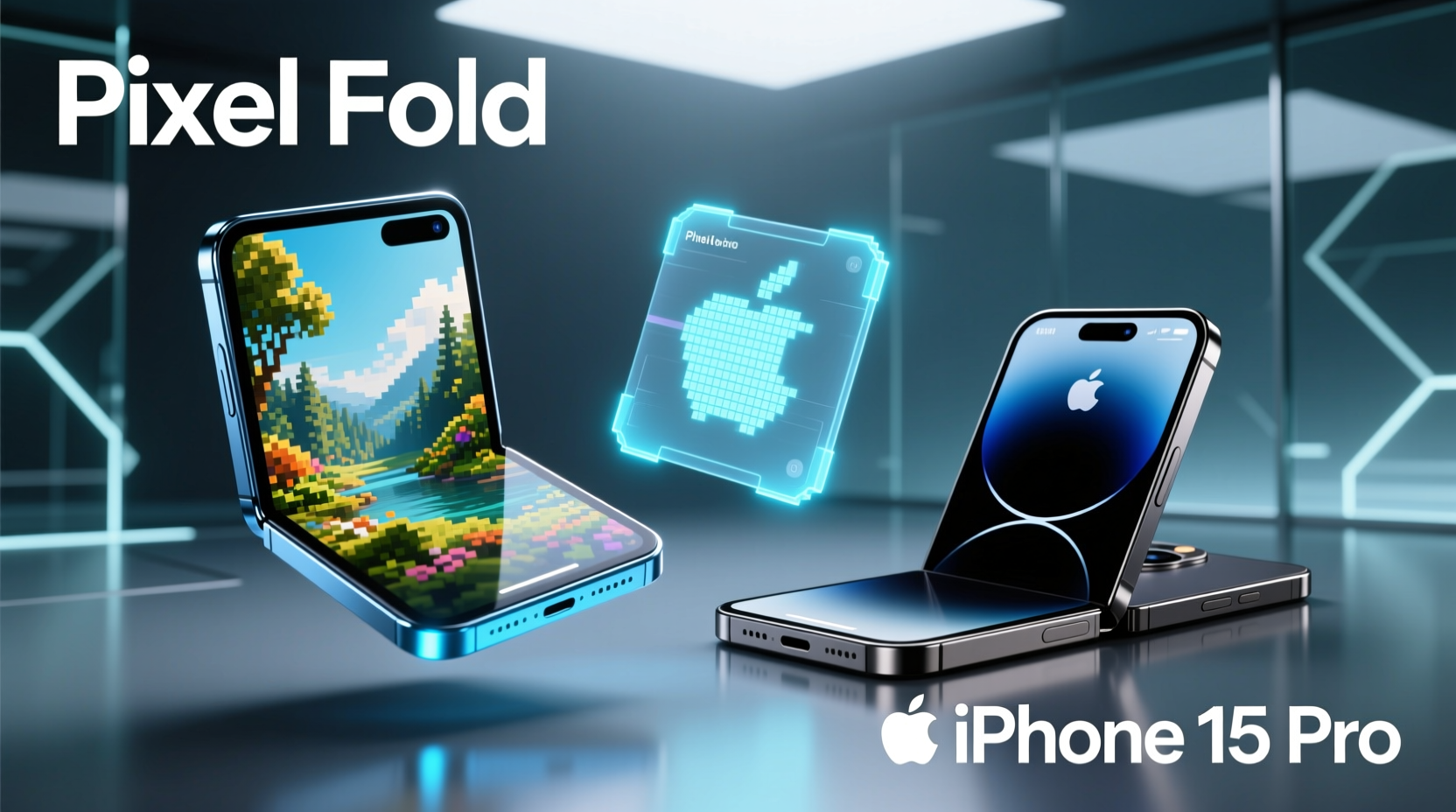
Apple’s design language remains rooted in precision engineering—cold metal, flat edges, surgical-grade finishes. The iPhone feels like a finished product, polished to perfection. The Pixel Fold, by contrast, embraces compromise in pursuit of possibility. Its folded thickness, visible crease, and slightly fragile hinge remind users they’re holding a transitional device. Yet, that same flexibility opens new use cases.
When unfolded, the Pixel Fold delivers a near-tablet experience without sacrificing pocketability. Multitasking becomes intuitive: browse email on one side, reply on the other. Watch a video while taking notes. These aren’t gimmicks—they’re productivity shifts that the iPhone, bound by its fixed 6.1- or 6.7-inch canvas, simply cannot match.
Software Experience: Stock Simplicity vs. iOS Polish
Google runs Android as it was meant to be seen—clean, fast, and free of bloatware. The Pixel Fold benefits from immediate OS updates, exclusive AI features like Call Screen and Hold for Me, and deeper integration with Google’s services. Features like direct lens integration in the camera app or real-time translation during calls showcase Google’s AI advantage.
Apple counters with unmatched optimization. iOS feels snappier, more consistent across apps, and better supported by third-party developers. Long-term support—six to seven years of updates—is still ahead of Google’s current three-year promise. But Google is closing the gap, especially in AI-driven functionality.
“Google isn’t winning on polish yet, but they’re leading in practical AI. That could be the tipping point.” — Rajiv Patel, Senior Mobile Analyst at TechInsight Group
Performance and Hardware Comparison
Under the hood, both devices pack flagship-tier hardware. The Pixel Fold uses the same Tensor G3 chip found in the Pixel 8 series, optimized for machine learning tasks rather than raw speed. The iPhone 15 Pro’s A17 Pro chip still dominates in CPU and GPU benchmarks, making it the preferred choice for intensive gaming and pro-level video editing.
But raw power isn’t everything. The Pixel Fold’s adaptive battery learning and on-device AI processing offer smarter energy use. Its triple rear camera system, co-developed with computational photography pioneers, delivers dynamic range and color accuracy that rival—and sometimes surpass—the iPhone in natural lighting.
| Feature | Pixel Fold | iPhone 15 Pro |
|---|---|---|
| Display (Unfolded) | 7.6” LTPO OLED | N/A (Fixed size) |
| Rear Cameras | 48MP main + 10.8MP ultrawide + 10.8MP telephoto | 48MP main + 12MP ultrawide + 12MP telephoto |
| Battery Life | Up to 12 hours mixed use | Up to 10 hours heavy use |
| OS Update Commitment | 3 years (OS + security) | 6–7 years (estimated) |
| Starting Price | $1,799 | $999 |
Note: While the iPhone starts significantly cheaper, comparing the Fold directly to the Pro Max model makes more sense given positioning. Still, the price gap remains substantial.
Ecosystem Integration: Where Apple Still Leads
Apple’s ecosystem remains its greatest strength. Handoff, AirDrop, iCloud syncing, Continuity Camera, and Universal Control create a frictionless experience across devices. If you own a Mac, iPad, or Apple Watch, switching away is painful.
Google is building its own mesh—Fast Pair, Nearby Share, Phone Hub, and Seamless Audio—but it lacks the depth and reliability of Apple’s implementation. However, for users already embedded in Gmail, Google Drive, and YouTube, the Pixel Fold feels like a natural extension.
A Real-World Example: The Hybrid Worker’s Dilemma
Consider Maria, a freelance journalist who travels frequently. She used an iPhone 14 Pro paired with an iPad Mini for writing on the go. After switching to a Pixel Fold, she found she no longer needed the tablet. During interviews, she runs Recorder on one side and Docs on the other. On trains, she folds the device halfway and props it up for hands-free video transcription. The reduction in gear—just one device instead of two—has simplified her workflow dramatically.
She missed iMessage at first but adapted using RCS and WhatsApp. The trade-off? Greater multitasking freedom and longer battery life during long days. For her, the Pixel Fold didn’t just replace two devices—it changed how she works.
Innovation Timeline: How We Got Here
The path to this moment has been gradual:
- 2010–2017: Apple refines the smartphone formula. Google focuses on affordability with Nexus and early Pixels.
- 2018–2020: Samsung pioneers foldables. Apple watches cautiously, prioritizing ecosystem growth.
- 2021–2022: Google launches Tensor chip, signaling commitment to hardware-software synergy.
- 2023: Pixel Fold released—not perfect, but functional and ambitious.
- 2024: Google extends update policy, improves hinge durability, and expands AI features.
This timeline shows Google shifting from playing catch-up to setting pace in specific domains—particularly AI and flexible interfaces.
Actionable Checklist: Choosing Between Them
- ✅ Need multitasking and tablet-like productivity? → Consider the Pixel Fold.
- ✅ Prioritize long-term software support and resale value? → iPhone wins.
- ✅ Already invested in Apple devices? → Stick with iPhone unless you crave innovation.
- ✅ Want cutting-edge AI and experimental features? → Pixel Fold offers more novelty.
- ✅ Budget-conscious? → iPhone 15 Pro is half the price of the Fold.
Frequently Asked Questions
Can the Pixel Fold really replace an iPhone?
For many users, yes—but not universally. If you rely heavily on iMessage, FaceTime, or specific iOS-only apps, the transition will be rocky. However, if your digital life revolves around Google services, web apps, and cross-device flexibility, the Fold can not only replace an iPhone but enhance your workflow.
Is the Pixel Fold durable enough for daily use?
Google has improved durability with a reinforced hinge and scratch-resistant inner screen. It’s not as tough as the iPhone’s titanium frame, but with moderate care—avoiding dust exposure and using a case—it holds up well in real-world conditions. Just don’t treat it like a traditional phone.
Does Google beat Apple at their own game?
Not yet—but they’re playing a different one. Apple still wins on refinement, longevity, and ecosystem cohesion. Google is winning on forward-thinking design, AI utility, and functional versatility. The “game” itself is evolving, and Google is shaping the next level.
Conclusion: The Future Is Folding
The Pixel Fold vs iPhone debate isn’t just about specs or cameras. It’s about vision. Apple excels at perfecting what exists. Google is betting on what comes next. In launching a capable foldable, Google hasn’t surpassed Apple across the board—but it has claimed leadership in innovation velocity.
Consumers now have a legitimate alternative: a device that doesn’t just mimic the iPhone but challenges its fundamental assumptions. As foldables mature, prices drop, and ecosystems adapt, the balance of power may shift. For the first time in years, Apple faces a competitor not just matching its moves, but inventing new ones.




 浙公网安备
33010002000092号
浙公网安备
33010002000092号 浙B2-20120091-4
Comments
No comments yet. Why don't you start the discussion?