
Summer festivals mean long days under the sun, hours of dancing on uneven ground, and a lot of walking—often across grassy fields, dusty lots, or cobblestone paths. Choosing the right footwear isn’t just about style; it’s about endurance. Two popular options dominate warm-weather wardrobes: platform sandals and espadrilles. Both offer a breezy, fashion-forward aesthetic perfect for music events and outdoor gatherings. But when comfort over extended wear is the priority, one may outperform the other in key areas like arch support, breathability, stability, and durability.
This guide dives deep into the structural, functional, and lifestyle differences between platform sandals and espadrilles, helping you make an informed decision based on real-world demands—not just Instagram appeal.
Understanding the Design: What Sets Them Apart?
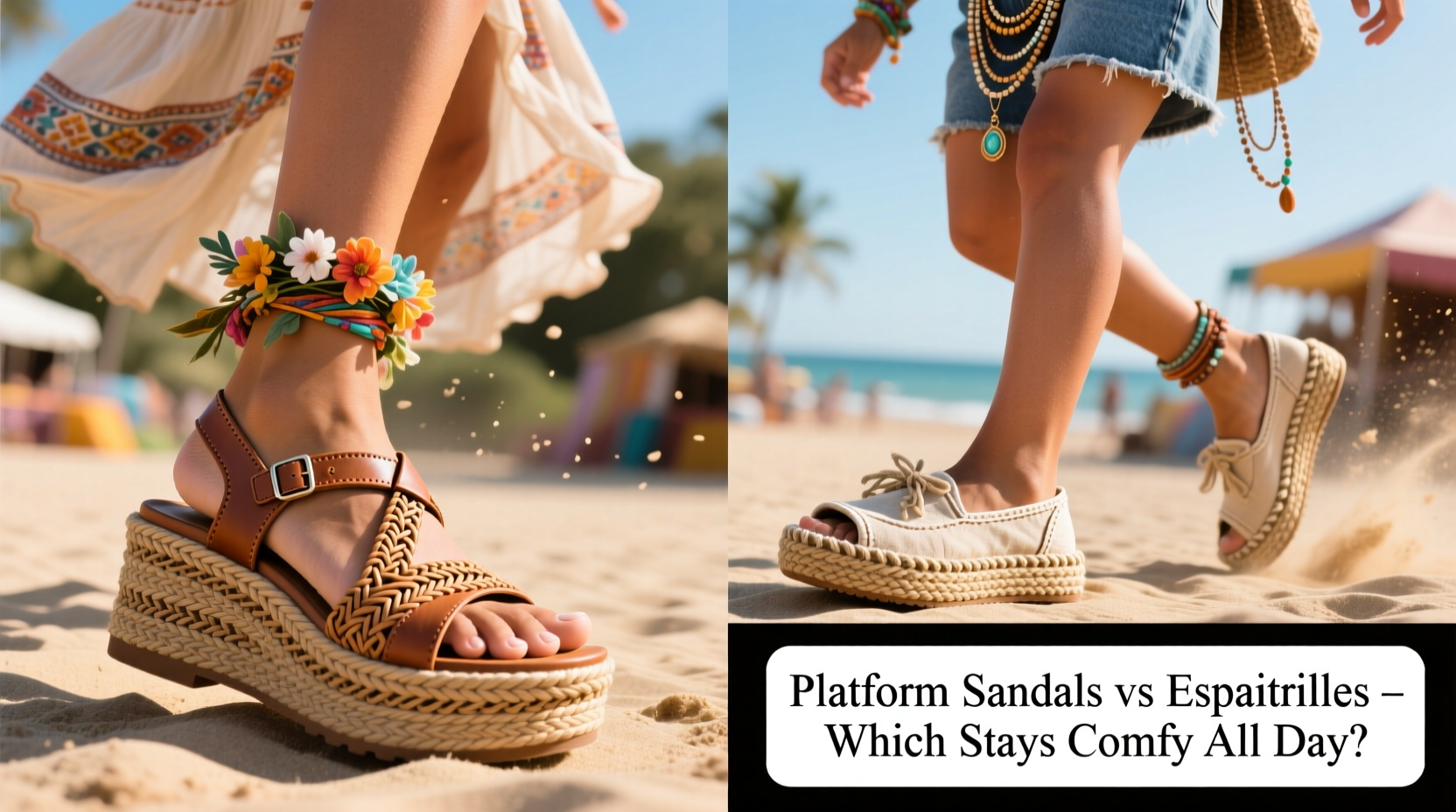
At first glance, both styles appear similar—open toes, woven details, and elevated soles. However, their construction, materials, and intended use reveal significant distinctions that affect performance during prolonged wear.
Platform Sandals are characterized by thick, often chunky soles made from synthetic materials like EVA foam, rubber, or polyurethane. They typically feature adjustable straps (ankle, toe, or T-bar), providing more foot coverage and security. The elevated heel can range from 2 to 5 inches, offering height without sacrificing too much balance—depending on design.
Espradrilles, originating from Mediterranean coastal regions, traditionally use braided jute rope for the midsole, topped with canvas or linen uppers. Modern versions sometimes incorporate rubber outsoles for better traction. While classic models are flat, many now come with slight wedges (1–3 inches). Their lightweight nature and soft fabric uppers make them ideal for casual strolls—but how do they fare on packed festival grounds?
Comfort Comparison: Support, Cushioning, and Breathability
When evaluating comfort for all-day wear, three factors matter most: cushioning, arch support, and airflow.
- Cushioning: Platform sandals generally win here. High-density foam or gel-infused footbeds absorb impact, especially important when standing for hours on hard surfaces. Many premium brands include memory foam padding tailored to foot contours.
- Arch Support: Most espadrilles have minimal built-in arch support due to their flat, flexible structure. Unless specifically designed with orthotic-friendly insoles, they may lead to fatigue or plantar fasciitis over time. Some modern hybrids now integrate molded footbeds, but these remain exceptions.
- Breathability: Espadrilles take the lead. Natural cotton or linen uppers allow air circulation, reducing sweat buildup. Platform sandals vary widely—some use synthetic straps that trap heat, while others employ perforated leather or mesh panels for ventilation.
“Footwear that combines elevation with proper shock absorption reduces joint strain significantly during extended periods of standing.” — Dr. Lena Torres, Podiatrist & Sports Medicine Specialist
The Role of Weight Distribution
Platforms distribute body weight across a broader sole surface, minimizing pressure points. In contrast, traditional espadrilles compress easily underfoot, transferring stress directly to the ball of the foot and heel. This becomes noticeable after four to five hours of continuous activity.
Durability and Terrain Performance
Festivals rarely happen on smooth pavement. Expect mud, gravel, grass, stairs, and crowded dance floors. How each shoe handles these conditions determines not only longevity but also safety.
| Feature | Platform Sandals | Espradrilles |
|---|---|---|
| Water Resistance | High – synthetic soles repel moisture | Low – jute absorbs water, weakens quickly |
| Traction | Moderate to high – rubber treads available | Limited – smooth canvas or thin rubber |
| Mud Handling | Good – easy to wipe clean | Poor – retains dirt, difficult to dry |
| Longevity (with care) | 2–3 seasons with regular use | 1–2 seasons, less if exposed to wet conditions |
| Stability on Uneven Ground | Better – wider base, secure straps | Risky – narrow profile, prone to rolling |
While espadrilles excel in dry, urban environments, their vulnerability to moisture makes them risky choices for outdoor festivals where rain showers or morning dew are common. Once soaked, jute soles degrade rapidly and lose shape. Platforms, particularly those with sealed soles and waterproof uppers, handle variable weather far better.
Style Versatility and Festival Fashion Fit
Both styles align well with bohemian, retro, and minimalist aesthetics popular at music festivals. However, their styling potential differs subtly.
- Platform Sandals: Offer bold visual impact. Chunky silhouettes pair effortlessly with flowy dresses, denim cutoffs, or wide-leg pants. Metallic finishes, rhinestones, or colorful straps add flair suitable for nighttime sets or themed events.
- Espradrilles: Lean toward understated elegance. Navy-and-white stripes, neutral tones, and simple laces complement linen outfits and vintage looks. They’re less likely to dominate an outfit, making them ideal for daytime chill zones or acoustic stages.
That said, fashion should never override function. A stunning pair that causes blisters by noon defeats the purpose of looking good.
Real-World Scenario: A Weekend at Bonnaroo
Sophia attended the four-day Bonnaroo Music Festival in Tennessee. She brought two pairs: white canvas espadrilles for daytime lounging and black leather platform sandals with padded footbeds for evening concerts.
On Day One, temperatures soared above 90°F. She wore her espadrilles to explore vendor markets and picnic areas. By late afternoon, her arches ached, and the soles had picked up dust and small pebbles. After a sudden thunderstorm turned the campsite muddy, she noticed the jute bottoms darkened and began unraveling.
That night, she switched to platforms. Despite dancing for three hours on compacted earth, her feet felt supported. The rubber outsole prevented slipping, and the ankle strap kept the shoe secure even during energetic crowd movements. Over the weekend, she relied almost entirely on the platforms, reserving the espadrilles only for relaxed moments near her tent.
Her takeaway? “The espadrilles looked great, but I couldn’t trust them beyond two hours. The platforms were heavier, yes—but worth every ounce in comfort.”
How to Choose Based on Your Festival Lifestyle
Your ideal choice depends on your personal habits, expected conditions, and physical needs. Consider this step-by-step evaluation before deciding:
- Assess the venue type: Is it rural (grass, dirt) or urban (pavement)? Rural settings favor durable, water-resistant platforms.
- Evaluate expected rainfall: Check historical weather patterns. If rain is likely, avoid natural-fiber espadrilles.
- Estimate daily walking distance: More than 5 miles? Prioritize cushioning and arch support—go for platforms with ergonomic design.
- Consider your foot sensitivity: Flat feet or prior injuries? Opt for medical-grade support found in select platform models.
- Weigh style preferences: Want standout drama? Platforms deliver. Prefer subtle charm? Espadrilles shine—but only if worn wisely.
Best of Both Worlds? Hybrid Options
Some brands now blend features: espadrille-inspired uppers with platform-level cushioning and rubberized soles. Brands like Soludos, Castañer, and Sam Edelman offer \"wedge espadrilles\" with memory foam insoles and reinforced heels. These hybrids provide moderate elevation, improved support, and a nod to traditional craftsmanship—all while enhancing practicality.
For example, a 3-inch wedge espadrille with a padded footbed and non-slip rubber bottom offers 80% of platform comfort with 100% of espadrille style. It's a smart compromise for style-conscious attendees unwilling to sacrifice well-being.
Frequently Asked Questions
Can I wear espadrilles to a multi-day outdoor festival?
You can, but with caveats. Stick to dry conditions, limit walking on rough terrain, and carry a backup pair. Avoid pure jute-bottomed versions if rain is forecasted. Consider upgraded models with synthetic reinforcements for better resilience.
Do platform sandals cause foot fatigue?
Poorly designed ones might. Heavy, rigid soles without flexibility can strain calves and lower back. However, modern lightweight platforms made with EVA foam reduce this risk significantly. Look for contoured footbeds and flexible shanks to maintain natural gait.
How do I clean platform sandals after a muddy festival?
Remove loose dirt with a soft brush. Use mild soap and water on stains, avoiding harsh chemicals. Let them air-dry away from direct heat. For fabric straps, spot-clean gently. Never machine-wash unless specified by the manufacturer.
Action Checklist: Picking Your Perfect Festival Footwear
- ✅ Determine primary terrain: grass, pavement, or mixed?
- ✅ Check weather forecast for rain or humidity
- ✅ Measure your average daily walking duration
- ✅ Try on multiple pairs with festival-appropriate socks or barefoot
- ✅ Walk on inclines and simulate dance motions in-store
- ✅ Prioritize adjustable straps and removable insoles
- ✅ Test traction by sliding on smooth floor
- ✅ Break in shoes 2–3 weeks before the event
- ✅ Pack blister prevention tools: moleskin, anti-chafe balm, spare insoles
Final Verdict: Which Stays Comfier All Day?
While espadrilles hold undeniable charm and cultural heritage, **platform sandals generally offer superior all-day comfort** for summer festivals. Their engineered cushioning, enhanced stability, and resistance to environmental wear make them better suited to the physical demands of extended outdoor events.
That doesn’t mean espadrilles are obsolete. For low-intensity gatherings, city-based festivals, or short outings, they remain excellent choices. But when faced with full days of movement, unpredictable weather, and demanding schedules, the thoughtful design of quality platform sandals gives them the edge.
Ultimately, the best shoe is one that lets you forget you’re wearing it—allowing you to focus on the music, the moment, and the memories being made.




 浙公网安备
33010002000092号
浙公网安备
33010002000092号 浙B2-20120091-4
Comments
No comments yet. Why don't you start the discussion?