
Measuring ingredients with precision is fundamental to consistent cooking and baking. While a full tablespoon or teaspoon is straightforward, fractions like 3/4 tablespoon can be tricky—especially when your set doesn’t include that exact size. Whether you're adjusting a family recipe or scaling down a batch, knowing how to accurately measure 3/4 tablespoon ensures your dishes turn out as intended. This guide breaks down reliable methods, common pitfalls, and expert-backed strategies to help you master this often-overlooked measurement.
Understanding the Basics: What Is 3/4 Tablespoon?
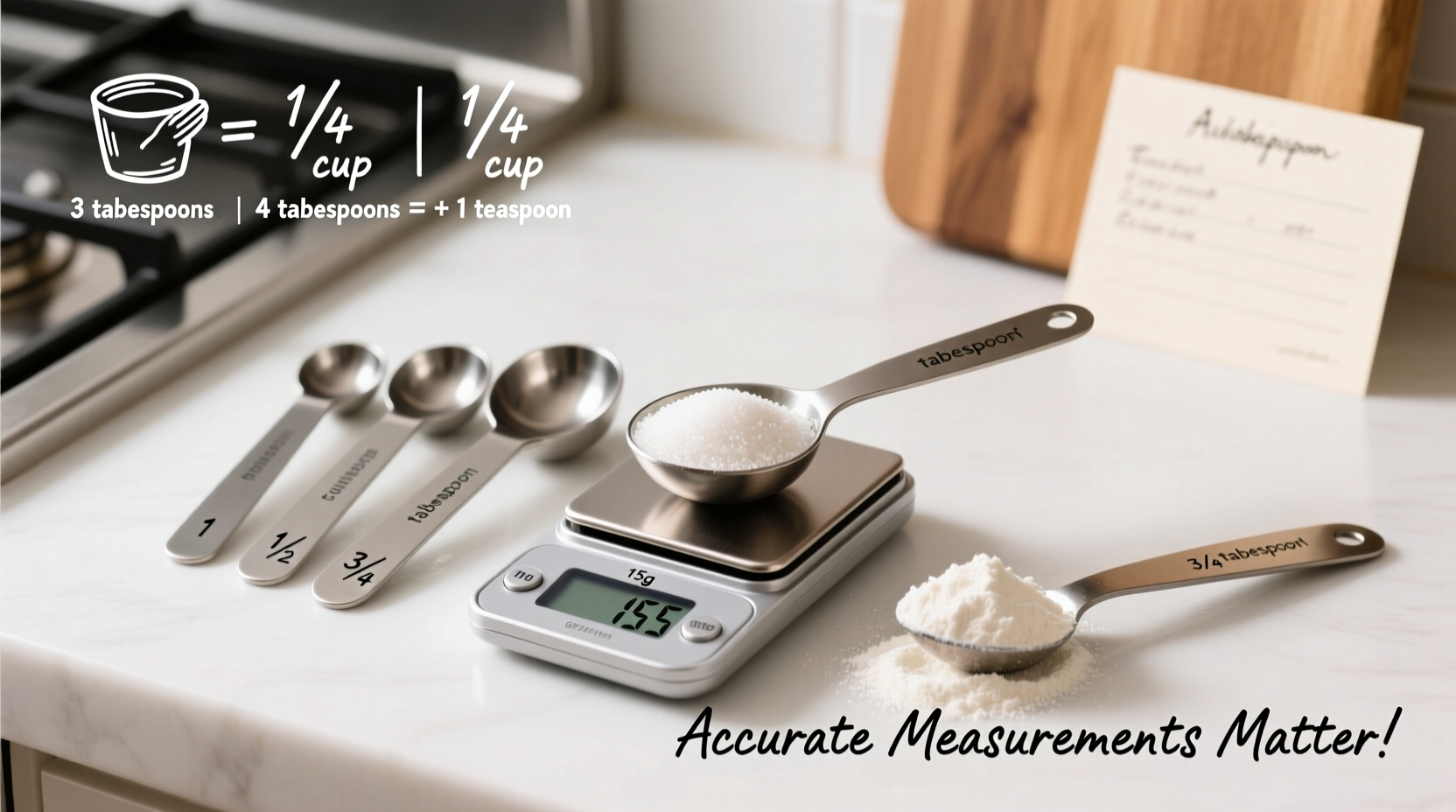
A standard U.S. tablespoon holds 15 milliliters (ml) of volume. Therefore, 3/4 tablespoon equals 11.25 ml. In teaspoons, since one tablespoon equals three teaspoons, 3/4 tablespoon translates to 2 1/4 teaspoons. This conversion is essential when you lack a 3/4 tablespoon measure but have access to smaller spoons.
Accuracy matters most in baking, where chemical reactions depend on precise ratios. Even slight deviations in leavening agents, salt, or fats can alter texture, rise, or flavor. For savory dishes, especially spice-heavy recipes, getting this measurement right prevents over-seasoning or blandness.
Step-by-Step Guide to Measuring 3/4 Tablespoon Without the Right Tool
If your measuring spoon set doesn’t include a 3/4 tablespoon, use these sequential steps to achieve accuracy:
- Check your spoon set: Some sets include a 3/4 tablespoon. If yours does, use it directly and level the ingredient.
- Use teaspoon equivalents: Measure 2 1/4 teaspoons instead. That’s two full teaspoons plus one-quarter teaspoon.
- Break down the quarter: Since 1/4 teaspoon isn’t always available, fill a 1/2 teaspoon halfway for the last 1/4.
- Use weight when possible: For ingredients like butter or oil, convert volume to grams. 3/4 tablespoon of water or similar liquids weighs approximately 11.25 grams.
- Visual estimation (last resort): Fill a full tablespoon and remove about one-quarter by scraping or pouring carefully.
This method works best with semi-solid or viscous ingredients like peanut butter or honey, where portion control is visible.
Common Tools and Their Accuracy for 3/4 Tablespoon
Different tools offer varying degrees of precision. The table below compares common household items and their reliability when measuring 3/4 tablespoon.
| Tool | Can Measure 3/4 Tbsp? | Accuracy Level | Best For |
|---|---|---|---|
| Standard Measuring Spoons | Yes (if included) | High | All ingredients |
| Teaspoon Set (1/4, 1/2, 1 tsp) | Yes (via 2 1/4 tsp) | High | Dry spices, powders |
| Liquid Measuring Cup (with ml markings) | Yes (11.25 ml) | Moderate | Liquids only |
| Kitchen Scale | Yes (by weight) | Very High | Butter, oils, syrups |
| Regular Spoon (from cutlery drawer) | No | Low | Not recommended |
Note: Household cutlery spoons vary widely in size—some hold up to 20 ml—making them unreliable for precise measurements.
Expert Insight: Why Precision Matters in Recipe Scaling
Chefs and food scientists emphasize that small inaccuracies compound when recipes are scaled. A slight overpour in a single serving may seem negligible, but when multiplied across batches, it affects outcomes significantly.
“Even a quarter-tablespoon difference in baking powder can lead to collapsed cakes or overly dense breads. When a recipe calls for 3/4 tablespoon, it’s not arbitrary—it’s calibrated.” — Chef Marcus Lin, Culinary Instructor at Hudson Valley Institute of Baking
This quote underscores the importance of treating fractional measurements with the same care as whole units.
Real Example: Fixing an Over-Salted Butter Sauce
Sarah was preparing garlic herb butter for steak and misread her recipe. Instead of 3/4 tablespoon of kosher salt, she used a full tablespoon. The sauce tasted overwhelmingly salty, forcing her to remake it. On the second attempt, she measured 2 1/4 teaspoons of salt using her 1/4 teaspoon spoon. This time, the seasoning was balanced and well-received.
The mistake wasn’t just in volume—it stemmed from skipping proper conversion. Her experience highlights how easily errors occur without a systematic approach to fractional measurements.
Checklist for Accurate Measurement of 3/4 Tablespoon
Follow this checklist every time you need to measure 3/4 tablespoon to ensure consistency:
- Identify whether the ingredient is liquid, dry, or sticky.
- Select the appropriate tool: spoons, scale, or measuring cup.
- Convert 3/4 tablespoon to 2 1/4 teaspoons if needed.
- Use a 1/4 teaspoon measure for the final quarter.
- Level dry ingredients; allow liquids to settle at eye level.
- Double-check conversions before adding to the mix.
- Record adjustments in your recipe notes for future use.
This routine minimizes guesswork and builds confidence in your kitchen skills.
Frequently Asked Questions
Can I use a regular spoon from my drawer to estimate 3/4 tablespoon?
No. Regular spoons vary greatly in capacity—some dinner spoons hold nearly 20 ml, which is over 25% more than a standard tablespoon. For accuracy, always use standardized measuring spoons.
How do I measure 3/4 tablespoon of honey or syrup?
For sticky ingredients, lightly coat the spoon with cooking spray or warm it slightly to allow smoother release. Alternatively, use a kitchen scale: 3/4 tablespoon of honey weighs approximately 15 grams due to its density.
Is 3/4 tablespoon the same as 12 ml?
Close, but not exact. 3/4 tablespoon is 11.25 ml. While 12 ml is only 0.75 ml over, this small excess may affect sensitive recipes like custards or gluten-free baked goods. Use precise tools when possible.
Conclusion: Master the Small Measurements for Big Results
Perfecting the measurement of 3/4 tablespoon might seem minor, but it reflects a broader principle: attention to detail elevates cooking from hit-or-miss to consistently excellent. Whether you’re using teaspoons, scales, or visual estimation, the key is consistency and awareness. These practical strategies empower you to adapt confidently, even without specialized tools.




 浙公网安备
33010002000092号
浙公网安备
33010002000092号 浙B2-20120091-4
Comments
No comments yet. Why don't you start the discussion?