
The cosmos may seem vast, chaotic, and incomprehensible at first glance. Yet beneath its grandeur lies an intricate web of order—rhythmic motions, repeating cycles, and mathematical precision that govern the behavior of celestial bodies. These are the predictable patterns in space: natural phenomena that unfold with remarkable consistency over time. From the orbit of Earth around the Sun to the pulsing rhythm of distant stars, these patterns form the foundation of astronomy, navigation, and even our understanding of time itself.
Recognizing and studying these patterns allows scientists to forecast eclipses, track asteroids, plan space missions, and explore the origins of the universe. But their importance extends beyond laboratories and observatories—they shape agriculture, cultural calendars, and human curiosity about our place in the cosmos.
What Are Predictable Patterns in Space?
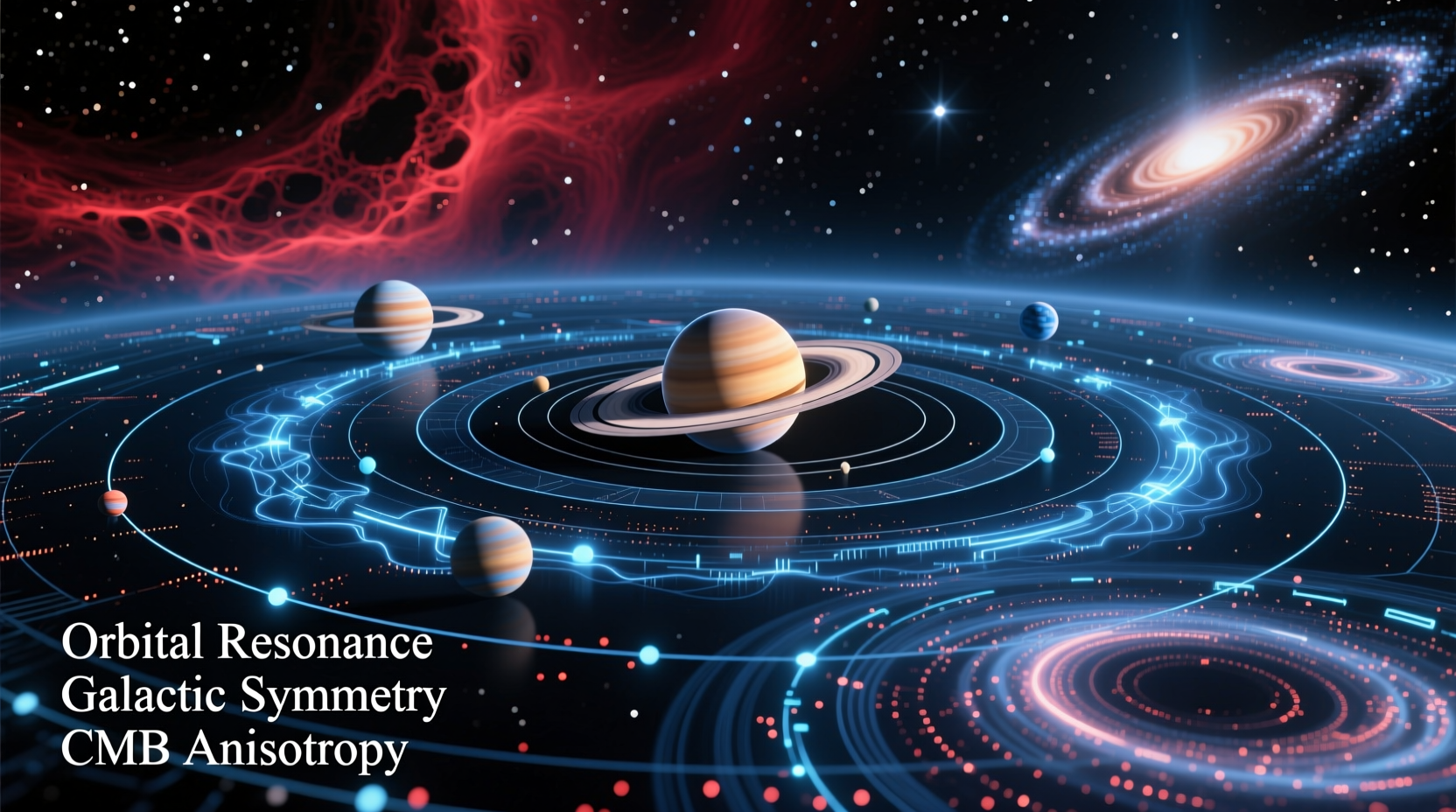
Predictable patterns in space refer to recurring astronomical events or movements that follow consistent physical laws, primarily governed by gravity, motion, and electromagnetic forces. These patterns emerge across multiple scales—from planets circling stars to galaxies rotating within clusters—and can be observed, measured, and forecasted with high accuracy.
Some of the most prominent examples include:
- Orbital motion: Planets, moons, and artificial satellites follow elliptical paths dictated by gravitational attraction.
- Rotational cycles: The spin of celestial bodies creates day-night rhythms and axial precession over long periods.
- Seasonal changes: Tilted planetary axes interacting with orbital position generate seasonal shifts on Earth and other worlds.
- Stellar pulsations: Certain stars rhythmically expand and contract, emitting regular light variations detectable across light-years.
- Tidal interactions: Gravitational tugs between nearby bodies create predictable tidal effects, such as ocean tides on Earth caused by the Moon.
The Science Behind Celestial Predictability
The predictability of space stems from the universality of physical laws. Newton’s law of universal gravitation and Einstein’s theory of general relativity both describe how mass and energy shape spacetime, dictating how objects move through it. Because these laws apply consistently throughout the observable universe, astronomers can model complex systems with confidence.
For example, Kepler’s three laws of planetary motion—formulated in the early 17th century—accurately describe how planets sweep equal areas in equal times, travel in elliptical orbits, and relate orbital period to distance from the Sun. These laws remain essential tools today, used not only for solar system dynamics but also in exoplanet detection.
“We don’t guess when a comet will return—we calculate it. That’s the power of celestial mechanics.” — Dr. Lena Patel, Astrophysicist at Caltech
Modern computational models integrate decades of observational data to simulate everything from asteroid trajectories to galactic collisions. NASA’s Jet Propulsion Laboratory uses such models to navigate spacecraft across billions of miles with pinpoint precision.
Real-World Applications of Cosmic Predictions
Understanding predictable patterns isn't just academic—it has tangible impacts on technology, safety, and culture.
Space Exploration & Satellite Operations
Satellites must maintain precise orbits to function correctly. Geostationary satellites, for instance, match Earth’s rotation exactly, staying fixed above one point on the equator. This requires constant monitoring and minor adjustments based on predicted gravitational perturbations from the Moon and Sun.
Asteroid Tracking and Impact Prevention
By analyzing the orbital patterns of near-Earth objects (NEOs), agencies like NASA and ESA identify potential threats years or even decades in advance. The successful DART mission in 2022 demonstrated humanity’s ability to alter an asteroid’s path—relying entirely on accurate predictions of its motion.
Timekeeping and Navigation
Our global time standards are rooted in astronomical cycles. Coordinated Universal Time (UTC) is synchronized with Earth’s rotation via atomic clocks and occasional leap seconds. Meanwhile, GPS satellites rely on relativistic corrections due to their orbital speed and altitude—without accounting for these predictable effects, location accuracy would degrade within minutes.
Agriculture and Cultural Calendars
Many traditional farming practices align with lunar phases and seasonal star positions. The ancient Egyptians used the heliacal rising of Sirius to anticipate the Nile flood. Today, some farmers still consult lunar calendars for planting schedules, leveraging centuries-old observations of celestial timing.
Common Predictable Patterns Explained
| Pattern | Description | Prediction Accuracy |
|---|---|---|
| Lunar Phases | 29.5-day cycle from new moon to full moon and back | Nearly perfect; predictable millennia ahead |
| Solar Eclipses | Moon passes directly between Earth and Sun | Highly accurate; Saros cycle repeats every ~18 years |
| Planetary Retrograde Motion | Apparent backward movement due to orbital perspective | Mathematically modeled and forecasted precisely |
| Halley’s Comet Orbit | Returns approximately every 76 years | Within days of prediction despite interstellar influences |
| Binary Star Eclipses | Two stars eclipse each other periodically | Measured down to seconds over decades |
Mini Case Study: Forecasting the Return of Halley’s Comet
In 1705, astronomer Edmond Halley applied Newton’s laws to historical comet sightings and deduced that a particular bright comet appeared roughly every 76 years. He predicted its return in 1758—though he died before witnessing it, the comet reappeared as expected and was later named in his honor.
This achievement marked one of the first successful demonstrations of using physics to predict a celestial event decades in advance. Modern calculations now account for gravitational nudges from Jupiter and Saturn, refining predictions to within a few days over centuries.
Step-by-Step Guide: Observing Predictable Patterns Yourself
You don’t need advanced equipment to witness cosmic regularity. Here’s how to begin tracking patterns in your own backyard:
- Choose a target: Start with the Moon, which completes a full phase cycle every 29.5 days.
- Record observations: Note the date, time, and visible phase nightly or weekly.
- Compare with predictions: Use free apps or websites like timeanddate.com to verify accuracy.
- Expand your scope: Track sunrise/sunset times to observe seasonal variation.
- Join citizen science: Contribute data to projects like Globe at Night or Zooniverse’s Milky Way Project.
Frequently Asked Questions
Why are space patterns so predictable when space seems random?
While individual events like meteor impacts may seem unpredictable, large-scale motions are dominated by gravity—a force that acts uniformly and cumulatively. Over time, this leads to stable, repeatable behaviors. Chaos exists in edge cases, but overall, the universe operates like a well-tuned machine.
Can these patterns change?
Yes—but slowly. External forces like stellar flybys, collisions, or relativistic effects can alter orbits over millions of years. However, short-term deviations are minor and often calculable, allowing us to adjust forecasts accordingly.
Do all stars and planets follow predictable paths?
Virtually all known bodies do under current conditions. Exceptions might include rogue planets ejected from systems or newly discovered objects with poorly constrained orbits. Once enough data is gathered, even these become predictable.
Conclusion: Embracing the Rhythm of the Cosmos
The predictable patterns in space reveal a deeper truth: the universe is not arbitrary. It follows rules we can learn, test, and trust. Whether you're launching a satellite, planting crops, or simply gazing at the night sky, recognizing these rhythms connects us to something timeless and universal.
As technology advances, our ability to detect and interpret these patterns grows—opening doors to deeper exploration and greater preparedness. But the wonder begins with awareness. Look up, mark the phases, trace the seasons, and see the invisible clockwork turning above.




 浙公网安备
33010002000092号
浙公网安备
33010002000092号 浙B2-20120091-4
Comments
No comments yet. Why don't you start the discussion?