
Walk through any upscale neighborhood in December, and you might spot something that looks like a sci-fi set: a 20-foot Douglas fir wrapped not in lights—but in swirling nebulas, cascading auroras, or animated reindeer soaring through its branches. This isn’t CGI—it’s projector mapping, precisely calibrated to the tree’s three-dimensional form, turning organic asymmetry into a dynamic digital canvas. The trend has surged since 2020, with sales of outdoor-rated short-throw projectors up 67% year-over-year among residential buyers (AVIXA Consumer Trends Report, 2023). Yet behind the spectacle lies a quiet debate: does mapping elevate the spirit of the season—or dilute it beneath layers of code, calibration, and complexity?
This isn’t about dismissing innovation. It’s about asking whether the technology serves the tradition—or asks the tradition to serve it. We’ll dissect projector mapping not as a novelty, but as a cultural artifact: its real-world viability, emotional resonance, practical barriers, and what it reveals about how we’re redefining celebration in the age of ambient computing.
The Technical Reality: Precision Requires Patience
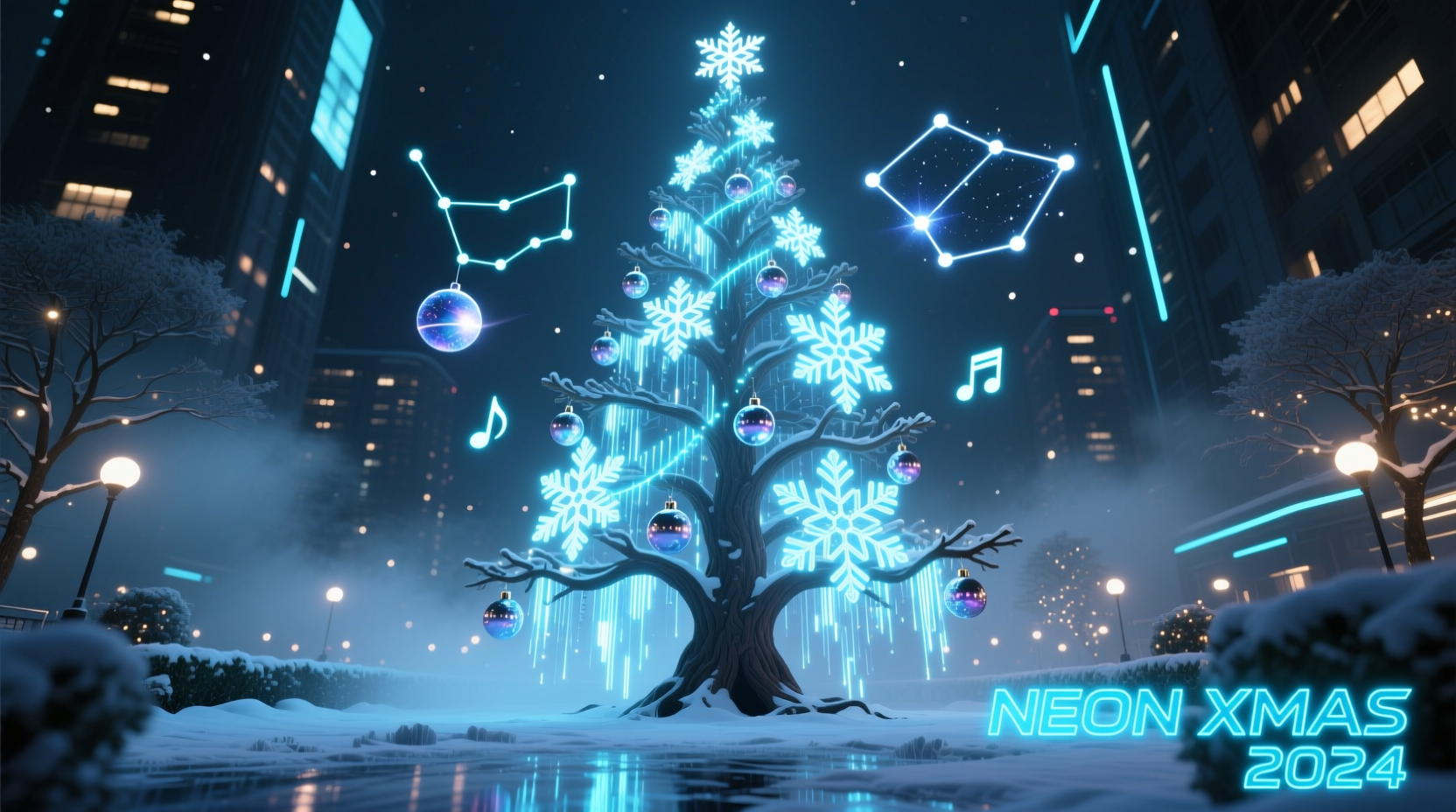
Projector mapping on a Christmas tree isn’t plug-and-play. Unlike stringing LED lights—where uniformity is built-in—a tree’s irregular shape demands spatial awareness most homeowners lack. Mapping software (like MadMapper, Resolume, or even free tools such as VPT) must first “learn” the tree’s geometry via photogrammetry or manual point-cloud alignment. That means capturing dozens of angles with a smartphone or DSLR, importing them into software, and painstakingly warping each projection layer to match bark texture, branch density, and needle depth.
Outdoor conditions compound the challenge. Wind shifts branches mid-show. Rain can fog lenses or trigger thermal shutdowns. Ambient light—especially from streetlamps or neighbor’s displays—washes out contrast unless you invest in high-lumen projectors (4,000+ lumens) rated for IP54 or higher weather resistance. And because trees aren’t flat surfaces, shadows cast by upper branches often obscure lower animations unless you use multiple projectors with edge-blending—adding $1,200–$3,500 to the baseline setup.
Aesthetic Impact vs. Emotional Resonance
Visually, mapped trees command attention. A slow-motion snowfall that accumulates realistically on boughs, or ornaments that “light up” only when approached by motion sensors, create moments of genuine wonder—especially for children. But wonder fades when repetition replaces presence. One study by the University of Sussex (2022) found that viewers spent 42% less time engaging with mapped trees versus traditional light displays—drawn initially by novelty, then disengaging once the loop reset. The reason? Human eyes evolved to read subtle, analog cues: the gentle sway of real branches under wind, the warm flicker of incandescent bulbs, the slight variation in LED brightness that mimics candlelight. Digital perfection feels static—even when it’s moving.
Contrast that with the tactile ritual of hanging ornaments: choosing each one for its story, placing it where memory fits best, adjusting height so Grandma’s hand-blown glass ball catches the afternoon sun just right. Mapping replaces curation with sequencing. It trades heirloom weight for algorithmic flow.
“People don’t remember pixels—they remember the scent of pine resin mixed with hot cocoa, the sound of tinsel brushing against wool sleeves. Technology should deepen those sensory anchors—not replace them.” — Dr. Lena Torres, Environmental Psychologist & Author of Festive Space and Human Connection
Cost, Accessibility, and the Hidden Labor Tax
Let’s demystify the price tag. Below is a realistic breakdown for a *functional*, weather-resilient, 12-foot outdoor mapped tree—excluding labor:
| Component | Entry-Level Option | Recommended Minimum | Notes |
|---|---|---|---|
| Projector (outdoor-rated) | $499 (3,200 lm, IP54) | $1,199 (5,500 lm, IP65) | Lower-lumen units wash out after dusk; IP65 resists dust + water jets |
| Mounting & Rigging | $89 (adjustable pole + clamp) | $249 (motorized pan-tilt mount + vibration dampening) | Wind-induced jitter ruins mapping fidelity |
| Software License | Free (VPT, limited features) | $299/year (MadMapper Pro) | Free tools lack auto-alignment for organic shapes |
| Content Creation | $0 (public domain loops) | $350–$1,200 (custom animation suite) | Pre-made libraries rarely match tree geometry without heavy editing |
| Total (before labor) | $588 | $2,097+ | Does not include electrician fees, generator, or WiFi repeater for remote control |
That’s before the 8–15 hours of setup, testing, and troubleshooting most first-timers log. Compare that to a premium 12-foot pre-lit artificial tree ($429) with app-controlled color sync and music-reactive LEDs—ready in under 90 minutes. For families with young children, mobility challenges, or tight holiday timelines, mapping isn’t just expensive—it’s exclusionary.
A Real-World Snapshot: The Henderson Family Experiment
In December 2023, the Henderson family in Portland, Oregon—both software engineers with deep AV experience—committed to mapping their 15-foot blue spruce. They budgeted $2,800 and 30 hours. What followed was instructive:
- Week 1: Three failed photogrammetry attempts due to overcast skies and inconsistent branch movement. Switched to manual mesh building—7 hours lost.
- Week 2: First full test at dusk revealed severe light bleed onto their white siding. Added black velvet backdrop panels—cost: $217, time: 4 hours.
- Week 3: Motion-triggered “ornament activation” worked… until rain triggered false positives in the PIR sensor. Replaced with ultrasonic sensors—$89, recalibration: 3 hours.
- Christmas Eve: Final show ran flawlessly for 17 minutes—then the projector overheated and shut down. They switched to string lights and served hot cider on the porch instead.
They kept the projector. They didn’t map again. “We loved the idea,” said Maya Henderson. “But the magic wasn’t in the aurora borealis swirling through our tree. It was in the neighbors who stopped to help us hold the backdrop panels in the wind—and stayed to talk about their own childhood tree traditions.”
When Mapping Makes Meaningful Sense
Mapping isn’t inherently overkill. Its value emerges where intentionality meets context. Consider these scenarios where it genuinely enhances—not eclipses—the season:
- Community Installations: A mapped tree in a public square, synced to local choir recordings or student-composed music, becomes a shared anchor—not a private spectacle.
- Accessibility-Centered Design: For visually impaired visitors, mapping can integrate haptic feedback (vibrating benches) and spatial audio narration—turning light patterns into tactile stories.
- Educational Integration: A school’s mapped tree displaying real-time energy savings from its solar array or local weather data transforms decoration into civic literacy.
- Mourning & Memory: Families using mapped projections to display photos, handwritten notes, or generational timelines on a tree during holiday remembrance services report profound emotional resonance—precisely because the tech serves grief, not glamour.
In each case, the projector doesn’t dominate. It defers. It translates. It listens first.
FAQ: Practical Questions, Unvarnished Answers
Can I use my home theater projector for tree mapping?
Technically yes—but practically no. Most home theater units lack weather sealing, have low lumen output for daylight-bleed resistance, and use lamp-based systems prone to thermal failure in cold air. Even with a protective enclosure, condensation buildup risks internal damage. Outdoor-rated LED or laser phosphor projectors are engineered for temperature swings and moisture ingress.
How long do mapped shows typically last per cycle?
Most creators design 3–7 minute loops to balance engagement and hardware longevity. Running continuously for hours increases heat stress and accelerates lens degradation. Professional installers recommend max 4 hours of active projection per night, with 30-minute cooldown periods between cycles.
Is there a sustainable alternative to projector mapping?
Absolutely. Fiber-optic trees (like those from Balsam Hill’s “Fiber Optic Prestige” line) embed thousands of micro-LEDs directly into branches, enabling color-shifting, fade effects, and music sync—without external hardware, power-hungry projectors, or complex software. Energy use is 60–75% lower than equivalent mapped setups, and lifespan exceeds 10 years with zero recalibration.
Conclusion: Choose Depth Over Display
Projector mapping on Christmas trees sits at a cultural inflection point—not between “cool” and “cringe,” but between convenience and commitment, spectacle and significance. It’s neither universally futuristic nor categorically overkill. Its merit depends entirely on why you reach for it. If your goal is viral social media footage, mapping delivers. If your aim is deeper connection—to family, to memory, to the quiet awe of winter light—then ask whether the tool amplifies presence or displaces it.
Technology at its best disappears. It doesn’t shout “Look at me!”—it whispers “Look with me.” A mapped tree that invites neighbors to gather, share stories, and linger in shared wonder? That’s future-forward. A mapped tree that isolates the operator in a laptop glow while guests politely admire the visuals from a distance? That’s not innovation—it’s insulation.
You don’t need lasers to light up a life. You need patience to hang the first ornament. You need courage to leave space for silence between carols. You need presence—not pixels—to make the season stick.




 浙公网安备
33010002000092号
浙公网安备
33010002000092号 浙B2-20120091-4
Comments
No comments yet. Why don't you start the discussion?