
Choosing the right controller for PC gaming can significantly influence your experience—whether you're navigating an open-world RPG, competing in fast-paced shooters, or exploring narrative-driven adventures. Two of the most popular options are the PlayStation 5’s DualSense and Microsoft’s Xbox Wireless Controller (Series X/S). Both offer premium build quality, modern features, and broad game support. But when used on a PC, subtle differences in ergonomics, input responsiveness, software integration, and connectivity begin to matter more. This guide breaks down every critical factor to help you decide which controller truly performs better on PC.
Ergonomics and Physical Design
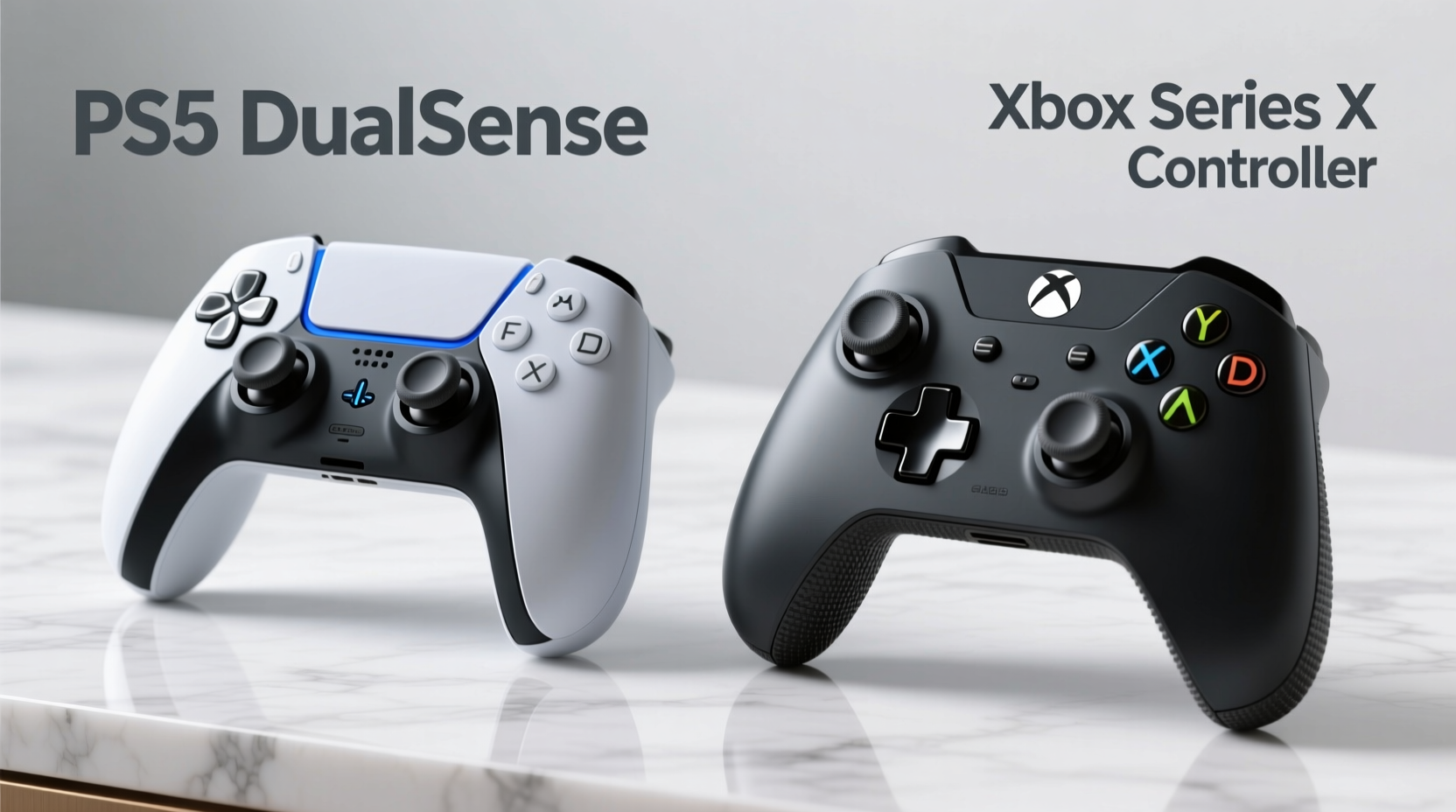
The way a controller feels in your hands over extended play sessions can make or break your enjoyment. The Xbox controller has long been praised for its near-universal fit, while the PS5’s DualSense introduces a bolder, more sculpted design.
The Xbox Wireless Controller maintains a familiar layout with slightly refined triggers and bumpers, improved grip texture, and a balanced weight distribution. Its symmetrical thumbstick placement and gently contoured back fit a wide range of hand sizes comfortably. Many PC gamers report being able to play for hours without fatigue, making it a top choice for marathon sessions.
In contrast, the DualSense features asymmetrical sticks—similar to its predecessor—with the left stick slightly lower than the right. While this may feel natural to PlayStation users, some PC players find it less intuitive, especially during precision aiming. The overall shape is sleeker but also bulkier, and the glossy rear panel can become slippery during intense gameplay unless your hands stay dry.
Button Layout and Input Precision
Input layout affects not just comfort but also performance, particularly in genres like FPS or fighting games where quick access and tactile feedback matter.
Xbox’s button mapping follows the standard ABXY configuration recognized by nearly all PC games with controller support. The buttons are concave, well-spaced, and provide clear actuation. The D-pad is clicky and precise, ideal for menu navigation or retro-style platformers. Triggers offer smooth resistance with a digital dead zone that's easily adjustable via Windows settings or third-party tools.
The DualSense improves upon the DualShock 4’s flat D-pad with a hybrid 8-way directional pad that performs better in games requiring cardinal inputs. However, the ABXY buttons are flatter and require more pressure, which can lead to missed inputs during rapid sequences. Some users also note that the touchpad, while innovative, is prone to accidental activation when resting thumbs on the front.
“From a competitive standpoint, consistency and predictability win. The Xbox controller’s inputs are more reliable across titles.” — Daniel Reeves, Senior UX Designer at a AAA PC game studio
Advanced Features: Haptics and Adaptive Triggers
This is where the DualSense shines. Its haptic feedback system replaces traditional rumble motors with highly nuanced vibrations capable of simulating textures like gravel, mud, or rain. In games like *Returnal* or *Horizon Forbidden West* on PC, these effects create a deeper sense of immersion. You can feel the difference between walking on grass and concrete, or the tension of drawing a bowstring thanks to adaptive triggers that dynamically resist your pull.
The Xbox controller uses standard impulse triggers—effective but far less sophisticated. While they provide basic rumble zones (left motor for low-frequency, right for high), there’s no variable resistance or granular vibration control. For most mainstream PC titles, this isn’t a limitation, as many don’t leverage advanced haptics anyway.
However, adoption of DualSense-specific features on PC remains limited. Only select titles through Steam Input or specialized drivers fully support haptics and trigger effects. Outside those, the DualSense functions largely like any other generic gamepad. So while the technology is impressive, its real-world impact depends heavily on software support.
Connectivity and Compatibility
One of the biggest advantages the Xbox controller holds on PC is native integration. Thanks to Microsoft’s ownership of the platform, the Xbox Wireless Controller works plug-and-play via USB or Bluetooth with zero additional software required. It’s automatically recognized by Windows, Steam, Epic Games, and most emulators. For wireless use, pairing via Bluetooth is seamless on most laptops, and the optional Xbox Wireless Adapter enables lossless, low-latency connections with multiple devices.
The DualSense requires more setup. While Bluetooth pairing works out of the box, full functionality—including battery level display, firmware updates, and haptic feedback—often demands third-party tools like DS4Windows or the newer official Sony PS5 Controller driver for Windows. These add layers of complexity and occasional latency. Additionally, some anti-cheat systems in multiplayer games (e.g., *Valorant*, *Fortnite*) may flag virtual input devices created by DS4Windows, leading to temporary bans or login issues.
| Feature | Xbox Controller | DualSense |
|---|---|---|
| Plug-and-Play on Windows | ✅ Yes | ⚠️ Partial (basic input only) |
| Native Driver Support | ✅ Full | ❌ Limited (requires third-party tools) |
| Bluetooth Pairing | ✅ Reliable | ✅ Works, but inconsistent audio/haptics |
| Battery Life | ~30–40 hours (AA batteries) | ~8–12 hours (built-in battery) |
| Rechargeable Battery | Optional (via Play & Charge Kit) | ✅ Built-in, USB-C |
| Anti-Cheat Friendliness | ✅ Widely accepted | ⚠️ May trigger false positives |
Performance and Latency
Latency—the delay between pressing a button and seeing the result—is crucial in competitive gaming. Both controllers perform well under normal conditions, but differences emerge in edge cases.
The Xbox controller, especially when used with the dedicated Xbox Wireless Adapter, delivers sub-10ms latency and rock-solid connection stability. Even over Bluetooth, input lag is negligible for most genres. Firmware updates are handled through the Xbox Accessories app, ensuring consistent performance.
The DualSense generally performs well over USB, but Bluetooth usage can introduce slight delays, particularly when audio is transmitted simultaneously (e.g., using a headset via the 3.5mm jack). Some users report stuttering or disconnects during prolonged sessions, though this varies by motherboard and Bluetooth stack. When paired with DS4Windows, additional processing overhead can further increase latency, making it less ideal for esports or rhythm games.
Mini Case Study: Competitive FPS Player Transition
Mark, a *Counter-Strike* enthusiast who primarily played on console, recently switched to PC gaming. He initially brought his DualSense, hoping to maintain familiarity. While he appreciated the immersive haptics in single-player titles, he noticed a slight delay during flick shots in *CS2*. After switching to an Xbox controller, his aim felt more responsive. “It wasn’t night and day,” he said, “but I stopped blaming ‘lag’ for missed shots. The inputs just registered faster.”
After testing both in identical network conditions, Mark concluded that the Xbox controller offered a more predictable and stable experience—critical in high-pressure matches.
Customization and Software Ecosystem
PC gamers often want to remap buttons, adjust stick sensitivity, or save profiles. Here, both platforms offer solutions, but with different approaches.
Xbox controllers can be customized using the official Xbox Accessories app, allowing stick dead zones, trigger sensitivity, and button remapping. However, it lacks advanced macros or profile syncing across apps. Third-party tools like reWASD or JoyToKey fill the gap but aren’t necessary for basic use.
The DualSense relies almost entirely on third-party software for customization. DS4Windows allows deep remapping, gyro aiming emulation, touchpad programming, and profile switching. This flexibility appeals to modders and simulation gamers (e.g., flight or racing titles using motion controls). However, managing profiles and avoiding conflicts takes effort.
Price and Long-Term Value
The Xbox Wireless Controller typically retails around $59.99, while the DualSense is priced at $69.99. That $10 difference reflects the latter’s advanced haptics and built-in battery—but whether it’s worth it depends on your priorities.
If you value plug-and-play reliability, longer battery life (with standard AAs), and broader compatibility, the Xbox controller offers better value for most PC users. You can replace batteries instantly instead of waiting for a recharge, and replacements are widely available.
The DualSense’s integrated battery is convenient but wears over time. Replacement requires disassembly, and average lifespan per charge is half that of the Xbox controller. Still, for players invested in immersive single-player experiences, the added realism from haptics may justify the cost.
Checklist: Choosing the Right Controller for Your PC Setup
- ✅ Do you prioritize plug-and-play simplicity? → Choose Xbox
- ✅ Are you playing competitive or fast-paced games? → Xbox has lower latency
- ✅ Do you want immersive haptics in supported games? → DualSense excels here
- ✅ Will you use the controller across multiple platforms? → DualSense works well on PS5 + PC
- ✅ Are you sensitive to hand fatigue? → Test ergonomics; Xbox suits more hand types
- ✅ Do you use anti-cheat-heavy multiplayer games? → Avoid DS4Windows if possible
Frequently Asked Questions
Can I use a PS5 controller on PC without any extra software?
Yes, you can connect the DualSense via USB or Bluetooth for basic input. However, features like battery level monitoring, haptics, and proper button labeling require third-party tools like DS4Windows or the official Sony driver.
Does the Xbox controller work better with Steam?
Yes. Steam natively recognizes the Xbox controller with full button mapping, vibration support, and customization through Steam Input. It’s one of the best-supported gamepads on the platform.
Which controller lasts longer on a single charge?
The Xbox controller wins significantly here. Using two AA batteries, it can last 30–40 hours. The DualSense’s built-in battery lasts about 8–12 hours, depending on haptics and volume usage.
Final Verdict: Which Is Better for PC Gaming?
The answer depends on what kind of PC gamer you are.
If you value reliability, low latency, and seamless integration, the **Xbox Wireless Controller** is the superior choice for most PC setups. It works instantly, plays nicely with anti-cheat systems, lasts longer between power cycles, and fits a wider variety of hand sizes. Its consistent performance makes it ideal for competitive titles, productivity tasks, or casual play.
On the other hand, the **PS5 DualSense** stands out for players who prioritize immersion. Games that support its haptic feedback and adaptive triggers offer a uniquely tactile experience unmatched by any other mainstream controller. If you spend most of your time in story-rich adventures, action RPGs, or cinematic platformers, the DualSense can elevate your gameplay.
Ultimately, neither controller is objectively “better” across the board. But for the average PC gamer seeking hassle-free performance, broad compatibility, and enduring comfort, the Xbox controller remains the gold standard.




 浙公网安备
33010002000092号
浙公网安备
33010002000092号 浙B2-20120091-4
Comments
No comments yet. Why don't you start the discussion?