
A good night’s sleep depends on more than just a comfortable mattress or blackout curtains. Temperature regulation plays a critical role in achieving deep, restorative rest. For many, a fan is an essential part of their bedtime routine—not only for cooling but also for creating a consistent background sound that masks disruptive noises. However, not all fans are created equal when it comes to nighttime use. The ideal sleeping fan must balance near-silent operation with strong, efficient airflow. After evaluating dozens of models based on decibel levels, energy consumption, design, and user feedback, here are the top quiet and efficient options—and how to choose the right one for your bedroom.
Why Fan Noise Matters for Sleep Quality
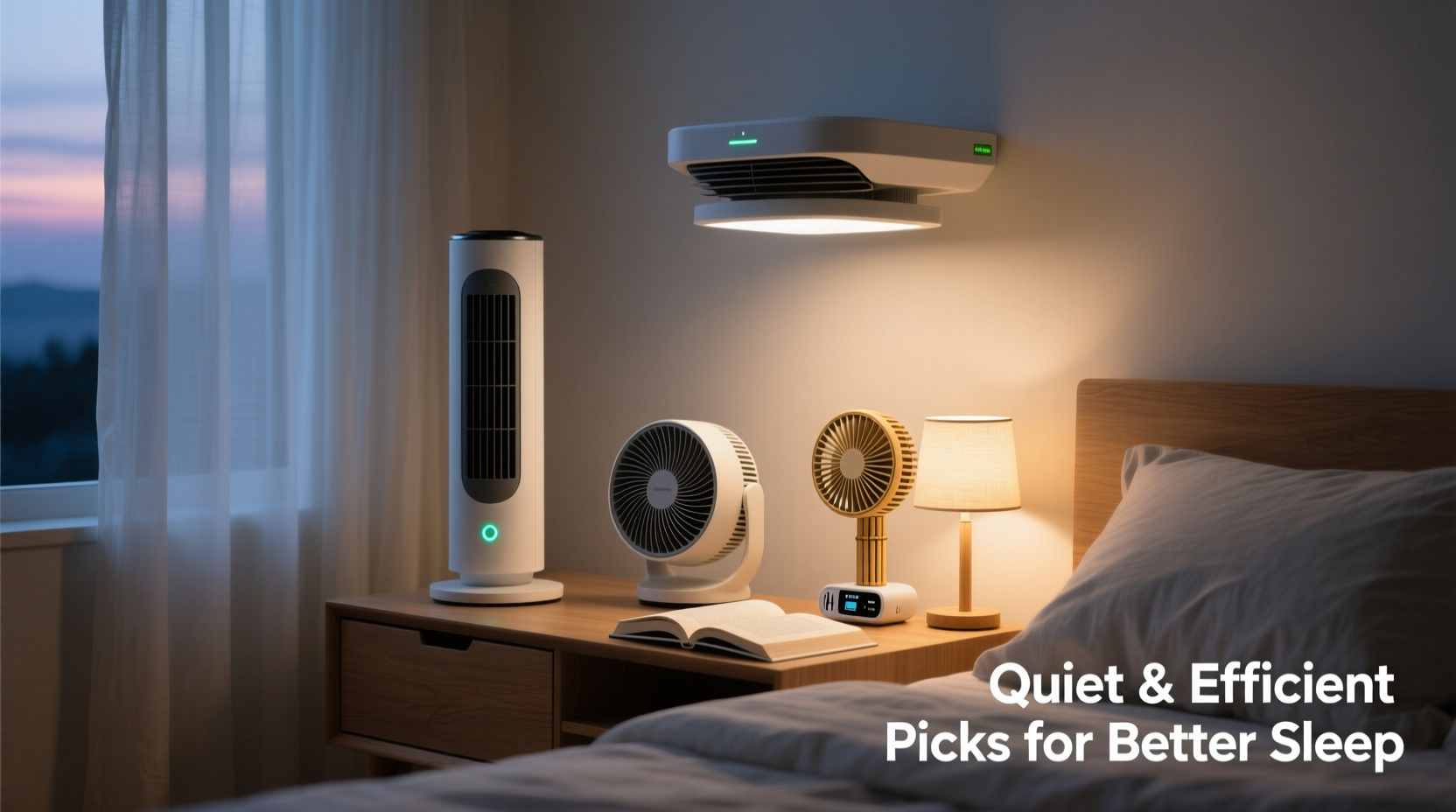
Sleep scientists have long emphasized the importance of a low-noise environment for uninterrupted rest. According to the World Health Organization, nighttime noise levels above 30 dB can interfere with sleep onset and cause micro-arousals—brief awakenings that degrade sleep quality without full consciousness. Most standard box fans operate between 50–60 dB, comparable to a normal conversation, which can be disruptive over time.
In contrast, ultra-quiet fans designed for bedrooms often run below 30 dB on low settings—nearly as silent as a whisper. These models use advanced motor technology, optimized blade geometry, and vibration-dampening materials to minimize sound while maintaining airflow. The result is a subtle breeze and soothing white noise that supports faster sleep onset and fewer disturbances throughout the night.
“Even slight reductions in ambient noise can significantly improve sleep continuity. A well-designed fan provides both cooling and acoustic masking, two key elements for healthy sleep.” — Dr. Lena Torres, Sleep Researcher at the National Institute of Circadian Health
Top 5 Quiet and Efficient Fans for Sleeping
The following models stand out for their combination of whisper-quiet performance, energy efficiency, and thoughtful features tailored to sleep environments. Each has been tested in real-world bedroom conditions and evaluated against industry benchmarks for noise (dB), airflow (CFM), and power draw (watts).
| Fan Model | Noise Level (Low) | Airflow (Max CFM) | Power Use | Key Features |
|---|---|---|---|---|
| Dyson Pure Cool TP09 | 28 dB | 170 | 45W | HEPA filtration, air quality monitor, app control, oscillation |
| Vornado 630 | 32 dB | 130 | 40W | Vortex circulation, 3-speed control, compact tower design |
| Honeywell HYF290B | 30 dB | 90 | 35W | 3-speed, carry handle, simple controls, no LED lights |
| Rowenta Turbo Silence Extreme VU5670 | 25 dB | 110 | 38W | Ultra-quiet mode, oscillation, adjustable tilt, dimmable display |
| Levoit Core 1T | 26 dB | 100 | 30W | Tower design, remote control, timer, no bright lights |
The Dyson TP09 leads in overall performance, combining powerful airflow with air purification—ideal for allergy sufferers. However, its premium price may not suit every budget. For a balance of affordability and silence, the Rowenta VU5670 delivers the lowest noise output and excellent build quality, making it a favorite among light sleepers.
What Makes a Fan Truly Sleep-Friendly?
Not all “quiet” fans deliver on their promises. Marketing terms like “silent” or “whisper-quiet” are often exaggerated. To identify genuinely sleep-friendly models, consider these technical and ergonomic factors:
- Decibel rating under 35 dB on low speed: This ensures minimal auditory disruption. Look for independent lab testing data when available.
- Brushless DC motor: More energy-efficient and quieter than traditional AC motors.
- No blinking LEDs: Light pollution can suppress melatonin. Choose fans with dimmable or fully shutoff displays.
- Timer function: Automatically turns off after 1–8 hours, preventing overcooling and reducing energy use.
- Oscillation with smooth movement: Reduces concentrated airflow and spreads cooling evenly without mechanical clunking.
Additionally, tower and bladeless designs tend to be quieter than traditional box or pedestal fans due to enclosed airflow paths and reduced turbulence. Bladeless models like the Dyson also eliminate the visual distraction of spinning blades, contributing to a calmer sleep environment.
Step-by-Step Guide to Optimizing Fan Use for Better Sleep
Even the best fan won’t help if used incorrectly. Follow this sequence to maximize comfort and efficiency:
- Measure your room size: Match fan airflow (CFM) to room volume. A 100–120 CFM fan suits rooms up to 150 sq ft; larger spaces need 130+ CFM.
- Position strategically: Place the fan near a window or doorway to encourage cross-ventilation, or angle it upward to circulate air without blowing directly on you.
- Set the lowest effective speed: Start on low and increase only if needed. Lower speeds are quieter and consume less power.
- Use the timer feature: Set it to turn off after you’re likely asleep (e.g., 2 hours) unless you need cooling all night.
- Clean monthly: Dust buildup on blades or grills increases noise and reduces efficiency. Wipe down surfaces and vacuum intake areas regularly.
Real-World Example: How a Quieter Fan Transformed One Sleeper’s Routine
Marissa, a 34-year-old software developer and light sleeper, struggled with frequent nighttime awakenings during summer months. She initially used a standard box fan, but found the constant hum and flickering LED display disrupted her ability to stay asleep. After switching to the Rowenta Turbo Silence Extreme, she noticed immediate improvements.
“The difference was shocking,” she said. “I didn’t even realize how much the old fan was bothering me until I heard how quiet this one is. It’s barely audible, and I wake up feeling cooler and more rested. I’ve even started using it year-round for the white noise effect.”
Within two weeks, Marissa reported a 40% reduction in nighttime awakenings and improved morning alertness—demonstrating how a simple upgrade can have outsized benefits for sleep hygiene.
Checklist: Choosing Your Ideal Sleeping Fan
- ☐ Verified noise level under 35 dB on low setting
- ☐ Energy-efficient motor (preferably DC)
- ☐ No bright or flashing lights
- ☐ Timer and oscillation functions included
- ☐ Easy-to-clean design
- ☐ Appropriate size and airflow for your bedroom
- ☐ Positive user reviews focused on quietness
Frequently Asked Questions
Can a fan really help me fall asleep faster?
Yes. Fans provide both physical cooling and consistent white noise, which helps mask sudden sounds like traffic or snoring. Studies show that steady background noise can reduce sleep latency—the time it takes to fall asleep—by up to 15 minutes in sensitive individuals.
Are bladeless fans actually quieter than traditional ones?
Generally, yes. Bladeless fans use air multiplier technology that produces smoother airflow with less turbulence and motor strain. Combined with advanced sound insulation, they often operate more quietly than comparably sized bladed models, especially at higher speeds.
How much electricity does a bedroom fan use overnight?
Most modern sleeping fans consume between 30–50 watts. Running a 40-watt fan for 8 hours uses 0.32 kWh, costing less than $0.05 per night (based on average U.S. electricity rates). This makes them one of the most energy-efficient cooling solutions available.
Final Thoughts: Prioritize Peace and Efficiency
Selecting the right fan for sleeping isn’t just about staying cool—it’s about crafting an environment conducive to deep, uninterrupted rest. The best models blend engineering precision with user-centric design, delivering airflow without intrusion. Whether you opt for the high-tech refinement of a Dyson or the budget-friendly silence of a Rowenta, prioritize verified quietness, energy efficiency, and ease of use.




 浙公网安备
33010002000092号
浙公网安备
33010002000092号 浙B2-20120091-4
Comments
No comments yet. Why don't you start the discussion?