
Polyester dominates the outerwear market for good reason: it’s durable, lightweight, and highly effective at retaining warmth. But as environmental concerns grow, consumers are increasingly asking whether a recycled polyester jacket is truly better than one made from virgin polyester. The answer isn’t just about materials—it involves energy use, carbon emissions, performance in cold weather, and long-term impact on ecosystems. This article dives deep into the science, manufacturing realities, and real-world performance to help you make an informed decision.
Sustainability: The Environmental Footprint of Polyester Production
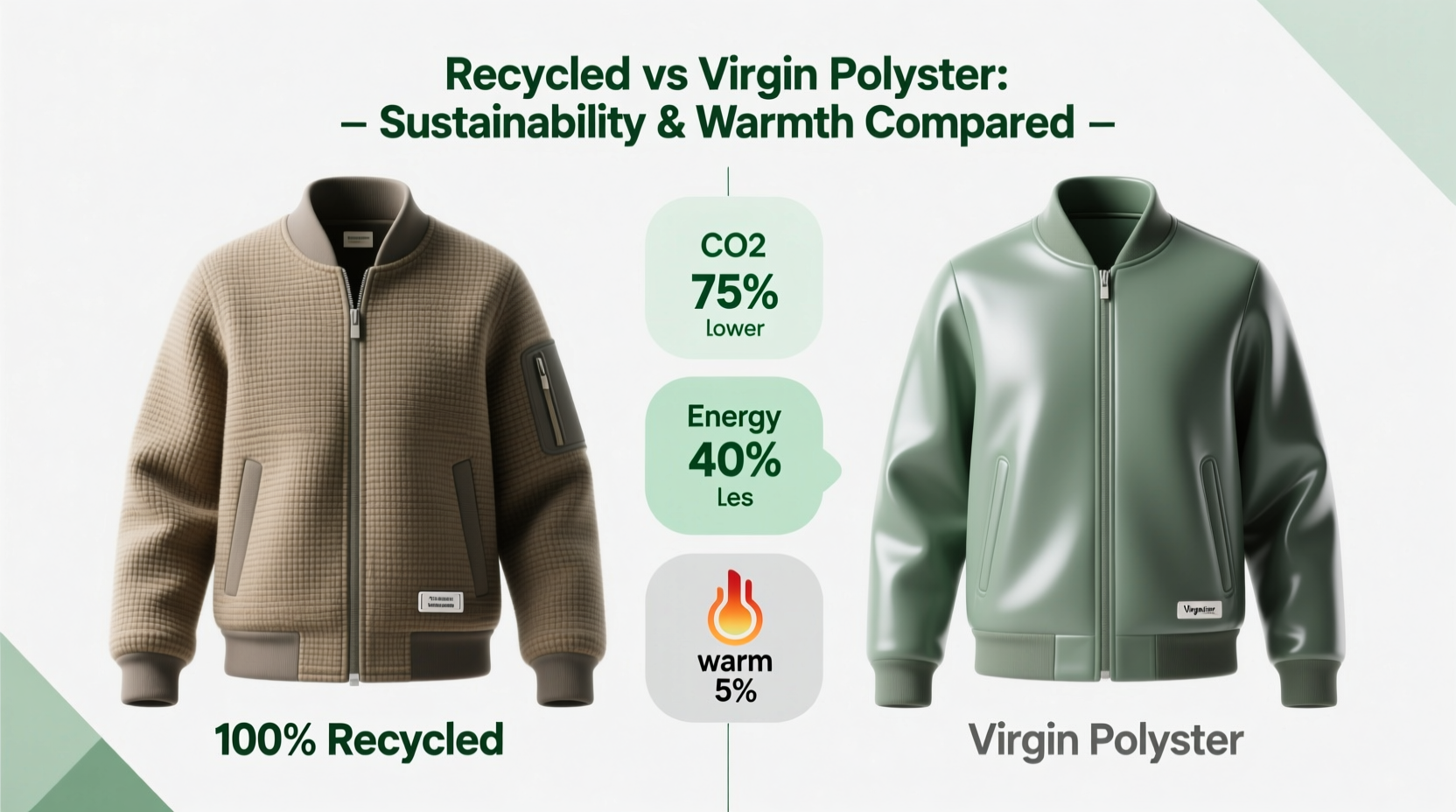
The production of virgin polyester begins with crude oil—a non-renewable resource. Through a series of chemical processes, petroleum is transformed into polyethylene terephthalate (PET), which is then spun into fibers for clothing. This process is energy-intensive and emits significant greenhouse gases. According to the Textile Exchange, producing one kilogram of virgin polyester generates approximately 5.5 kilograms of CO₂ equivalent.
In contrast, recycled polyester—often labeled as rPET—is typically made from post-consumer plastic bottles or industrial textile waste. The recycling process involves collecting, cleaning, shredding, and melting the plastic before extruding it into new fibers. While this still requires energy, studies show that using recycled polyester reduces carbon emissions by up to 30% compared to virgin production. Additionally, it diverts plastic waste from landfills and oceans, contributing to circular economy goals.
However, the sustainability advantage of recycled polyester isn't absolute. Microplastic shedding remains a concern for both types during washing. And while rPET reduces reliance on fossil fuels, it doesn’t eliminate synthetic fiber pollution. Furthermore, mechanical recycling degrades fiber quality over time, limiting infinite recyclability—a key challenge in achieving true circularity.
Warmth and Performance: Do Recycled Jackets Keep You Just as Warm?
When it comes to insulation, the thermal performance of a jacket depends more on design—such as fill weight, layering, and construction—than the origin of the polyester fiber. Both recycled and virgin polyester can be engineered to provide identical loft, density, and heat retention.
Manufacturers often use polyester in two forms: as a face fabric (shell) or as insulation (e.g., PrimaLoft®, Thermore®). In both cases, recycled fibers have been refined to match the technical specifications of virgin ones. Independent lab tests conducted by outdoor gear reviewers show no statistically significant difference in warmth between jackets made from 100% recycled polyester insulation versus virgin equivalents under controlled conditions.
That said, some early-generation recycled insulations did suffer from slightly lower resilience and compressibility. However, advancements in polymer engineering have largely closed this gap. Today, high-end brands like Patagonia, The North Face, and Arc’teryx use recycled polyester in their premium insulated layers without compromising warmth or durability.
“Modern recycled polyester performs on par with virgin in terms of insulation and moisture management. The real win is environmental.” — Dr. Lena Fischer, Sustainable Materials Researcher, ETH Zurich
Comparative Analysis: Key Differences at a Glance
| Factor | Virgin Polyester | Recycled Polyester (rPET) |
|---|---|---|
| Raw Material Source | Fossil fuels (crude oil) | Post-consumer plastic waste |
| CO₂ Emissions (per kg) | ~5.5 kg CO₂e | ~3.8 kg CO₂e (30% lower) |
| Energy Consumption | High (petrochemical refining) | Moderate (cleaning & reprocessing) |
| Water Usage | Low (but pollution risk) | Higher during bottle cleaning phase |
| Microplastic Shedding | Yes (during washing) | Yes (similar rate) |
| Thermal Performance | Excellent | Comparable (modern versions) |
| Durability | High | Slightly lower after multiple cycles |
| End-of-Life Recyclability | Limited (downcycling common) | Limited (same constraints) |
This table highlights that while recycled polyester wins in emissions and resource conservation, trade-offs exist—particularly in water use during preprocessing and slight reductions in fiber longevity over repeated recycling loops.
Real-World Example: A Winter Commuter’s Choice
Consider Sarah, a cyclist who commutes year-round in Portland, Oregon. She needed a reliable mid-layer jacket that could handle rain, wind, and temperatures dipping below freezing. She narrowed her options to two nearly identical models: one made with 100% virgin polyester insulation, priced at $120, and another using certified recycled materials, priced at $135.
After researching lifecycle assessments shared by the brands, she learned the recycled version saved the equivalent of 28 plastic bottles from entering landfills and reduced carbon output by 27%. Though slightly more expensive, Sarah chose the recycled option, confident that warmth wouldn’t be compromised. Over six months of daily use, she reported equal comfort, no noticeable difference in drying time, and similar resistance to pilling. Her only regret? Not checking the care label sooner—both jackets required cold washes and air drying to minimize microfiber release.
Sarah’s experience reflects a growing trend: eco-conscious consumers don’t want to sacrifice performance for sustainability. And increasingly, they don’t have to.
Care and Longevity: Maximizing the Life of Your Polyester Jacket
No matter the source material, how you care for your jacket significantly impacts its environmental footprint. A longer-lasting garment means fewer replacements and less overall waste. Here’s a step-by-step guide to extending the life of any polyester jacket:
- Wash only when necessary. Odors can often be aired out rather than washed away. Overwashing accelerates wear and increases microplastic shedding.
- Use a gentle, eco-friendly detergent. Avoid bleach and fabric softeners, which degrade synthetic fibers.
- Wash in cold water on a delicate cycle. High heat can damage fibers and cause shrinkage or delamination in bonded fabrics.
- Use a microfiber-catching bag or filter. Devices like the Guppyfriend bag or Cora Ball reduce microplastic pollution by up to 80%.
- Air dry whenever possible. Tumble drying stresses fibers and consumes unnecessary energy.
- Repair minor damage promptly. Small tears or broken zippers can often be fixed with DIY kits or local tailors.
Common Misconceptions About Recycled Polyester
Despite its popularity, several myths persist about recycled polyester:
- Myth: Recycled polyester is always biodegradable. False. Like virgin polyester, rPET is a plastic and does not break down naturally in the environment.
- Myth: Using recycled materials eliminates pollution. While it reduces fossil fuel extraction, dyeing and finishing processes still involve chemicals and wastewater.
- Myth: All “recycled” claims are trustworthy. Greenwashing is common. Always check for third-party certifications.
- Myth: Recycled jackets are less warm. Modern manufacturing ensures parity in insulation performance.
Understanding these nuances helps avoid oversimplification. Sustainability is not a binary choice but a spectrum of trade-offs and improvements.
Checklist: Choosing the Most Responsible Polyester Jacket
Before purchasing, ask yourself these questions:
- ✅ Is the recycled content certified (e.g., GRS, RCS)?
- ✅ Does the brand disclose its supply chain and carbon footprint?
- ✅ Is the jacket designed for durability (reinforced seams, quality zippers)?
- ✅ Can it be repaired or returned through a take-back program?
- ✅ What steps does the company take to reduce microfiber pollution?
- ✅ Is the price justified by transparency and ethical labor practices?
This checklist empowers you to move beyond marketing slogans and evaluate garments based on verifiable impact.
Frequently Asked Questions
Is recycled polyester really better for the environment?
Yes, overall. It reduces dependence on fossil fuels, lowers carbon emissions by up to 30%, and repurposes plastic waste. However, it’s not a perfect solution—microplastic shedding and limited recyclability remain challenges. Still, choosing recycled over virgin is a net positive step toward sustainability.
Do recycled polyester jackets lose warmth faster?
Not significantly. While early versions had slightly lower resilience, modern recycled insulations match virgin polyester in thermal performance. Any loss in loft over time is due more to usage and care than fiber origin.
Can recycled polyester be recycled again?
Technically yes, but with limitations. Each recycling cycle shortens the polymer chains, reducing fiber strength. Most rPET undergoes \"downcycling\" into lower-grade products like carpet or stuffing. True closed-loop recycling remains rare in the apparel industry.
Conclusion: Making a Smarter, Warmer Choice
When comparing recycled polyester jackets to those made from virgin polyester, the evidence is clear: recycled offers meaningful environmental benefits without sacrificing warmth or functionality. It uses less energy, emits fewer greenhouse gases, and gives discarded plastics a second life—all while performing just as well in cold, wet conditions.
Yet no material is flawless. Both types shed microplastics, rely on chemical processing, and face end-of-life recycling barriers. The most sustainable jacket is not necessarily the one made from recycled fibers, but the one you keep longer, care for properly, and eventually repair or recycle responsibly.




 浙公网安备
33010002000092号
浙公网安备
33010002000092号 浙B2-20120091-4
Comments
No comments yet. Why don't you start the discussion?