
A well-made kale salad is more than a side dish—it’s a celebration of texture, brightness, and balance. Too often dismissed as tough or bitter, kale reaches its full potential when properly prepared and paired with a vibrant lemon-garlic vinaigrette. This version transforms the sturdy green into a crisp, tender base that absorbs bold citrus notes and aromatic garlic without overpowering its earthy depth. Whether served as a light lunch, a dinner accompaniment, or a meal-prep staple, this salad delivers on both flavor and nutritional value. The secret lies not just in the ingredients but in technique: massaging the kale, balancing acidity, and layering flavors for maximum impact.
Definition & Overview
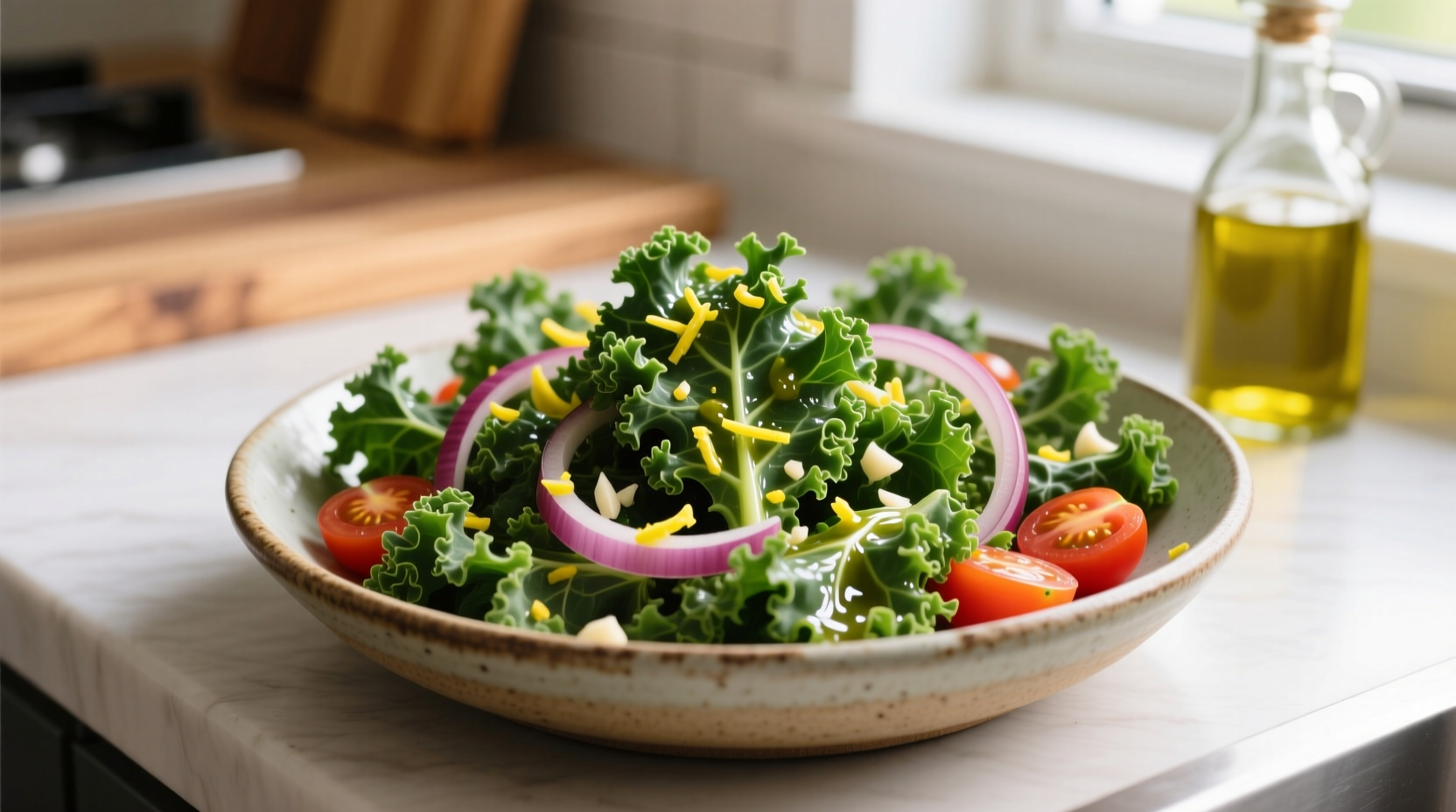
Kale, a member of the Brassica oleracea family, is a leafy green vegetable known for its robust structure and nutrient density. Unlike delicate lettuces such as butter or romaine, kale maintains integrity under dressings and holds up over time, making it ideal for composed salads. In this preparation, raw curly or Lacinato (Tuscan) kale serves as the foundation, elevated by a freshly made dressing of lemon juice, extra-virgin olive oil, minced garlic, Dijon mustard, salt, and pepper. Optional enhancements include shaved Parmesan, toasted nuts, dried fruit, or avocado for added richness.
The concept of a \"dressed\" kale salad originated in modern American health-conscious cuisine during the early 2010s, though its roots trace back to Mediterranean traditions where bitter greens are dressed simply with oil, acid, and aromatics. What sets this preparation apart from other green salads is the necessity of physical manipulation—specifically massaging—to break down cellulose fibers and soften the leaves. Without this step, kale can remain unpleasantly chewy and resistant to seasoning.
This salad exemplifies how minimalism in ingredients does not equate to simplicity in execution. Each component plays a functional role: lemon provides acidity to brighten and preserve; garlic adds pungency and depth; olive oil emulsifies and coats; mustard stabilizes the emulsion while contributing subtle heat and tang. Together, they form a dressing that clings to the kale rather than pooling at the bottom of the bowl.
Key Characteristics
| Attribute | Description |
|---|---|
| Flavor Profile | Bright, citrus-forward with garlicky sharpness, balanced by grassy olive oil and slight bitterness from kale. |
| Aroma | Fresh lemon zest, raw garlic, and herbal notes from extra-virgin olive oil. |
| Texture | Crisp-tender kale after massaging; creamy if avocado is added; crunchy with nuts or seeds. |
| Color | Vibrant deep green kale contrasted with golden dressing sheen. |
| Shelf Life | Up to 3 days refrigerated in an airtight container (kale improves in flavor over first 24 hours). |
| Culinary Function | Standalone salad, side dish, grain bowl base, or protein companion (chicken, salmon, tofu). |
Practical Usage: How to Make It Right
Creating a successful kale salad hinges on precision and timing. Follow these steps to ensure optimal texture and flavor integration:
- Wash and Dry Thoroughly: Rinse kale leaves under cold water to remove grit. Use a salad spinner or pat dry with clean towels. Excess moisture dilutes the dressing and inhibits adhesion.
- Remove the Stems: Hold each leaf at the base and strip the fibrous central rib with your hands. Discard stems or save for stocks. Chop leaves into bite-sized pieces.
- Massage with Oil and Salt: Place chopped kale in a large bowl. Drizzle with 1 tablespoon of olive oil and sprinkle with ¼ teaspoon fine sea salt. Using clean hands, knead the kale for 2–3 minutes until it darkens slightly, softens, and reduces in volume by about 30%. This process ruptures cell walls, releasing natural enzymes and improving tenderness.
- Prepare the Dressing: In a separate small bowl, whisk together the juice of one medium lemon (about 3 tablespoons), ½ teaspoon Dijon mustard, 1 small clove minced garlic, ⅓ cup extra-virgin olive oil, freshly ground black pepper, and optional honey (½ teaspoon) to balance acidity. Taste and adjust seasoning.
- Dress and Rest: Pour dressing over massaged kale. Toss well to coat every leaf. Let sit for 10–30 minutes before serving to allow full absorption. Longer resting times deepen flavor penetration.
- Add Final Touches: Just before serving, incorporate garnishes like shaved Parmigiano-Reggiano, toasted almonds or pine nuts, halved cherry tomatoes, sliced avocado, or dried cranberries.
Pro Tip: For restaurant-quality results, chill the serving plates and toss in garnishes last to maintain temperature contrast and textural integrity. If prepping ahead, store dressed kale separately from wet additions like tomatoes or avocado to prevent sogginess.
Variants & Types of Kale
Not all kale is created equal. Choosing the right variety affects both texture and taste:
- Curly Kale: Most common in supermarkets. Ruffled leaves have a peppery bite and require thorough massaging. Best for hearty salads and long marination.
- Lacinato (Tuscan/Dinosaur) Kale: Flat, dark blue-green leaves with a sweeter, more delicate profile. Less fibrous than curly kale; requires less massage. Ideal for elegant presentations.
- Red Russian Kale: Purple-tinged stems and flat leaves with a mild, slightly sweet flavor reminiscent of spinach. Tender enough to eat raw without extensive prep. Adds visual appeal.
- Young Baby Kale: Harvested early, sold in bags. Softer texture, milder taste. Suitable for quick salads but lacks structural resilience for extended storage.
Each type responds differently to dressing and time. Curly kale benefits most from prolonged marinating, while baby kale should be dressed shortly before serving to avoid wilting. Lacinato strikes the best balance between durability and refinement, making it a favorite among chefs.
Comparison with Similar Ingredients
Kale is often grouped with other leafy greens, but key distinctions affect substitution decisions:
| Green | Difference from Kale | Best Substitution? |
|---|---|---|
| Spinach | Much more delicate; wilts instantly when dressed; milder, almost sweet flavor. | No—unless using raw in small amounts for color/texture contrast. |
| Swiss Chard | Leaves softer; stems are edible and colorful. Bitter only when overcooked. | Yes, for sautéed versions; not ideal raw due to rapid breakdown. |
| Collard Greens | Even tougher than kale; typically cooked. Raw use requires very thin slicing and extended marination. | Possible with modification, but expect chewier texture. |
| Arugula | Peppery, but extremely fragile. Loses structure within minutes of dressing. | No—use as a garnish instead of base. |
| Green Cabbage | Crisp and crunchy, high water content. Milder, slightly sweet. Holds dressing well. | Yes—especially for slaw-style variations with lemon-garlic elements. |
“Kale isn’t meant to be eaten like iceberg lettuce. It’s a canvas. You build flavor into it through technique—not just topping it.” — Chef Naomi Lee, Root & Vine
Practical Tips & FAQs
Why do you massage kale?
Massaging breaks down lignin and cellulose in the leaf structure, reducing toughness and releasing trapped bitterness. The mechanical action also helps distribute oil and salt evenly, jumpstarting the curing process similar to how salt preserves vegetables.
Can I use bottled lemon juice?
Freshly squeezed lemon juice contains volatile oils in the zest and higher acidity levels crucial for flavor activation. Bottled juice often tastes flat and may contain preservatives. Always use fresh lemons for optimal brightness.
How do I keep the salad from getting soggy?
Dress only what you plan to consume within 24 hours. Store leftovers undressed or drain excess liquid if stored too long. Avoid adding watery vegetables (like cucumber) until service.
Is this salad suitable for meal prep?
Yes—this is one of the few raw salads that improves with time. Dressed kale develops deeper flavor over 12–24 hours as the leaves absorb the vinaigrette. Prepare through step 5, then refrigerate. Add final toppings just before eating.
What proteins pair well with this salad?
Grilled chicken, seared salmon, roasted chickpeas, hard-boiled eggs, or pan-seared tofu all complement the citrus-garlic profile. The acidity cuts through fat, enhancing satiety and digestion.
Can I substitute the garlic?
Raw garlic is potent but essential for authenticity. To mellow the bite, roast the clove first or use shallot as a partial substitute. Powdered garlic lacks freshness and can taste metallic in raw applications.
How much dressing should I use?
Start with ⅓ cup per 6 cups of chopped raw kale. Add more gradually after massaging if needed. Over-dressing leads to greasiness; under-dressing leaves kale dry. Adjust based on kale type—curly absorbs more than Lacinato.
Can I make it vegan or dairy-free?
Absolutely. Omit cheese or replace with nutritional yeast for umami. Ensure honey is excluded if strict vegan—use maple syrup or omit sweetener entirely.
Storage Guide: Store dressed kale in a sealed glass container for up to 3 days. Undressed kale keeps for 5–7 days in a crisper drawer lined with paper towels. Never freeze raw dressed kale—it will turn mushy upon thawing.
Expert Insight: Building Flavor Layers
Professional kitchens treat kale salad as a layered composition, not a mix-and-serve dish. Consider the sequence of addition:
- Base Layer: Massaged kale + dressing → allows deep infusion.
- Middle Layer: Nuts, seeds, legumes → add crunch and plant-based protein.
- Top Layer: Cheese, avocado, herbs → preserve freshness and visual appeal.
A two-stage dressing method enhances complexity: apply half the dressing initially, let rest, then finish with remaining dressing and garnishes. This ensures even coverage without overwhelming delicate components.
Summary & Key Takeaways
A truly refreshing kale salad transcends basic salad assembly through deliberate technique and ingredient synergy. The lemon and garlic dressing is not merely a coating but a transformative agent that elevates humble greens into a sophisticated, nutrient-rich dish. Success depends on understanding kale’s biology—its toughness demands intervention, and its bitterness responds to proper seasoning.
Core principles to remember:
- Always remove tough stems and massage the leaves to improve texture.
- Use fresh lemon juice and high-quality olive oil—the dressing makes or breaks the dish.
- Allow resting time after dressing; flavors intensify and integrate over hours.
- Choose the right kale variety: Lacinato for elegance, curly for heartiness.
- Treat the salad as a buildable platform—add proteins, fats, and textures strategically.
- Store smartly: dressed kale lasts longer than most believe, but wet additions don’t.
Try This Tonight: Make the base salad with massaged Lacinato kale, lemon-garlic vinaigrette, toasted slivered almonds, and shaved Parmesan. Serve alongside grilled lemon chicken for a complete, restaurant-worthy meal in under 30 minutes.




 浙公网安备
33010002000092号
浙公网安备
33010002000092号 浙B2-20120091-4
Comments
No comments yet. Why don't you start the discussion?