
In an era where sustainability and health consciousness go hand in hand, reusable water bottles have become a staple for millions. But as tap water quality varies across regions—and concerns about microplastics, chlorine, and heavy metals grow—many consumers are turning to filtered water bottles. These portable purifiers promise cleaner, better-tasting water wherever you go. But do they really deliver on both taste and safety? Or are they just another wellness trend wrapped in eco-friendly packaging?
The answer isn’t a simple yes or no. The effectiveness of a filtered reusable bottle depends on the type of filter, the contaminants present in your water source, and how consistently the device is maintained. To help you make an informed decision, we’ll explore the technology behind these filters, evaluate their real-world performance, and separate marketing claims from measurable results.
How Do Filtered Water Bottles Work?
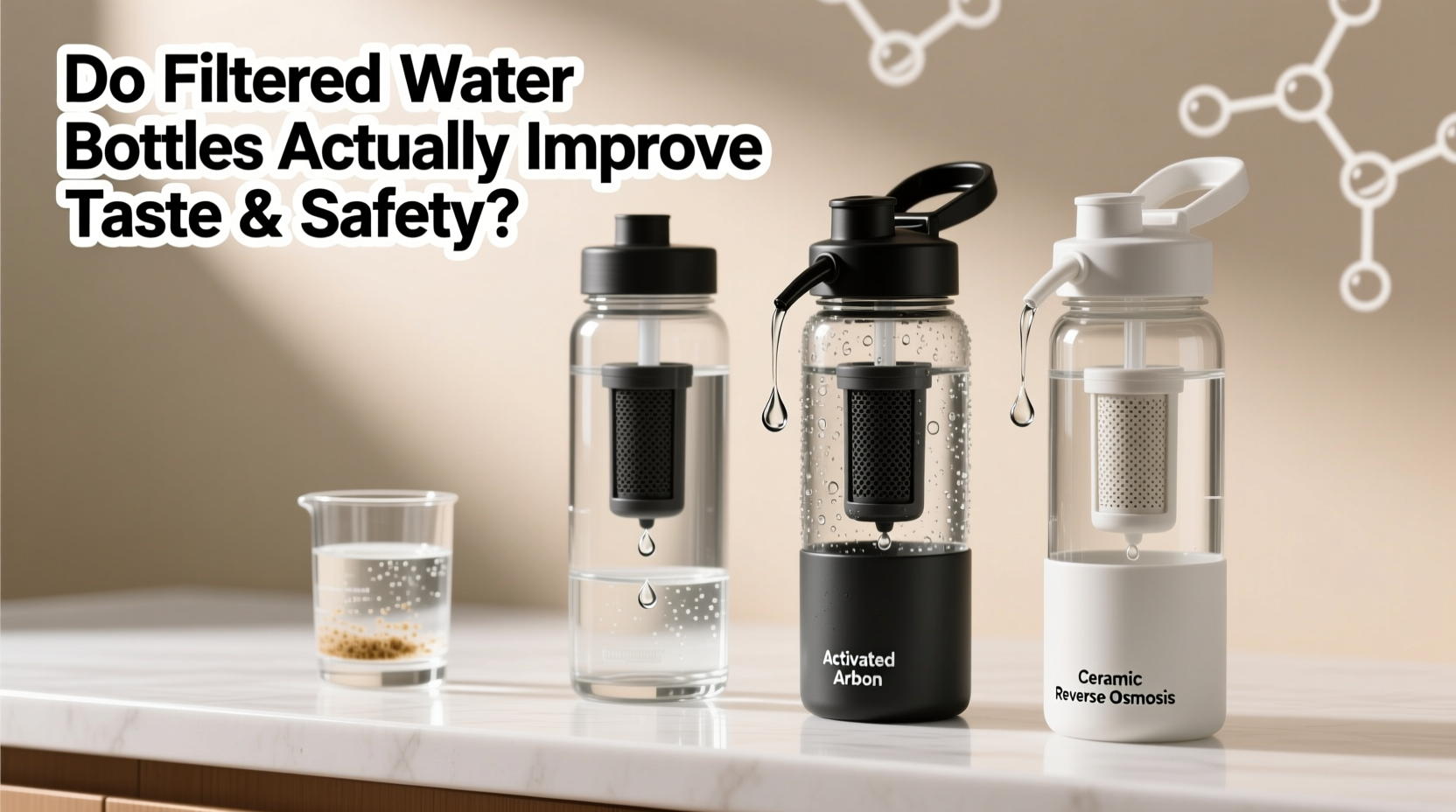
Filtered water bottles integrate a built-in purification system, typically located in the straw, lid, or base of the bottle. Most use one or more filtration technologies to remove impurities before you take a sip. The most common methods include:
- Activated Carbon Filters: These absorb chlorine, volatile organic compounds (VOCs), and some pesticides. They’re especially effective at improving taste and odor.
- Mechanical (Microfiber) Filters: These physically block particles, bacteria, and protozoa by using tiny pores—often rated at 0.1 or 0.2 microns. They don’t remove chemicals but are excellent for pathogens.
- Ion Exchange Resins: Used to reduce heavy metals like lead and mercury by swapping them with harmless ions.
- UV-C Light (in advanced models): Some high-end bottles use ultraviolet light to neutralize bacteria and viruses, though this requires batteries and doesn’t affect chemical contaminants.
Many top-tier bottles combine several of these methods. For example, the Grayl Geopress uses electroadsorption technology (similar to activated carbon but faster), while the LifeStraw Peak Series combines hollow fiber membranes with activated carbon.
Taste: Can a Filter Really Make Tap Water Taste Better?
One of the most immediate benefits users report is improved taste. Municipal tap water often contains chlorine or chloramine, added to kill bacteria but which impart a sharp, chemical aftertaste. Activated carbon filters excel at removing these compounds, resulting in water that tastes noticeably fresher and more neutral.
A 2022 blind taste test conducted by Consumer Reports found that 78% of participants preferred the taste of filtered water from a Lifestraw bottle over unfiltered tap water from a moderately chlorinated municipal supply. The difference was less pronounced in areas with naturally soft, low-chlorine water.
Beyond chlorine, carbon filters can also reduce sulfides (which cause a “rotten egg” smell), tannins (from decaying vegetation), and metallic notes caused by trace iron or copper leaching from old pipes. However, they won’t eliminate naturally occurring minerals like calcium or magnesium—many people actually prefer the taste of mineral-rich water.
“Taste improvement is one of the strongest motivators for using filtered bottles. Even small reductions in chlorine or sulfur compounds can dramatically change perception.” — Dr. Lena Patel, Environmental Health Scientist, Johns Hopkins University
That said, taste is subjective. Some users report no noticeable difference, especially if their local water is already clean and lightly treated. Others find the filtered water so superior that they stop buying bottled water altogether.
Safety: What Contaminants Do These Bottles Actually Remove?
This is where things get more technical. While taste improvements are immediate, safety claims require scrutiny. Not all filters are created equal, and many products make broad promises without third-party verification.
Here’s a breakdown of what different types of filters can realistically remove:
| Contaminant | Activated Carbon | Mechanical Filter | Ion Exchange | UV Light |
|---|---|---|---|---|
| Chlorine | ✔️ Yes | ❌ No | ❌ No | ❌ No |
| Lead | ⚠️ Partial (depends on resin blend) | ❌ No | ✔️ Yes | ❌ No |
| Bacteria (E. coli) | ❌ No | ✔️ Yes (if pore size ≤0.2 microns) | ❌ No | ✔️ Yes |
| Viruses | ❌ No | ❌ No (too small) | ❌ No | ✔️ Yes (with sufficient exposure) |
| Microplastics | ⚠️ Partial (larger particles only) | ✔️ Yes (if filter is sub-micron) | ❌ No | ❌ No |
| Pesticides | ✔️ Yes (some VOCs) | ❌ No | ❌ No | ❌ No |
For true safety in uncertain environments—such as hiking, international travel, or areas with compromised infrastructure—a combination filter is essential. The LifeStraw Mission, for instance, removes 99.9999% of bacteria and 99.9% of protozoa, making it suitable for untreated freshwater sources.
However, most standard filtered bottles sold for daily urban use aren’t designed for backcountry survival. If your goal is to reduce exposure to lead from aging plumbing or microplastics from bottled water, look for models tested under NSF Protocol P231 or NSF 53.
Real-World Example: Commuter in Flint, Michigan
Consider Maria, a teacher in Flint, who switched to a filtered bottle after her home tests revealed intermittent lead levels above EPA limits. Her city’s water has improved since the crisis, but old service lines still pose risks. She chose a Seychelle Tritan bottle with an ion exchange filter certified to reduce lead by 99.3%.
After three months, she had her tap water retested—this time pouring it through the bottle first. The lab results showed lead dropped from 12 ppb to 0.2 ppb, well below the actionable threshold. More importantly, she noticed the metallic taste disappeared. “It’s not just about safety,” she said. “I actually want to drink more water now because it tastes clean.”
Maria’s experience underscores a key point: filtered bottles can be both functional and motivational. When water tastes better and feels safer, hydration habits improve.
Choosing the Right Filtered Bottle: A Practical Checklist
Not every filtered bottle suits every need. Use this checklist to select one that matches your lifestyle and concerns:
- Identify your primary concern: Is it taste, safety, portability, or reducing plastic waste?
- Check certifications: Look for NSF/ANSI standards relevant to your needs (e.g., NSF 53 for lead, NSF 42 for chlorine).
- Review filter lifespan: Most last 40–150 liters. Replace on schedule—even if water still tastes fine.
- Consider flow rate: Some filters require strong suction or multiple pumps. Gravity-fed models (like Grayl) are easier but bulkier.
- Evaluate ease of cleaning: Narrow straws or complex internals can harbor mold if not cleaned regularly.
- Check material safety: Opt for BPA-free, food-grade plastics or stainless steel bodies.
- Assess real-world usability: Will you remember to refill and maintain it? Simpler designs often win in long-term use.
Limitations and Common Misconceptions
Despite their benefits, filtered bottles have clear limitations:
- They don’t remove all contaminants. Fluoride, nitrates, arsenic, and pharmaceuticals often pass through unless specifically targeted.
- Filters degrade over time. A clogged or expired filter may still let water through but offer little protection.
- No filter makes unsafe water completely safe. In severely contaminated environments, boiling or chemical treatment is still recommended.
- UV systems require power. Dead batteries render UV ineffective, and shadows within the chamber can leave pathogens unharmed.
Additionally, marketing language like “purifies any water source” can be misleading. While some bottles are designed for emergency use, others are best suited for mildly treated tap water. Always read the fine print.
Frequently Asked Questions
Can filtered water bottles remove microplastics?
Yes, but only if they use a mechanical filter with a pore size smaller than the microplastic particles (typically 1–5 microns). Hollow fiber membranes at 0.1–0.2 microns, such as those in LifeStraw or Puritii bottles, effectively capture most microplastics. Activated carbon alone does not.
How often should I replace the filter?
Most manufacturers recommend replacing filters every 40 to 150 liters, depending on usage and model. This usually translates to 1–3 months of daily use. Some bottles have built-in indicators; otherwise, track your intake or set calendar reminders.
Are filtered bottles worth it compared to home filtration systems?
They serve different purposes. Home systems (like under-sink or pitcher filters) treat larger volumes and often remove more contaminants. Filtered bottles are ideal for on-the-go use, travel, or supplementing home systems when you're away. They’re not a full replacement but a valuable extension of your water safety strategy.
Step-by-Step Guide to Maximizing Your Filtered Bottle’s Performance
To get the most out of your investment, follow this routine:
- Before First Use: Soak or rinse the filter as instructed (often 15–30 seconds under running water).
- Daily Use: Fill with cold or room-temperature water. Avoid hot liquids, which can damage filters and promote bacterial growth.
- After Each Use: Empty remaining water, disassemble the cap or straw, and rinse thoroughly.
- Weekly Cleaning: Wash all parts with mild soap and a bottle brush. Let air dry completely to prevent mold.
- Monitor Flow Rate: If suction becomes harder or water flows slower, the filter may be clogged—replace it.
- Replace on Schedule: Don’t wait for bad taste. Set a reminder based on manufacturer guidelines.
- Store Properly: Keep in a cool, dry place. Never leave water sitting in the bottle for days.
“The biggest mistake people make is assuming the filter works forever. Like any technology, it has a shelf life—both in time and volume.” — James Wu, Water Quality Engineer, NSF International
Conclusion: Are Filtered Reusable Bottles Worth It?
The evidence is clear: high-quality filtered reusable bottles can significantly improve both the taste and safety of drinking water, especially in areas with chlorinated tap water, aging infrastructure, or limited access to clean sources. They’re not miracle devices, but they are practical tools in a proactive health and sustainability toolkit.
If your tap water tastes metallic, smells like chlorine, or comes from a region with known contamination issues, a filtered bottle offers immediate benefits. For hikers, travelers, or parents concerned about school plumbing, they provide peace of mind. And for anyone trying to ditch single-use plastic, they add value by making tap water more appealing.
But success depends on choosing the right model and maintaining it diligently. Read labels, verify certifications, and treat the filter as a consumable—not a permanent fix. When used correctly, these bottles do more than just clean water—they encourage healthier habits, reduce environmental impact, and put control back in your hands.




 浙公网安备
33010002000092号
浙公网安备
33010002000092号 浙B2-20120091-4
Comments
No comments yet. Why don't you start the discussion?