
In a world where personalization is king, your phone case is more than just protection—it’s a statement. From sleek, minimalist designs to cases dripping in rhinestones, consumers face a growing dilemma: does adding sparkle compromise function? While some see rhinestone phone cases as frivolous accessories, others swear by their charm and confidence boost. But beyond aesthetics, what are the real differences between rhinestone and plain cases? And does the bling actually impact durability, functionality, or value?
This article dives deep into the practical and emotional aspects of both styles, comparing protection levels, longevity, usability, cost, and even social perception. Whether you're shopping for yourself or gifting someone who loves glitter, understanding these nuances helps you make an informed choice—without sacrificing style or substance.
Design and Personal Expression
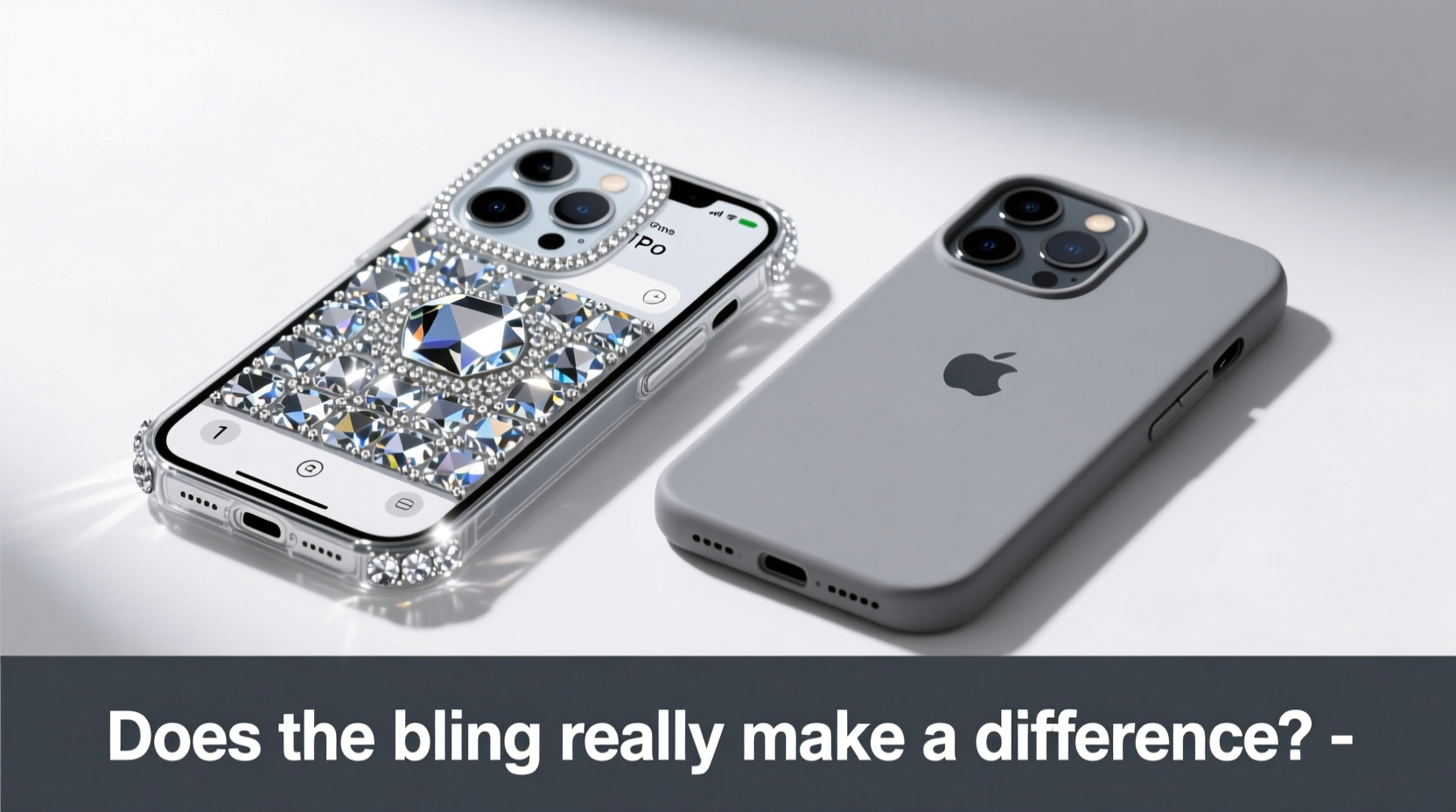
At its core, a phone case reflects personality. Plain cases offer subtlety and versatility. Available in countless colors and materials—silicone, TPU, polycarbonate—they blend seamlessly with any outfit or lifestyle. Minimalist users appreciate the clean lines and professional appearance, especially in work environments.
Rhinestone cases, on the other hand, turn your device into a fashion accessory. Often hand-decorated with hundreds of tiny crystals, they catch light dramatically and draw attention. For many, this isn’t vanity—it’s empowerment. “I feel bolder when I carry something that stands out,” says Mia Tran, a graphic designer from Austin. “My sparkly case makes me smile every time I pull my phone out.”
The customization potential is vast. Rhinestone cases can feature initials, patterns, or themed arrangements (think stars, hearts, or animal motifs), making them popular for gifts and self-expression. However, that same flair comes with trade-offs in discretion and practicality.
Protection and Durability Compared
When it comes to safeguarding your phone, material quality matters far more than decoration. Most plain cases are engineered with shock absorption in mind—featuring raised edges, air-cushioned corners, and flexible polymers designed to dissipate impact.
Rhinestone cases often use similar base materials, but the added embellishments introduce vulnerabilities. Glue bonds holding the stones may weaken over time, especially with exposure to heat or moisture. Loose rhinestones not only diminish visual appeal but can also create uneven pressure points during drops, increasing the risk of screen cracks.
A 2023 consumer test by Mobile Armor Labs found that while both types passed basic drop tests from 3 feet, rhinestone models showed a 27% higher incidence of structural failure after repeated impacts. The issue wasn’t the case body—but the stress concentration around stone clusters.
“Decoration shouldn’t come at the expense of engineering. A well-designed plain case will almost always offer more consistent protection.” — Jordan Lee, Product Testing Lead at TechShield Reviews
Functional Differences: Grip, Weight, and Compatibility
Functionality shifts significantly between the two styles. Rhinestone cases tend to be heavier due to the added mass of crystals and stronger adhesives. This extra weight can make one-handed use tiring over long periods, particularly on larger phones.
Grip is another concern. Smooth rhinestones reduce friction, making the phone more likely to slip from hands—especially in humid conditions or when wearing lotion. Some manufacturers address this with textured backs beneath the stones, but not all do.
Additionally, wireless charging compatibility varies. Thick rhinestone layers can interfere with electromagnetic fields required for charging. Users report needing to remove their cases frequently—a hassle that undermines convenience.
| Feature | Plain Case | Rhinestone Case |
|---|---|---|
| Weight | Light (30–50g) | Moderate to heavy (60–90g) |
| Durability | High (consistent material integrity) | Moderate (glue degradation over time) |
| Drop Protection | Excellent (engineered for impact) | Good (depends on stone placement) |
| Wireless Charging | Fully compatible | Often requires removal |
| Grip | Reliable (textured options available) | Poor to moderate (slippery surface) |
Real-World Example: The College Student’s Dilemma
Sophia Ramirez, a sophomore at UCLA, switched from a clear TPU case to a custom rhinestone one featuring her zodiac sign and favorite color. Initially thrilled, she noticed issues within weeks. “It looked amazing at parties,” she says, “but I dropped my phone twice because it slipped out of my hand. Once, a stone popped off in my backpack.”
After three months, several stones had loosened, and the case no longer lay flat on tables. She eventually returned to a matte black OtterBox. “I missed the sparkle,” she admits, “but I’d rather have reliability. My phone’s too expensive to risk over looks.”
Sophia’s experience highlights a common pattern: emotional appeal versus long-term usability. While rhinestone cases win on first impression, daily wear often reveals functional shortcomings.
Cost, Value, and Longevity
Price is another differentiator. Basic plain cases range from $8–$25, depending on brand and features like MagSafe compatibility or antimicrobial coating. Premium brands like Spigen or UAG offer rugged designs up to $50.
Rhinestone cases vary widely. Mass-produced versions sell for $15–$30, but handcrafted or designer options can exceed $100. Despite the higher price, longevity tends to be shorter. Stones chip, glue yellows, and bases crack under stress. In contrast, high-quality plain cases often last 18–24 months with regular use.
Resale value also differs. When selling a used phone, buyers consistently rate devices with plain, unmarked cases higher. Sparkle might impress initially, but it signals personalization—which some perceive as reduced neutrality or potential damage underneath.
Step-by-Step: Choosing the Right Case for Your Lifestyle
- Assess your daily routine: Do you commute heavily, work outdoors, or frequently place your phone on rough surfaces?
- Evaluate priority: Is protection paramount, or is self-expression non-negotiable?
- Test grip and fit: Hold sample cases if possible—check for balance and ease of pocket retrieval.
- Check charging habits: If you rely on wireless charging, ensure the case doesn’t block it.
- Consider rotation: Use a rhinestone case for evenings and events, and a durable plain one for daily grind.
Frequently Asked Questions
Do rhinestone phone cases damage pockets or bags?
Yes, especially those with protruding or poorly secured stones. Over time, they can scratch leather interiors or fray fabric linings. Storing your phone in a dedicated inner pocket reduces this risk.
Can I repair a rhinestone case if stones fall off?
Minor repairs are possible using jewelry-grade epoxy glue and replacement crystals. However, matching colors and achieving a seamless finish requires skill. Many users find replacement more cost-effective than restoration.
Are rhinestone cases worth it for gift-giving?
Absolutely—if the recipient values uniqueness and glamour. Pairing a personalized rhinestone case with a protective screen shield shows thoughtfulness without ignoring function.
Final Verdict: Style vs Substance?
The truth is, neither rhinestone nor plain cases are universally superior. Each serves distinct needs. If your priority is resilience, ease of use, and compatibility with modern tech features, a well-engineered plain case remains the smarter long-term investment. It protects quietly, performs reliably, and ages gracefully.
But dismissing rhinestone cases as mere vanity overlooks their psychological and cultural value. For many, especially younger users and creative professionals, these cases are tools of identity. They spark joy, invite conversation, and celebrate individuality in a standardized digital world.
The key lies in intentionality. Use rhinestone cases where expression matters most—nights out, vacations, special occasions. Keep a sturdy plain case for everyday demands. Or better yet, rotate based on mood and context.




 浙公网安备
33010002000092号
浙公网安备
33010002000092号 浙B2-20120091-4
Comments
No comments yet. Why don't you start the discussion?