
In recent years, robot vacuums have become a staple in many households—quietly gliding across floors while homeowners focus on more important tasks. But as technology evolves, manufacturers are packing more features into these compact machines. One of the most prominent additions? Built-in mopping systems. The promise is simple: one device that vacuums and mops, handling both dry debris and light spills. But does this combo functionality deliver real value, or is it merely a marketing ploy designed to justify a higher price tag?
To answer this question, we need to look beyond the glossy product descriptions and examine actual performance, maintenance requirements, floor compatibility, and long-term usability. For some users, a dual-function robot may be a game-changer. For others, investing in two dedicated units—one for vacuuming, another for mopping—could yield better results and greater flexibility.
The Rise of the All-in-One Robot Cleaner
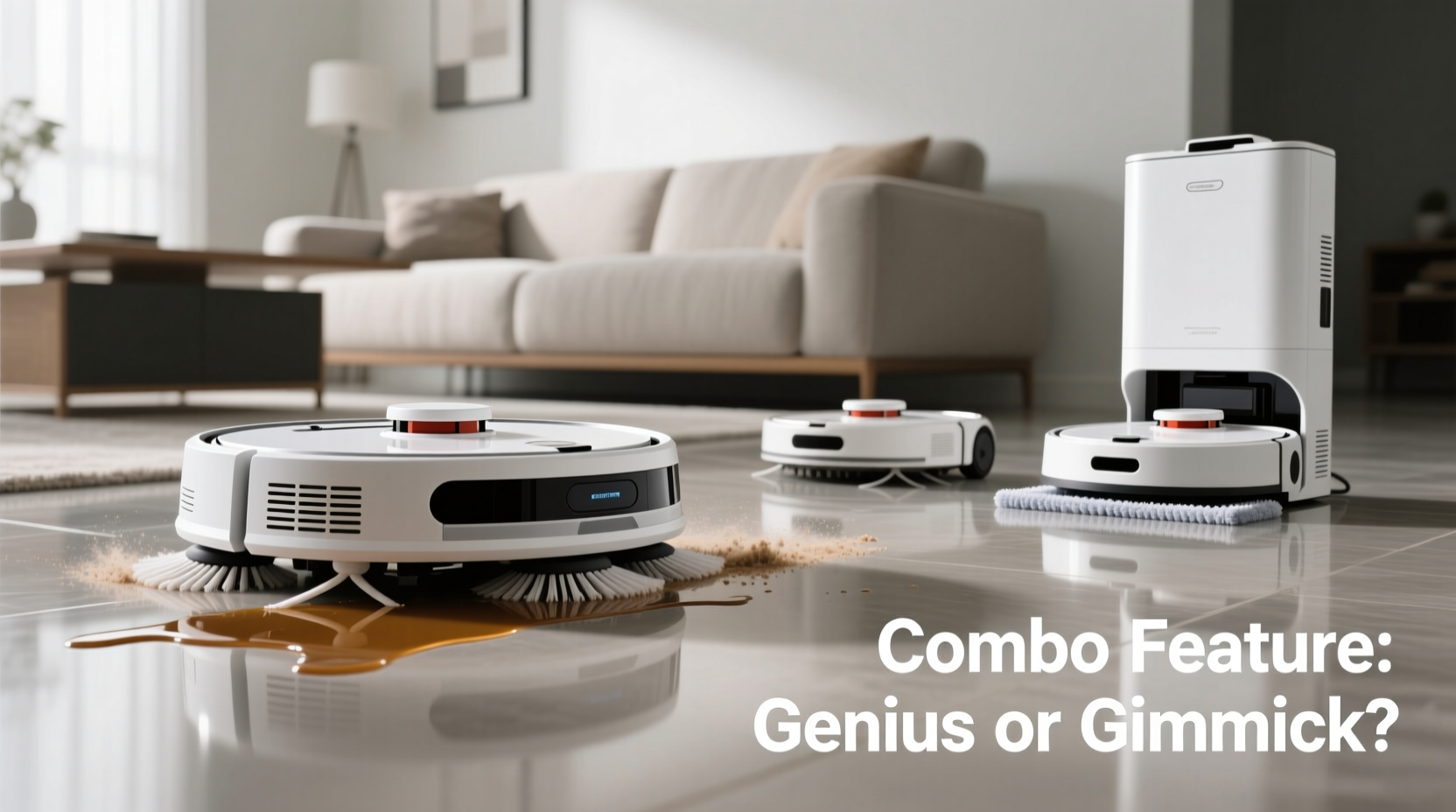
The appeal of an all-in-one cleaning robot is undeniable. With a single device, you can schedule daily vacuuming and periodic mopping without switching tools or managing multiple charging docks. Brands like Roborock, iRobot, Ecovacs, and Shark have heavily promoted their hybrid models, touting smart navigation, self-cleaning bases, and advanced water flow control.
These robots typically come equipped with a removable dustbin and a water tank that attaches to the bottom. After vacuuming, the same unit deploys a microfiber pad to damp-mop hard floors. Some high-end models even offer automatic dirt disposal and self-washing mop pads, reducing user intervention to near zero.
But convenience doesn’t always equate to effectiveness. While these devices perform admirably on light dust and footprints, they often fall short when confronted with sticky spills, dried-on grime, or deep stains. Their mopping action tends to be passive—dragging a damp cloth rather than scrubbing—which raises questions about whether they truly replace traditional mopping.
Performance Comparison: Vacuum-Mop Combos vs Separate Units
Let’s break down how combo robots stack up against standalone vacuum and mop robots—or even human-led cleaning—in key performance areas.
| Feature | Combo Robot (Vacuum + Mop) | Separate Vacuum & Mop Robots | Manual Cleaning |
|---|---|---|---|
| Cleaning Coverage | Good for small to medium homes; limited by shared battery and bin capacity | Superior; each robot optimized for its task | Most thorough, but time-consuming |
| Dust Pickup | Effective on hard floors; weaker on carpets due to added weight from water tank | Stronger suction; vacuum can focus on debris without compromise | Best for embedded dirt and allergens |
| Mopping Performance | Light wiping only; struggles with dried spills | Dedicated mop bots offer scrubbing, multi-pass cleaning, and drying modes | Deep scrubbing with adjustable pressure and cleaner types |
| Maintenance | Higher; requires emptying bin, refilling water, cleaning pads, avoiding carpet damage | Modular; maintain only the device in use | Immediate cleanup, but labor-intensive |
| Cost Efficiency | One-time purchase, but potential for premature wear | Higher upfront cost, longer lifespan per device | No equipment cost, but high time cost |
The data suggests a trade-off: combo units offer integration at the expense of specialization. When both functions are needed, the robot must compromise—either by reducing suction power to accommodate the water tank or by skipping carpets during mopping mode to avoid soaking them.
“Hybrid robots are excellent for maintenance cleaning in homes with mostly hard flooring. But they’re not substitutes for deep cleaning.” — David Lin, Home Automation Engineer at CleanTech Labs
When the Combo Makes Sense (And When It Doesn’t)
Not every home is the same, and the decision between a combo robot and separate units should reflect your lifestyle, floor type, and expectations.
Choose a combo robot if:
- You live in a small apartment or open-concept space with minimal carpeting.
- Your floors accumulate light dust, pet hair, and occasional spills.
- You prioritize convenience over deep cleaning.
- You’re willing to manually intervene—e.g., lifting the robot off rugs or replacing pads frequently.
Opt for separate units if:
- You have mixed flooring (carpet, tile, hardwood) and want optimal performance on each.
- You desire stronger suction or advanced mopping features like scrubbing or drying.
- You want to run vacuuming and mopping simultaneously or on different schedules.
- You’re concerned about water damage or mold from improperly dried mop pads.
Real Example: The Martinez Family’s Experience
The Martinez family lives in a 1,400-square-foot townhouse with two dogs, a toddler, and a mix of hardwood and area rugs. They purchased a top-tier combo robot hoping to reduce daily cleaning time. Initially, they were impressed: the robot handled breakfast crumbs and tracked paw prints well.
Within three months, however, issues emerged. The robot occasionally rolled over a rug while mopping, leaving behind damp patches. The mop pad began emitting a musty smell despite weekly washes. More critically, they noticed that sticky juice spills weren’t fully removed—the robot would smear them slightly but not lift the residue.
Frustrated, they bought a standalone robot mop with vibrating scrubbing pads. Now, they run the vacuum robot daily and the mop robot twice a week. “It costs more,” says Maria Martinez, “but our floors actually feel clean now. The combo was convenient, but it wasn’t doing the job.”
Step-by-Step: How to Decide Which System Fits Your Home
Choosing between a combo robot and separate units doesn’t have to be overwhelming. Follow this practical decision-making process:
- Assess your floor types. Measure the percentage of hard flooring vs. carpet. If more than 30% is carpet, a combo robot may struggle during mopping cycles.
- Evaluate your mess level. Do you deal with pet accidents, spilled drinks, or cooking splatters? High-traffic homes benefit more from dedicated mopping.
- Check your tech setup. Do you have smart home integration? Separate robots can be scheduled via apps or voice assistants just like a single unit.
- Review your budget. A high-end combo robot can cost $700+. Two mid-range dedicated robots might total $800–$900 but offer better longevity and modularity.
- Consider maintenance tolerance. Combo units require more frequent attention—emptying bins, drying pads, checking wheels. If you prefer set-it-and-forget-it, separate automated models with self-emptying or self-washing features may be worth the investment.
- Test real-world reviews. Look for long-term user feedback on durability, noise, and cleaning consistency—not just initial unboxing impressions.
Are Combo Features Just Gimmicks?
The term “gimmick” implies a flashy feature with little practical value. By that standard, not all combo robots qualify—but many do edge toward gimmickry when marketed as complete replacements for manual cleaning.
True innovation lies in integration: automatic docking stations that empty dustbins and wash mop cloths (like the Roborock S8 Max Ultra), intelligent sensors that detect floor type and adjust water flow, and app-based zoning that lets you specify where mopping occurs. These features add meaningful value.
However, many mid-range combo models offer basic mopping with fixed water output and no scrubbing action. In these cases, the mopping function feels tacked on—an afterthought to justify a premium price. You’re paying for something you might rarely use effectively.
As one Reddit user put it: “I bought a combo robot because I thought it would save me time. Instead, I spend more time washing the mop pad and moving it off rugs than I would just using a spray mop once a week.”
Checklist: Is a Combo Robot Right for You?
- ☐ My home is primarily hard flooring (tile, vinyl, hardwood)
- ☐ I don’t mind manually removing the water tank on carpeted days
- ☐ I’m okay with light mopping—no deep scrubbing required
- ☐ I want to minimize the number of devices in my home
- ☐ I’m not dealing with heavy spills or sticky messes daily
- ☐ I’ve researched models with smart water control and anti-carpet detection
If you checked most of these boxes, a combo robot could serve you well. If not, separating the functions may yield better outcomes.
FAQ: Common Questions About Combo Robots
Can robot vacuums with mops clean grout or textured tiles?
Generally, no. Most combo robots lack the scrubbing pressure needed to clean grout lines. They can wipe the surface, but dirt embedded in grooves will remain. For textured or uneven tiles, manual scrubbing or a dedicated scrubbing mop bot is recommended.
Do combo robots damage hardwood floors?
Potentially, yes—if used incorrectly. Excessive water output or failure to dry the mop pad afterward can warp wood or dull finishes. Always use low moisture settings on hardwood and ensure the pad is only slightly damp.
How often should I replace the mop pad on a combo robot?
Every 3–6 months, depending on usage. Wash reusable pads after every use to prevent bacterial growth and odor. Cheap pads degrade quickly and lose absorbency, reducing cleaning efficiency.
Final Verdict: Convenience vs. Capability
The robot vacuum with mop combo is not inherently a gimmick—but it’s often oversold. For light-duty cleaning in modern, hard-floored homes, it offers genuine convenience. It keeps floors presentable between deeper cleanings and reduces the frequency of manual chores.
Yet, it’s crucial to recognize its limitations. It won’t replace a proper mop, especially in homes with kids, pets, or frequent cooking. The mopping function is supplemental, not comprehensive. And the compromises—reduced suction, risk of wet carpets, extra maintenance—can outweigh the benefits for some users.
Separate units, while requiring more initial investment and coordination, allow each robot to excel at its designated task. You gain scheduling flexibility, better performance, and often longer device lifespans. For serious cleaning, this modular approach is superior.
“The future of home robotics isn’t one-size-fits-all machines. It’s interoperable systems that work together intelligently.” — Dr. Lena Park, Robotics Researcher at MIT Media Lab
Conclusion: Make the Choice That Works for Your Floors, Not the Hype
Don’t let sleek ads or inflated claims dictate your purchase. Whether a robot vacuum with mop is a gimmick depends entirely on how you use it—and what you expect from it. If your goal is daily upkeep with minimal effort, a well-reviewed combo model could be a smart addition. But if you demand truly clean floors, investing in separate, specialized robots may be the wiser long-term move.
Before buying, ask yourself: Am I looking for convenience, or am I looking for cleanliness? The answer will guide you to the right solution.




 浙公网安备
33010002000092号
浙公网安备
33010002000092号 浙B2-20120091-4
Comments
No comments yet. Why don't you start the discussion?