
In urban apartments, shared homes, or small living spaces, finding room for a dedicated workspace can feel impossible. Yet the demand for quiet, focused work environments has never been higher. One of the most innovative and space-efficient solutions? Converting a closet into a fully functional home office. What was once a storage nook for coats and shoes can become a private, distraction-free zone tailored to your professional needs. This transformation isn’t just about saving square footage—it’s about reclaiming focus, improving workflow, and designing a workspace that fits your life.
The idea may sound extreme at first, but micro-offices are gaining popularity among remote workers, freelancers, and entrepreneurs who prioritize efficiency over excess. With thoughtful planning, proper lighting, ergonomic furniture, and smart storage, a closet office can rival traditional setups in both function and comfort. Whether you’re working from a studio apartment or simply need a quiet corner to concentrate, this guide walks you through every phase of turning an unused closet into a productive, personalized workspace.
Assess Your Closet’s Suitability
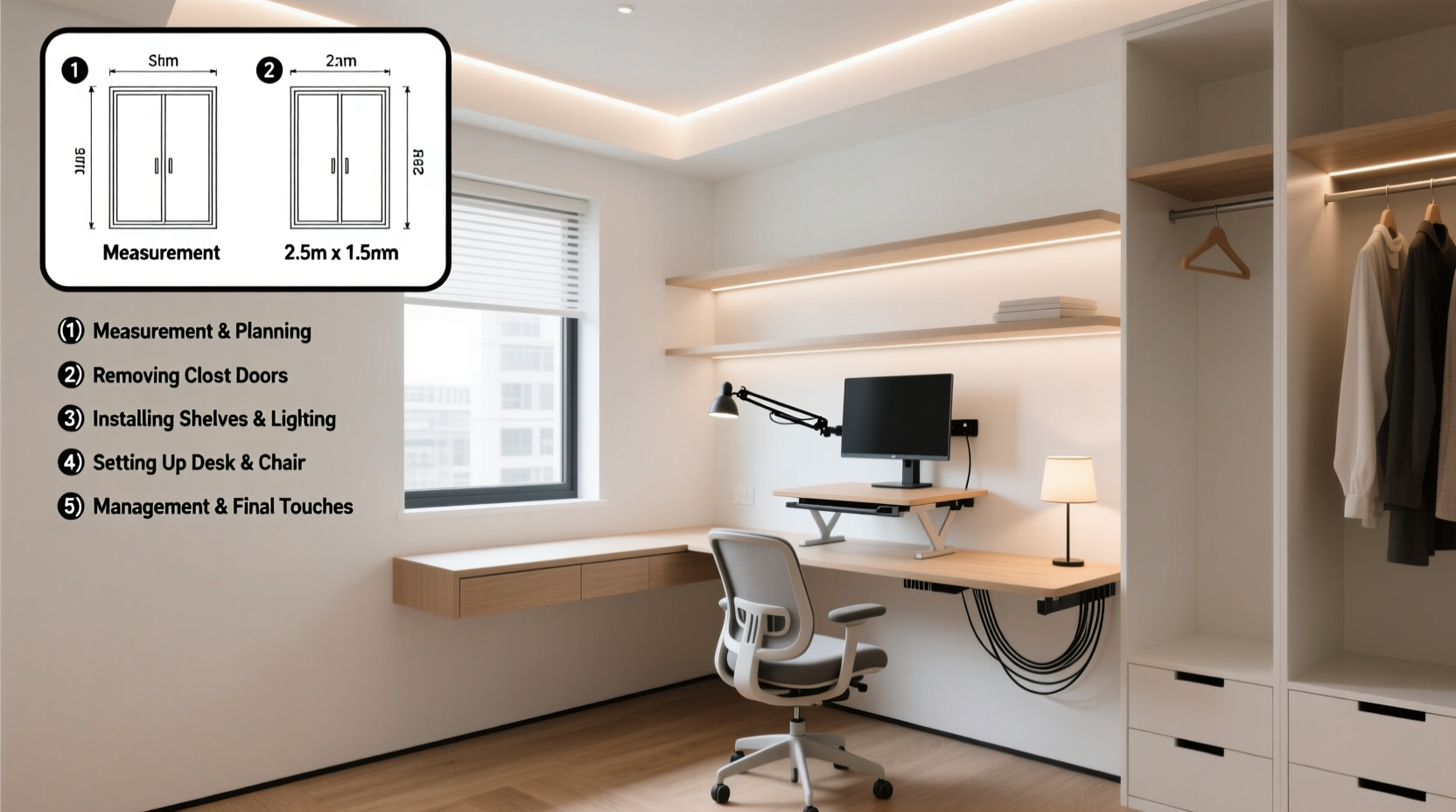
Not every closet is ideal for conversion, but many standard reach-in or walk-in closets meet the basic requirements. Start by evaluating dimensions, structural features, and environmental conditions. A minimum depth of 4 feet and width of 3 feet is recommended to accommodate a chair and small desk. Ceiling height should allow for comfortable seating without feeling cramped.
Check for existing electrical outlets. Running power to a new location can be costly and complex, so a closet with an outlet—or one near a wall socket—is a major advantage. If no outlet exists, consider using a cord from a nearby room (safely routed) or installing a surface-mounted conduit system. Avoid closets with poor ventilation, high humidity (like those near bathrooms), or irregular shapes that limit usable space.
Design a Smart Layout
Efficient use of space is critical in a closet-sized office. The layout must balance ergonomics, accessibility, and visual comfort. Begin by selecting a compact desk—wall-mounted fold-down models save floor space and can be tucked away when not in use. Alternatively, a narrow console table or shallow shelving unit can double as a work surface.
Position the desk to maximize natural light if the closet door will remain open during work hours. If privacy is needed, install a barn door, accordion door, or heavy curtain to enclose the space while allowing flexibility. Chair selection is equally important; opt for a slim-profile ergonomic chair with adjustable height and lumbar support. Test different configurations on paper or with a room planner app to visualize traffic flow and equipment placement.
“Small spaces force better design decisions. Every inch must serve a purpose.” — Lena Park, Interior Designer & Small Space Specialist
Essential Equipment and Ergonomics
A functional workspace depends on more than just furniture. Invest in tools that support productivity and physical well-being. A monitor arm frees up desk space and allows for optimal screen height, reducing neck strain. Use a laptop riser with an external keyboard and mouse to maintain proper wrist alignment. Noise-canceling headphones help block ambient sound, especially in shared homes.
Lighting is non-negotiable. Overhead lighting alone creates glare and shadows. Combine ambient light (such as a ceiling-mounted LED) with task lighting—a slim under-shelf LED strip or adjustable desk lamp—to reduce eye fatigue. Position lights to avoid reflections on screens.
Temperature control matters too. Closets can trap heat from electronics and lack airflow. Ensure there’s some ventilation—leave a gap under the door, install a small USB-powered fan, or keep the door partially open during long sessions.
Ergonomic Setup Checklist
- Top of monitor at or slightly below eye level
- Keyboard positioned so elbows form a 90-degree angle
- Feet flat on floor or footrest
- Chair supports lower back curvature
- Ambient and task lighting both present
- Cables managed and out of the way
Maximize Storage and Organization
With limited surface area, smart storage is essential. Utilize vertical space aggressively. Install floating shelves above the desk for books, supplies, or decorative items. Pegboards or grid panels on the side walls hold pens, headphones, notes, and small tools magnetically or with hooks.
Use drawer organizers, stackable bins, and slim file holders to categorize materials. Label everything to save time searching. For digital clutter, adopt cloud storage and document scanning to minimize physical paperwork. A small lockable cabinet or basket keeps sensitive documents or personal items secure when the closet is in a shared area.
| Storage Solution | Best For | Space-Saving Benefit |
|---|---|---|
| Floating Shelves | Books, decor, frequently used supplies | Uses wall space, leaves floor clear |
| Pegboard/Grid Wall | Tools, cords, headphones, notes | Customizable, highly visible organization |
| Under-Desk Drawer | Pens, sticky notes, small electronics | Utilizes dead space beneath desk |
| Magnetic Cable Clips | Chargers, headset cords | Prevents tangles, keeps wires off desk |
Step-by-Step Conversion Timeline
Transforming a closet into a home office doesn’t require weeks of renovation. With preparation, it can be completed over a weekend. Follow this realistic timeline:
- Day 1 Morning – Clear & Clean: Remove all contents from the closet. Clean walls, floor, and shelf surfaces. Patch holes or repaint if desired.
- Day 1 Afternoon – Electrical Check: Test existing outlets. Plan cord routing if extending power. Consult an electrician if adding a new outlet.
- Day 2 Morning – Install Fixtures: Mount desk (fold-down or fixed), shelves, pegboard, and lighting. Secure cables with clips or raceways.
- Day 2 Afternoon – Furnish & Organize: Bring in chair, set up computer, arrange supplies. Test monitor height, lighting, and comfort.
- Ongoing – Optimize: Adjust setup based on daily use. Add noise insulation, plants, or mood lighting to enhance atmosphere.
Real-World Example: From Linen Closet to Legal Office
Sarah Kim, a contract attorney living in a San Francisco studio, converted a 3.5-foot-deep linen closet into her full-time remote office. With no spare room, she needed a space that could disappear after work hours. She installed a wall-mounted pull-down desk with a built-in power strip, added LED strips under the lip for lighting, and mounted a slim rolling chair on a wall hanger when not in use.
She painted the interior with a deep blue matte finish to reduce glare and boost focus. A fabric curtain replaced the original bi-fold door for soft closure and sound dampening. Using labeled bins on retractable shelves, she stores legal pads, files, and tech accessories vertically. Her laptop docks into a riser station with a Bluetooth keyboard and mouse.
“I get more done in two hours here than I did in four at the kitchen table,” Sarah says. “Closing the curtain signals to my roommate—and my brain—that it’s work time.”
Common Pitfalls to Avoid
Even well-intentioned conversions can fall short without attention to detail. Avoid these common mistakes:
- Ignoring ventilation: Electronics generate heat; poor airflow leads to discomfort and equipment stress.
- Overcrowding the space: Resist the urge to fill every inch. Clutter increases cognitive load and reduces efficiency.
- Poor cable management: Exposed cords create hazards and visual chaos. Use adhesive clips, sleeves, or in-wall conduits.
- Neglecting acoustics: Thin closet doors transmit sound. Add weather stripping or acoustic panels to reduce noise leakage.
- Skipping ergonomics: A tiny space shouldn’t mean compromised posture. Prioritize chair quality and screen positioning.
Frequently Asked Questions
Can I legally run a business from a closet office?
Yes, provided your local zoning laws and lease agreement permit home-based businesses. Most freelance, consulting, or remote roles don’t require special permits. However, avoid high-traffic operations or inventory storage if restricted by your housing rules.
How do I prevent the space from feeling claustrophobic?
Use light colors, reflective surfaces (like a small mirror), and layered lighting to create openness. Keep the door open when possible, or install a glass-pane insert. Adding a single plant or artwork provides psychological relief from confinement.
Is a closet office suitable for long workdays?
It can be, with proper ergonomics and breaks. Limit continuous sitting to 50-minute intervals, stand periodically, and step outside the space during breaks. Pair your closet office with a secondary lounge workstation for variety.
Final Thoughts and Next Steps
A closet office proves that great work doesn’t require grand spaces. It demands intention, creativity, and a commitment to minimizing distractions. By repurposing overlooked areas, you gain more than square footage—you gain control over your environment. This kind of adaptive thinking reflects a modern approach to living and working: efficient, flexible, and deeply personal.
The transformation begins with a single decision: to stop waiting for the perfect room and start building the right one, no matter the size. Gather your measurements, sketch a layout, and source your first piece—whether it’s a fold-down desk or a quiet lamp. In less than a week, you could have a dedicated space that sharpens your focus and elevates your output.




 浙公网安备
33010002000092号
浙公网安备
33010002000092号 浙B2-20120091-4
Comments
No comments yet. Why don't you start the discussion?