
For long-time Samsung users still clinging to the Galaxy Note 8, the question isn’t whether their phone still works—it’s whether it still makes sense to use one in 2024. Released in 2017, the Note 8 was a flagship powerhouse in its day: large AMOLED screen, dual rear cameras, and of course, the beloved S Pen. But nearly seven years later, technology has moved fast. Enter the Galaxy S20 FE (Fan Edition), released in late 2020 as a high-value alternative to the premium S20 series. The real question now is: Is upgrading from the Note 8 to the S20 FE actually worth it today?
The answer depends on your needs, expectations, and how much longer you’re willing to stretch an aging device. Let’s break down the key differences and see if the jump justifies the investment—even years after the S20 FE’s launch.
Performance: A Generational Leap
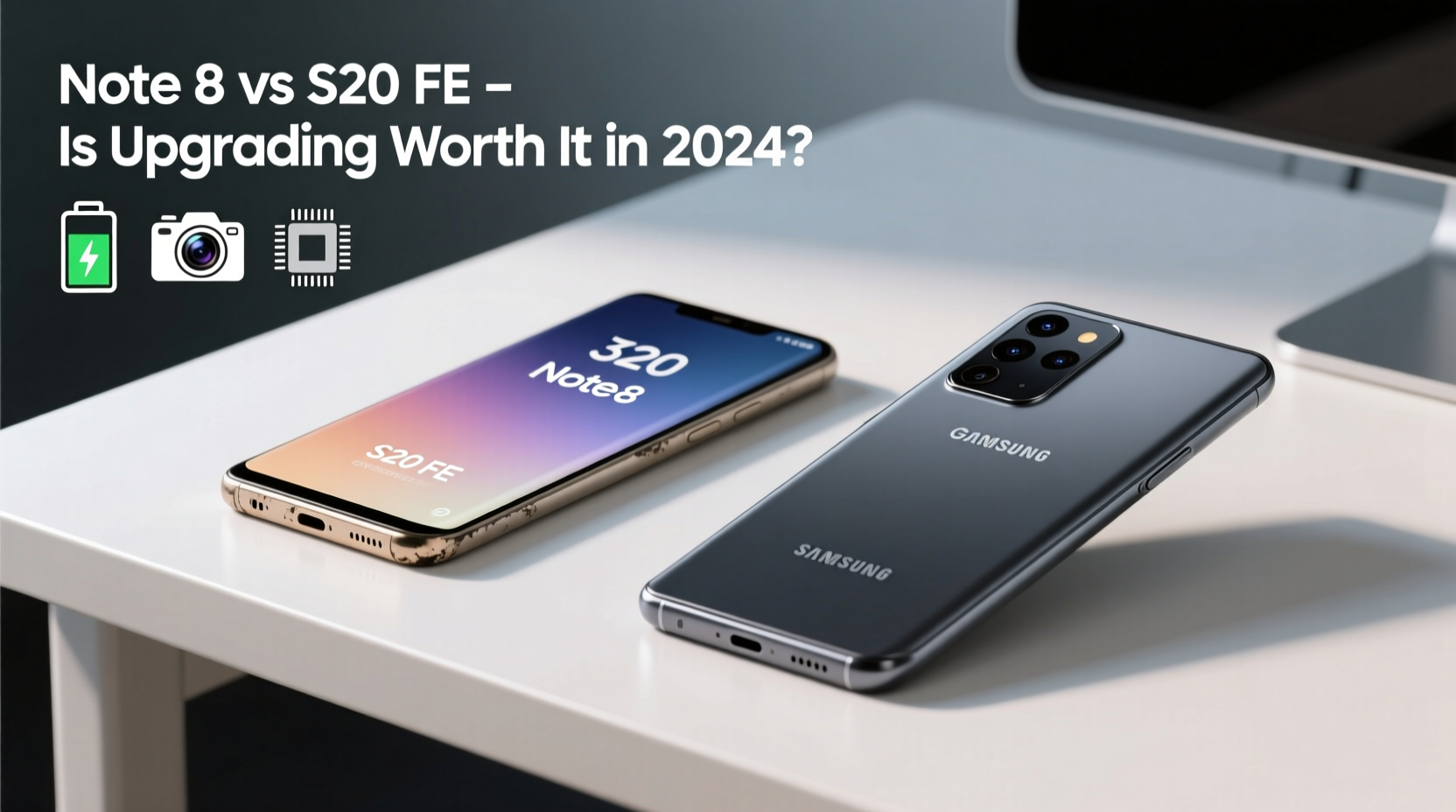
The heart of any smartphone experience lies in its processor and RAM. The Galaxy Note 8 runs on either the Qualcomm Snapdragon 835 or Exynos 8895, depending on region—both excellent chips for 2017. However, by today’s standards, they struggle with multitasking, app loading times, and newer Android features that demand more processing power.
In contrast, the S20 FE comes equipped with the Snapdragon 865 (or Exynos 990 in select regions), a chip that remains capable even in 2024. Paired with 6GB or 8GB of RAM (depending on storage variant), the S20 FE handles modern apps, games, and background processes with ease. You’ll notice faster app launches, smoother transitions, and far better performance in demanding tasks like video editing or gaming.
Android version support is another critical factor. The Note 8 received updates up to Android 10 with One UI 2.0—no further security patches are being issued. The S20 FE, however, launched with Android 10 but was updated to Android 13 and received security patches into 2024. While not eternal, this extended lifecycle means better app compatibility, improved security, and access to newer features like dark mode, enhanced privacy controls, and Google’s latest AI tools.
Display and Design: Modernity Meets Function
The Note 8 featured a 6.3-inch Quad HD+ Super AMOLED display with a traditional 16:9 aspect ratio and noticeable bezels. It was sharp and vibrant at the time, but feels dated next to today’s standards. The S20 FE, meanwhile, offers a 6.5-inch FHD+ Super AMOLED display with a 120Hz refresh rate—an upgrade that dramatically improves scrolling smoothness, responsiveness, and overall visual fluidity.
The design language is also vastly different. The S20 FE embraces the modern flat-edge aesthetic with a punch-hole front camera and slimmer bezels. It’s larger but more immersive, and despite lacking an IP68 rating in some early batches, most units do offer dust and water resistance—a feature absent entirely on the Note 8.
“Phones aren’t just about specs—they’re about daily usability. A 120Hz screen changes how you interact with your device.” — David Kim, Mobile UX Analyst
While the Note 8’s curved edges were elegant, the S20 FE prioritizes durability and practicality. Its polycarbonate back may not feel as premium as glass, but it’s more resistant to drops. Plus, the larger screen is ideal for streaming, reading, and using the S Pen (yes, it still supports it).
Camera Comparison: Night and Day Difference
On paper, both phones have dual rear cameras, but the improvements in software, sensor quality, and processing are immense. The Note 8 sports a 12MP wide and 12MP telephoto setup—solid for its era, especially with 2x optical zoom and portrait mode. However, low-light performance is weak by today’s standards, and detail loss in HDR scenes is common.
The S20 FE steps up with a 12MP main sensor, 12MP ultra-wide, and an 8MP telephoto lens. The addition of the ultra-wide camera opens creative possibilities, letting you capture landscapes, group shots, or tight interiors without stepping back. More importantly, computational photography has evolved: Night Mode, improved HDR, and better autofocus make a tangible difference in real-world photos.
| Feature | Note 8 | S20 FE |
|---|---|---|
| Main Camera | 12MP f/1.7 | 12MP f/2.2 (Dual Pixel AF) |
| Ultra-Wide Lens | No | Yes, 12MP f/2.2 |
| Zoom | 2x Optical | 3x Hybrid, up to 30x Digital |
| Front Camera | 8MP f/1.7 | 32MP f/2.2 |
| Video Recording | 4K@30fps | 4K@60fps, 8K@24fps |
The front-facing camera is another major leap. The S20 FE’s 32MP selfie shooter produces sharper, more detailed images—ideal for video calls, vlogging, or social media content. Combined with better stabilization and audio zoom, the S20 FE is simply a more versatile imaging tool.
Battery and Charging: All-Day Power, Faster Refills
The Note 8 packs a 3,300mAh battery—modest even for its time. With moderate use, it barely lasts a full day in 2024 due to aging hardware and inefficient background processes. Fast charging is limited to 15W, and there’s no wireless charging option.
The S20 FE, on the other hand, houses a 4,500mAh battery—over 35% larger. This translates to reliable all-day usage, even with 5G and 120Hz enabled. It supports 25W fast charging (charger sold separately), wireless charging, and even reverse wireless charging to power accessories like earbuds.
Real-world testing shows the S20 FE consistently delivers 6–7 hours of screen-on time, while the Note 8 often struggles to reach 4 hours under similar conditions. For anyone relying on their phone for navigation, work, or entertainment, this difference is transformative.
Mini Case Study: Sarah’s Upgrade Journey
Sarah, a freelance graphic designer, used her Note 8 for six years. She loved the S Pen for sketching ideas and appreciated the compact size. But over time, she noticed delays in opening design apps, frequent crashes in Adobe Illustrator Draw, and poor photo quality when sharing mockups with clients.
After switching to the S20 FE, she immediately felt the difference. Apps loaded instantly, multitasking between Photoshop Express and Slack became seamless, and the ultra-wide camera helped her document client spaces more effectively. “I didn’t realize how much my old phone was holding me back,” she said. “The S20 FE feels like a true creative tool—not just a communication device.”
Checklist: Is the S20 FE Right for You?
- ✅ Need a phone that can run modern apps smoothly
- ✅ Want better camera performance, especially at night
- ✅ Value all-day battery life and fast charging
- ✅ Use your phone for video calls, streaming, or content creation
- ✅ Still want S Pen functionality (with third-party stylus or basic input)
- ❌ Prefer smaller, more compact devices
- ❌ Already invested in newer ecosystem devices (e.g., Fold series)
Frequently Asked Questions
Can I use the S Pen on the S20 FE like on the Note 8?
The S20 FE does not have built-in S Pen support like Note models. However, it is compatible with Bluetooth-enabled styluses such as the S Pen from the S21 Ultra or newer Galaxy Tabs. You won’t get the same seamless integration, but precision input is still possible.
Is the S20 FE still receiving updates?
As of 2024, the S20 FE is no longer receiving major Android OS updates. It reached Android 13 and will likely get occasional security patches through mid-2024. While not future-proof, it remains secure and functional for everyday use.
Should I wait for a newer model instead?
If budget allows, consider the S23 FE or S24 series for longer software support and improved efficiency. However, if you're seeking value and a significant leap from the Note 8, the S20 FE—available at steep discounts secondhand or refurbished—is still a smart transitional upgrade.
Final Verdict: Yes, the Upgrade Is Worth It
Upgrading from the Galaxy Note 8 to the S20 FE in 2024 isn’t just about newer hardware—it’s about reclaiming speed, reliability, and relevance in a mobile-first world. The performance gains alone justify the move, but when combined with a superior display, advanced cameras, and modern battery tech, the decision becomes clear.
You don’t need to chase the latest flagship to feel upgraded. The S20 FE delivers a remarkably complete experience, bridging the gap between legacy devices and contemporary expectations. For former Note users who miss productivity features, the continued support for stylus input—even if not native—keeps that workflow alive.




 浙公网安备
33010002000092号
浙公网安备
33010002000092号 浙B2-20120091-4
Comments
No comments yet. Why don't you start the discussion?