
Two generations apart, the Samsung Galaxy S10 and Galaxy A54 represent very different philosophies in mobile design. The S10 was a flagship in 2019—powerful, sleek, and packed with premium features. The A54, released in 2023, sits in the upper mid-range, offering modern software, improved durability, and long-term support. But for users still holding onto a working S10, the question isn’t just about specs—it’s about value. Is upgrading to the A54 actually worthwhile, or can the S10 still deliver a satisfying experience in 2024?
Performance and Hardware: A Generational Leap
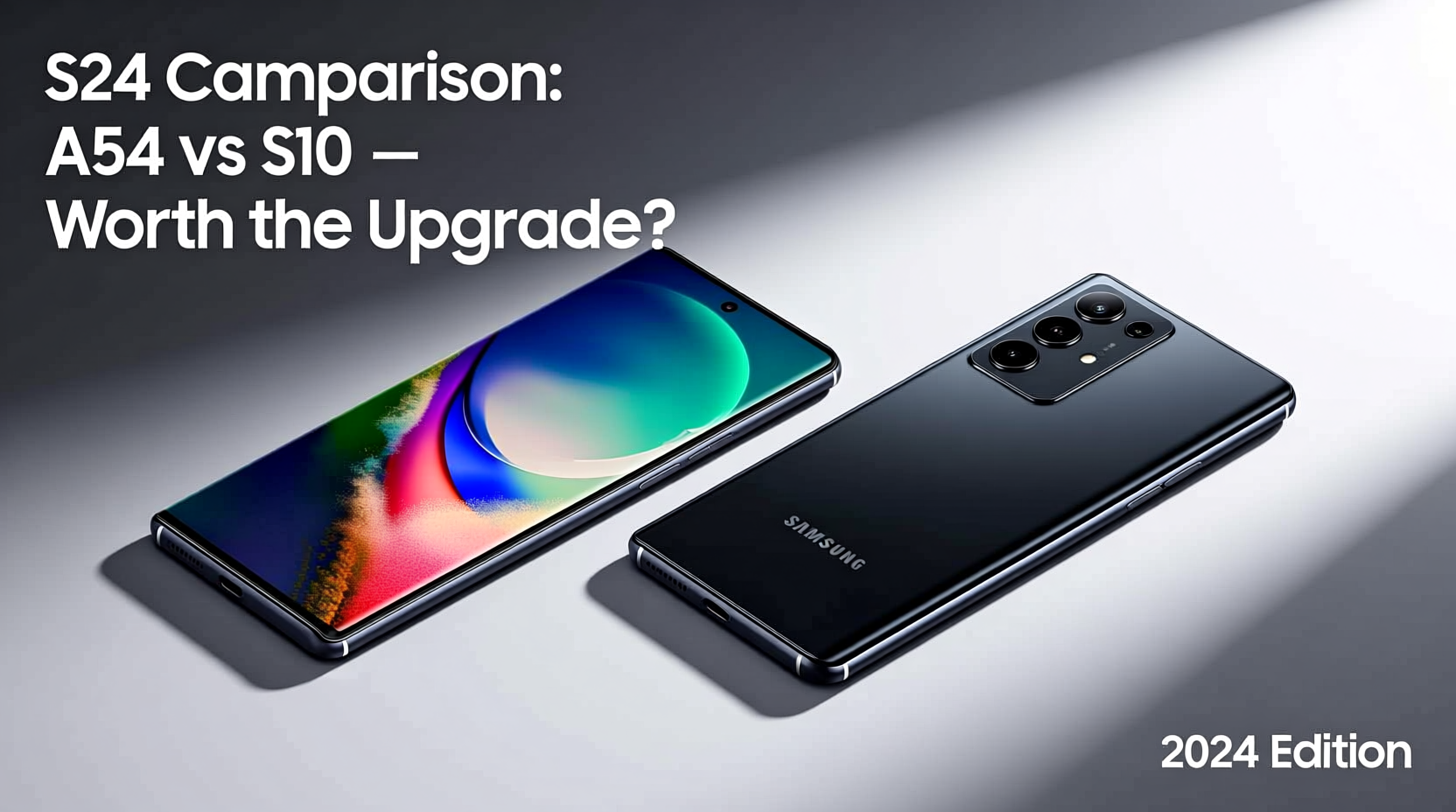
The core difference between these two phones lies in their processors and overall system efficiency. The S10 runs on the Qualcomm Snapdragon 855 (or Exynos 9820 in some regions), which was top-tier at launch. It handled multitasking, gaming, and camera processing with ease. However, nearly five years later, that chip shows its age when running heavier apps or newer versions of Android.
In contrast, the A54 uses Samsung’s Exynos 1380—a mid-range SoC built on a more efficient 5nm process. While not as powerful as the S10’s flagship chip in raw benchmarks, the Exynos 1380 benefits from modern architecture, better thermal management, and longer software optimization. Real-world usage reveals smoother animations, faster app launches, and noticeably better background task handling.
Battery Life Comparison
Battery degradation is inevitable. Even if your S10 originally lasted a full day, by 2024 most units have lost 20–30% of their capacity. The original 3,400mAh battery now struggles to make it through heavy use. In contrast, the A54 packs a 5,000mAh battery—nearly 50% larger—and benefits from a more power-efficient chipset and display.
Real-world testing shows the A54 consistently delivering 1.5 to 2 full days of moderate use, while the aging S10 often requires midday charging. Additionally, the A54 supports 25W fast charging (though sold without the charger), whereas the S10 maxes out at 15W. Over time, this difference in endurance and recharge speed significantly impacts daily usability.
Display and Design: Premium Feel vs Modern Durability
The S10 featured a 6.1-inch Dynamic AMOLED display with HDR10+ support and an in-display fingerprint sensor—cutting-edge at the time. Its curved edges gave it a luxurious look, but also made accidental touches and screen damage more common.
The A54 steps back from curves with a flat 6.4-inch Super AMOLED display, slightly larger and brighter (up to 1000 nits peak). It runs at 120Hz refresh rate, making scrolling and animations visibly smoother than the S10’s 60Hz panel. Though the S10’s screen remains sharp and color-accurate, the higher refresh rate on the A54 offers a tangible improvement in fluidity.
Design-wise, the S10 feels compact and premium with its glass back and aluminum frame. The A54 trades some elegance for practicality—plastic build, IP67 water resistance, and Gorilla Glass 5 front/back. For users who prioritize drop protection and dust resistance, the A54’s ruggedness is a clear upgrade.
“Phones aren’t just about peak performance anymore—they’re about sustained reliability. The shift from flagships like the S10 to durable mid-rangers like the A54 reflects consumer demand for longevity over luxury.” — Lena Park, Mobile Analyst at TechTrend Weekly
Camera Capabilities: Evolution Over Revolution
The S10 launched with a triple rear setup: 12MP main, 12MP telephoto, and 16MP ultra-wide. For its time, it delivered excellent dynamic range and accurate colors. However, low-light performance has aged poorly, and autofocus can lag behind modern standards.
The A54 drops the telephoto lens but upgrades to a 50MP main sensor with pixel binning (producing 12.5MP high-quality shots), a 12MP ultra-wide, and a 5MP macro. Software enhancements like Night Mode, AI scene optimization, and improved HDR processing result in more consistent photos across lighting conditions.
In daylight, both phones produce strong results, though the A54 captures more detail. In low light, the gap widens—the A54’s larger pixel size and multi-frame processing reduce noise and preserve details far better than the S10.
| Feature | Samsung S10 | Samsung A54 |
|---|---|---|
| Processor | Snapdragon 855 / Exynos 9820 | Exynos 1380 |
| RAM | 8GB | 6GB or 8GB |
| Battery | 3,400mAh | 5,000mAh |
| Charging | 15W wired, 9W wireless | 25W wired, no wireless |
| Display | 6.1” AMOLED, 60Hz | 6.4” AMOLED, 120Hz |
| Rear Cameras | 12MP + 12MP + 16MP | 50MP + 12MP + 5MP |
| Water Resistance | IP68 | IP67 |
| Software Support | Ends 2023 (Android 13) | Until 2027 (Android 17) |
Software and Longevity: The Hidden Upgrade Factor
This is where the A54 pulls decisively ahead. Samsung promises four major Android OS updates and five years of security patches for the A54—meaning it will receive updates until at least 2027. The S10, despite being a flagship, only received three OS updates (ending with Android 13) and its final security patch rolled out in early 2024.
Without regular updates, the S10 becomes increasingly vulnerable to security threats and may struggle with future app compatibility. Banking apps, messaging platforms, and even social media tools are beginning to require newer APIs and encryption standards that older devices can’t support.
Moreover, One UI has evolved significantly since 2019. Features like enhanced dark mode, better privacy controls, split-screen multitasking, and improved accessibility options are either missing or clunkier on the S10’s outdated software version.
Mini Case Study: Maria’s Upgrade Dilemma
Maria has used her S10 daily since 2019. By late 2023, she noticed her phone rebooting randomly during calls, apps taking longer to load, and her banking app failing to authenticate. She considered buying a used iPhone or sticking with her S10, but after visiting a carrier store, she tested the A54.
She immediately noticed the smoother interface, brighter screen, and how quickly the camera focused in dim lighting. After switching, she found her battery anxiety gone and appreciated receiving quarterly OS updates. “I didn’t think a mid-range phone could feel this much faster,” she said. “It’s not flashy, but it just works better every single day.”
Is Upgrading Worth It? A Practical Checklist
Before deciding whether to upgrade, consider your actual needs. Use this checklist to evaluate your situation:
- ✅ Does your S10 struggle to last a full day on a charge?
- ✅ Have you noticed frequent app crashes or slow response times?
- ✅ Are you no longer receiving security updates?
- ✅ Do newer apps fail to install or run poorly?
- ✅ Is the screen cracked or touch responsiveness declining?
- ✅ Do you value features like 120Hz scrolling or improved night photography?
If three or more apply, upgrading to the A54 makes practical sense. The device isn’t a powerhouse, but it delivers reliable, future-proof performance at a reasonable price point—typically under $400.
Frequently Asked Questions
Can the S10 still run everyday apps smoothly in 2024?
Yes, for basic tasks like calling, texting, browsing, and social media. However, complex apps like Google Maps with navigation, YouTube in 4K, or photo editors may lag. Performance depends heavily on remaining battery health and storage space.
Does the A54 support wireless charging like the S10?
No, the A54 does not have wireless charging. This is one feature downgraded from the S10. However, its 25W wired charging compensates by filling the larger battery faster.
Is the S10 obsolete?
Not entirely—but it’s functionally outdated. Without security updates and facing hardware limitations, it’s best suited as a secondary phone or for very light use. For primary daily drivers, it’s nearing end-of-life.
Final Verdict: When to Hold On, When to Let Go
The Galaxy S10 was an outstanding phone in its era, and some units still perform admirably. But technology moves fast. The A54 may lack the prestige of a flagship badge, but it offers meaningful improvements: longer battery life, modern software support, a smoother display, and better camera consistency.
Upgrading isn’t about chasing the latest gadget—it’s about regaining reliability. If your S10 causes frustration more often than satisfaction, the A54 represents a smart, cost-effective step forward. It bridges the gap between affordability and longevity, making it one of the most sensible mid-range upgrades available.




 浙公网安备
33010002000092号
浙公网安备
33010002000092号 浙B2-20120091-4
Comments
No comments yet. Why don't you start the discussion?