
Creating a pleasant atmosphere in your home often begins with fragrance. Whether you're winding down after work or hosting guests, a well-scented room enhances comfort and mood. Two of the most popular methods for dispersing aroma—scented candles and electric diffusers—each offer unique advantages. But when it comes to actual room coverage, one may outperform the other depending on your space, lifestyle, and priorities. Understanding how each system works, how far their scent travels, and what factors influence distribution is key to making an informed choice.
How Scent Spreads: The Science Behind Fragrance Distribution
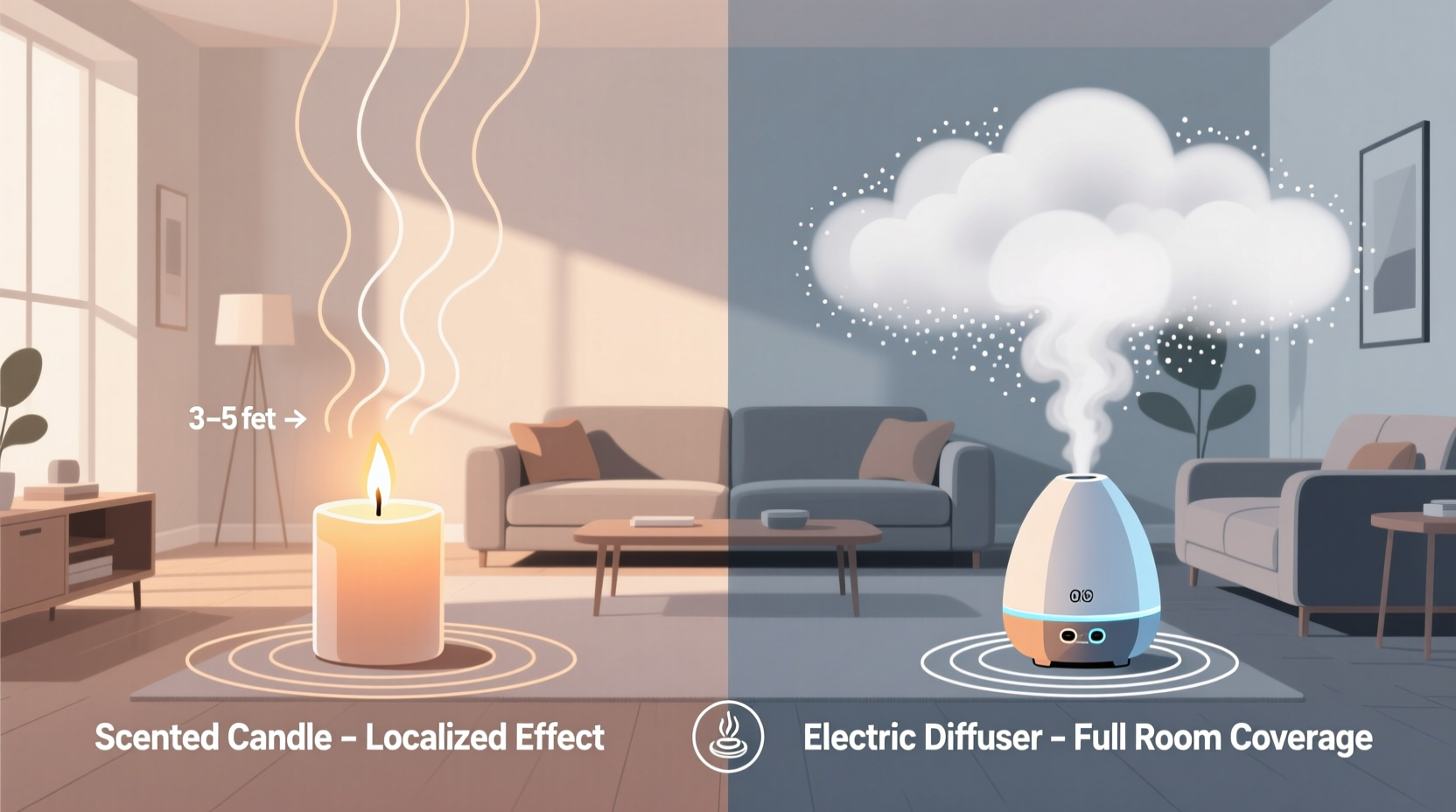
Fragrance dispersion relies on air movement, volatility of essential oils, and heat or mechanical diffusion. Scented candles use flame-based heat to melt wax and release aromatic compounds into the air through convection. As the candle burns, warm air rises, carrying scent molecules upward and outward in a natural but limited pattern. This process depends heavily on burn time, wick size, wax type, and airflow in the room.
Electric diffusers, by contrast, use ultrasonic vibrations or fan-assisted nebulization to break essential oils into micro-particles and disperse them evenly into the air. Because they don’t rely on combustion, they can operate continuously and distribute scent more uniformly across larger areas. Unlike candles, many diffusers allow adjustable output settings, enabling precise control over intensity and reach.
The difference in mechanism leads to a significant variation in performance. While candles create a cozy ambiance with localized scent concentration near the flame, diffusers are engineered for broader, sustained coverage—especially in open-plan spaces or multi-room environments.
“Airflow dynamics play a crucial role in fragrance delivery. Passive systems like candles depend on thermal currents, while active systems like diffusers generate consistent particle dispersion.” — Dr. Lena Torres, Environmental Aromatics Researcher, Institute of Indoor Air Quality
Comparing Room Coverage: Real-World Performance
To evaluate which method offers superior room coverage, consider three main variables: effective range, consistency of distribution, and environmental impact.
Scented candles typically cover small to medium-sized rooms (up to 200 square feet) effectively when placed centrally and allowed to achieve a full melt pool. However, their scent tends to remain strongest within a 6–8 foot radius of the flame. Drafts, closed doors, or high ceilings can further limit spread. In larger homes or open-concept layouts, multiple candles would be needed to achieve even distribution—an impractical and potentially hazardous solution.
Electric diffusers, particularly ultrasonic and fan-driven models, are designed for rooms up to 500 square feet or more, depending on model specifications. Many come with timers, intermittent mist settings, and directional vents that optimize airflow. Some advanced units include built-in humidity sensors or smart controls that adjust output based on room conditions, ensuring consistent fragrance levels over time.
Key Factors Influencing Coverage
- Room size and layout: Open spaces favor diffusers; smaller, enclosed rooms may benefit equally from either option.
- Air circulation: HVAC systems, ceiling fans, or open windows enhance diffuser reach but can disrupt candle plumes.
- Fragrance oil concentration: Higher-quality oils in both formats improve longevity and projection.
- Duration of use: Candles offer temporary bursts of scent; diffusers provide continuous diffusion over hours.
Detailed Comparison: Candles vs Diffusers
| Feature | Scented Candles | Electric Diffusers |
|---|---|---|
| Effective Room Coverage | Up to 200 sq ft (optimal) | 200–500+ sq ft (model-dependent) |
| Scent Consistency | Peaks during burn, fades quickly after | Steady output over time |
| Runtime per Use | 20–60 hours total (per candle) | 4–24 hours continuous (refill-dependent) |
| Control Over Intensity | Limited (burn duration only) | Adjustable settings (low/medium/high) |
| Safety Risk | Open flame, fire hazard, soot emission | No flame; safer around children/pets |
| Maintenance | Wick trimming, debris removal | Regular cleaning, water/oil refills |
| Lifespan of Device | N/A (single-use product) | Years with proper care |
| Ambiance Factor | High (warm glow, flickering light) | Low to moderate (some LED options) |
This comparison highlights that while scented candles excel in creating mood and intimacy, electric diffusers surpass them in functional performance—particularly in coverage, control, and operational safety.
When Candles Shine: Ideal Use Cases
Despite limitations in coverage, scented candles have irreplaceable value in certain settings. Their soft, flickering light adds warmth to bathrooms, bedrooms, or dining tables. High-end soy or beeswax candles with premium fragrance oils can produce surprisingly strong scent throws in compact spaces.
For example, lighting a single luxury candle in a 12x12-foot bedroom before bedtime creates a calming sensory experience without needing whole-room saturation. Similarly, placing votives along a hallway or entryway can guide guests with subtle olfactory cues.
However, relying on candles for large-area scenting poses practical challenges. Multiple units increase fire risk, require constant monitoring, and lead to uneven fragrance distribution. Moreover, paraffin-based candles emit black soot and volatile organic compounds (VOCs), which can degrade indoor air quality—especially problematic in poorly ventilated areas.
Diffusers in Action: Maximizing Whole-Room Impact
Electric diffusers are engineered for efficiency and scalability. Ultrasonic models use water mixed with essential oils, vibrating the solution into a cool mist that carries fragrance throughout the air. Fan-based diffusers atomize oil directly without water, offering stronger scent concentration and longer-lasting effects.
In real-world application, a mid-range diffuser placed in a living room (approx. 300 sq ft) can maintain noticeable fragrance levels for 6–8 hours on medium setting. Units with intermittent modes cycle mist every few minutes, conserving oil while sustaining ambient presence. Smart diffusers connected to apps can even activate automatically when you arrive home.
Mini Case Study: Office Space Scenting
A small marketing firm in Portland sought to improve workplace morale using ambient scent. Initially, they used scented candles in common areas, but staff reported headaches and inconsistent fragrance. After switching to two electric diffusers—one in the lounge and one near the reception desk—employees noted improved air freshness and fewer respiratory complaints. The manager observed that citrus and peppermint blends helped maintain alertness during afternoon hours, with no safety concerns from unattended operation.
This shift not only enhanced overall scent coverage but also reduced maintenance effort and eliminated fire code violations previously flagged during inspections.
Step-by-Step Guide: Choosing the Right Option for Your Space
- Measure your room: Calculate square footage. Under 200 sq ft? Either option works. Over 300 sq ft? Lean toward a diffuser.
- Assess ventilation: Rooms with airflow (fans, vents, open windows) will carry scent farther—ideal for diffusers.
- Evaluate safety needs: If children, pets, or mobility-limited individuals are present, avoid open flames.
- Determine usage frequency: Daily use favors diffusers for cost efficiency and convenience.
- Test scent strength: Try both methods temporarily. Burn a candle for two hours, then run a diffuser at medium for the same duration. Note where fragrance is detectable.
- Consider ambiance: Want mood lighting? Candles win. Prefer silent, hands-free operation? Choose a diffuser.
Cost and Long-Term Value Analysis
While scented candles often appear cheaper upfront, their long-term cost adds up. A high-quality candle may last 40–50 hours and cost $25–$40. Replacing it monthly results in $300–$500 annual spending. Additionally, frequent use demands ongoing attention and replacement.
Electric diffusers require a higher initial investment ($30–$100), but essential oil refills are economical. A 10ml bottle of concentrated oil lasts 1–3 months with regular use and costs $8–$15. Over a year, total expenditure averages $100–$200, including electricity (minimal). With proper cleaning, a diffuser can last 3–5 years or more, offering substantial savings.
“The return on investment shifts clearly toward diffusers after six months of regular use,” says Mark Reynolds, Home Wellness Consultant. “They’re not just safer—they’re smarter for daily aromatherapy.”
FAQ: Common Questions Answered
Can I use a candle to scent a large living room?
You can, but coverage will be uneven. The scent will concentrate near the candle and fade toward corners. For better results, use a high-output diffuser or multiple candles—though the latter increases fire risk and soot accumulation.
Do electric diffusers damage furniture or walls?
Ultrasonic diffusers release fine mist that can settle on surfaces if placed too close. To prevent moisture buildup, keep the unit at least 2 feet away from electronics, artwork, and wooden furniture. Wipe nearby surfaces weekly if used frequently.
Which is better for allergies—candles or diffusers?
Diffusers are generally safer for allergy sufferers. Candles, especially paraffin-based ones, emit soot and VOCs that can irritate lungs. Essential oils in diffusers should be used cautiously—some people react to strong eucalyptus or citrus scents—but the absence of combustion makes them a cleaner option overall.
Final Recommendation: Match the Method to Your Needs
If your priority is broad, consistent room coverage with minimal intervention, electric diffusers are the superior choice. They deliver fragrance efficiently across large areas, operate safely unattended, and offer long-term cost benefits. Modern models blend seamlessly into home decor and support wellness routines through programmable schedules and therapeutic blends.
Scented candles remain unmatched for ambiance and emotional resonance. There’s something inherently comforting about the glow of a flame and the slow unfurling of a rich vanilla or sandalwood note. For intimate moments, short-term use, or decorative flair, they continue to hold their place.
The smart approach isn't choosing one over the other entirely, but using each strategically. Reserve candles for relaxation rituals in personal spaces, and deploy diffusers for whole-home freshness, daytime energy boosts, or background scenting in shared areas.




 浙公网安备
33010002000092号
浙公网安备
33010002000092号 浙B2-20120091-4
Comments
No comments yet. Why don't you start the discussion?