
When it comes to choosing a bag for the daily commute, professionals face a constant trade-off between style, function, and capacity. Two of the most common options—shoulder bags and totes—are often pitted against each other. While both are stylish and widely used in office environments, they differ significantly in how much they can carry, how comfortable they are over time, and how practical they are for different types of workers. The real question isn’t just about volume; it’s about what “holds more stuff” means in practice. Is it raw cubic inches, or is it usable space, accessibility, and long-term wearability?
Capacity: What Does “More Stuff” Really Mean?
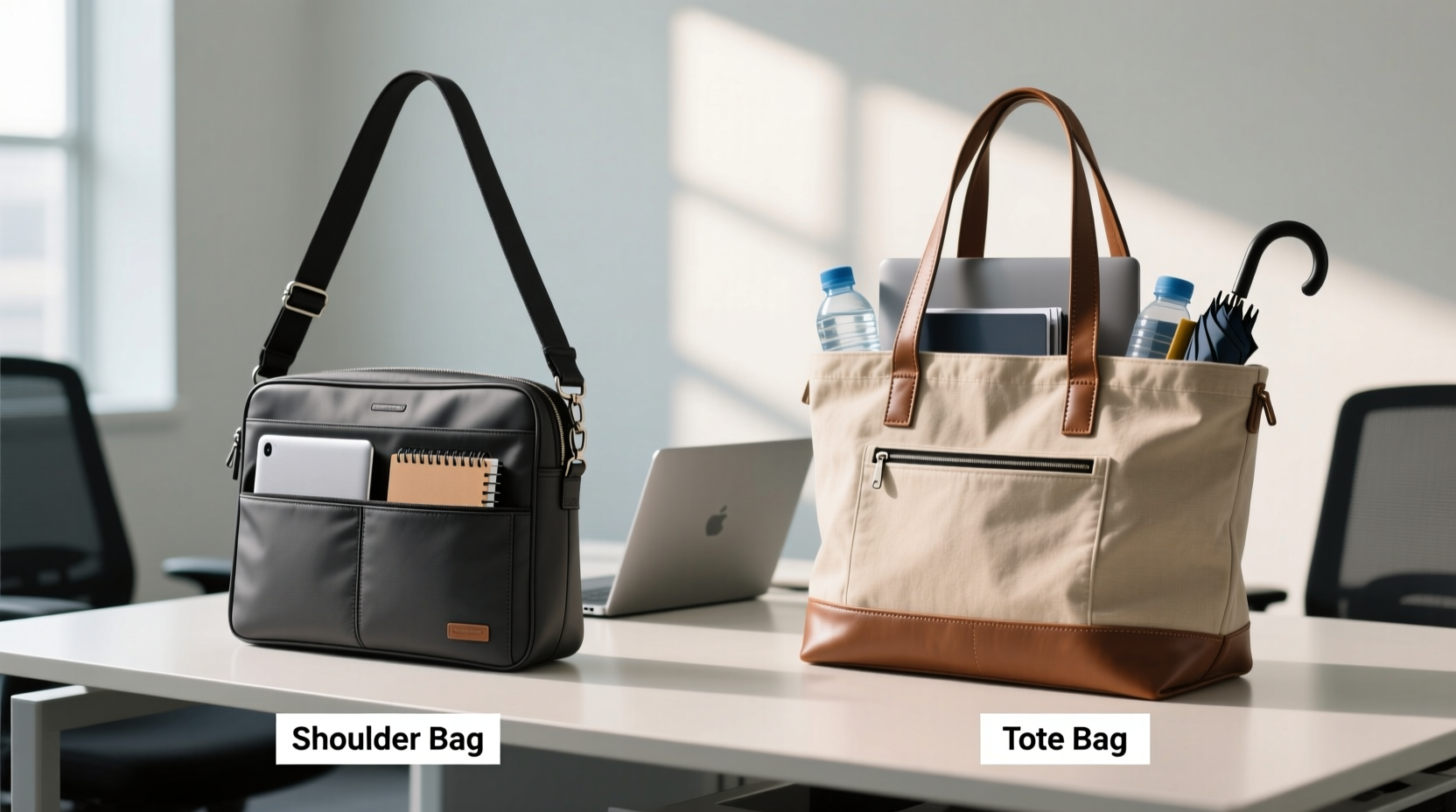
On paper, totes usually win the capacity race. Most standard totes range from 15 to 20 liters in volume, with wide openings and deep interiors designed to swallow laptops, files, water bottles, and even gym clothes. Shoulder bags, by comparison, typically max out around 10–12 liters, depending on design. But volume alone doesn’t tell the full story.
Totes offer expansive, open interiors, but this can lead to disorganization. Without internal compartments, items sink to the bottom, making them harder to retrieve. Shoulder bags, though smaller overall, often feature multiple zipped pockets, padded laptop sleeves, and designated sections for pens, phones, and wallets. This structured layout means that while the tote may technically hold more, the shoulder bag makes better use of its space.
Real-World Use: Who Carries What?
The type of work you do plays a major role in determining which bag performs better. Consider two common scenarios:
Case Study: Marketing Executive vs. Freelance Designer
A marketing executive commuting to a corporate office might need a 15-inch laptop, tablet, presentation folders, water bottle, lunch container, and a change of shoes. In this case, a large tote—especially one with reinforced handles and a structured base—can accommodate everything without strain, provided she carries it in her hand or uses a detachable shoulder strap.
In contrast, a freelance graphic designer who works remotely but meets clients at cafes needs quick access to her 13-inch MacBook, sketchbook, stylus, charger, and wallet. She values organization and mobility. A compact shoulder bag with RFID-blocking pockets and a front-access tech compartment allows her to grab items without rummaging. Even though she carries fewer items, her bag feels more efficient.
“Clients judge your professionalism not just by your work, but by how composed you appear. A cluttered tote spilling papers says one thing; a streamlined shoulder bag says another.” — Lena Torres, Workplace Image Consultant
Comfort and Ergonomics: The Hidden Trade-Off
Carrying capacity matters less if the bag causes discomfort. Totes are notorious for shoulder and back strain when overloaded. Because weight is distributed unevenly—typically on one arm or carried by hand—they can lead to postural imbalance over time. According to ergonomic studies, carrying more than 10% of your body weight in a single-strap bag increases the risk of musculoskeletal issues.
Shoulder bags, especially crossbody styles, distribute weight across the torso, reducing pressure on any one point. Adjustable straps allow users to position the bag closer to the center of gravity, minimizing sway and fatigue during walking or transit.
| Feature | Tote Bag | Shoulder Bag |
|---|---|---|
| Average Capacity | 15–20 liters | 8–12 liters |
| Weight Distribution | Poor (single handle or shoulder) | Good (crossbody or dual-strap options) |
| Organization | Limited (open interior) | High (multiple compartments) |
| Access Speed | Moderate (wide opening) | Fast (front pockets, zippers) |
| Durability Under Load | Varies (handles may weaken) | Generally high (structured design) |
Choosing Based on Your Workday: A Step-by-Step Guide
Selecting the right bag shouldn’t be based on trends or aesthetics alone. Follow this decision framework to match your needs with the right style:
- Inventory your daily essentials: List every item you carry regularly—laptop, notebook, phone, wallet, keys, umbrella, snacks, etc.
- Measure total volume: Place items in a box or bin to estimate required capacity. A standard 15-inch laptop takes up about 3 liters; add 1 liter per additional device or bulky item.
- Assess your commute: Do you walk more than 10 minutes? Take stairs? Ride a bike? If yes, prioritize weight distribution and hands-free carrying.
- Evaluate security needs: Frequent public transit users benefit from zipped closures and anti-theft features, which shoulder bags often provide.
- Test real-world fit: Visit a store and load sample bags with your typical load. Notice how the weight feels after five minutes of carrying.
When Totes Win—and When They Don’t
Totes excel when you need to transport large or irregularly shaped items: portfolios, legal documents, books, or fitness gear. Their top-loading design makes it easy to drop in folders or remove them flat. However, their lack of structure in softer models can lead to sagging and difficulty retrieving small items like lip balm or business cards.
They’re also less secure in crowded spaces. An open tote on a subway is an invitation for pickpockets. Even with a zipper, the wide mouth creates a larger target area. For urban professionals navigating busy commutes, this is a serious drawback.
That said, structured leather totes with magnetic snaps, interior pockets, and optional shoulder straps bridge the gap. These hybrid designs combine tote-like capacity with improved organization and security.
FAQ: Common Questions About Work Bags
Can a shoulder bag really fit a 15-inch laptop?
Yes, many modern shoulder bags are designed specifically for 15-inch laptops. Look for models with padded, dedicated sleeves and external dimensions of at least 15” x 11” x 4”. Just ensure the bag isn’t overstuffed, as this strains seams and reduces comfort.
Are totes unprofessional?
Not inherently. A sleek, structured tote in neutral leather conveys sophistication. However, canvas totes with logos or excessive wear may appear casual or disorganized. Context matters—what works in a creative agency may not suit a law firm.
Which bag lasts longer?
Durability depends more on materials and construction than style. That said, shoulder bags often have reinforced stress points (like strap attachments) due to ergonomic design requirements. With proper care, both can last 3–5 years or more.
Checklist: Picking the Right Bag for Your Work Life
- ✅ Measure your daily load before shopping
- ✅ Prioritize padded laptop compartments if you carry tech
- ✅ Choose adjustable straps for better weight control
- ✅ Opt for water-resistant materials if you walk or bike
- ✅ Ensure zippers are sturdy and close fully
- ✅ Test carry comfort with a loaded bag
- ✅ Avoid overly decorative designs if professionalism is key
Final Verdict: It Depends on How You Define “More”
If “more stuff” means maximum volume and minimal organization, the tote wins. It’s ideal for those who transport bulky items infrequently and don’t mind carrying weight by hand. But if “more” includes accessible storage, daily comfort, security, and ease of movement, the shoulder bag is the smarter choice for most office professionals.
The best bag isn’t the one that holds the most—it’s the one that makes your routine smoother, safer, and more efficient. For the average worker juggling tech, documents, and personal items across commutes and meetings, a well-designed shoulder bag offers superior functionality, even with less raw space.




 浙公网安备
33010002000092号
浙公网安备
33010002000092号 浙B2-20120091-4
Comments
No comments yet. Why don't you start the discussion?