
When it comes to securing your home, modern technology offers powerful tools that go far beyond traditional locks and peepholes. Two of the most common upgrades homeowners consider are smart doorbells with cameras and smart keypads. Both promise enhanced protection, convenience, and control—but they serve different purposes and offer distinct advantages. Understanding how each system functions, where they excel, and how they contribute to overall home security is essential for making an informed decision. This article breaks down the strengths and limitations of both options, compares their real-world impact, and helps you determine which one—or combination—delivers the greatest improvement in home safety.
How Smart Doorbells with Cameras Enhance Security
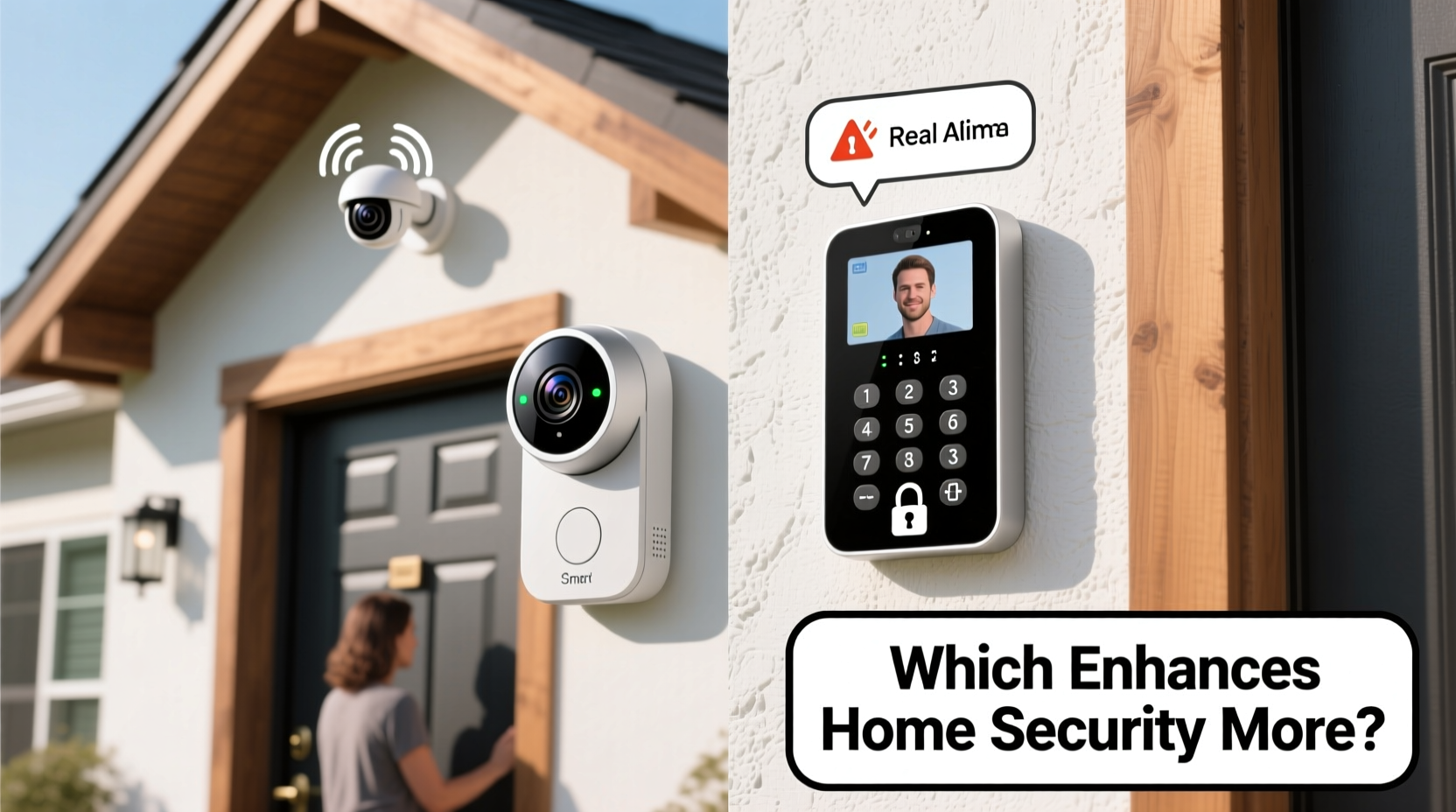
A smart doorbell with a built-in camera acts as both a deterrent and a monitoring tool. Unlike conventional doorbells, these devices allow you to see, hear, and speak to anyone at your front door from anywhere using a smartphone or tablet. Most models include HD video, night vision, motion detection, two-way audio, and cloud or local storage for recorded footage.
The presence of a visible camera alone discourages porch pirates, package thieves, and suspicious loiterers. In fact, a 2022 study by the University of North Carolina found that 60% of burglars check for surveillance systems before attempting a break-in—and many will avoid homes with visible cameras entirely.
Beyond deterrence, smart doorbells provide real-time awareness. Whether you're at work, on vacation, or simply in the backyard, you can monitor activity at your entrance. If someone approaches, you receive an instant alert. You can then choose to engage via two-way talk, which often scares off unwanted visitors without requiring physical intervention.
Key Security Benefits of Smart Doorbells
- Remote monitoring: View live footage anytime, anywhere.
- Evidence collection: Record incidents for police reports or insurance claims.
- Real-time alerts: Get notified immediately when motion or doorbell presses occur.
- Deterrence: Visible cameras reduce the likelihood of attempted break-ins.
- Integration: Works with other smart home systems like alarms and lights.
The Role of Smart Keypads in Home Security
Smart keypads, typically used with electronic locks or home security systems, replace traditional keys with PIN-based access. These keypads can be installed on entry doors, garages, or interior access points and are often integrated into broader smart home ecosystems. Some standalone models connect via Bluetooth or Wi-Fi, while others are part of monitored alarm systems.
One major advantage of keypads is eliminating the need for physical keys, reducing risks associated with lost, stolen, or duplicated keys. Instead, homeowners assign unique codes to family members, guests, or service providers. Many systems allow temporary or scheduled access—for example, granting a cleaning crew entry only between 9 AM and 11 AM on Tuesdays.
From a security standpoint, smart keypads enhance accountability. Every entry is logged with a timestamp and associated code, allowing you to track who entered and when. This feature is especially valuable for households with children, renters, or frequent visitors.
“Access control is just as important as surveillance. Knowing who enters your home and when provides critical oversight.” — David Lin, Home Security Systems Engineer
Security Advantages of Smart Keypads
- No physical keys: Eliminates risks of key duplication or lock picking.
- User-specific codes: Assign personalized PINs to track individual access.
- Temporary access: Grant time-limited entry for guests or workers.
- Integration with alarms: Disarm security systems upon entering the correct code.
- Fail-safes: Backup power and manual override options prevent lockouts.
Direct Comparison: Doorbell Camera vs Keypad
While both technologies improve home security, they do so in fundamentally different ways. A smart doorbell focuses on external monitoring and interaction, whereas a keypad emphasizes internal access control. The best choice depends on your specific security priorities.
| Feature | Smart Doorbell with Camera | Smart Keypad |
|---|---|---|
| Primary Function | Surveillance & remote communication | Access control & entry logging |
| Deterrent Effect | High – visible camera discourages intruders | Moderate – less visible, but prevents unauthorized access |
| Remote Access | Yes – view and respond from phone | Limited – manage codes remotely, but no real-time monitoring |
| Entry Tracking | No – cannot verify who enters after door opens | Yes – logs every code used and time of entry |
| Integration Capability | High – works with smart lights, alarms, voice assistants | High – integrates with locks, alarms, home hubs |
| Vulnerability | Hacking, power outages, tampering | Code sharing, brute-force attempts, battery failure |
| Best For | Monitoring deliveries, deterring strangers, remote verification | Controlling access, managing household entries, eliminating keys |
Real-World Example: How Each System Prevented a Break-In
In suburban Denver, Sarah installed a Ring Video Doorbell after her neighbor’s porch was robbed twice in one month. One evening, she received a motion alert showing a man lingering near her front door. Through the two-way speaker, she said, “I see you—police are on the way.” The man immediately walked away. Later, police confirmed he had been casing multiple homes in the area. The doorbell not only deterred the threat but also provided clear footage that helped identify the suspect.
Meanwhile, in Austin, Mark uses a Schlage Encode Smart Keypad on his garage entry. When his HVAC technician arrived early and tried to enter using an expired temporary code, the system denied access and sent Mark a notification. He was able to remotely generate a new code and verify the technician’s identity before granting entry. Without the keypad, an unauthorized person might have gained access using an old, shared code.
These examples highlight how both systems prevent breaches—but through different mechanisms. The doorbell stops threats before they escalate, while the keypad ensures only authorized individuals gain entry.
Which Improves Home Security More?
The answer isn’t straightforward. If your primary concern is preventing unwanted visitors, monitoring deliveries, or verifying identities before opening the door, a smart doorbell with camera delivers greater immediate value. Its visual and auditory feedback loop creates a psychological barrier for criminals and gives homeowners peace of mind.
However, if your focus is on controlling access, managing household entries, or eliminating the risk of lost keys, a smart keypad offers superior long-term security. It transforms your door into a controlled access point with audit trails, time restrictions, and user accountability.
For maximum protection, experts recommend combining both. A smart doorbell lets you see who’s at the door; once verified, you can unlock the door remotely or instruct the visitor to enter using their assigned PIN on the keypad. This layered approach—visual verification followed by secure access—creates a robust defense against both opportunistic and targeted threats.
Step-by-Step Guide to Enhancing Entry Security
- Assess your current vulnerabilities: Are packages being stolen? Are keys frequently lost or copied?
- Determine your priority: Surveillance (doorbell) or access control (keypad)?
- Choose compatible devices: Ensure your doorbell or keypad works with existing locks and smart home platforms.
- Install properly: Mount doorbells at eye level; place keypads near entry points with good lighting.
- Set up access codes: Assign unique PINs and disable unused ones regularly.
- Enable notifications: Turn on motion alerts and entry logs for real-time updates.
- Review footage and logs weekly: Look for unusual patterns or failed access attempts.
- Update firmware regularly: Keep devices protected against known security flaws.
Frequently Asked Questions
Can a smart doorbell replace a keypad for home security?
No. While a doorbell provides visibility and deterrence, it doesn’t control physical access. You still need a lock and a method of entry management—like a keypad, smart lock, or key—to secure your home effectively.
Are smart keypads vulnerable to hacking?
Like any connected device, smart keypads can be hacked if not properly secured. However, models with encryption, offline mode, and multi-factor authentication significantly reduce this risk. Always choose reputable brands and update software regularly.
Do I need professional installation for either device?
Many smart doorbells and keypads are designed for DIY installation, especially wireless or battery-powered models. However, hardwired systems or those integrating with existing alarm panels may require a professional to ensure correct setup and compatibility.
Final Recommendation: Combine for Maximum Protection
Neither a smart doorbell with camera nor a smart keypad alone provides complete entry security. Each addresses a different layer of protection—one focused on observation and deterrence, the other on access and accountability. For comprehensive home security, the optimal solution is to use both in tandem.
Imagine this: a delivery person arrives, and your doorbell alerts you. You confirm it’s the expected package, then remotely unlock the door or instruct them to leave it. Your house cleaner arrives later and enters using a time-limited PIN on the keypad—logged automatically. Any unrecognized attempts trigger alerts. This synergy of surveillance and control creates a dynamic, responsive security system that adapts to real-life needs.
“The future of home security isn’t about choosing one device over another—it’s about creating intelligent layers that work together.” — Lena Torres, Smart Home Security Consultant
Take Action Today
Your front door is the most vulnerable point of entry in your home. Don’t rely on outdated methods. Evaluate your current setup, identify gaps, and invest in technology that matches your lifestyle and security goals. Whether you start with a smart doorbell, a keypad, or both, taking action now significantly reduces your risk of break-ins, theft, and unauthorized access.




 浙公网安备
33010002000092号
浙公网安备
33010002000092号 浙B2-20120091-4
Comments
No comments yet. Why don't you start the discussion?