
Lighting does more than illuminate a room—it shapes how we feel, think, and behave. While traditional incandescent or fluorescent bulbs have long served as functional light sources, smart LED lighting has introduced dynamic color control, brightness adjustment, and scheduling capabilities that go far beyond basic illumination. As homes become smarter, so do our lighting choices. But with the ability to bathe a room in calming blue or energizing yellow light at the touch of an app, a critical question arises: Can colored LEDs actually affect your mood? And if so, how do smart lights compare to conventional bulbs in supporting emotional and cognitive well-being?
The answer lies at the intersection of neuroscience, circadian biology, and environmental psychology. Modern research shows that light—especially its color temperature and timing—plays a powerful role in regulating alertness, sleep quality, and even emotional states. This article explores the differences between smart lights and regular bulbs, examines the psychological effects of colored LEDs, and offers practical insights for using lighting to enhance daily life.
How Light Influences Human Physiology
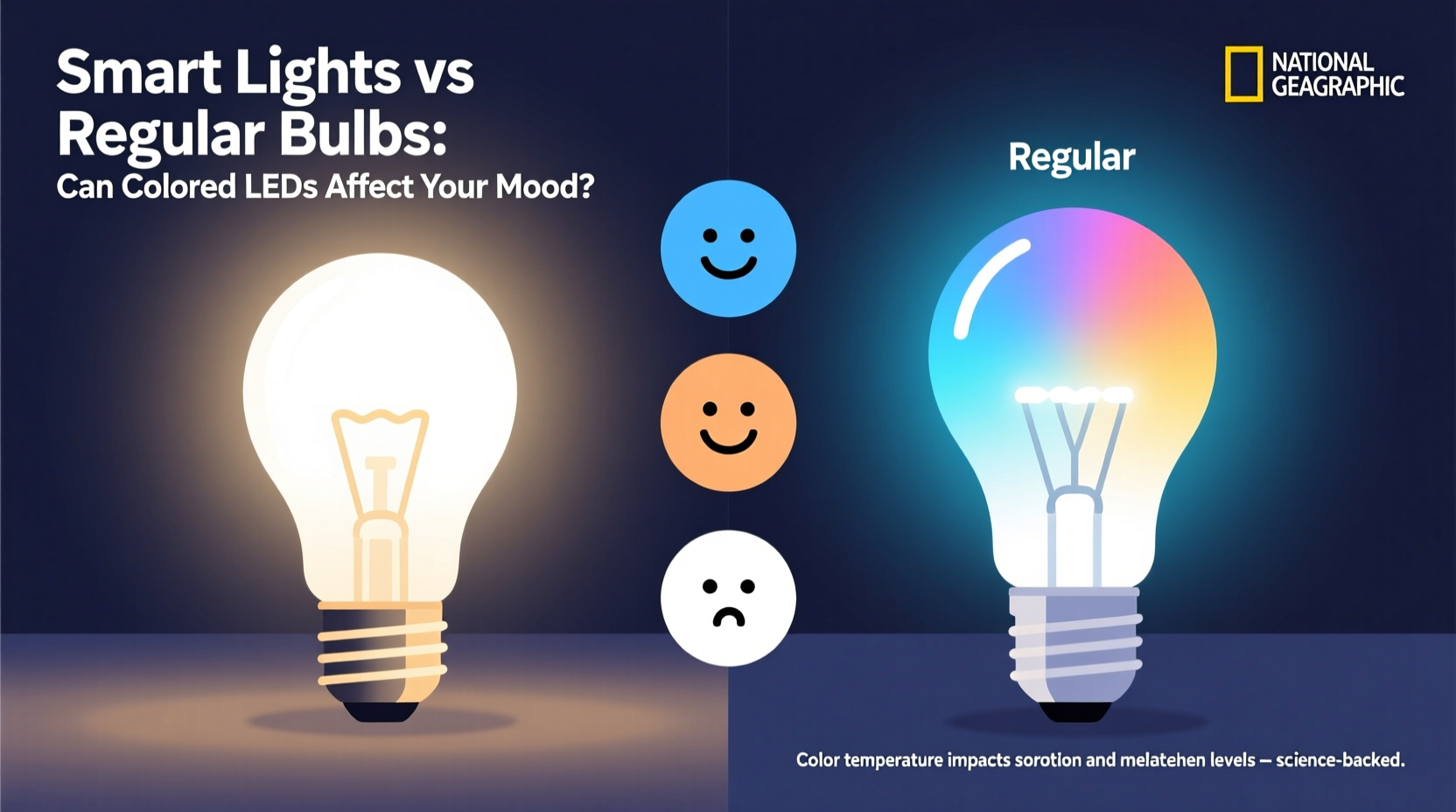
Long before artificial lighting, human activity was governed by natural daylight. The sun’s spectrum shifts throughout the day—from warm reds at sunrise to cool blues at midday and back to amber hues at dusk—signaling our brains when to be alert and when to wind down. These cues regulate the production of melatonin, the hormone responsible for sleep, and cortisol, which governs wakefulness and stress response.
Modern lighting disrupts this rhythm. Traditional bulbs often emit a static color temperature, typically around 2700K (warm white), regardless of time of day. While cozy, this constant exposure fails to mimic natural light cycles. In contrast, smart LED systems can adjust both intensity and color temperature dynamically, aligning more closely with our biological needs.
“Light is one of the most potent environmental signals influencing our circadian rhythms. Poor lighting can disrupt sleep, impair focus, and contribute to mood disorders.” — Dr. Laura Foster, Neuroscientist & Sleep Researcher, Stanford University
The key mechanism involves intrinsically photosensitive retinal ganglion cells (ipRGCs) in the eye. These specialized cells are particularly sensitive to blue wavelengths (around 480 nm). When exposed to blue-rich light during the day, they suppress melatonin and promote alertness. However, evening exposure to blue light—common from screens and cool-white LEDs—can delay sleep onset and reduce sleep quality.
Smart Lights vs Regular Bulbs: A Functional Comparison
To understand the real-world impact of smart lighting, it helps to compare features side by side. Below is a breakdown of core differences between smart LED bulbs and traditional incandescent or CFL bulbs:
| Feature | Smart LED Bulbs | Regular Bulbs (Incandescent/CFL) |
|---|---|---|
| Color Temperature Range | Tunable (e.g., 2200K–6500K) | Fixed (usually 2700K–3000K) |
| Color Options | Millions of colors via RGB/RGBW | Single white tone only |
| Brightness Control | Fully dimmable via app, voice, or automation | Limited to compatible dimmer switches |
| Energy Efficiency | High (uses ~80% less energy than incandescent) | Low (incandescent), Medium (CFL) |
| Lifespan | 15,000–25,000 hours | 1,000–8,000 hours |
| Circadian Support | Yes, with automated daylight-mimicking schedules | No |
| Mood & Ambiance Customization | Highly customizable for emotional effect | Minimal; limited to brightness and fixture design |
This comparison reveals that smart lights are not just about convenience—they offer functional advantages that directly influence well-being. The ability to shift from cool, energizing white light in the morning to warm, relaxing tones at night supports healthier sleep-wake cycles. Meanwhile, full-color options allow users to create environments tailored to specific moods or activities.
The Psychological Impact of Colored LEDs
Color psychology has long been applied in design, marketing, and therapy. Different hues evoke distinct emotional responses, and LED lighting makes it easy to harness these effects indoors. Here’s how common LED colors may influence mood:
- Blue (Cool White to Deep Blue): Enhances concentration and alertness. Ideal for home offices or study areas during the day. However, excessive blue light at night can interfere with sleep.
- Green: Associated with balance, calm, and renewal. Often used in relaxation spaces or bathrooms to promote a sense of tranquility.
- Yellow/Amber: Evokes warmth and comfort. Mimics sunset light, making it excellent for evening use to signal the brain that it’s time to unwind.
- Red: Stimulates energy and passion but can increase heart rate. Best used sparingly—for ambiance rather than prolonged exposure.
- Purple: Linked to creativity and introspection. Popular in bedrooms or creative studios for its soothing yet inspiring effect.
- White (Tunable): Neutral and versatile. Daylight white (5000K–6500K) boosts productivity; warm white (2700K–3000K) supports relaxation.
A growing body of research supports these associations. A 2020 study published in Scientific Reports found that participants exposed to blue-enriched lighting during work hours reported higher alertness and faster reaction times compared to those under standard office lighting. Conversely, another study in the Journal of Affective Disorders showed that individuals using warm, dim lighting in the evening experienced improved sleep latency and reduced anxiety symptoms.
Real-World Application: A Case Study in Mood Optimization
Samantha, a 34-year-old graphic designer working remotely, struggled with low energy in the afternoons and difficulty winding down at night. Her home office used a single overhead fluorescent fixture, and her bedroom had a standard warm bulb. After reading about circadian lighting, she installed tunable smart bulbs in both rooms.
She programmed her office light to start at 6:30 AM with a gradual sunrise simulation (transitioning from warm to 5000K daylight white over 30 minutes). During work hours, the light remained bright and cool to maintain focus. At 6 PM, the system shifted to 3000K in the living room and 2200K in the bedroom. She also experimented with soft green lighting during yoga sessions and deep blue for high-focus design tasks.
Within three weeks, Samantha reported increased daytime alertness, fewer afternoon slumps, and falling asleep 20 minutes faster on average. “I didn’t realize how much my lighting was affecting my mood until I changed it,” she said. “Now, my space feels more intentional—and I feel more in control of my energy.”
How to Optimize Smart Lighting for Emotional Well-Being
Using smart lights effectively requires more than just colorful effects. Strategic implementation based on circadian principles and personal routines yields the best results. Follow this step-by-step guide to maximize mood benefits:
- Assess Your Daily Rhythm: Note when you wake up, work, relax, and sleep. Identify energy dips or sleep issues.
- Choose the Right Bulbs: Invest in tunable white or full-color smart LEDs (e.g., Philips Hue, LIFX, Nanoleaf) that support scheduling and automation.
- Set a Circadian Schedule: Program lights to follow natural daylight patterns:
- 6–8 AM: Warm-to-cool transition (2200K → 5000K)
- 9 AM–6 PM: Cool white (4000K–5000K) for focus
- 6–9 PM: Gradual shift to warm white (3000K → 2200K)
- After 9 PM: Dim, amber or red-toned light only
- Create Mood Zones: Assign specific colors to activities:
- Blue or white: Work, reading, exercise
- Green or purple: Meditation, creativity
- Red or amber: Romantic dinners, relaxation
- Use Automation: Link lights to sunrise/sunset times, alarms, or voice commands for seamless integration.
- Limit Nighttime Blue Exposure: Disable bright or cool lights two hours before bed. Enable “night mode” on all smart bulbs.
Common Mistakes to Avoid
Even with advanced technology, poor usage can negate benefits. Watch out for these pitfalls:
- Overusing bright or cool light at night: Disrupts melatonin and delays sleep.
- Flashing or strobing effects: Can trigger headaches, anxiety, or seizures in sensitive individuals.
- Neglecting room function: Using energizing blue light in a bedroom defeats relaxation goals.
- Ignoring consistency: Frequent, random color changes can feel chaotic rather than calming.
- Skipping automation: Manual control is less effective than scheduled, consistent lighting patterns.
FAQ: Your Lighting and Mood Questions Answered
Can smart lights help with seasonal affective disorder (SAD)?
While smart lights are not a substitute for medical-grade light therapy boxes, they can complement treatment. Using bright, cool-white lighting (5000K–6500K) during morning and midday hours may help regulate mood and energy in people with mild winter blues. For clinical SAD, consult a healthcare provider and consider dedicated 10,000-lux light therapy devices.
Are colored LEDs safe for long-term use?
Yes, when used appropriately. LEDs are energy-efficient and emit minimal UV radiation. However, avoid prolonged exposure to intense blue light at night, and refrain from using flashing modes if you have photosensitive conditions. Stick to steady, moderate brightness for ambient lighting.
Do I need smart lights in every room?
Start with high-impact areas: bedroom, home office, and living room. These spaces shape your daily routines and emotional states the most. You don’t need full color in every bulb—tunable white LEDs provide significant circadian benefits without complexity.
Conclusion: Illuminate with Intention
Lighting is no longer just about visibility—it’s a tool for shaping mood, health, and performance. Smart lights, with their dynamic color and scheduling capabilities, offer unprecedented control over our indoor environments. When used mindfully, they can support alertness during the day, ease the transition into rest, and even elevate emotional experiences through color psychology.
Compared to static regular bulbs, smart LEDs represent a leap forward in both functionality and well-being potential. The key is intentionality: aligning light with natural rhythms, personal needs, and emotional goals. Whether you're combating afternoon fatigue, improving sleep, or simply creating a more inviting atmosphere, your lighting choices matter more than you might think.




 浙公网安备
33010002000092号
浙公网安备
33010002000092号 浙B2-20120091-4
Comments
No comments yet. Why don't you start the discussion?