
Nail shapes have long played a pivotal role in personal style expression, influencing not only how manicures look but also how they function in daily life. Among the most debated styles today is the contrast between square nails and oval nails. Once the undisputed favorite for clean, modern elegance, square nails are now facing stiff competition from the softer, more natural appeal of oval nails. With shifting fashion trends and growing emphasis on nail health, many are asking: are square nails going out of style?
The answer isn’t straightforward. While oval nails are rising in popularity—especially among those seeking low-maintenance, durable manicures—square nails still hold strong in professional settings and high-fashion circles. Understanding the differences, benefits, and drawbacks of each shape can help you make an informed decision based on your lifestyle, nail anatomy, and aesthetic preferences.
The Anatomy of Square Nails
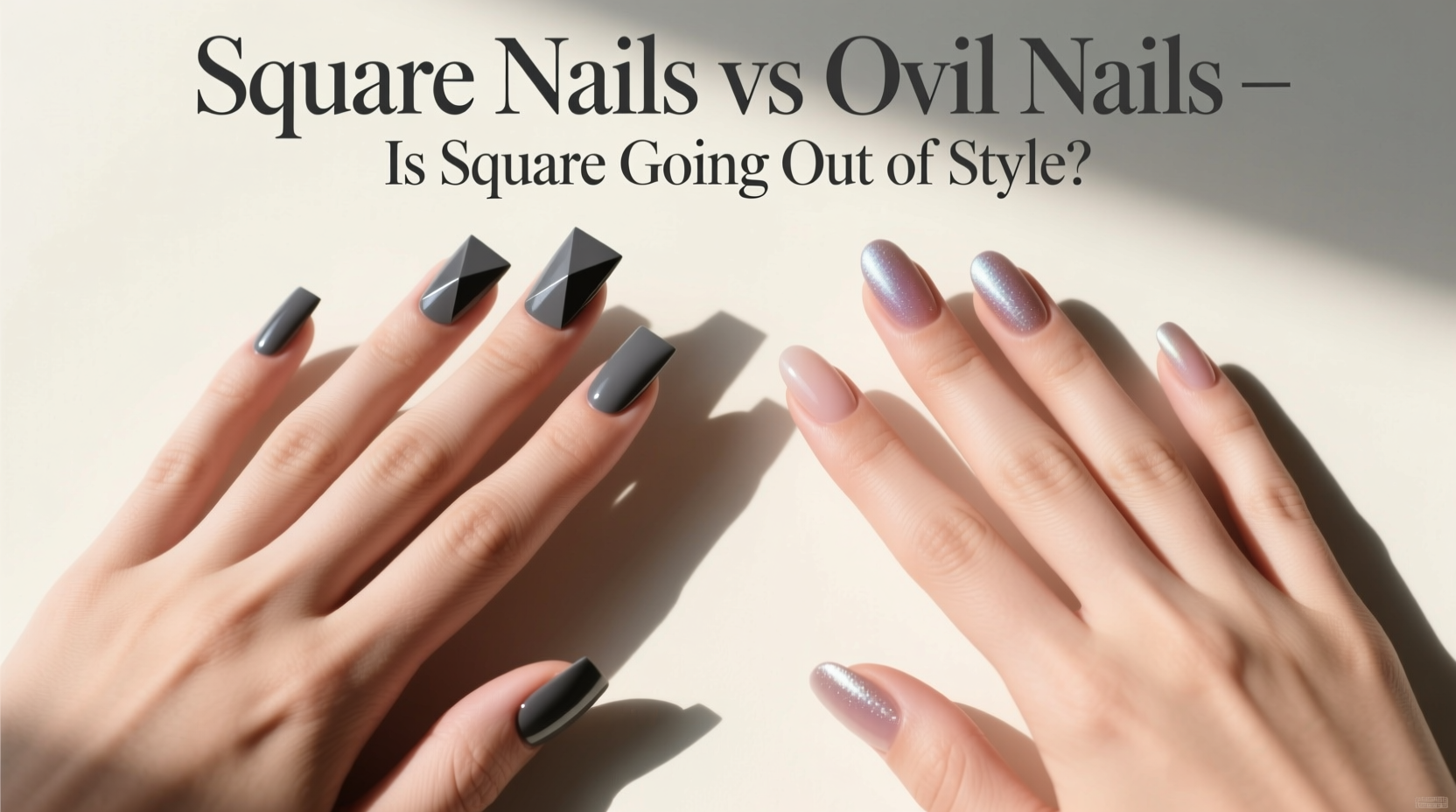
Square nails are characterized by straight-across tips with sharp 90-degree corners. This shape creates a broad, flat surface that offers excellent support for nail art and gives fingers a structured, elongated appearance. It’s particularly favored by those who type frequently or use their hands often, as the flat edge provides stability.
Despite their durability, square nails come with trade-offs. The sharp corners are prone to snagging on fabrics and can break more easily if not properly maintained. Over time, filing down the edges to prevent splitting may lead to a slightly rounded square—essentially evolving into a squoval (a hybrid of square and oval).
The Rise of Oval Nails
Oval nails feature gently curved edges that follow the natural contour of the cuticle, creating a smooth, rounded tip. This shape mimics the natural growth pattern of the nail, making it one of the most structurally sound options. Oval nails are less likely to catch on clothing or snag during everyday tasks, which contributes to their growing popularity.
They’re especially recommended for people with weaker or thinner nails, as the absence of sharp corners reduces the risk of chipping and peeling. Additionally, oval nails offer a timeless, elegant look that complements both casual and formal wear. Celebrities and influencers have increasingly embraced this shape for its understated sophistication and ease of maintenance.
“Oval nails represent a return to balance between beauty and functionality. They enhance the hand without demanding constant upkeep.” — Lila Monroe, Celebrity Nail Artist & Educator
Comparing Square vs Oval: A Practical Breakdown
| Feature | Square Nails | Oval Nails |
|---|---|---|
| Durability | High, but corners are vulnerable | Very high due to even stress distribution |
| Maintenance Level | Moderate to high (requires frequent corner filing) | Low (natural shape resists breaking) |
| Aesthetic Appeal | Modern, bold, edgy | Soft, elegant, natural |
| Suitability for Nail Art | Excellent—flat surface ideal for designs | Good, but limited space at the tip |
| Best For | Confident professionals, fashion-forward individuals | Active lifestyles, natural beauty enthusiasts |
Are Square Nails Going Out of Style?
Fashion cycles are inherently cyclical, and nail trends are no exception. Square nails dominated the early 2010s through the mid-2020s, championed by influencers and salon stylists alike for their crisp, polished appearance. However, recent shifts in consumer behavior—particularly a move toward wellness, self-care, and functional beauty—have tilted the scale in favor of oval nails.
That said, declaring square nails “out of style” would be premature. High-end fashion runways continue to feature square and stiletto variations for dramatic effect. In corporate environments, square nails remain a symbol of precision and professionalism. What’s changing is not the relevance of square nails, but rather the context in which they’re worn.
Instead of a full decline, we’re witnessing a diversification of preference. Consumers are becoming more educated about nail health and are choosing shapes that align with their daily routines. For someone who works at a keyboard all day, oval might win for practicality. For a creative director attending gallery openings, square nails may still be the signature look.
Mini Case Study: From Square to Oval – A Client’s Journey
Jasmine, a 32-year-old graphic designer, had worn square nails for nearly a decade. She loved the sharp lines and how they made her hands appear longer. However, after switching to a remote job with increased typing and parenting young children, she noticed her nails were constantly breaking at the corners. Frustrated, she consulted her nail technician, who suggested transitioning to oval.
Initially hesitant, Jasmine agreed to try the change. Within two weeks, she reported fewer breaks and less irritation when washing dishes or playing with her kids. Though she missed the boldness of square nails, she appreciated the reduced maintenance. Today, she alternates between oval and squoval depending on her schedule—opting for oval during busy seasons and returning to square for vacations or special events.
How to Choose the Right Shape for You
Selecting between square and oval nails shouldn’t be based solely on trend forecasts. Instead, consider these factors:
- Lifestyle demands: Do you type often, handle tools, or engage in hands-on activities? Oval may reduce breakage.
- Natural nail bed shape: Those with wide cuticles may find oval looks more harmonious; narrow beds can carry off square well.
- Manicure frequency: If you go weeks between appointments, oval requires less touch-up.
- Personal style: Are you drawn to minimalist elegance or bold statements?
Step-by-Step Guide to Transitioning Shapes
- Consult your nail technician: Discuss your goals and daily habits to determine the best fit.
- Gradually reshape: Avoid cutting too much at once. File slightly over 2–3 sessions to maintain strength.
- Adjust your filing technique: Use a fine-grit file and always file in one direction to prevent splitting.
- Strengthen your nails: Apply a keratin-based treatment during the transition to minimize damage.
- Evaluate comfort: After two weeks, assess how the new shape feels during daily tasks.
FAQ
Can I switch from square to oval without damaging my nails?
Yes, as long as the transition is gradual. Abrupt changes can weaken the nail plate. Work with your technician to file down corners incrementally over a few appointments.
Do oval nails make fingers look shorter?
No—when done correctly, oval nails can actually elongate the appearance of fingers. The key is maintaining a balanced length and ensuring the curve follows the cuticle line smoothly.
Which shape lasts longer between fills?
Oval nails typically last longer between maintenance visits because they grow out more naturally without unsightly sharp edges. This makes them ideal for those with irregular salon schedules.
Final Thoughts: Style Meets Function
The debate between square and oval nails isn’t about which is better overall, but which serves you best personally. Trends may elevate oval nails as the current favorite, but square nails retain their place in the beauty lexicon for good reason—they convey confidence, structure, and intentionality.
Rather than chasing what’s trending, focus on what supports your lifestyle and enhances your natural beauty. Whether you choose the bold geometry of square nails or the flowing curves of oval, the right shape should feel like an extension of who you are—not just what’s in fashion today.




 浙公网安备
33010002000092号
浙公网安备
33010002000092号 浙B2-20120091-4
Comments
No comments yet. Why don't you start the discussion?