
Deflating an air bed after use doesn’t have to be a tedious chore. When your air mattress is equipped with a built-in foot pump, the process becomes significantly faster and more efficient—provided you know how to use it correctly. Many people struggle with slow deflation, trapped air pockets, or accidental damage during storage, simply because they skip key steps or misunderstand the mechanism. This guide walks you through a proven method to deflate your air bed quickly, safely, and without unnecessary effort. Whether you're packing up after a guest visit or preparing for travel, mastering this process will save time and extend the life of your mattress.
Understanding Your Air Bed’s Built-In Foot Pump
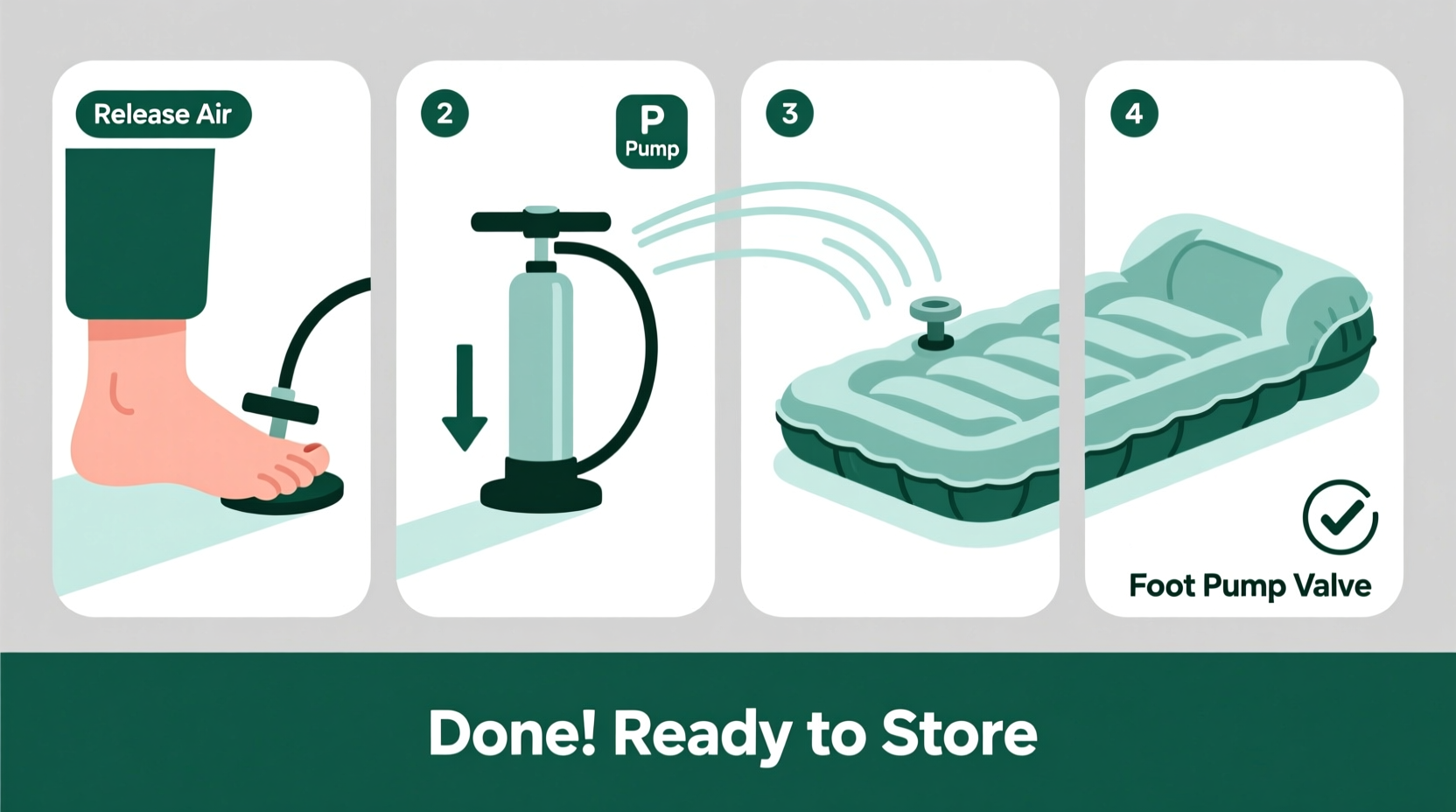
Not all air beds are created equal, and models with integrated foot pumps represent a smart upgrade over traditional manual or electric-only versions. The built-in foot pump eliminates the need for external inflators and gives users direct control over airflow. It typically operates via a one-way valve system: when you press the foot pedal, it forces air out of the mattress chamber and prevents it from flowing back in.
This design is especially useful for quick breakdowns. However, many users fail to achieve full deflation because they don’t engage the valve properly or stop too early, leaving residual air that makes rolling difficult. To get the most out of your foot pump, ensure the deflation valve is fully open and positioned at the lowest point of the bed—this allows gravity to assist in pushing air toward the exit.
Step-by-Step Process to Deflate Efficiently
- Clear the Surface: Remove all bedding, including sheets, blankets, and pillows. Ensure the floor around the air bed is clear to allow easy access on all sides.
- Open the Deflation Valve: Rotate or pull the valve cap counterclockwise until it clicks into the open position. You should hear a hissing sound if air begins escaping.
- Position the Bed Strategically: If possible, tilt the air bed so the foot pump end is slightly lower than the head. Gravity helps move trapped air downward.
- Begin Foot Pumping: Stand on the foot pedal gently but firmly. Use a steady rhythm—one press per second—to steadily expel air. Avoid rapid stomping, which can damage internal seals.
- Apply Manual Pressure: As the bed collapses, walk across the surface (barefoot or in socks) to push remaining air toward the valve. Start from the far end and move toward the pump.
- Roll as You Go: Once about 70% deflated, begin rolling the mattress tightly from the head end toward the foot pump. This traps less air and speeds final evacuation.
- Finish with Final Pumps: After rolling, give 3–5 more foot presses to remove any last pockets of air compressed inside the roll.
- Seal and Store: Close the valve securely and place the mattress in its carry bag or a dry storage area away from sharp objects.
Do’s and Don’ts When Using a Built-In Foot Pump
| Do’s | Don’ts |
|---|---|
| Do open the valve completely before pumping | Don’t try to deflate while still inflated with people or heavy items on it |
| Do use smooth, controlled foot pressure | Don’t wear shoes while operating the pump—risk of puncture is high |
| Do roll the mattress gradually during deflation | Don’t leave the valve open unattended—dust and debris can enter |
| Do store in a cool, dry place after deflating | Don’t fold sharply; always roll to prevent seam stress |
Real-World Example: A Family Weekend Cleanup
The Thompson family hosted their niece for a weekend sleepover using a twin air bed with a built-in foot pump. After breakfast on Sunday, Mr. Thompson attempted to deflate the bed quickly so he could return it to the closet. He opened the valve but didn’t tilt the bed, then began rapidly stomping the foot pump. After two minutes, the mattress was still half-inflated and awkward to handle.
His daughter suggested watching the instruction video again. They repositioned the bed with the pump side slightly lowered, walked across the top to shift air forward, and used consistent foot presses while rolling. The entire process took under 90 seconds the second time. The difference? Proper technique and patience with airflow dynamics.
“Most failures in air bed deflation come down to impatience and poor positioning. Let physics help—you don’t need force.” — Jordan Lee, Product Engineer at SleepWell Outdoors
Pro Tips for Faster Deflation and Longevity
- Deflate Before Disassembling Accessories: Remove the pump hose or attachments only after complete deflation to avoid sucking in dirt.
- Clean the Valve Regularly: Wipe the valve opening monthly with a dry cloth to prevent clogs from lint or pet hair.
- Avoid Over-Pumping: Once no more air escapes, stop pressing. Excessive force wears out the diaphragm over time.
- Use a Helper for Larger Beds: For queen or king sizes, have someone press down on the opposite end while you operate the pump.
Frequently Asked Questions
Why isn’t my foot pump working even though the valve is open?
The most common cause is incorrect valve alignment. Make sure the switch is turned fully to the \"deflate\" setting, not stuck between inflate and deflate. Also, inspect for obstructions like fabric caught in the mechanism. If no air moves after checking these, the internal seal may be worn and need replacement.
Can I speed up deflation with an external vacuum?
No—using a household vacuum is strongly discouraged. The strong suction can collapse internal baffles or tear seams. Stick to the built-in pump and manual rolling for safe results.
How long should deflation take with a foot pump?
For a standard twin or full-size bed, expect 2–4 minutes using proper technique. Larger models may take up to 6 minutes. If it takes longer, double-check the valve position and consider cleaning the pump chamber.
Final Checklist for Quick & Safe Deflation
- Strip all bedding from the air mattress
- Ensure deflation valve is fully open
- Angle the bed so the pump end is lowest
- Press foot pump steadily and rhythmically
- Walk across the surface to shift air toward the valve <6>Start rolling tightly from the head end
- Give final 3–5 pumps after rolling
- Close valve and store in a dry, protected space
Conclusion
Deflating an air bed with a built-in foot pump is meant to simplify your routine, not complicate it. By following the correct sequence—opening the valve, leveraging gravity, applying steady foot pressure, and rolling strategically—you transform what could be a frustrating task into a seamless part of your post-use cleanup. These small adjustments reduce wear, prevent leaks, and make storage easier.




 浙公网安备
33010002000092号
浙公网安备
33010002000092号 浙B2-20120091-4
Comments
No comments yet. Why don't you start the discussion?