
Deleting your Google account is one of the most significant digital decisions you can make. Unlike signing out or disabling a service, permanently removing your Google account erases access to Gmail, Drive, Photos, YouTube, and all other Google-connected platforms. Once deleted, recovery is impossible. This process demands careful planning, especially when safeguarding personal data and ensuring no unintended consequences arise from lost access. Whether you're prioritizing privacy, consolidating online identities, or stepping back from digital life, doing it correctly protects your information and prevents future complications.
Understand What Happens When You Delete Your Google Account
Your Google account is more than just an email address. It's the central hub for nearly every digital interaction you've had with Google services over the years. Deleting it doesn’t just remove Gmail—it removes everything tied to that identity. Before proceeding, recognize exactly what will be lost:
- Emails and contacts: All messages in Gmail, including drafts and sent items, are erased.
- Cloud-stored files: Google Drive documents, Sheets, Slides, and uploaded files vanish permanently.
- Photos and videos: Anything stored in Google Photos—unless manually backed up—is deleted forever.
- YouTube presence: Your channel, uploaded videos, comments, and playlists are removed.
- Play Store purchases: Access to apps, games, movies, and books bought through Google Play ends.
- Account-linked devices: Smartphones, tablets, smart home devices, and wearables lose sync and functionality.
“Once a Google account is deleted, there is no way to restore it. Users must assume full responsibility for backing up critical data.” — Digital Privacy Task Force, 2023 Report
Step-by-Step Guide to Permanently Delete Your Google Account
The deletion process is irreversible after 21 days. Follow these steps carefully to maintain control and avoid accidental loss.
- Back up essential data using Google Takeout
Go totakeout.google.com, sign in, and select the services you want to export (e.g., Mail, Drive, Contacts, Photos). Choose file type (ZIP), delivery method (download link via email), and frequency (one-time). Initiate the export and wait for confirmation emails with download links. - Download and verify all exported files
Save archives to an external hard drive or trusted cloud service (e.g., iCloud, OneDrive). Open sample files to confirm integrity—especially large photo libraries or document folders. - Update or transfer ownership of critical services
If you used your Google account to register domains, business tools, or collaborative projects, reassign ownership. For example:- Transfer Google Docs ownership to another user.
- Change admin roles in Google Workspace if applicable.
- Update login details for third-party apps using “Sign in with Google.”
- Remove device associations
On Android phones: Go to Settings > Accounts > Google > Remove account.
On iOS or computers: Sign out of Chrome, Gmail, and Drive apps. Ensure no auto-sync remains active. - Proceed to account deletion
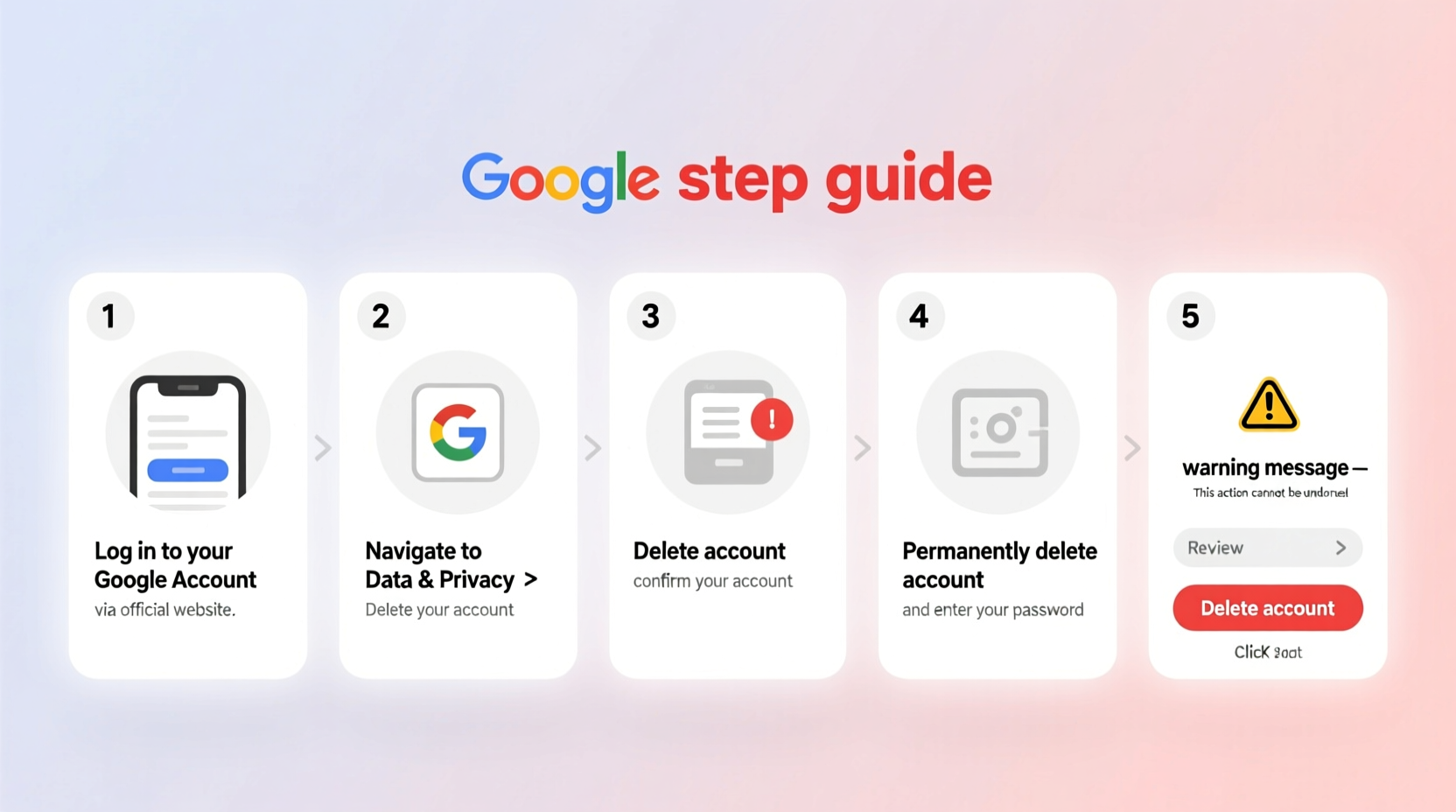
Visitmyaccount.google.com, navigate to “Data & privacy,” then scroll to “Delete your account or services.” Click “Delete your Google Account.” Confirm identity with password or 2FA. - Select deletion and confirm final warnings
Google displays a final checklist. Confirm you’ve backed up data and understand consequences. Click “Delete Account.” - Wait 21 days for permanent removal
During this period, signing into any Google service restores the account. After 21 days, deletion is irreversible and servers purge associated data.
Data Backup Checklist Before Deletion
To ensure nothing important is left behind, use this actionable checklist:
- ✅ Export emails via Google Takeout as .MBOX files
- ✅ Download full Google Photos library (original quality)
- ✅ Save Google Drive contents, including shared files you own
- ✅ Export Chrome bookmarks and passwords (if not synced elsewhere)
- ✅ Transfer YouTube channel content to another platform
- ✅ Revoke third-party app access under “Security” settings
- ✅ Note down important account recovery codes or 2FA backups
Do’s and Don’ts When Deleting Your Google Account
| Do’s | Don’ts |
|---|---|
| Use Google Takeout to archive data in multiple formats | Assume automatic backups exist beyond your control |
| Test downloaded files before deletion | Delete without transferring ownership of shared documents |
| Sign out of all devices after initiating deletion | Reuse the same phone or tablet without wiping Google profiles |
| Keep a written log of exported file locations | Ignore linked subscriptions like YouTube Premium or Google One |
A Real Example: Why Planning Matters
Sophie, a freelance designer from Portland, decided to leave Google after five years of heavy reliance on Gmail and Drive. She began by exporting her data but overlooked her shared client folders. After deletion, she realized several collaborators could no longer access project briefs stored under her account. Though she had local copies, the delay caused missed deadlines. A simple step—transferring folder ownership before deletion—would have prevented this. Her experience underscores the importance of auditing shared resources and communicating changes to team members ahead of time.
Frequently Asked Questions
Can I recover my Google account after deletion?
No. Once the 21-day grace period ends, Google permanently deletes your account and all associated data. There is no customer support option to reverse this action.
Will my Gmail address become available for others to use?
No. Google does not release deleted email addresses for new registrations. This prevents impersonation and maintains security across the ecosystem.
What happens to my YouTube channel if I delete my Google account?
Your entire YouTube presence—including videos, comments, and subscribers—is erased. Even if you’ve backed up videos locally, the channel itself cannot be restored.
Final Considerations and Closing Advice
Deleting your Google account isn't merely a technical task—it's a deliberate act of digital minimalism. While the process is straightforward, its impact is profound. Many people underestimate how deeply embedded Google services are in daily workflows, communication, and creative output. Taking the time to audit, export, and transfer essential data ensures you retain control over your digital legacy. Remember: this decision should be made with clarity, not frustration. If you're unsure, consider disabling services temporarily instead of full deletion.
After deletion, take inventory of your remaining digital footprint. Update passwords elsewhere, consider privacy-focused alternatives (like ProtonMail or DuckDuckGo), and reflect on how technology aligns with your values moving forward.




 浙公网安备
33010002000092号
浙公网安备
33010002000092号 浙B2-20120091-4
Comments
No comments yet. Why don't you start the discussion?