
Walking your dog should be a joyful experience for both of you. Yet, many pet owners unknowingly compromise their dog’s comfort and safety with improperly fitted harnesses and leashes. A poorly adjusted harness can cause chafing, restrict movement, or even allow escape—while the wrong leash setup reduces control and increases stress. Getting the fit right isn’t complicated, but it requires attention to detail and consistency. This guide walks you through each essential step to ensure your dog stays comfortable, secure, and happy on every walk.
Why Proper Harness and Leash Fit Matters
Dogs are not built to be pulled from the neck. Traditional collars place pressure on the trachea, spine, and thyroid, especially in small breeds or dogs prone to respiratory issues. A well-fitted harness distributes force across the chest and shoulders, reducing strain and improving posture. When combined with a properly attached leash, this setup enhances communication between you and your dog, making training easier and walks more enjoyable.
According to Dr. Sarah Jensen, a certified veterinary behaviorist: “A correctly fitted harness supports healthy biomechanics and prevents long-term musculoskeletal damage, particularly in active or working dogs.”
“Even the most expensive harness fails if it doesn't fit. Comfort and function go hand-in-hand.” — Dr. Sarah Jensen, DVM, Canine Rehabilitation Specialist
Choosing the Right Harness Type
Not all harnesses serve the same purpose. The best choice depends on your dog’s size, breed, behavior, and walking habits. Here’s a quick comparison:
| Type of Harness | Best For | Fitting Focus |
|---|---|---|
| Back-clip (standard) | Calm walkers, trained dogs | Snug around chest and ribcage |
| Front-clip (no-pull) | Pullers, strong breeds | Clip centered on chest, straps aligned |
| Head-halter (e.g., Gentle Leader) | Dogs needing directional control | Nose loop + neck strap balance |
| Vest-style (supportive) | Senior dogs, mobility issues | Even weight distribution, padding |
For most everyday use, a front- or back-clip harness made from breathable mesh with adjustable straps offers the best blend of comfort and control.
Step-by-Step Guide to Fitting a Dog Harness
Fitting a harness isn’t just about snapping it on—it’s about precision. Follow these steps carefully to achieve optimal comfort and security.
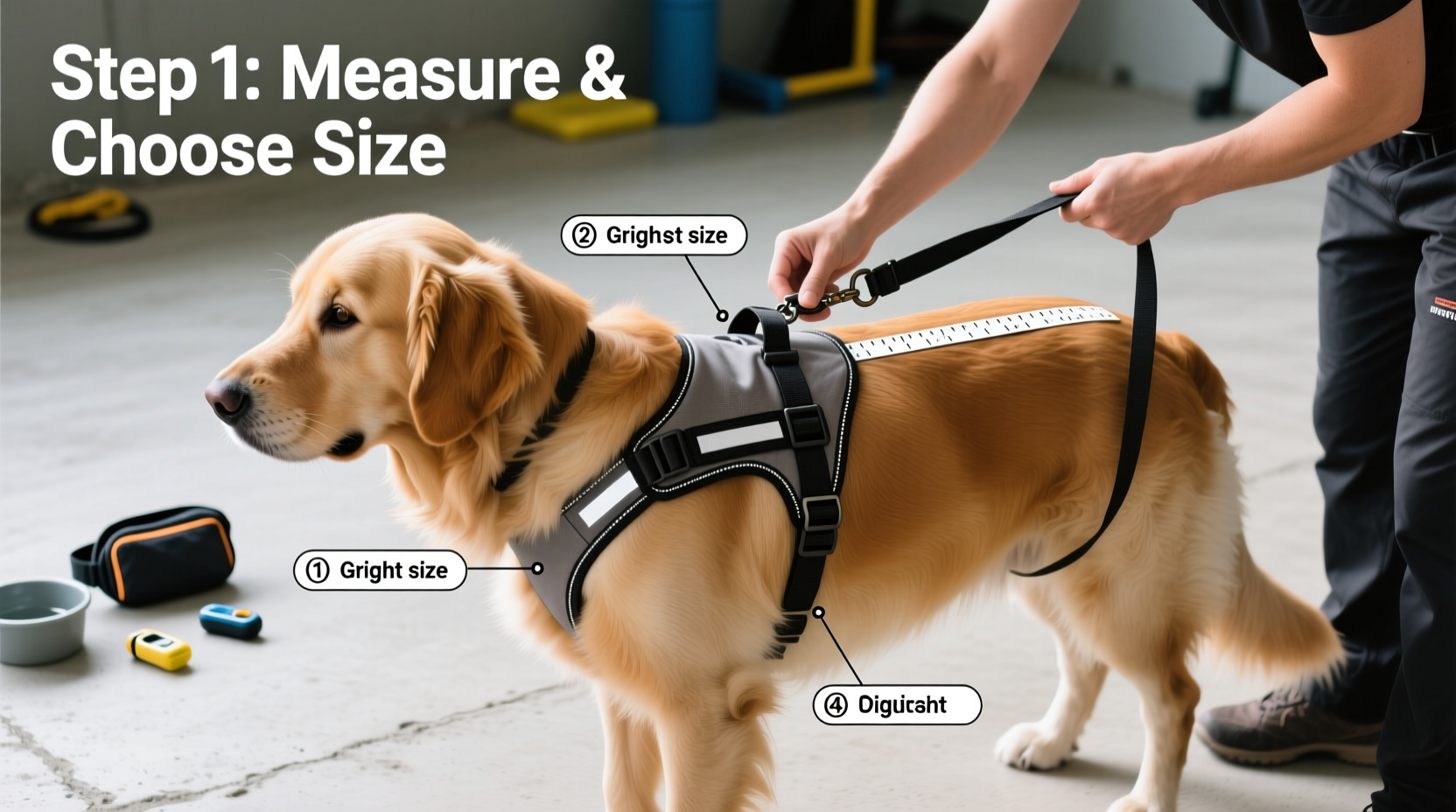
- Measure Your Dog First
Use a soft tape measure to record:- Chest girth: Just behind the front legs, where the widest part of the ribcage is.
- Neck circumference: At the base of the skull, above the shoulders.
- Back length: From the base of the neck to where the tail begins.
- Select the Correct Size
Refer to the manufacturer’s sizing chart. Never assume small, medium, large will fit uniformly across brands. If your dog falls between sizes, size up—especially for growing puppies or thick-coated breeds. - Put the Harness On Backward (If Required)
Many harnesses require placing the belly strap over the dog’s head first. Lay the harness on the floor with the label facing up and the loops oriented correctly. Gently guide your dog’s front legs into the side loops while lifting the harness upward into position. - Adjust All Straps Gradually
Begin with the loosest setting and tighten incrementally:- Secure the chest strap snugly but not tightly.
- Fasten the belly strap so it sits just behind the front legs.
- Ensure shoulder straps lie flat without twisting.
- Check the Two-Finger Rule
Slide two fingers under each strap. You should be able to fit them comfortably—not more, not less. Too tight causes rubbing; too loose risks escape. - Test Mobility and Position
Let your dog move around indoors. Watch how the harness rides. It should stay level and not shift forward, backward, or twist. The metal ring for the leash should sit centered on the chest (for front-clip) or atop the shoulders (for back-clip). - Attach the Leash Properly
Use a 4–6 foot nylon or biothane leash. Clip it securely to the designated metal ring. Avoid using retractable leashes with front-clip harnesses—they defeat the purpose of controlled guidance.
Real-World Example: Fixing a Loose Fit
Milo, a 2-year-old Australian Shepherd, kept slipping out of his harness during neighborhood walks. His owner assumed he’d grown, so she bought a larger one—only for the problem to worsen. After consulting a trainer, she discovered the chest strap was too loose, allowing Milo to back out when excited. By tightening the lower strap and repositioning the harness higher behind his shoulders, the escape attempts stopped immediately. The key wasn’t size—it was proper adjustment.
Leash Attachment and Handling Techniques
The leash is an extension of communication. How you hold it and where it connects affects control and comfort.
- Hold the leash midline: Grip the middle of the leash, letting slack hang in a loop. This allows quick tension adjustment without jerking.
- Keep the dog at your side: Use treats or verbal cues to encourage heeling. Don’t let the leash go taut unless correcting direction.
- Avoid overhead pulling: Never yank upward. Pulling up on a harness can compress the shoulders and discourage forward motion.
Common Fitting Mistakes and How to Avoid Them
Even experienced dog owners make these errors:
| Mistake | Consequence | Solution |
|---|---|---|
| Harness too loose around chest | Dog slips out or twists | Tighten lower strap; recheck fit weekly |
| Straps twisted under armpits | Chafing, restricted stride | Lay harness flat before putting on |
| Using collar and harness together incorrectly | Conflicting pressure points | If using both, attach leash to harness only |
| Ignoring wear and tear | Broken buckles, frayed fabric | Inspect monthly; replace if damaged |
FAQ: Common Questions About Harness and Leash Fitting
How often should I check the fit of my dog’s harness?
Check every time you put it on. Dogs fluctuate in weight, and puppies grow rapidly. Reassess fit at least once a month, more often for young dogs. Adjust straps as needed—even a half-inch can make a difference.
Can I leave the harness on my dog all day?
No. Harnesses are designed for activity, not constant wear. Leaving one on can cause skin irritation, fur breakage, or accidental snagging. Remove it after walks and inspect the skin underneath for redness or sores.
My dog scratches at the harness—what should I do?
This may indicate improper fit, material sensitivity, or anxiety. First, double-check the tightness and alignment. Try a softer fabric like neoprene or padded mesh. If scratching persists, consult a trainer or vet to rule out behavioral or dermatological issues.
Final Checklist Before Every Walk
- ✅ Measure accurately before purchase
- Use real numbers, not guesses.
- ✅ Fasten all clips and adjust all straps
- No dangling ends or loose loops.
- ✅ Confirm two-finger space under straps
- Comfortable but secure.
- ✅ Attach leash to correct ring
- Front for control, back for casual walks.
- ✅ Observe movement indoors first
- Watch for pinching, slipping, or reluctance.
Conclusion: Walk with Confidence and Care
Properly fitting a dog harness and leash is one of the simplest yet most impactful things you can do for your dog’s physical health and emotional well-being. When done right, it transforms walks from a struggle into a shared experience of trust and connection. Take the time to measure, adjust, and observe. Your dog may not thank you in words—but you’ll see it in their relaxed stride, perked ears, and eager eyes.




 浙公网安备
33010002000092号
浙公网安备
33010002000092号 浙B2-20120091-4
Comments
No comments yet. Why don't you start the discussion?