
Choosing the right thermos isn’t just about brand or design—it’s about function. Many people overlook capacity until they’re either refilling mid-morning or lugging around a heavy container that’s half-empty. The decision between a small and large thermos can quietly impact your day: from hydration habits to portability, temperature retention, and even how often you actually use it. While it might seem trivial, the size of your thermos influences comfort, convenience, and consistency in your routine.
Whether you're fueling early commutes, packing for hikes, or simply trying to stay warm at your desk, understanding how size affects real-world performance is essential. This guide breaks down the trade-offs, use cases, and hidden factors so you can make an informed choice—one that fits not just your drink preferences, but your life.
Understanding Thermos Capacity: What “Small” and “Large” Really Mean
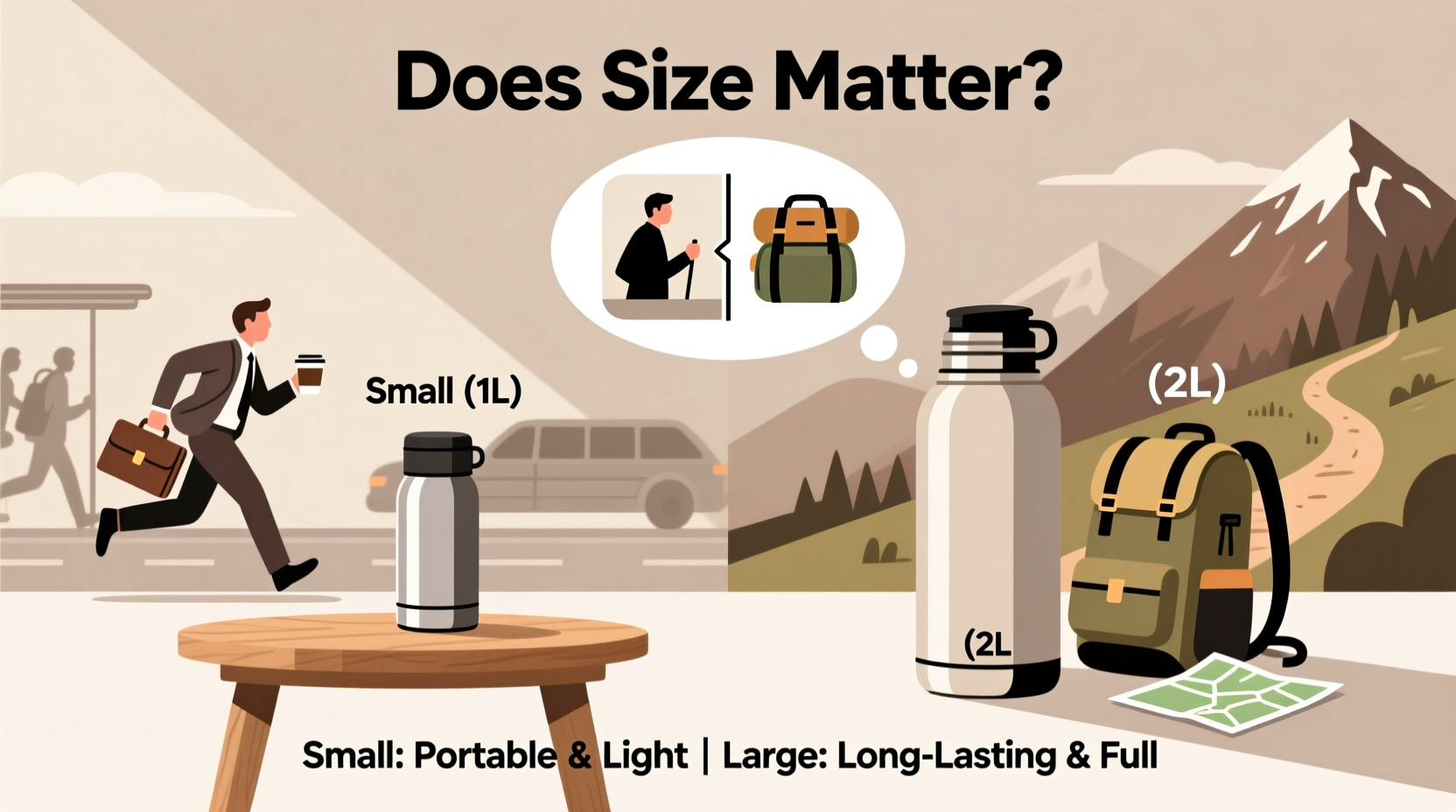
Thermos sizes vary significantly across brands, but general categories help frame the discussion:
- Small (8–16 oz / 240–475 ml): Ideal for espresso, short lattes, or concentrated servings of tea or soup.
- Medium (20–32 oz / 590–950 ml): A balanced option for most daily users—enough for multiple cups without being bulky.
- Large (40–64 oz / 1.2–1.9 L): Designed for extended outings, shared use, or those who drink frequently throughout the day.
The confusion often arises because “large” doesn’t always mean “better.” A 64-ounce thermos may keep coffee hot for 24 hours, but if only 20 ounces are consumed before cooling, the rest goes to waste. Conversely, a small 12-ounce flask might require constant refills, defeating the purpose of insulation.
“Size should follow function. I’ve seen clients abandon high-end thermoses simply because they were too big to fit in their car cup holder.” — Daniel Park, Product Design Consultant, Outdoor Gear Lab
When a Small Thermos Makes Sense
Smaller thermoses shine in specific scenarios where portability, precision, or ritual matters more than volume.
They’re particularly effective for:
- Commuting via public transit or biking—compact size reduces bulk.
- Coffee purists who want one perfect pour without dilution over time.
- Backpackers or hikers covering short trails who need minimal weight.
- Kitchen-to-desk transfers where reheating isn't practical.
However, small thermoses demand discipline. Once emptied, there's no backup. They also tend to cool faster proportionally because the surface-area-to-volume ratio increases as size decreases. That means a 10-ounce thermos may lose heat 15–20% faster than a 32-ounce model under identical conditions.
Advantages of a Large Thermos
Larger models excel when sustained access to hot (or cold) beverages is non-negotiable. Think construction workers, long-haul drivers, parents managing kids’ outdoor activities, or remote workers without easy kitchen access.
Benefits include:
- Extended autonomy—fewer trips to refill or reheat.
- Better heat retention due to thermal mass; more liquid slows temperature drop.
- Versatility—can serve multiple people or double as a portable soup container.
- Fewer compromises on consumption habits—you can sip freely without rationing.
But drawbacks exist. Weight becomes an issue: 32 ounces of water weighs over 2 pounds, and 64 ounces tips the scale at nearly 4. Add a bulky shape, wide base, or inconvenient lid, and usability drops sharply. Many large thermoses don’t fit in standard cup holders, backpack side pockets, or under airplane seats.
Real Example: Sarah’s Morning Routine
Sarah, a nurse working 12-hour shifts, initially bought a sleek 12-ounce stainless steel thermos because it looked minimalist and fit in her scrub pocket. By hour three, she’d finished her coffee and had no way to get more—hospital break rooms were often occupied. She switched to a 40-ounce wide-mouth model. Though heavier, it now holds enough coffee to last her entire shift, doubles as a tea infuser, and keeps water hot for instant oatmeal during night rounds. The extra weight was a minor trade-off for reliability.
Key Factors to Consider Before Choosing
Selecting the right size isn’t about averages or trends—it’s personal. Use these criteria to evaluate what works for your lifestyle.
| Factor | Small Thermos (≤16 oz) | Large Thermos (≥40 oz) |
|---|---|---|
| Portability | Excellent – fits in bags, glove compartments, bike cages | Poor – often requires dedicated carry space |
| Heat Retention | Good (6–12 hrs) | Excellent (24+ hrs with premium models) |
| Daily Usage Pattern | Best for single servings or quick consumption | Ideal for slow sippers or all-day reliance |
| Weight When Full | 0.75–1 lb | 2.5–4 lbs |
| Spill Risk | Lower – smaller volume, easier to control pouring | Higher – especially with wide mouths or faulty lids |
Step-by-Step: How to Choose Your Ideal Size
- Track your current drinking habits for three days. Note how much hot liquid you consume and when.
- Evaluate your carrying environment. Do you use a briefcase, backpack, or just coat pockets?
- Test cup holder dimensions. Measure your car, stroller, or bike mount if applicable.
- Decide on primary beverage type. Espresso lovers may prefer small, while tea drinkers benefit from larger infusion space.
- Consider secondary uses. Will you carry soup, share drinks, or need ice retention?
- Try before you commit. Borrow different sizes or buy returnable options first.
Common Misconceptions About Thermos Size
Several myths cloud judgment when selecting capacity:
- Myth: Bigger always means better heat retention.
Reality: Insulation quality matters more than size. A well-made 16-oz Hydro Flask outperforms a cheap 64-oz jug. - Myth: Small thermoses are only for coffee.
Reality: They work well for broths, matcha, or even keeping baby bottles warm. - Myth: You’ll save money by buying one large thermos instead of two small ones.
Reality: If one sits unused due to inconvenience, you’ve wasted both money and utility.
FAQ: Common Questions About Thermos Size
Does a larger thermos keep drinks hotter longer?
Generally, yes—but only if both models have comparable insulation (double-wall vacuum, copper lining, etc.). The greater volume in a large thermos creates more thermal inertia, slowing heat loss. However, opening frequency and lid seal integrity play bigger roles in actual performance.
Can I use a small thermos for all-day hydration?
Only if you plan to refill. A 12-ounce thermos holds less than half the recommended hourly intake for someone drinking 64+ ounces daily. For continuous use, pair a small thermos with a separate cold water bottle.
Is there a universal \"best\" size?
No. The ideal size depends on individual routines. That said, 20–32 ounces is the most versatile range, balancing capacity, portability, and compatibility with accessories like cup holders and cleaning brushes.
Final Checklist: Picking the Right Size Thermos
- ✅ I know exactly how much hot liquid I consume per day.
- ✅ I’ve measured my bag, vehicle, and workspace constraints.
- ✅ I understand whether I’m a grazer (frequent sips) or a session drinker (one or two servings).
- ✅ I’ve considered secondary uses like food storage or sharing.
- ✅ I prioritize build quality and lid design, not just capacity.
- ✅ I’m willing to test different sizes before making a final decision.
Conclusion: It Does Matter—But Not How You Think
The debate between small and large thermos sizes isn’t about which is objectively superior—it’s about alignment with your daily rhythm. A mismatched size leads to underuse, frustration, or unnecessary burden. The right choice supports your habits rather than forcing you to adapt to it.
Don’t default to what’s popular or largest on the shelf. Instead, assess your real needs: how much you drink, where you go, and how you move through your day. Whether you land on a compact 12-ounce companion or a rugged 64-ounce workhorse, let intention guide your decision.




 浙公网安备
33010002000092号
浙公网安备
33010002000092号 浙B2-20120091-4
Comments
No comments yet. Why don't you start the discussion?