
For decades, animation has been a powerful medium for storytelling, imagination, and emotional resonance. Among the most celebrated studios in this world are Walt Disney Animation Studios and Studio Ghibli. While both have shaped generations with timeless films, their creative philosophies, visual languages, and narrative structures reveal striking contrasts. For fans of animated cinema, understanding these differences deepens appreciation for each studio’s unique artistry. This article explores how Studio Ghibli and Disney approach animation—not just in technique, but in worldview, character development, and cultural identity.
Artistic Vision and Aesthetic Philosophy
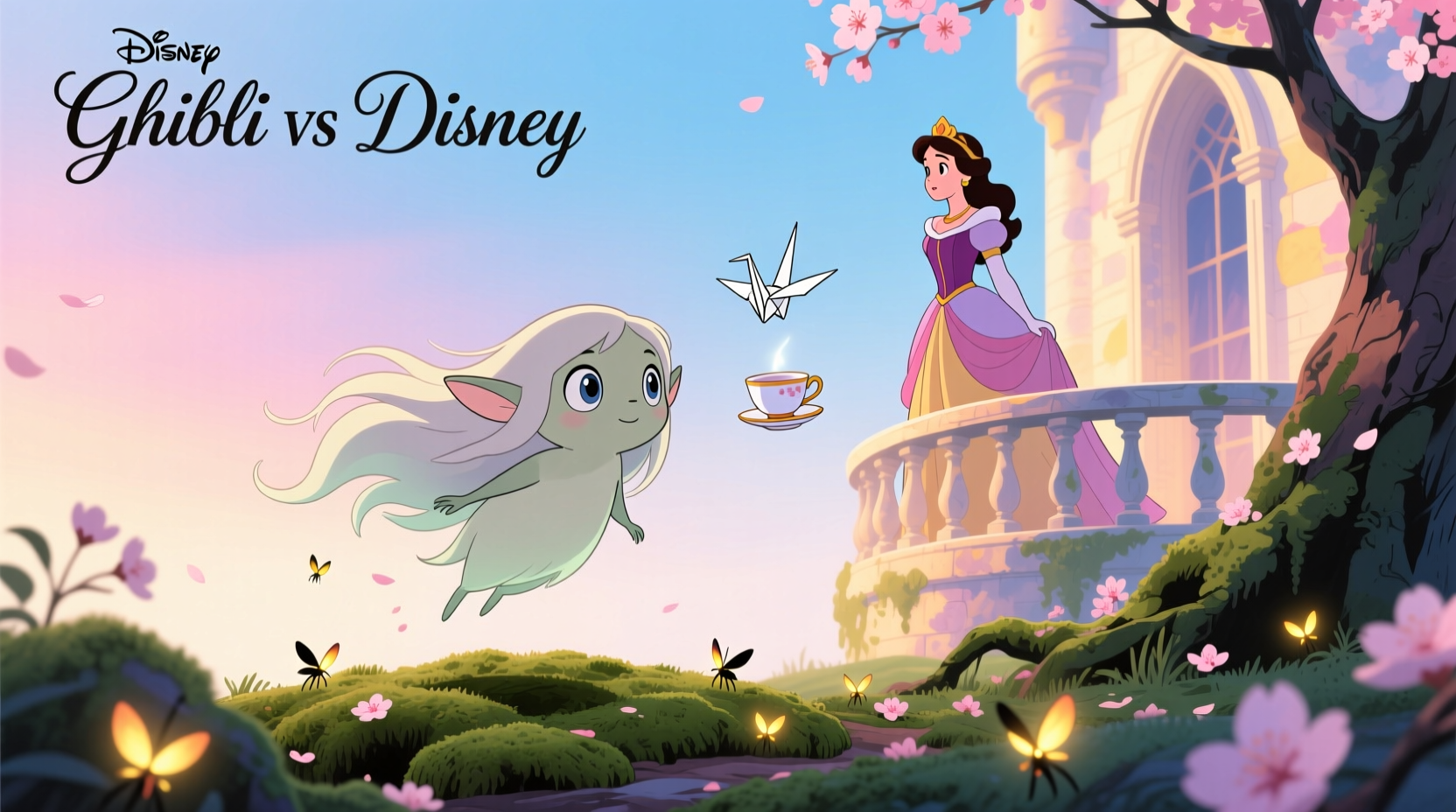
The visual language of any animation studio begins with its underlying philosophy. Disney, since its founding in the 1930s, has championed a style rooted in clarity, exaggeration, and theatricality. Its early works like *Snow White* and *Cinderella* established a tradition of highly polished, symmetrical designs with bold outlines and saturated colors. Characters are often idealized—princesses with delicate features, heroes with chiseled jaws—and environments follow a stage-like composition that guides the viewer’s eye with precision.
In contrast, Studio Ghibli, founded in 1985 by Hayao Miyazaki, Isao Takahata, and Toshio Suzuki, embraces a more naturalistic and contemplative aesthetic. Ghibli films prioritize texture, ambient detail, and subtle motion. Watch any scene from *My Neighbor Totoro* or *Spirited Away*, and you’ll notice the wind rustling through trees, steam rising from bathhouse pipes, or dust motes floating in sunlight—details that serve no plot function but enrich the sense of presence. This “everyday magic” is central to Ghibli’s appeal: the belief that wonder exists not in spectacle alone, but in quiet observation.
Disney’s animation often aims to dazzle; Ghibli’s seeks to immerse. Where Disney uses dynamic camera movements and rapid cuts during musical numbers, Ghibli favors long, static shots that allow scenes to breathe. The pacing itself becomes part of the storytelling—a reflection of Japanese aesthetics like *ma* (negative space) and *wabi-sabi* (beauty in imperfection).
Storytelling Approaches: Hero’s Journey vs. Slice-of-Life Wonder
Disney narratives frequently follow the classic hero’s journey: a protagonist faces adversity, gains allies, overcomes obstacles, and returns transformed. Think of Simba in *The Lion King*, Elsa in *Frozen*, or Moana on her ocean voyage. These arcs emphasize personal growth through external conflict, often culminating in a climactic confrontation. Emotional beats are clearly signposted—music swells, characters deliver monologues, and resolutions feel earned yet definitive.
Studio Ghibli stories, while sometimes epic in scope (*Princess Mononoke*, *Howl’s Moving Castle*), often resist tidy conclusions. Miyazaki has said he dislikes stories where “good wins and evil is destroyed.” Instead, Ghibli films explore coexistence, ambiguity, and moral complexity. In *Nausicaä of the Valley of the Wind*, the protagonist doesn’t defeat her enemies so much as change their perception of nature. In *Only Yesterday*, there’s no villain—just the quiet unfolding of memory and self-reflection.
Ghibli also embraces what critics call “plotlessness”—narratives driven less by action than by experience. Consider the first half of *Kiki’s Delivery Service*, where Kiki simply finds a place to live, learns to fly, and bakes pastries. There’s tension, yes, but it arises from loneliness and self-doubt, not a looming catastrophe. This slice-of-life approach reflects a broader Japanese tradition in literature and film, where character interiority matters more than dramatic escalation.
“We do not need magic to transform our world. We carry all the power we need within ourselves already.” — Hayao Miyazaki
Character Design and Emotional Expression
Character design reveals fundamental differences in how each studio views human (and non-human) nature. Disney characters are archetypal: the innocent princess, the comic sidekick, the noble mentor. Their emotions are broad and instantly readable—eyes widen in surprise, mouths drop in shock, brows furrow in anger. This expressiveness ensures universal comprehension, especially important in global markets.
Ghibli characters, meanwhile, are often understated. Faces may remain neutral even during intense moments, with emotion conveyed through posture, silence, or environmental cues. Chihiro in *Spirited Away* rarely cries dramatically; her fear is shown in clenched hands and hesitant steps. This restraint aligns with cultural norms in Japan, where emotional control is valued, and feelings are often communicated indirectly.
Moreover, Ghibli populates its worlds with complex adults—teachers, parents, factory workers—who have inner lives beyond supporting the protagonist. Disney, especially in its earlier eras, often reduced adult figures to caricatures or absent presences. Recent films like *Encanto* and *Raya and the Last Dragon* show progress, but Ghibli has consistently treated adult struggles—from war trauma to marital strain—with rare seriousness.
Comparison Table: Character and Narrative Traits
| Aspect | Disney | Studio Ghibli |
|---|---|---|
| Narrative Structure | Hero’s journey, clear climax | Episodic, reflective, open-ended |
| Emotional Expression | Exaggerated, theatrical | Subtle, internalized |
| Protagonist Age | Often teens or young adults | Frequently children or adolescents |
| Villains | Clearly defined antagonists | Moral ambiguity, redemption arcs |
| Adult Characters | Supporting roles, often simplified | Fully developed, emotionally layered |
Themes and Cultural Roots
The thematic core of each studio is inseparable from its cultural context. Disney emerged from American ideals of individualism, optimism, and triumph over adversity. Its stories often celebrate self-discovery (“Just be yourself!”), romantic love as transformative, and the belief that one person can change the world. Even when addressing darker themes—loss in *Bambi*, identity in *Tangled*—the tone ultimately leans hopeful, often resolving in celebration.
Studio Ghibli, shaped by postwar Japan and Shinto-Buddhist traditions, engages more deeply with impermanence, environmental ethics, and collective responsibility. Nature in Ghibli films is not a backdrop but a living force—sometimes nurturing, sometimes wrathful. The forest spirits in *Princess Mononoke* are neither good nor evil; they react to human actions. This animistic worldview sees divinity in rivers, trees, and wind, reinforcing a message of harmony rather than domination.
War and industrialization are recurring concerns. *Grave of the Fireflies* is a harrowing depiction of civilian suffering during WWII. *Castle in the Sky* critiques militarism and technological hubris. Even *Ponyo* carries undertones of ecological imbalance. These themes reflect Japan’s historical relationship with technology and nature—one marked by both reverence and caution.
While Disney increasingly incorporates diverse cultures (*Moana*, *Encanto*, *Wish*), its storytelling framework remains largely consistent. Ghibli, by contrast, rarely seeks global appeal through adaptation. Its films are deeply Japanese in setting, rhythm, and sensibility, trusting audiences to engage with unfamiliar contexts.
Mini Case Study: Two Princesses, Two Worlds
Compare *Cinderella* (1950) and *Spirited Away* (2001). Both feature young women thrust into magical realms, facing trials and emerging stronger. But their journeys diverge profoundly.
Cinderella’s transformation hinges on external forces: her fairy godmother, the prince, the glass slipper. Her agency is limited; she waits for rescue, sings of dreams, and ultimately marries into royalty. The story reinforces a passive ideal of virtue rewarded.
Chihiro, in contrast, enters the spirit world by accident and must earn her survival. She works, negotiates, shows kindness to outcasts, and rescues her parents through courage and wit. There’s no prince, no romance, no grand ball. Her reward is maturity, memory, and return to ordinary life. The film suggests that growth comes not from fate, but from choice and effort.
This contrast illustrates a broader difference: Disney often rewards destiny; Ghibli honors resilience.
Animation Techniques and Production Values
Technically, both studios have pushed the boundaries of hand-drawn animation. Disney pioneered multiplane cameras, squash-and-stretch physics, and synchronized sound. Ghibli, while influenced by Disney’s early work, developed its own techniques—especially in depicting natural phenomena. The flight sequences in *Porco Rosso* or *Howl’s Moving Castle* are renowned for their fluidity and attention to aerodynamics.
Where Disney embraced digital tools early (transitioning to CGI with *Tangled*), Ghibli resisted automation longer. Miyazaki famously banned computers in his studio for years, insisting on hand-painted cels. Even today, Ghibli blends traditional methods with selective digital enhancement, preserving a tactile quality lost in fully rendered 3D animation.
A telling example: in *The Wind Rises*, the dream sequences of aircraft design are animated with obsessive detail—rivets, fabric tension, airflow—all drawn frame by frame. This dedication to craft reflects a belief that labor itself imbues art with soul.
Checklist: How to Deepen Your Appreciation of Both Studios
- Watch one Disney and one Ghibli film back-to-back (e.g., *Frozen* and *Kiki’s Delivery Service*) and compare pacing.
- Identify the moment the protagonist makes a key decision—note whether it’s driven by emotion, duty, or necessity.
- Analyze the role of music: Does it underscore emotion (Disney) or blend into atmosphere (Ghibli)?
- Look for background details: Are they decorative (Disney) or narratively suggestive (Ghibli)?
- Reflect on the ending: Does it provide closure, or leave questions open?
FAQ
Is Studio Ghibli better than Disney?
Neither studio is objectively “better.” They serve different artistic goals. Disney excels in emotional accessibility and musical storytelling; Ghibli offers depth, subtlety, and philosophical richness. Preference depends on what you value in animation.
Why don’t Ghibli films have big musical numbers?
Unlike Disney’s Broadway-inspired tradition, Ghibli integrates music more organically. Joe Hisaishi’s scores enhance mood but rarely interrupt narrative flow with full songs. Singing, when it occurs (e.g., Satsuki’s chant in *Totoro*), feels spontaneous and diegetic.
Can Disney and Ghibli learn from each other?
Absolutely. Disney’s recent films show greater emotional nuance and environmental themes (*Luca*, *Encanto*). Ghibli’s influence is evident in Pixar’s quieter moments (*Soul*, *Turning Red*). Cross-pollination enriches both traditions.
Conclusion: Embracing Both Legacies
Studio Ghibli and Disney represent two pinnacles of animated storytelling, each shaped by distinct cultures, histories, and artistic visions. To love one is not to reject the other. Disney’s brilliance lies in its ability to uplift, inspire, and unite audiences across ages and borders. Ghibli’s strength is its patience, its respect for silence, and its unwavering gaze at the complexities of existence.
Fans who explore both studios gain more than entertainment—they gain perspective. They see how animation can be both a mirror and a window: reflecting universal emotions while opening onto worlds shaped by different values and aesthetics. Whether you’re moved by the swell of a Disney ballad or the whisper of wind through a Ghibli forest, the magic of animation remains undeniable.




 浙公网安备
33010002000092号
浙公网安备
33010002000092号 浙B2-20120091-4
Comments
No comments yet. Why don't you start the discussion?