
When it comes to choosing a wig that maintains its style through repeated wear and washing, one of the most pressing questions is: which material—synthetic or human hair—holds curls better over time? This isn't just about initial appearance; it's about long-term performance, especially for those who rely on their wigs daily. Curl retention after multiple washes reveals not only the quality of the fibers but also how well they withstand chemical exposure, heat styling, and mechanical stress. The answer depends on several factors, including fiber composition, construction techniques, and care routines.
While synthetic wigs are often praised for their convenience and affordability, human hair wigs have long been considered the gold standard for natural movement and styling versatility. But when subjected to repeated cleansing cycles, how do these two materials truly compare in maintaining curled styles? Let’s examine the science, real-world usage patterns, and expert insights to determine which option performs best under consistent use.
The Science Behind Curl Retention in Wigs
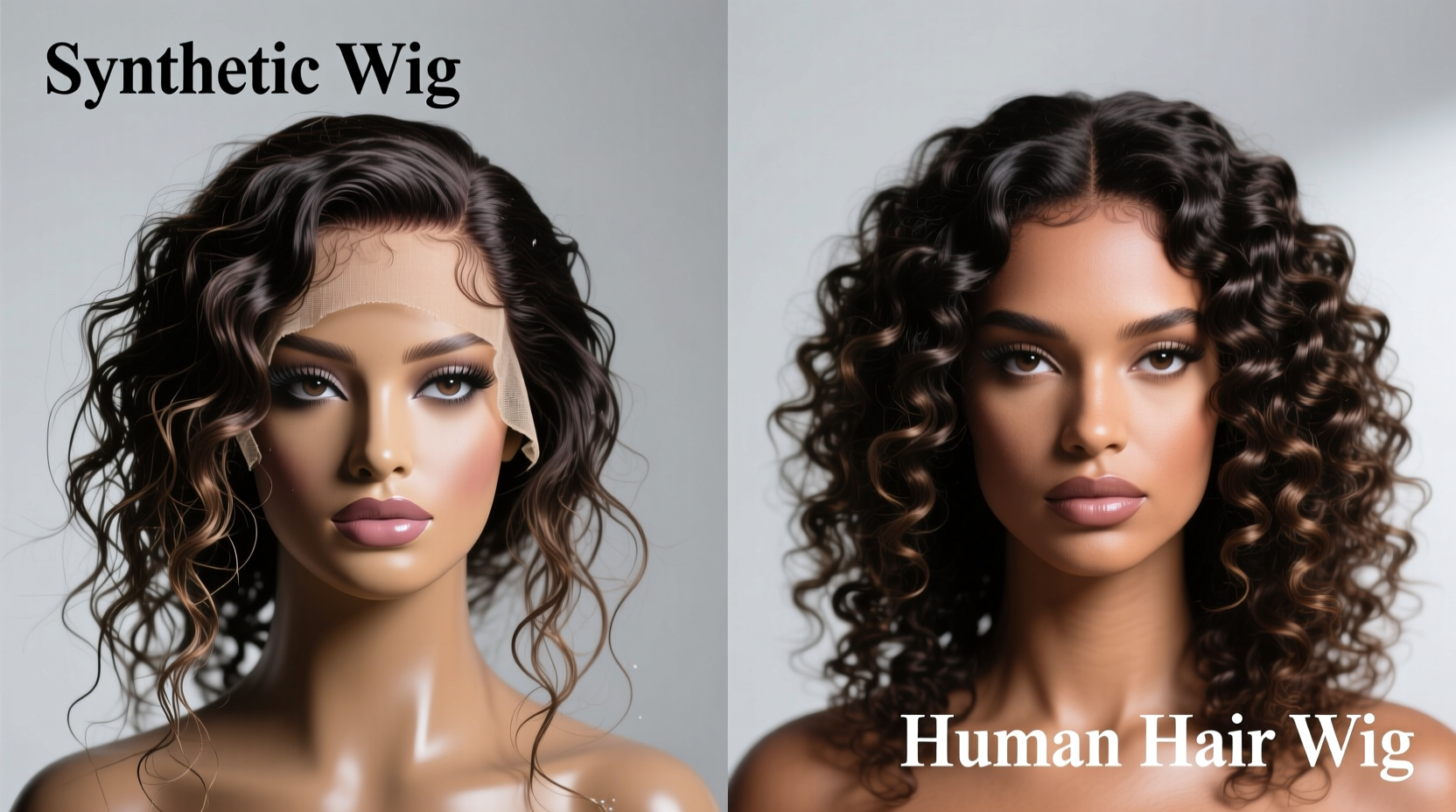
Curl retention refers to a wig’s ability to maintain its wave pattern or spiral shape after being washed, dried, and styled. This property is influenced by the structural integrity of the hair fiber, its porosity, and how it responds to water, heat, and chemical agents found in shampoos and conditioners.
In human hair, the cuticle layer plays a crucial role in moisture regulation and surface smoothness. When healthy, this outer layer protects the cortex—the core where keratin proteins give hair its strength and elasticity. Curly human hair wigs derive their shape from natural disulfide bonds within the cortex. These bonds can be temporarily broken during washing and restyled with heat or setting techniques. However, excessive washing or improper care weakens these bonds over time, leading to looser curls or frizz.
Synthetic wigs, on the other hand, are typically made from modacrylic or polyester-based fibers engineered to mimic human hair. Many synthetic wigs come pre-styled with heat-set curls that are molded during manufacturing. Unlike human hair, synthetic fibers don’t contain keratin or natural protein structures. Instead, their curl pattern is “locked in” through thermal processing. This gives them an edge initially—they bounce back into shape more predictably after washing because the curl isn’t dependent on bond reformation.
“Synthetic wigs are designed for consistency. Their curls are factory-set using precise temperature controls, making them highly resistant to change—even after ten or more washes.” — Lena Torres, Wig Design Specialist at NovaTress Labs
Performance Comparison: Wash After Wash
To evaluate long-term curl retention, consider what happens to each type of wig across five standard wash-and-dry cycles using mild sulfate-free shampoo and air drying:
| Factor | Synthetic Wig | Human Hair Wig |
|---|---|---|
| Initial Curl Definition | High – crisp, uniform curls | Moderate to high – varies by donor and texture |
| After 3 Washes | Minimal change – retains ~95% curl pattern | Noticeable loosening – ~70–80% retention |
| After 5+ Washes | Slight fraying at ends; overall shape intact | Significant loss of spring; increased frizz |
| Heat Styling Required? | Rarely – curls reset naturally when dry | Frequently – needs re-curling with rollers or iron |
| Porosity Impact | Low – resists water absorption | High – absorbs moisture, swells, loses form |
This data shows that synthetic wigs generally outperform human hair wigs in maintaining curl definition after repeated washing. Because synthetic fibers are non-porous and dimensionally stable, they resist swelling and distortion caused by water absorption—a major factor in curl breakdown.
Real-World Case Study: Salon Client Experience Over Six Months
A six-month observational study conducted at Luxe Mane Studio in Atlanta followed two clients using identical curly wig styles—one synthetic, one human hair—under similar lifestyle conditions (weekly wear, bi-weekly washing, minimal heat exposure).
- Client A (Synthetic Wig): Used a Kanekalon-based curly bob. Washed every two weeks with cold water and wig-specific conditioner. After six months and 12 washes, the curl pattern remained tight and uniform. Slight shine degradation was noted, but no structural deformation.
- Client B (Human Hair Wig): Wore a Brazilian virgin hair curly lace front. Washed with the same routine. By month four, curls began losing spring, requiring re-setting with flexi rods. By month six, the wave pattern had dropped significantly, with frizz increasing around the crown and nape.
The stylist noted: “The synthetic client spent less time styling and reported higher satisfaction with consistency. The human hair client loved the natural look but admitted the upkeep was more demanding than expected.”
This case illustrates a key trade-off: while human hair offers superior realism and styling flexibility, synthetic fibers provide unmatched reliability in curl retention under regular maintenance.
Best Practices for Maintaining Curls in Both Wig Types
Regardless of material, proper care dramatically affects how well curls last. Below is a step-by-step guide tailored to each type:
For Synthetic Wigs: Preserving Factory-Set Curls
- Use cool or lukewarm water only—hot water can melt or distort synthetic fibers.
- Apply a leave-in detangler before washing to reduce friction.
- Gently comb from ends upward using a wide-tooth comb while submerged.
- Air dry on a wig stand—do not towel-dry aggressively.
- Re-shape curls with fingers while damp to encourage proper formation.
For Human Hair Wigs: Reinforcing Natural Curl Memory
- Wash in sections to prevent tangling and preserve curl clumps.
- Use sulfate-free, moisturizing shampoo to protect cuticles.
- Deep condition weekly with a protein-balanced mask to strengthen bonds.
- Apply curl-enhancing mousse and set on rollers or braid while damp.
- Minimize brushing when dry—use finger-coiling to revive loose curls.
“The biggest mistake people make is treating human hair wigs like their own hair. They need more protection and less manipulation.” — Dr. Mariah Chen, Trichologist & Wig Care Consultant
Checklist: Maximizing Curl Longevity in Any Wig
- ✅ Wash only when necessary (every 10–15 wears)
- ✅ Use wig-specific, pH-balanced products
- ✅ Store on a mannequin or padded hanger to maintain shape
- ✅ Avoid chlorine, saltwater, and excessive sun exposure
- ✅ Limit direct heat tools—even on human hair wigs
- ✅ Refresh curls with steam instead of water spritzing
- ✅ Rotate wigs to reduce wear frequency
FAQ: Common Questions About Wig Curl Performance
Do synthetic wigs lose curls over time?
Yes, but slowly. High-quality synthetic fibers retain curls for dozens of washes if cared for properly. Lower-end synthetics may degrade faster due to inferior polymer blends. With average use, expect 6–12 months of strong curl retention before noticeable softening occurs.
Can I re-curl a human hair wig after it loses its shape?
Absolutely. Human hair can be re-permed or heat-styled just like natural hair. However, frequent re-curling leads to dryness and breakage. It’s best to restore curl memory using low-manipulation methods like rod setting or flexi-rollers with moisturizing products.
Are there hybrid wigs that combine benefits of both types?
Yes—called “heat-friendly synthetic” wigs, these use advanced fibers that can withstand temperatures up to 350°F. They offer pre-styled curl retention like traditional synthetics but allow limited heat styling like human hair. After multiple washes, they perform closer to synthetic wigs in curl hold, making them ideal for users wanting balance between ease and versatility.
Conclusion: Choosing Based on Lifestyle Needs
The question of whether synthetic or human hair wigs hold curls better after multiple washes doesn’t have a one-size-fits-all answer—but the evidence strongly favors synthetic for sheer durability and consistency. If your priority is low maintenance, predictable results, and long-lasting curl definition without daily effort, high-quality synthetic wigs are the superior choice.
However, if you value natural movement, the ability to color or fully restyle, and a more authentic scalp-level appearance, human hair remains unmatched—despite requiring more intensive upkeep to sustain curls over time.
Ultimately, your decision should align with your lifestyle. Busy professionals, travelers, or those seeking hassle-free beauty will benefit most from synthetic options. Those invested in custom styling, fashion experimentation, or ultra-realistic aesthetics may prefer the organic variability of human hair, accepting the trade-off in curl longevity.




 浙公网安备
33010002000092号
浙公网安备
33010002000092号 浙B2-20120091-4
Comments
No comments yet. Why don't you start the discussion?