
For outdoor enthusiasts with chronic back pain, choosing the right sleeping system can make the difference between a restorative night under the stars and waking up stiff, sore, and regretting the trip. While tents have long been the default shelter choice, hammocks have gained popularity for their lightweight design and unique suspension comfort. But when it comes to spinal alignment, pressure relief, and overall recovery during sleep, which option truly supports a healthier back?
The answer isn’t universal—it depends on your specific condition, sleeping habits, gear choices, and environment. Some people with lower back strain find relief in the cradling curve of a well-hung hammock, while others rely on the flat, stable surface of a tent with a high-R-value sleeping pad. This article breaks down the biomechanics, real-world performance, and expert insights behind both setups to help you decide what’s best for your spine.
How Sleep Position Affects Back Pain in the Wild
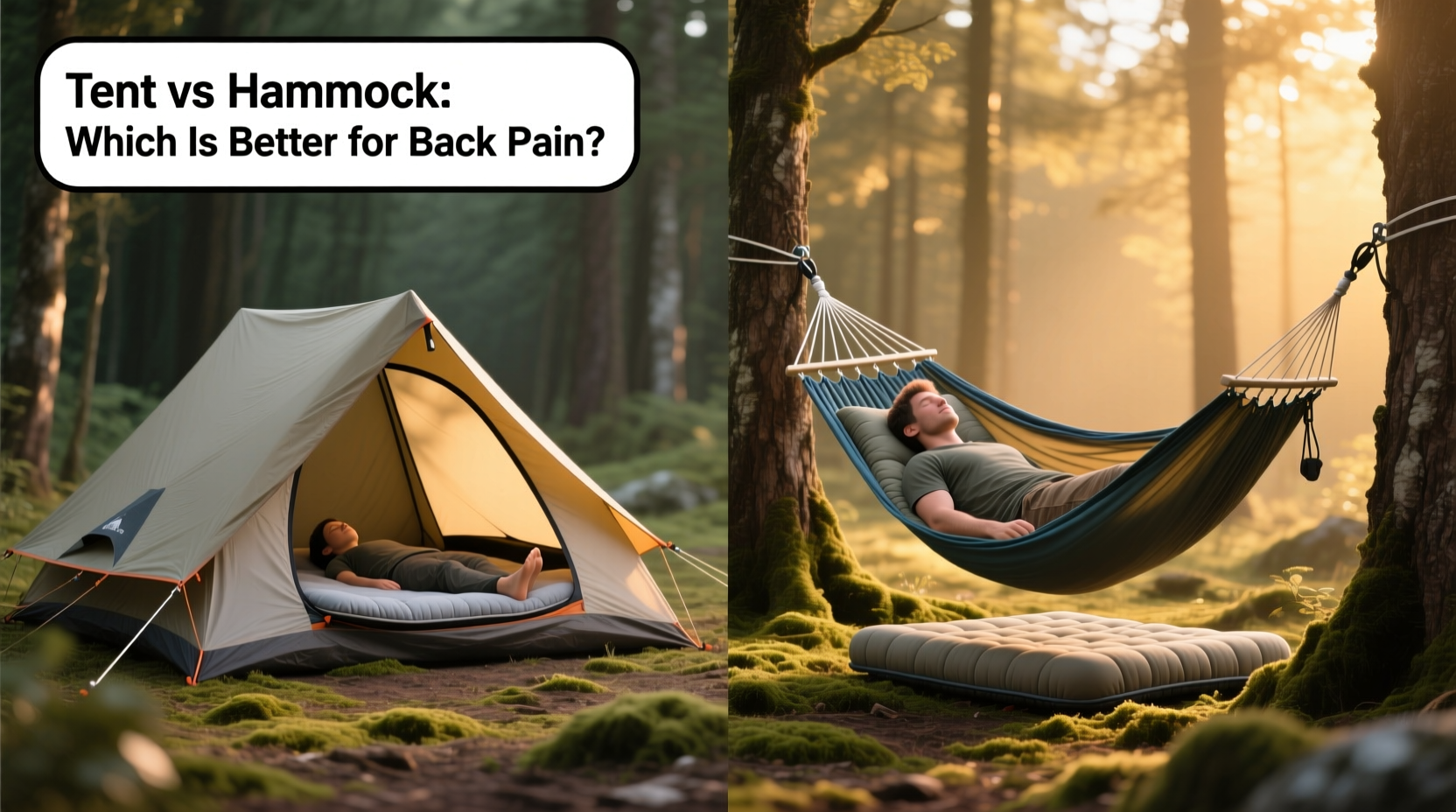
Back pain often worsens due to poor spinal alignment during sleep. In a home bed, mattresses are designed to support natural curvature—lumbar supported, hips aligned, shoulders free. In the wilderness, that level of control disappears unless intentionally recreated.
Tents offer a flat sleeping plane, but only if the ground beneath is even. More often, terrain slopes, rocks press into the body, and inadequate padding fails to cushion pressure points. Hammocks, by contrast, suspend the body slightly curved, mimicking a fetal position or zero-gravity posture. When properly rigged, they distribute weight evenly along the back, reducing point pressure on hips and shoulders.
However, improper hammock use can exaggerate spinal flexion, leading to lower back strain. Similarly, a poorly insulated tent floor can cause muscle tension from cold exposure, indirectly worsening pain. The key lies not just in the shelter type, but in how it’s used.
Comparing Support: Tent Floors vs. Suspended Fabric
Tents provide a horizontal surface, allowing users to lie flat—a benefit for those who need neutral spine positioning, such as individuals with degenerative disc disease or post-surgical conditions. However, most campers underestimate the importance of ground insulation. A thin foam pad may prevent heat loss but offers little cushioning over uneven terrain.
A quality air or closed-cell foam sleeping pad with an R-value of 4.0 or higher can bridge gaps in terrain and mimic some of the comfort of a mattress. Combined with a roomy tent, this setup allows for natural movement during sleep without rolling into rocks or roots.
Hammocks, on the other hand, eliminate ground contact entirely. High-end models made from breathable nylon or polyester stretch slightly to conform to the body’s shape. When hung at the correct angle (typically 30 degrees from horizontal), they promote a diagonal lay position—lying at a slight recline rather than flat—which reduces pressure on lumbar discs.
Research published in *Applied Ergonomics* suggests that a slight recline (around 20–30 degrees) minimizes disc compression and muscle strain. This aligns with anecdotal reports from hikers using gathered-end hammocks with integrated ridgelines and underquilts.
“Many patients with mild to moderate lumbar strain report improved morning mobility after sleeping in a properly adjusted hammock. The gentle cradle reduces paraspinal muscle activation.” — Dr. Lena Torres, Physical Therapist & Outdoor Medicine Specialist
Head-to-Head Comparison: Key Factors for Back Health
| Factor | Tent Advantages | Hammock Advantages |
|---|---|---|
| Spinal Alignment | Flat surface supports neutral spine; ideal for post-op or sciatica | Diagonal lay reduces lumbar pressure; conforms to natural curves |
| Pressure Relief | Depends heavily on pad thickness and ground smoothness | Even weight distribution; no direct hip/shoulder contact |
| Insulation | High-R pads + groundsheet prevent cold-related muscle tension | Requires underquilt; cold air flows underneath without one |
| Mobility During Sleep | Freedom to shift positions; less risk of entrapment | Limited lateral movement; improper hang risks spinal twist |
| Setup Flexibility | Needs flat, clear ground; vulnerable to flooding | Works over water, roots, or slopes; avoids wet terrain |
| Packability | Bulkier; heavier with full-frame poles and rainfly | Ultra-light options under 2 lbs; easy to pack |
This comparison shows that neither option is universally superior. For someone with spondylolisthesis or spinal fusion, the stability of a tent with a thick pad may be essential. For a person with muscular tension or disc-related discomfort, the floating support of a hammock could offer meaningful relief.
Real-World Example: A Hiker’s Journey with Sciatica
Mark R., a 52-year-old thru-hiker preparing for the Appalachian Trail, struggled with recurring sciatica flare-ups during early training hikes. He initially used a three-season dome tent with a standard foam pad. Despite stretching and anti-inflammatories, he woke daily with sharp pain radiating down his left leg.
After consulting a sports physiotherapist, he switched to a double-wide backpacking hammock with a structural ridgeline and thermal underquilt. He practiced the “banana peel” technique—laying diagonally across the hammock to achieve a flatter back position—and added a lumbar pillow for extra support.
Within two weeks, his morning pain dropped from a 7/10 to a consistent 2/10. “It wasn’t magic,” he said, “but the combination of reduced pressure and better temperature regulation let my muscles relax fully for the first time in months.”
His success wasn’t just about switching shelters—it was about optimizing the system. He still uses a tent in exposed alpine zones where trees are scarce, but now selects campsites based on both comfort and medical needs.
Step-by-Step: Optimizing Your Shelter for Back Pain Relief
Regardless of your choice, small adjustments can significantly improve spinal comfort. Follow this timeline to set up a back-friendly sleep system:
- Pre-Trip Assessment (1 week before): Identify your primary pain triggers—pressure points, cold, stiffness—and choose gear accordingly. Consult a physical therapist if needed.
- Site Selection (Arrival): In a tent, look for naturally flat areas free of rocks and roots. For hammocks, find two sturdy trees 12–15 feet apart with minimal overhead hazards.
- Setup Angle: Hang your hammock at a 30-degree angle from horizontal. Use a ridgeline to maintain consistent sag (ideal depth: 15–18 inches).
- Sleeping Position: Lie diagonally—shoulders at ~30 degrees to the center line—to flatten your spine and avoid excessive arching.
- Insulation Layering: Use a closed-cell pad in tents (R-value ≥ 4). In hammocks, pair an underquilt with a top quilt; avoid compressible sleeping bags underneath.
- Support Add-Ons: Insert a small inflatable or memory foam lumbar pillow. Some hikers use rolled-up jackets for temporary lower back support.
- Nightly Adjustment: If you wake with discomfort, reposition immediately. Note patterns over multiple nights to refine your setup.
Common Mistakes That Worsen Back Pain
- Using a taut, flat-hung hammock: Creates a banana-shaped curve that hyperflexes the spine.
- Skipping insulation: Cold muscles tighten involuntarily, increasing stiffness and pain.
- Overlooking pad R-value: A 2.0 R-value pad won’t suffice on rocky or cold ground.
- Sleeping in clothes that restrict movement: Tight waistbands or stiff fabrics limit natural shifts during REM cycles.
- Ignoring pre-sleep stretching: Gentle yoga or nerve glides can reduce nocturnal spasms.
Frequently Asked Questions
Can sleeping in a hammock cause back pain?
Yes—if improperly set up. A hammock hung too tightly forces the spine into a deep U-shape, increasing disc pressure. Without proper diagonal positioning or lumbar support, even a well-rigged hammock can strain lower back muscles. However, when optimized, most users report reduced pain compared to hard-ground tent sleeping.
Is a thicker sleeping pad always better for back pain in tents?
Thickness matters, but insulation (R-value) is equally critical. A 4-inch air pad feels plush but collapses under body weight without sufficient internal structure. Look for pads with internal baffles and an R-value of at least 4.0 for three-season use. Combining a 2-inch closed-cell foam pad under an air pad adds both cushion and thermal protection.
Are there hammocks designed specifically for back pain?
While no hammock is marketed exclusively for medical use, certain features help: wider fabric (double or deluxe width), structural ridgelines for consistent sag, and compatibility with ergonomic accessories like lumbar supports and underquilts. Brands like Hennessy, Warbonnet, and Dutchware emphasize ergonomics in design.
Action Plan: Choosing What Works for You
Start by evaluating your diagnosis. Conditions like spinal stenosis or recent surgery often require flat, stable surfaces—favoring tents with premium pads. Chronic muscle tension, disc bulges, or sacroiliac joint dysfunction may respond better to the balanced support of a well-hung hammock.
Test both systems in your backyard or local park. Spend at least two consecutive nights in each to assess morning symptoms. Keep a log: rate pain from 1–10, note stiffness duration, and track sleep interruptions.
Invest in modularity. A hybrid approach—using a tent in winter or exposed areas, and a hammock in forested, temperate zones—can maximize comfort year-round. Accessories like portable lumbar rolls, insulated pads, and quick-deploy straps enhance either system.
“The outdoors shouldn’t exacerbate chronic pain. With thoughtful preparation, both tents and hammocks can support spinal health—it’s about matching the tool to the individual.” — Dr. Arjun Patel, Wilderness Medicine Physician
Final Thoughts: Prioritize Function Over Trend
Hammocks have become trendy in the backpacking world, praised for their ultralight appeal and tree-top views. Tents remain the go-to for families, car campers, and extreme weather. But when managing back pain, trends should take a backseat to biomechanics and personal response.
There is no single “best” shelter. There is only what works best for your body. Whether you're nestled in a spacious tent atop a thick foam barrier or gently cradled in a diagonally laid hammock, the goal is the same: waking up refreshed, mobile, and ready to enjoy the trail.




 浙公网安备
33010002000092号
浙公网安备
33010002000092号 浙B2-20120091-4
Comments
No comments yet. Why don't you start the discussion?