
Losing your only key or being locked out with no spare can be stressful—especially when the original is nowhere to be found. What if you don’t have access to the lock either? Whether it’s a house, car, or padlock, creating a replacement key without the original presents unique challenges. Fortunately, modern locksmithing techniques, digital tools, and mechanical know-how offer practical solutions. This guide walks through reliable methods, tools, and expert-backed strategies to recreate a key from scratch—even when neither the key nor the lock is available.
Understanding Key Types and Lock Systems
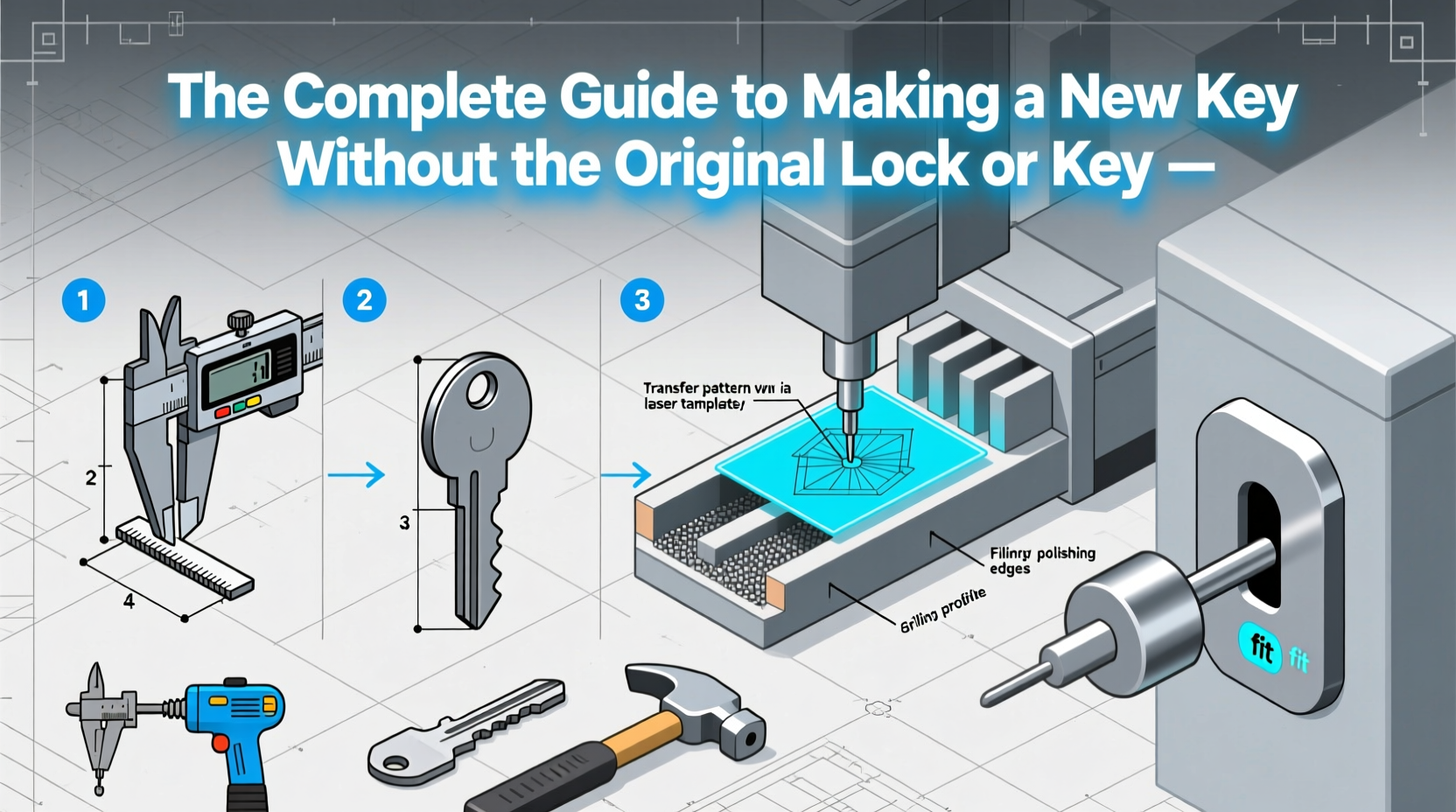
Before attempting to create a new key, it's essential to understand the type of lock and key system involved. Not all keys are created equal—some rely on simple cuts, while others use complex internal mechanisms or electronic components.
- Pin Tumbler Keys: Most common in residential doors; require precise depth and spacing of cuts.
- Tubular Keys: Circular design used in vending machines and some older locks.
- Transponder Keys: Found in modern vehicles; contain embedded chips that communicate with the ignition.
- Dimple or Sidebar Keys: High-security keys with intricate cut patterns.
If you don't have the original key or access to the lock, identifying the correct key blank becomes critical. Misidentification leads to wasted time and money. The best starting point is gathering as much information as possible about the lock brand, model, or vehicle make and year.
Step-by-Step Guide to Recreating a Key Without Originals
Recreating a key without physical references requires a methodical approach. While not always guaranteed, success depends on preparation, resourcefulness, and access to the right tools or professionals.
- Identify the Lock or Device Type: Determine whether it’s a door lock, vehicle ignition, or padlock. Note brand names like Kwikset, Schlage, or specific car models (e.g., Toyota Camry 2015).
- Research Compatible Key Blanks: Use online databases such as LockWiki or automotive key charts to match the device to a key blank number (e.g., ILCO UK157).
- Contact the Manufacturer or Dealer: For vehicles or high-security locks, provide proof of ownership to request a key code based on serial numbers or VINs.
- Hire a Professional Locksmith: A certified locksmith can generate a key using code-cutting machines if you provide the correct specifications.
- Use 3D Modeling and Printing (Advanced): If you have detailed measurements or a photo of a similar key, CAD software and a precision 3D printer may produce a functional prototype.
This process isn’t foolproof, especially for transponder or laser-cut keys, but combining research with expert support increases your chances significantly.
DIY vs. Professional Solutions: Pros and Cons
While DIY methods may save money upfront, they often lack reliability—particularly for security-critical applications. Here’s a breakdown of common approaches:
| Solution | Best For | Accuracy | Risk Level |
|---|---|---|---|
| Locksmith Code Cutting | Doors, cars with known codes | High | Low |
| 3D Printed Key Prototype | Testing fit (not daily use) | Medium | High (fragile, imprecise) |
| Key Impressioning (by pro) | When lock is accessible | Very High | Low (if done correctly) |
| Online Key Ordering by Number | Known key code available | High | Low |
| Guessing Key Cuts (DIY filing) | Simple padlocks only | Low | Very High (can damage lock) |
For most people, relying on a licensed locksmith or authorized dealer offers the safest and most effective path.
Real-World Example: Replacing a Lost Garage Door Remote Key
Mark lost his only garage door remote and had no spare. The opener was installed over a decade ago, and he didn’t know the model. He couldn’t access the motor unit because the door was closed and locked. Instead of replacing the entire system, he took these steps:
- He searched the garage walls for a label on the receiver unit inside.
- Found a LiftMaster 823LM sticker with a model number.
- Used the LiftMaster website to identify compatible remotes and key fobs.
- Purchased a universal remote and programmed it using the learn button (accessed via a side panel).
- Ordered a replacement mechanical key for the manual release from an online locksmith supplier using the model-specific key code.
Within two days, Mark restored full access—without needing the original key or opening the lock. His success came from persistence and using publicly available technical data.
“Even without the original key, most locks are tied to identifiable systems. The key code is often more important than the physical key.” — Daniel Reyes, Master Locksmith & Security Consultant
Actionable Checklist: How to Replace a Key Without the Original
Follow this checklist to maximize your chances of recovering access:
- ✅ Gather any identifying information: brand, model number, VIN, or serial tags.
- ✅ Search online for lock/key compatibility charts using the collected data.
- ✅ Contact the manufacturer or dealer with proof of ownership.
- ✅ Consult a certified locksmith who offers code-based key cutting.
- ✅ Avoid destructive methods like drilling unless it’s a last resort.
- ✅ Once access is restored, duplicate two new keys and store one securely off-site.
Frequently Asked Questions
Can a locksmith make a key without the original or the lock?
Yes, but only if they have enough information—such as a key code, lock model, or vehicle VIN. Without reference points, duplication isn’t possible. However, experienced locksmiths can sometimes reverse-engineer a solution using industry databases and code books.
Is it legal to make a key without the original?
Yes, as long as you own or have authorized access to the property or vehicle. Most professionals require ID and proof of ownership before creating high-security or automotive keys to prevent unauthorized duplication.
Can I 3D print a working key?
You can print a key that fits mechanically, but durability and precision are major limitations. Plastic keys wear quickly and may not withstand turning force. They’re best used as prototypes or temporary solutions until a metal version is made.
Final Thoughts and Next Steps
Creating a new key without the original lock or key is challenging—but not impossible. Success hinges on accurate identification, access to technical resources, and knowing when to call in a professional. Modern tools like key code databases, VIN decoders, and precision cutting machines have made it easier than ever to restore access without destruction or guesswork.
Once you’ve resolved the immediate issue, take preventive action. Label and photograph every key in your household. Store spares in a secure location, and consider upgrading to smart locks or programmable access systems that reduce reliance on physical keys altogether.




 浙公网安备
33010002000092号
浙公网安备
33010002000092号 浙B2-20120091-4
Comments
No comments yet. Why don't you start the discussion?