
When a recipe calls for “one garlic clove,” it may seem like a minor detail—but this small bulb segment plays an outsized role in flavor development across global cuisines. Misjudging its potency or substituting incorrectly can tilt a dish from aromatic to overpowering in seconds. For home cooks and seasoned chefs alike, understanding the true weight, volume, flavor impact, and available forms of a single garlic clove is essential for consistent, balanced cooking. This guide clarifies the precise definition of a garlic clove, breaks down its equivalents in minced, chopped, powdered, and roasted forms, and provides practical guidance on substitutions, storage, and usage across culinary applications.
Definition & Overview
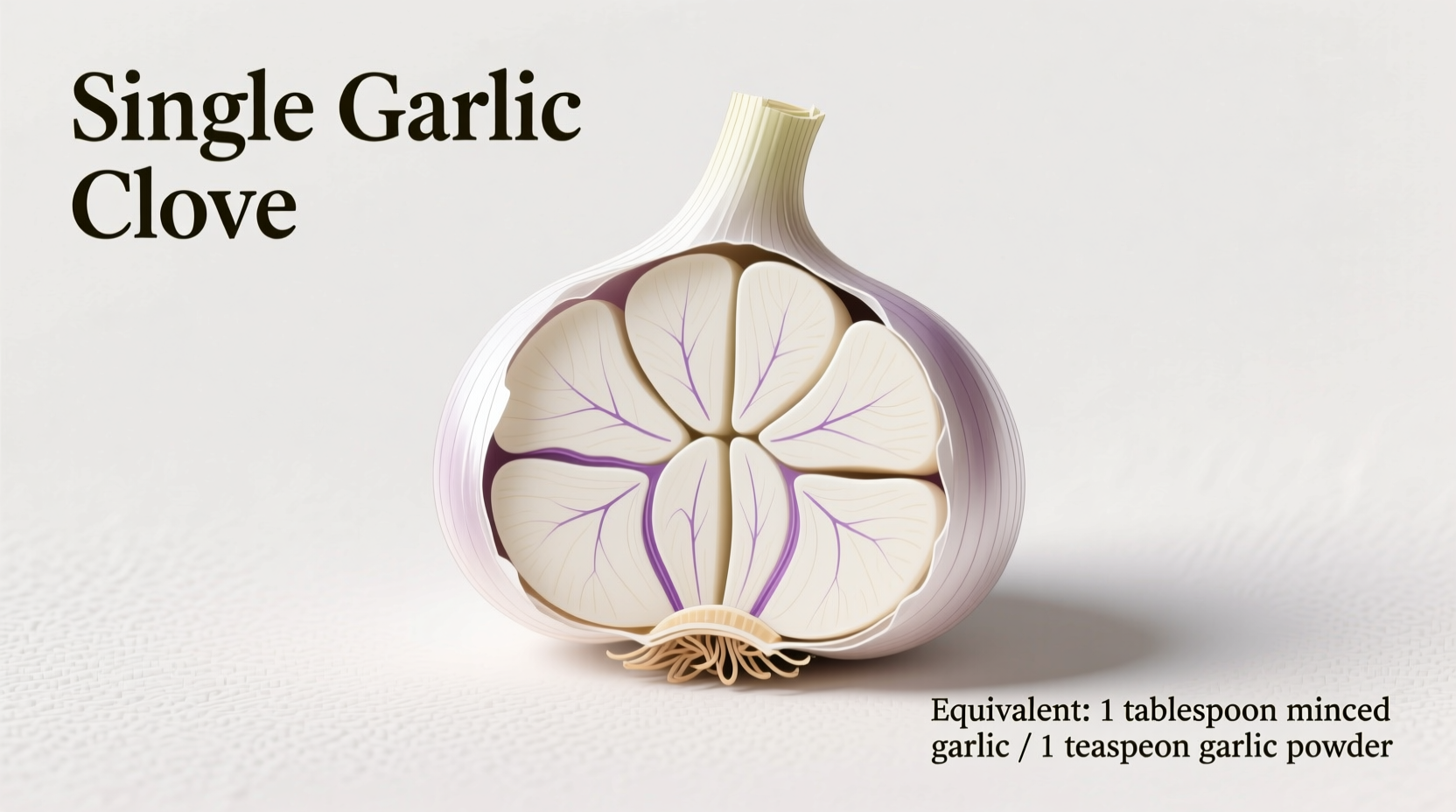
A single garlic clove is one individual segment of a garlic bulb (*Allium sativum*), typically encased in a papery skin and attached to other cloves around a central stem. While a full garlic head (or bulb) contains multiple cloves—ranging from 10 to 20 depending on variety—a clove refers specifically to one of these lobed sections. Garlic originated in Central Asia and has been cultivated for over 5,000 years, now serving as a foundational ingredient in Mediterranean, Middle Eastern, Asian, African, and Latin American cooking.
Fresh garlic cloves are characterized by their pungent aroma, sharp bite when raw, and ability to mellow into sweetness when cooked. Their biochemical complexity—driven primarily by the compound allicin, released when cells are crushed—makes them both a flavor powerhouse and a subject of nutritional interest. In culinary terms, a single clove is not just a physical unit but a standardized measure of taste intensity, especially in recipe development.
Key Characteristics
| Attribute | Description |
|---|---|
| Flavor Profile | Sharp, pungent, spicy when raw; transforms to sweet, nutty, and umami-rich when roasted or sautéed. |
| Aroma | Pronounced sulfuric scent when cut or crushed; intensifies briefly before mellowing during cooking. |
| Color & Form | Creamy white flesh with dry, pale brown or purple-tinged skin; irregular teardrop shape. |
| Heat Level | Moderate to high pungency when raw; diminishes significantly with heat exposure. |
| Culinary Function | Aromatic base, seasoning agent, natural preservative, flavor enhancer. |
| Shelf Life (Fresh) | 3–6 weeks at room temperature in a cool, dry, ventilated space. |
Practical Usage: How Much Is One Clove—and How to Use It?
In most recipes, particularly those developed in North America and Europe, “one garlic clove” implies a medium-sized fresh clove—approximately 4 to 5 grams in weight, or about 1 teaspoon of minced garlic. However, clove size varies dramatically between garlic types and even within the same bulb. A large clove from a softneck variety may yield up to 2 teaspoons minced, while a small one might barely reach half a teaspoon.
To standardize results:
- Chopped garlic: 1 medium clove ≈ ½ teaspoon chopped
- Minced garlic: 1 medium clove ≈ 1 teaspoon minced
- Pressed garlic: 1 medium clove ≈ ½ to ¾ teaspoon pressed (more intense due to cell rupture)
- Garlic juice (from pressing): ≈ ¼ to ⅓ teaspoon per clove
These equivalents assume average-size cloves. When precision matters—such as in sauces, dressings, or preserved foods—weighing cloves ensures consistency. A digital kitchen scale set to grams offers the most reliable measurement.
Pro Tip: For maximum flavor release, crush or mince garlic and let it rest for 5–10 minutes before cooking. This allows alliinase enzymes to convert alliin into allicin, enhancing both aroma and health-promoting compounds.
In practice, how you incorporate a clove depends on the dish’s texture and timing:
- Sautéing aromatics: Mince or thinly slice cloves and cook gently in oil or butter until fragrant (about 30–60 seconds). Avoid browning unless desired, as burnt garlic turns bitter.
- Roasting whole: Whole cloves become tender and sweet when roasted. Place unpeeled cloves in olive oil, salt, and herbs; roast at 375°F (190°C) for 20–25 minutes. Squeeze out pulp for spreads or mash into potatoes.
- Raw applications: Finely mince or press for vinaigrettes, aioli, chimichurri, or bruschetta. Balance sharpness with acid (lemon juice) or fat (olive oil).
- Slow-cooked dishes: Add whole or halved cloves to soups, stews, and braises. They infuse depth without dominating, and soften into edible morsels.
Variants & Types of Garlic and Their Clove Equivalents
Not all garlic is created equal. Different cultivars affect clove size, number per bulb, shelf life, and flavor intensity—impacting substitution accuracy.
Common Garlic Varieties
- Softneck Garlic (Allium sativum var. sativum): Most common in supermarkets. Has 10–20 smaller cloves per bulb, flexible stalks ideal for braiding. More pungent than hardneck, stores longer (up to 8 months). Cloves tend to be less uniform.
- Hardneck Garlic (Allium sativum var. ophioscorodon): Features 4–12 large, evenly sized cloves arranged around a stiff central stem. Sweeter, more complex flavor with fewer but larger cloves. Includes subtypes like Rocambole, Porcelain, and Purple Stripe. Shorter shelf life (3–5 months).
- Solo (Single-Clove) Garlic: Also known as \"pearl\" or \"monobulb\" garlic, this rare type produces only one large clove per bulb. Extremely potent and often used in gourmet or medicinal contexts.
Processed Forms and Substitutions
Fresh garlic isn’t always accessible. Processed alternatives offer convenience but require adjustment:
| Form | Equivalent to 1 Fresh Clove | Best Used In |
|---|---|---|
| Minced garlic (jarred, refrigerated) | ½ tsp | Quick sautés, marinades, dressings (less bright flavor than fresh) |
| Dried garlic flakes | ¼ tsp | Slow-cooked dishes, spice blends, rubs |
| Garlic powder | ⅛ tsp | Dry rubs, soups, sauces, baked goods (concentrated, less nuanced) |
| Granulated garlic | ¼ tsp | Similar to powder but slower to dissolve; good for pickling |
| Roasted garlic puree (homemade or jarred) | 1 tsp | Spreads, mashed potatoes, creamy sauces (milder, sweeter profile) |
| Black garlic (fermented) | 1 clove (whole) | Garnishes, glazes, modernist cuisine (sweet, tangy, molasses-like) |
Note: Never substitute garlic powder 1:1 for fresh cloves. Its concentrated form can easily overwhelm. As a rule: 1 tsp garlic powder ≈ 6–8 fresh cloves. Adjust gradually and taste as you go.
Comparison with Similar Ingredients
Garlic is frequently confused with related alliums, but each brings distinct qualities to the plate.
| Ingredient | How It Differs from Garlic | Substitution Viability |
|---|---|---|
| Shallot | Milder, sweeter, with onion-garlic hybrid notes. Smaller cloves, higher sugar content. | Limited: Can replace garlic in delicate sauces (e.g., French reductions), but lacks punch. Use 1 shallot ≈ 2 cloves garlic in mild applications. |
| Onion | Bulkier, less pungent, primarily sweet/earthy. No allicin production. | Partial: Adds body but not garlic’s sharpness. Combine with a small amount of garlic powder if needed. |
| Leek | Very mild, vegetal, with subtle sweetness. Requires extensive cleaning. | Poor direct substitute. Best used alongside garlic for layered flavor. |
| Garlic Scapes | Tender green shoots from hardneck plants. Flavor resembles young garlic with grassy notes. | Excellent seasonal alternative. Use 2 tbsp chopped scapes ≈ 1 clove. Ideal for pestos, stir-fries. |
“Garlic is the mortar that binds the bricks of flavor in savory cooking. But like any strong foundation, too much compromises the structure.” — Chef Elena Torres, Culinary Institute of San Francisco
Practical Tips & FAQs
Q1: How do I peel garlic quickly?
A1: Place the clove on a cutting board, lay the flat side of a chef’s knife over it, and press down firmly with your palm. The skin will loosen and peel off easily. Alternatively, shake cloves in a sealed jar for 10–15 seconds to separate skins.
Q2: Can I freeze fresh garlic cloves?
A2: Yes. Peel and freeze whole cloves in an airtight container for up to 6 months. Frozen garlic loses firmness but retains flavor. For convenience, purée cloves with oil and freeze in ice cube trays.
Q3: Why does my garlic sometimes turn blue or green during pickling?
A3: This harmless reaction occurs when garlic’s sulfur compounds interact with trace acids or metals (like aluminum or copper). It’s common in homemade pickles and doesn’t affect safety or taste.
Q4: How much garlic is too much?
A4: Raw garlic exceeds palatability for many diners beyond 4–5 cloves per serving. Digestive discomfort may occur with excessive intake. Cooked garlic can be used more liberally due to mellowed flavor. Always consider audience sensitivity.
Q5: What are signs of spoiled garlic?
A5: Avoid cloves that are soft, discolored (yellow or brown spots), sprouting green shoots (though still usable if firm), or have mold. Remove sprouts from center if present—they’re bitter but not harmful.
Q6: Is pre-minced garlic worth using?
A6: Jarred garlic offers speed but sacrifices freshness and enzymatic complexity. It often contains citric acid or vinegar to preserve color, which dulls flavor. Reserve for last-minute meals. For best quality, mince fresh garlic and store in oil in the fridge for up to 1 week.
Q7: Can I grow my own garlic from store-bought cloves?
A7: Yes, though supermarket garlic may be treated to inhibit sprouting. Organic cloves have higher success rates. Plant individual cloves root-end down, 2 inches deep, 6 inches apart in fall for summer harvest.
Checklist: Optimizing Garlic Use in Your Kitchen
- Use a microplane or press for maximum allicin release in raw sauces.
- Store whole bulbs in a mesh bag away from light and moisture.
- Label frozen garlic with date; use within 6 months.
- Balance strong garlic flavors with dairy (yogurt, cream), acid (lemon, vinegar), or sweetness (honey, caramelized onions).
- When doubling a recipe, don’t automatically double the garlic—consider increasing by 1.5x to avoid overwhelming the dish.
Summary & Key Takeaways
A single garlic clove is more than a vague recipe instruction—it’s a calibrated unit of flavor that bridges science, tradition, and technique. Understanding its physical dimensions, flavor dynamics, and equivalents empowers cooks to replicate recipes accurately and adapt creatively when fresh garlic isn't available.
Key points to remember:
- One medium garlic clove equals approximately 1 teaspoon minced or 4–5 grams by weight.
- Size varies by garlic type; hardneck cloves are larger and fewer, softneck smaller and more numerous.
- Substitutions must account for concentration: ⅛ tsp garlic powder ≈ 1 fresh clove.
- Fresh garlic delivers unmatched depth, but processed forms offer utility in specific contexts.
- Storage, preparation method, and cooking time profoundly influence final flavor.
- Never equate garlic with similar alliums without adjusting expectations and quantities.
Mastering the garlic clove means mastering one of the most fundamental tools in the culinary arsenal. Whether building a sofrito, finishing a curry, or crafting a simple pasta aglio e olio, precision with this humble ingredient separates competent cooking from truly exceptional results.




 浙公网安备
33010002000092号
浙公网安备
33010002000092号 浙B2-20120091-4
Comments
No comments yet. Why don't you start the discussion?