
Chunky heel boots have become a staple in modern wardrobes, blending bold aesthetics with the promise of stability. Yet, too often, their stylish silhouette comes at the cost of comfort. Many wearers end up with sore feet, blisters, or even long-term foot strain because they prioritize look over fit. The truth is, you don’t have to sacrifice comfort for fashion. With the right knowledge, you can find chunky heel boots that not only elevate your outfit but also support your stride throughout the day.
From understanding heel structure to decoding sizing quirks, this guide delivers practical insights drawn from podiatrists, footwear designers, and real-world wearers. Whether you're shopping online or trying on pairs in-store, these strategies will help you make informed choices that last beyond a single outing.
Why Fit Matters More Than Style in Chunky Heel Boots
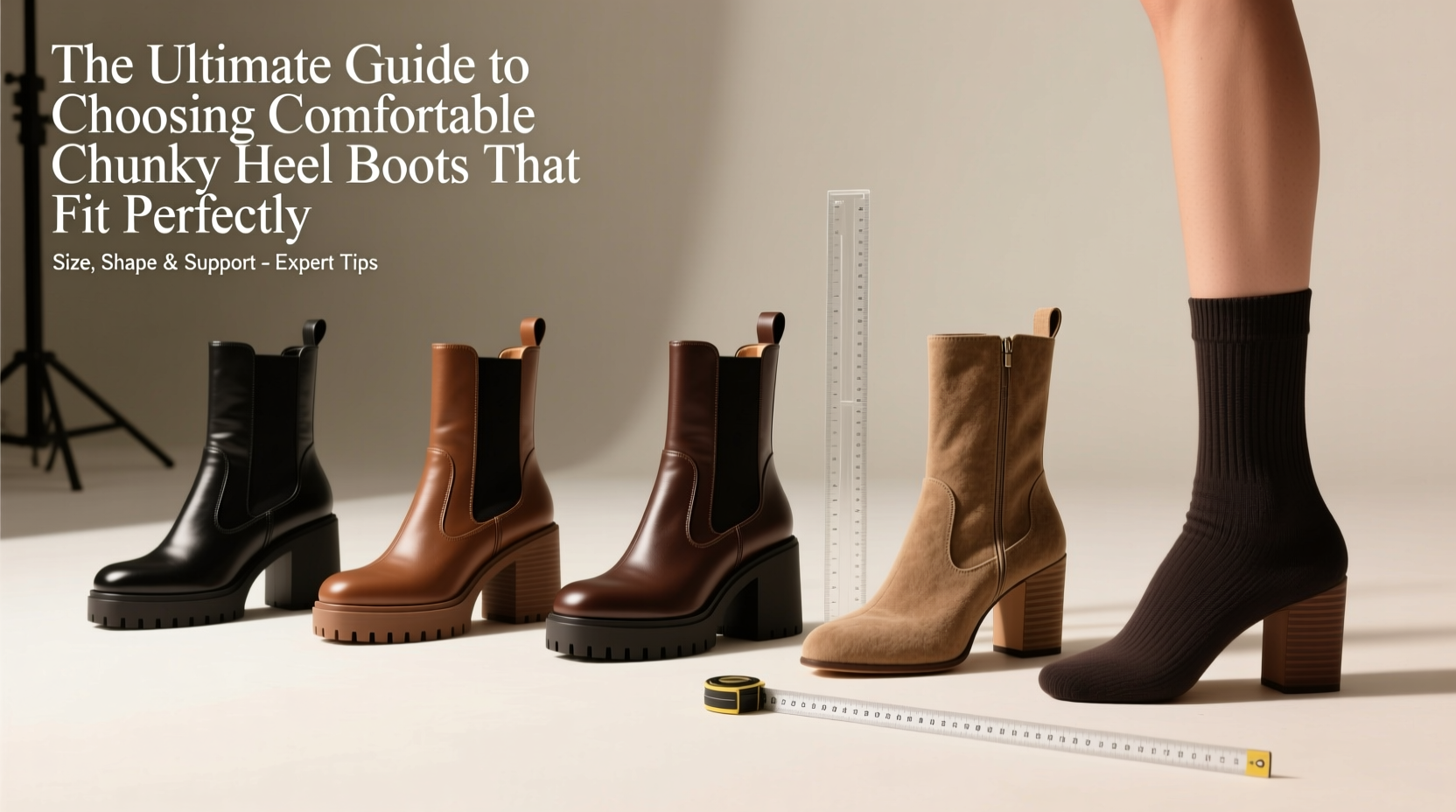
A well-designed chunky heel distributes weight more evenly than a stiletto, reducing pressure on the ball of the foot. However, poor fit can negate these benefits. A boot that’s too tight restricts circulation and causes friction; one that’s too loose leads to heel slippage, which increases fatigue and the risk of tripping.
The broad base of a chunky heel offers stability, but if the shaft is too narrow around the calf or the toe box cramps your toes, the overall experience becomes uncomfortable regardless of heel width. Fit isn’t just about length—it involves width, arch support, ankle contouring, and heel cup security.
“Footwear should complement your biomechanics, not fight them. A thick heel doesn’t excuse a poor fit.” — Dr. Lena Torres, Podiatrist & Gait Specialist
Key Features of a Comfortable Chunky Heel Boot
Not all chunky heels are created equal. Beyond visual appeal, certain design elements directly impact comfort and long-term wearability.
- Heel Height and Pitch: Opt for heels between 2 to 3 inches. Higher than that increases forward pressure, even with a wide base.
- Cushioned Insole: Look for memory foam, EVA padding, or removable orthotic-friendly insoles.
- Ankle Support: A snug but non-restrictive ankle collar prevents wobbling without cutting off circulation.
- Flexible Outsole: Rubber soles with slight flex at the ball of the foot reduce stiffness and improve stride.
- Roomy Toe Box: Toes should lie flat without crowding. Avoid pointed styles if you have wider feet.
- Secure Fastening: Zippers, side elastics, or adjustable buckles allow fine-tuning of fit across calves and instep.
Step-by-Step Guide to Finding Your Perfect Fit
Finding the ideal pair requires more than just knowing your size. Follow this methodical approach whether shopping in person or online.
- Measure Both Feet: Use a Brannock device or trace your feet on paper. Measure length, width, and arch length. Do this in the afternoon when feet are slightly swollen.
- Determine Your Foot Shape: Are your feet narrow, wide, high-arched, or flat? This affects how boots feel beyond standard sizing.
- Check Brand Sizing Charts: Sizes vary significantly between brands. Always consult the specific brand’s chart, especially for European labels.
- Try Before You Buy (If Possible): Wear the socks you plan to use with the boots. Walk, stand, and simulate stairs.
- Evaluate Pressure Points: Pay attention to pinching at the ankle, tightness across the instep, or slipping at the heel.
- Break-In Realism: Some materials soften slightly, but significant discomfort won’t disappear. Don’t buy “tight now, comfy later” unless it’s a known break-in style like full-grain leather.
- Assess Arch Support: If the insole is flat, consider adding custom or over-the-counter orthotics.
Do’s and Don’ts When Buying Chunky Heel Boots
| Do’s | Don’ts |
|---|---|
| Shop at the end of the day when feet are largest | Size based solely on your sneaker size |
| Choose adjustable closures for calf fit variation | Ignore heel slippage—even if “it’ll stop after breaking in” |
| Look for cushioned midsoles and shock-absorbing heels | Assume all “wide” widths fit the same (varies by brand) |
| Read customer reviews focused on comfort and fit | Buy without checking return policies (especially online) |
| Test boots on different surfaces (tile, carpet, pavement) | Wear new boots for an entire workday without a trial run |
Real Example: How Sarah Found Her All-Day Work Boots
Sarah, a marketing executive in Chicago, needed stylish yet wearable boots for her commute and office days. She loved the look of platform lug-sole boots but found most caused arch pain by noon. After three disappointing purchases, she decided to slow down her search.
She measured both feet and discovered her right foot was half a size longer and wider. She started focusing on brands offering half sizes and wide-width options. She tried on several pairs at a specialty shoe store, prioritizing models with removable insoles so she could insert her custom orthotics.
Her final choice: a 2.5-inch block heel boot with a padded heel collar, rubber outsole, and side zipper for calf adjustment. The toe box allowed wiggle room, and the arch matched her foot contour. She wore them two hours each evening before committing to full-day use. Now, she wears them three times a week without discomfort.
“Once I stopped treating boots like accessories and started seeing them as tools for mobility, everything changed.” — Sarah L., Verified Customer
Comfort Checklist Before You Purchase
Use this concise checklist to evaluate any chunky heel boot before buying:
- ✅ Heel height is between 2–3 inches
- ✅ Insole has visible or palpable cushioning
- ✅ No pinching at ankle, instep, or toes
- ✅ Heel does not lift more than 3mm while walking
- ✅ Toe box allows natural splay (no pressure on pinky or big toe)
- ✅ Sole bends naturally at the ball of the foot
- ✅ Calf width accommodates your leg, even with thicker socks
- ✅ Return policy allows exchange if fit isn’t perfect
Frequently Asked Questions
Can chunky heel boots be worn every day?
Yes, provided they are well-fitted and designed with comfort features like cushioning, proper arch support, and flexible soles. Avoid wearing the same pair daily—rotate footwear to reduce strain and extend lifespan.
How do I prevent heel slippage in new boots?
Use adhesive heel grips or try a thinner sock. If slippage persists, the boot may be too large or lack a secure heel cup. Some brands offer half-sizes or narrow fittings that reduce this issue.
Are wide-calf chunky heel boots harder to find?
They can be, but several brands specialize in extended calf sizes, including Franco Sarto, Naturalizer, and Sam Edelman. Look for styles with side zippers or stretch panels for added adjustability.
Final Thoughts: Style Should Never Come at the Cost of Comfort
Chunky heel boots offer a powerful blend of attitude and utility—but only when they fit correctly. Too many people settle for discomfort because they believe fashion demands sacrifice. That mindset leads to blistered heels, avoided outings, and discarded boots.
By approaching your next purchase with intention—measuring accurately, testing thoroughly, and prioritizing structural comfort—you gain more than just footwear. You gain confidence in every step, knowing your boots support you as much as they style you.




 浙公网安备
33010002000092号
浙公网安备
33010002000092号 浙B2-20120091-4
Comments
No comments yet. Why don't you start the discussion?