
Handmade keychain pendants are more than just functional accessories—they’re personal expressions of identity, craftsmanship, and intention. Unlike mass-produced alternatives, each handmade piece carries subtle imperfections that speak to its authenticity, often reflecting the artisan’s skill and story. Whether you're drawn to minimalist metals, earthy ceramics, or symbolic wood carvings, choosing the right pendant involves balancing aesthetics, durability, material ethics, and emotional resonance. This guide walks you through every consideration to ensure your selection aligns perfectly with both your lifestyle and personal taste.
Understand Your Style Identity
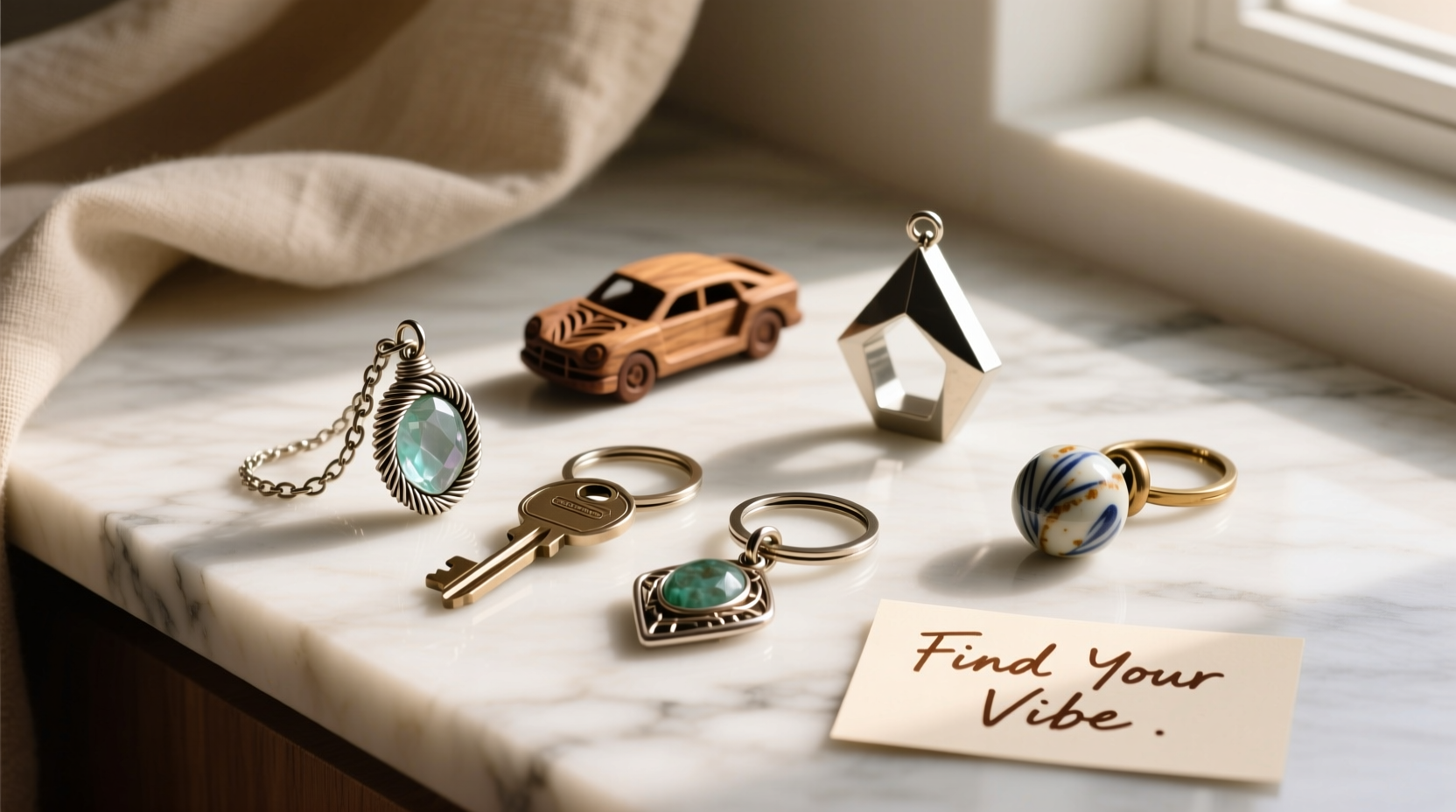
Your keychain is one of the few accessories that travels with you daily—visible in elevators, at coffee shops, on public transit. It subtly communicates who you are. Before browsing materials or designs, clarify your personal aesthetic. Are you drawn to clean lines and industrial minimalism? Or do you gravitate toward organic shapes, vintage motifs, or spiritual symbols?
- Minimalist: Look for sleek metal shapes, geometric cuts, or tiny engraved initials.
- Rustic/Earthy: Consider wooden pendants, raw stones, or leather accents.
- Bohemian: Seek out colorful beads, tassels, or hand-painted details.
- Modern Urban: Opt for anodized aluminum, titanium, or laser-cut stainless steel.
Style isn’t just about appearance—it’s consistency. A well-chosen pendant should feel like a natural extension of your wardrobe and personality, not a mismatched afterthought.
Evaluate Materials for Durability and Meaning
The material of your pendant affects not only its look but also its longevity and tactile experience. Handmade pieces often use natural or sustainably sourced components, adding depth beyond surface appeal.
| Material | Durability | Aesthetic | Ethical Note |
|---|---|---|---|
| Stainless Steel | High | Sleek, modern, hypoallergenic | Recyclable; low environmental impact |
| Titanium | Very High | Lightweight, futuristic | Mined responsibly; ideal for sensitive skin |
| Wood (e.g., walnut, sandalwood) | Moderate | Warm, organic, aromatic | Ensure FSC-certified or reclaimed sources |
| Ceramic | Low to Moderate | Artistic, matte finish | Energy-intensive firing; best when locally made |
| Leather (vegetable-tanned) | Moderate | Vintage, rugged | Biodegradable; avoid chrome-tanned leather |
For those who value sustainability, prioritize artisans who disclose sourcing. A pendant made from salvaged ocean plastic or ethically harvested antler isn’t just unique—it tells a story worth carrying.
“Every material has memory. Wood remembers the forest. Metal remembers the forge. When you choose by feel and origin, you wear meaning.” — Lena Torres, Artisan Jewelry Designer
Consider Functionality and Daily Use
No matter how beautiful, a pendant must survive daily wear. Ask yourself: Will it snag on fabric? Is it too bulky for your pocket? Could it scratch your phone or car keys?
Size matters. While a 3-inch carved stone may be stunning, it might be impractical if you carry your keys in a tight jeans pocket. For everyday usability, aim for a pendant between 0.75 and 1.5 inches in width. Shape also plays a role—rounded edges glide smoothly; sharp corners can catch or chip.
Real-Life Scenario: The Commuter’s Choice
Jamal, a graphic designer in Portland, loved bold, sculptural pendants. His favorite was a brass owl, intricately detailed with feather etchings. Within three weeks, the delicate wings bent against his laptop bag zipper. He switched to a compact, smooth river-stone pendant strung on braided hemp. Lighter, flatter, and gentler on surrounding items, it stayed intact for over a year—and still drew compliments.
Align with Personal Values and Symbolism
Many handmade pendants carry symbolic weight—a Hamsa for protection, a tree of life for growth, or a simple initial for identity. These aren’t mere decorations; they serve as quiet reminders or talismans.
Ask: What do I want this object to represent? Protection? Connection? Resilience? Some buyers commission custom engravings—dates, coordinates, mantras—that turn the pendant into a wearable keepsake.
Supporting independent artisans also aligns with ethical consumption. Buying directly from craft fairs, Etsy shops, or local markets ensures fair wages and reduces carbon footprint compared to imported goods.
Step-by-Step Guide: Choosing a Meaningful Pendant
- Reflect: What emotion or idea do you want to carry daily?
- Research Symbols: Explore cultural or spiritual icons that resonate (e.g., lotus, anchor, yin-yang).
- Shortlist Artisans: Find makers whose philosophy matches yours—eco-conscious, feminist, heritage-based.
- Contact for Customization: Inquire about engraving, color options, or size adjustments.
- Review Craftsmanship: Examine product photos closely for finish quality and structural integrity.
- Purchase with Purpose: Keep the story of the maker and material in mind when using it.
Essential Checklist Before You Buy
- ✅ Does the pendant complement my most-used keys and keyring?
- ✅ Is the material suitable for frequent handling and possible exposure to water?
- ✅ Have I verified the artisan’s reputation through reviews or portfolio?
- ✅ Does the design reflect a style I consistently wear (clothes, jewelry, accessories)?
- ✅ Is the price fair for the materials and labor involved?
- ✅ Can it be repaired or polished if damaged over time?
Frequently Asked Questions
How do I clean and maintain a handmade pendant?
Care depends on the material. Wipe metal with a soft cloth weekly. Avoid submerging wood or leather. For ceramic, use a dry brush to remove dust. Always store your keychain in a dry place away from humidity.
Are handmade pendants more expensive than store-bought ones?
They often cost more due to individual labor, premium materials, and limited production. However, their uniqueness and longevity usually justify the investment. Think of it as owning a small sculpture you use every day.
Can I gift a handmade pendant without knowing the recipient’s style?
Yes—opt for universally appealing designs: a simple initial, a neutral-toned stone, or a classic symbol like a compass or heart. Include a note explaining the artisan’s story for added emotional value.
Final Thoughts: Wear What Matters
Selecting the perfect handmade keychain pendant is an act of mindful curation. It’s not about following trends, but about choosing something that endures—physically and emotionally. Whether it’s a hammered copper disc inscribed with your mantra or a tiny acorn carved from cherry wood, the right pendant becomes part of your rhythm: jingling softly in your pocket, catching light on a subway ride, reminding you of intention with every use.




 浙公网安备
33010002000092号
浙公网安备
33010002000092号 浙B2-20120091-4
Comments
No comments yet. Why don't you start the discussion?