
Size does not always correlate with significance—nowhere is this truer than in the world of food. The phrase “tiny as a mustard seed” evokes more than poetic imagery; it speaks to a fundamental truth in cooking: the smallest ingredients can exert the most profound influence. In kitchens across cultures, minute components like mustard seeds, grains of pepper, or pinches of saffron routinely transform dishes with potency far exceeding their physical dimensions. Understanding minimal size in gastronomy isn’t merely about measurement—it’s about recognizing impact, precision, and balance. For home cooks and professionals alike, mastering the use of diminutive yet powerful elements is essential for achieving depth, complexity, and authenticity in flavor.
Definition & Overview
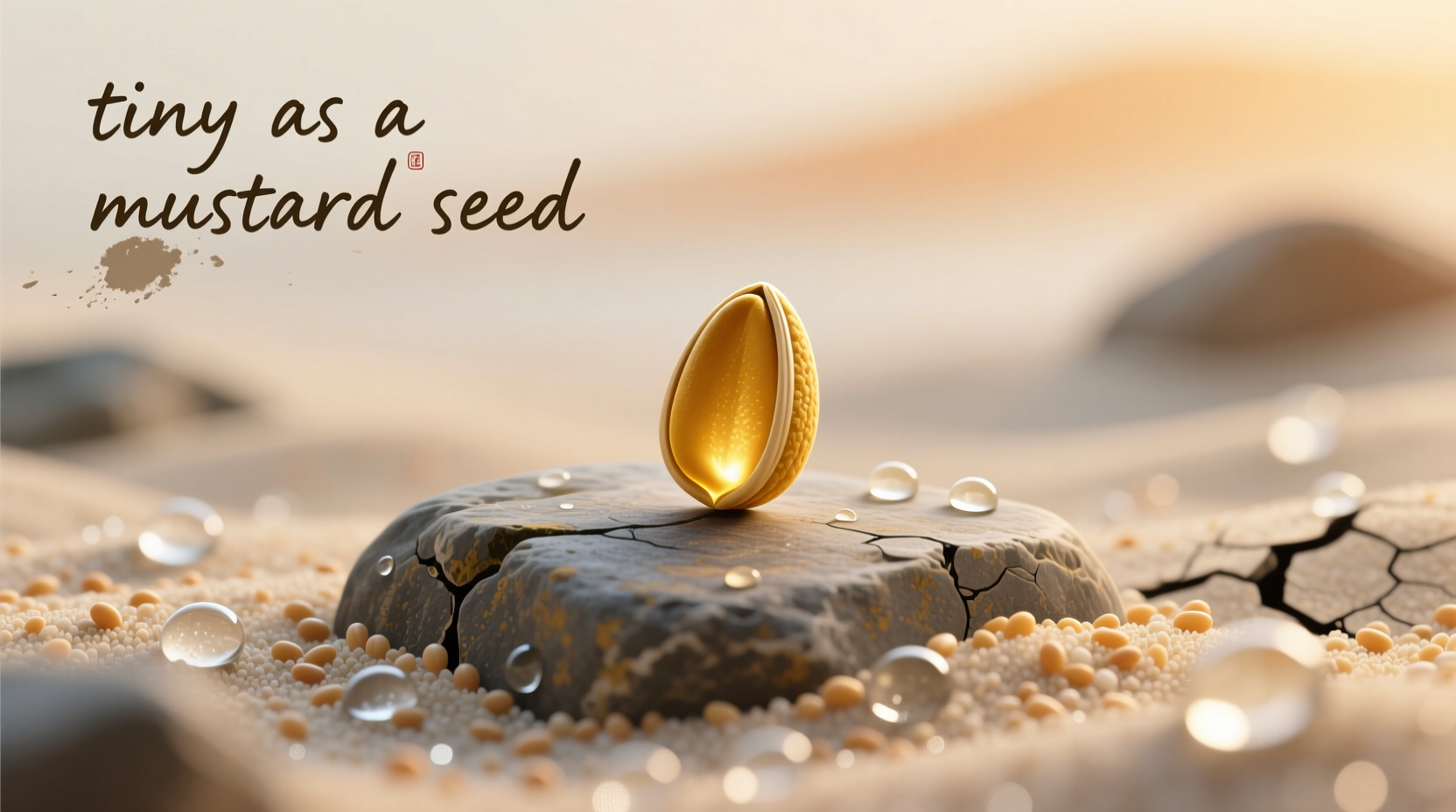
Mustard seeds—often cited as one of nature’s tiniest but most potent spices—are derived from various species of the Brassica and Sinapis genera. Measuring between 1–2 millimeters in diameter, they are among the smallest whole spices used globally. Despite their modest stature, mustard seeds are foundational in Indian, Ethiopian, Middle Eastern, and European cuisines. They come in three primary varieties: yellow (or white), brown, and black, each differing slightly in heat, aroma, and culinary application.
Their historical roots trace back over 5,000 years, with early cultivation in the Indus Valley and ancient Egypt. Mustard was valued not only as a condiment but also for its medicinal properties and preservative qualities. Today, mustard seeds remain a staple in spice cabinets worldwide, prized for their ability to bloom with intense flavor when heated in oil—a technique known as *tadka* or tempering.
In broader terms, \"minimal size\" in food science and culinary practice refers to ingredients that, due to their small physical form, require precise handling, measured usage, and an understanding of dispersion dynamics. These include not just whole seeds but also ground spices, micro herbs, enzymes, fermentation starters, and even modern culinary additives like sodium alginate or lecithin used in molecular gastronomy.
Key Characteristics
| Characteristic | Details |
|---|---|
| Size | 1–2 mm in diameter; approximately 0.04–0.08 inches |
| Flavor Profile | Pungent, sharp, nutty when raw; develops into warm, earthy, and slightly bitter notes when cooked |
| Aroma | Peppery and tangy when crushed; releases sulforaphane compounds upon hydration |
| Heat Level | Mild to moderate pungency; activated by moisture and heat; black mustard seeds are hottest |
| Culinary Function | Tempering agent, flavor base, textural accent, emulsifier (in mustard paste) |
| Shelf Life | Whole seeds: up to 3–4 years in cool, dark storage; ground: 6–12 months |
| Color & Form | Round, hard spheres; colors range from pale yellow to deep brown/black |
Practical Usage: How to Use Mustard Seeds in Cooking
The power of mustard seeds lies in their activation. Unlike many spices that release flavor gradually during cooking, mustard seeds undergo a dramatic transformation when exposed to heat and fat. This makes them ideal for tempering—a technique where whole spices are briefly fried in oil or ghee to infuse the fat with aromatic compounds before being added to a dish.
- Tempering (Tadka): Heat 1–2 teaspoons of oil or ghee in a pan over medium heat. Add 1/2 to 1 teaspoon of mustard seeds. Cover immediately to prevent popping. Once seeds begin to crackle and pop (within 30 seconds), remove from heat and pour over dals, curries, yogurt raitas, or steamed vegetables.
- Marinades & Pickling: Crushed or coarsely ground mustard seeds are mixed with vinegar, salt, and sugar to create robust pickling brines or meat rubs. Their enzymatic action helps tenderize proteins while adding tang and bite.
- Mustard Paste: Soak 2 tablespoons of mustard seeds in cold water for 4–6 hours, then blend with apple cider vinegar, turmeric, and honey. Let sit for 12–24 hours to develop full pungency. Ideal for sandwiches, glazes, or dipping sauces.
- Baking & Bread Coating: Sprinkle whole or cracked mustard seeds onto bread dough before baking. Common in naan, bagels, and seeded sourdough loaves for texture and flavor contrast.
- Salad Enhancements: Lightly toast mustard seeds and toss with greens, roasted beets, goat cheese, and balsamic vinaigrette for a crunchy, spicy element.
Pro Tip: Always cover the pan when heating mustard seeds. They pop violently when heated due to internal moisture turning to steam. A splatter guard or tight-fitting lid prevents mess and injury while preserving volatile aromatics.
Professional Techniques
In restaurant kitchens, chefs leverage the principle of minimal size through controlled dispersion. A single gram of toasted mustard seed powder can season an entire batch of lentil soup without overwhelming it. Sous-vide applications often incorporate whole mustard seeds directly into vacuum-sealed proteins—slow cooking allows gradual flavor infusion without bitterness.
Modernist cuisine uses micronized mustard seed extracts to deliver instant pungency in foams or gels. When combined with lecithin, these micro-emulsions stabilize air bubbles while imparting a subtle heat—ideal for avant-garde presentations.
Variants & Types
Not all mustard seeds are interchangeable. Choosing the right type depends on desired heat level, color, and regional authenticity.
- Yellow (White) Mustard Seeds (Brassica hirta): Pale gold, mild in flavor, commonly used in American yellow mustard and pickling blends. Best for beginners or dishes requiring gentle heat.
- Brown Mustard Seeds (Brassica juncea): Slightly smaller and darker than yellow, with a sharper, more complex bite. Predominant in Indian curries, Chinese five-spice blends, and Dijon-style mustards.
- Black Mustard Seeds (Brassica nigra): The rarest and most pungent, with a deep, almost floral heat. Used in South Indian sambar, Ethiopian wats, and traditional European stone-ground mustards. Often considered superior in aroma but harder to source.
| Type | Heat Level | Best Uses | Substitution Note |
|---|---|---|---|
| Yellow | Low | Pickles, mild dressings, ballpark mustard | Can replace brown in a pinch, but lacks depth |
| Brown | Medium-High | Curries, stir-fries, artisanal mustards | Closest substitute for black; widely available |
| Black | High | Traditional recipes, specialty condiments | Use brown + a pinch of horseradish powder for approximation |
Comparison with Similar Ingredients
Mustard seeds are often confused with other small, round seeds such as cumin, nigella, or sesame. While visually similar, their roles in cooking differ significantly.
| Ingredient | Size | Flavor | Culinary Role |
|---|---|---|---|
| Mustard Seed | 1–2 mm, spherical | Sharp, pungent, nutty when toasted | Flavor base, tempering spice |
| Cumin Seed | 3–5 mm, oblong | Earthy, warm, slightly bitter | Aromatic foundation in stews and rice |
| Nigella Seed (Kalonji) | 1–2 mm, matte black, angular | Onion-like, smoky, faintly bitter | Garnish for flatbreads, pickles |
| Sesame Seed | 2–3 mm, oval, cream to black | Buttery, sweet when toasted | Texture, binding agent, tahini base |
One common error is substituting nigella seeds for mustard seeds in tempering. Though both are black and tiny, nigella lacks the enzymatic reaction that gives mustard its signature heat. Confusing them alters the chemical profile of a dish entirely.
Practical Tips & FAQs
How much mustard seed should I use?
Start with 1/2 teaspoon per serving for tempering. Adjust upward based on variety and tolerance for heat. Overuse can make dishes acrid, especially with black mustard seeds.
Can I grind mustard seeds ahead of time?
It's best to grind them fresh. Pre-ground mustard loses volatile oils quickly and may clump due to moisture absorption. If storing, keep in an airtight container away from light and humidity.
Why do my mustard seeds burn so fast?
Mustard seeds have a low smoke point when dry-heated. Always use oil or ghee as a medium, and monitor heat closely. Medium-low to medium is ideal. Burnt mustard seeds turn bitter and unusable.
What is the shelf life of whole vs. ground mustard seeds?
Whole seeds retain potency for up to four years if stored properly. Ground seeds degrade within a year due to increased surface area exposed to oxygen. Label your containers with purchase dates.
Are mustard seeds safe for people with allergies?
Yes, but caution is advised. Mustard is a recognized allergen in the EU and must be labeled on packaged foods. Cross-reactivity with cruciferous vegetables (like broccoli or cabbage) can occur in sensitive individuals.
How do I store mustard seeds long-term?
Keep in airtight glass jars in a cool, dark pantry. Avoid refrigeration unless in high-humidity climates, as moisture can trigger premature enzyme activation and mold.
Can I use mustard seeds in sweet dishes?
Yes—in moderation. In Indian cuisine, they appear in sweet-and-sour mango chutneys. In Scandinavian baking, they complement honey-glazed ham or spiced fruit compotes. The contrast enhances complexity.
Expert Insight: Chef Anika Rao, Culinary Instructor
\"The moment mustard seeds hit hot oil is the most critical five seconds in South Asian cooking. That burst of aroma signals the start of flavor layering. Miss it, and you lose the essence of the dish.\"
Broader Implications of Minimal Size in Cooking
The concept of \"tiny as a mustard seed\" extends beyond literal ingredients. It reflects a philosophy of precision and respect for proportion. Consider:
- Salt Crystals: A few grains of Maldon sea salt finish a chocolate tart with textural elegance and salinity balance.
- Saffron Threads: Three threads steeped in warm water perfume a risotto for four—costly and minuscule, yet irreplaceable.
- Fermentation Starters: A gram of koji mold inoculates pounds of rice for miso production, transforming starches into umami-rich compounds over months.
- Enzymes in Cheese Making: Rennet, used in quantities measured in drops, coagulates milk through biochemical precision.
In each case, minimal size demands maximal attention. Under-dosing leads to blandness; over-dosing creates imbalance. Mastery lies in calibration.
Summary & Key Takeaways
“Tiny as a mustard seed” is more than a simile—it’s a lesson in culinary economy. These minute seeds exemplify how size and significance are inversely related in cooking. From their explosive role in tempering to their enzymatic power in fermentation, mustard seeds teach us to value precision, timing, and restraint.
To harness their potential:
- Always activate mustard seeds in fat before adding to dishes.
- Choose the correct variety—yellow, brown, or black—based on desired heat and tradition.
- Store whole seeds properly to preserve shelf life and flavor integrity.
- Respect their potency; a little goes a very long way.
- Apply the principle of minimal size to other ingredients: salts, spices, acids, and cultures.
Challenge yourself this week: Cook a dal or vegetable dish using only tempered mustard seeds, cumin, and curry leaves for flavor. Taste the difference that mindful, minimal seasoning makes.




 浙公网安备
33010002000092号
浙公网安备
33010002000092号 浙B2-20120091-4
Comments
No comments yet. Why don't you start the discussion?