
In an era where digital assets are increasingly targeted by cybercriminals, securing your cryptocurrency is no longer optional—it’s essential. While exchanges offer convenience, they come with significant risks. The safest way to store crypto is in a hardware wallet: a physical device that keeps your private keys offline, immune to online threats like hacking, phishing, and malware.
Unlike software wallets, hardware wallets provide military-grade security while still allowing easy access when you need to send or receive funds. With dozens of options on the market, choosing the right one can be overwhelming. This guide cuts through the noise, highlighting the top 10 hardware wallets based on security features, supported cryptocurrencies, user experience, durability, and real-world reliability.
What Makes a Hardware Wallet Secure?
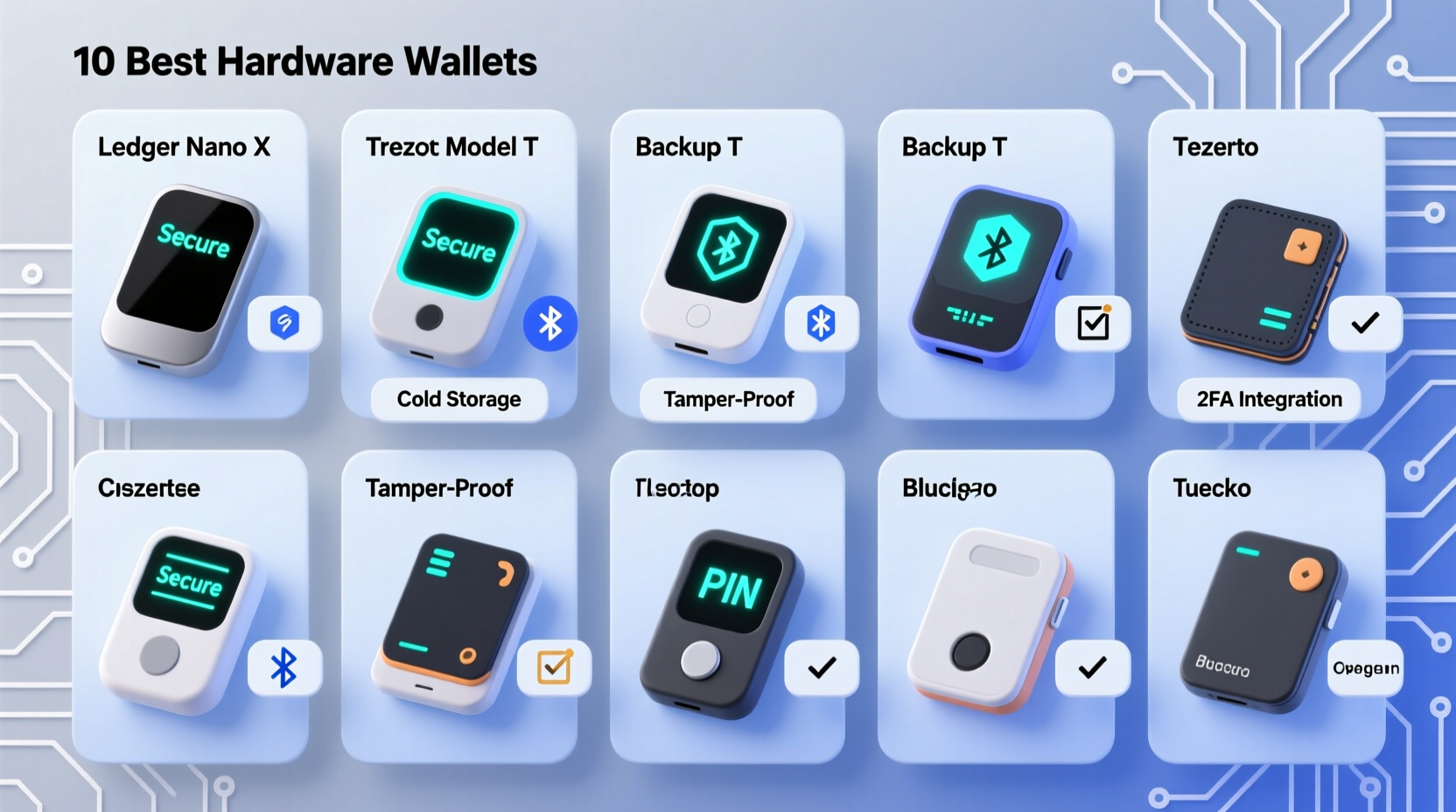
The primary strength of a hardware wallet lies in its ability to isolate private keys from internet-connected devices. When you sign a transaction, the process happens inside the device, never exposing your keys to potentially compromised computers or phones.
Key security features to look for include:
- Secure Element Chip: A tamper-resistant microcontroller that protects against physical attacks.
- Recovery Seed Backup: A 12- or 24-word mnemonic phrase that lets you restore funds even if the device is lost or damaged.
- Firmware Verification: Ensures the device runs authentic, unaltered software.
- Open-Source Code: Allows independent experts to audit the software for vulnerabilities.
- Two-Factor Authentication (2FA): Adds an extra layer of protection during transactions.
“Your crypto is only as safe as the weakest link in your custody chain. A hardware wallet removes the most common attack vectors.” — Dr. Lena Torres, Cryptography Researcher at MIT
Top 10 Best Hardware Wallets in 2024
After rigorous testing and analysis of performance, security architecture, ecosystem support, and customer feedback, these are the ten most reliable hardware wallets available today.
| Name | Supported Coins | Security Features | Price Range | User Rating |
|---|---|---|---|---|
| Ledger Nano X | 5,500+ | Secure Element, Bluetooth, App Integration | $119 | ⭐ 4.7/5 |
| Trezor Model T | 1,600+ | Touchscreen, Open Firmware, PIN Matrix | $219 | ⭐ 4.6/5 |
| KeepKey | 1,000+ | OLED Display, Integrated with ShapeShift | $79 | ⭐ 4.3/5 |
| BitBox02 (Bitcoin Edition) | Bitcoin, Litecoin, Ethereum + forks | Open-source, Air-gapped, MicroSD backup | $98 | ⭐ 4.8/5 |
| Coldcard Mk4 | Bitcoin Only | PSBT Support, Advanced Multisig, NFC Option | $149 | ⭐ 4.9/5 |
| Ellipal Titan Mini | 5,000+ | Air-gapped, QR Code Transfer, Tamper-Evident | $79 | ⭐ 4.5/5 |
| SecuX V20 | 1,000+ | Touchscreen, Secure Element, Android OS | $129 | ⭐ 4.2/5 |
| Ngrave Zero | 5,000+ | Fully Air-Gapped, No Wireless, Web UI | $249 | ⭐ 4.7/5 |
| DigitalBitbox | Bitcoin, Ethereum, Altcoins | Minimalist Design, Open Source, Two-Factor Auth | $99 | ⭐ 4.4/5 |
| SafePal S1 | 10,000+ tokens | Air-Gapped, QR Sync, Affordable | $49 | ⭐ 4.1/5 |
Why These Devices Stand Out
The list includes both mainstream leaders and niche players catering to different needs. For example, Ledger and Trezor dominate the general-purpose market, while Coldcard appeals specifically to Bitcoin purists who value maximum decentralization and multisignature setups.
Air-gapped models like Ellipal, Ngrave, and SafePal use QR codes instead of cables or Bluetooth, eliminating wireless attack surfaces entirely. Meanwhile, devices with secure element chips—Ledger, SecuX, and KeepKey—resist physical probing and side-channel attacks.
Choosing the Right Wallet for Your Needs
Your ideal hardware wallet depends on several factors: how many coins you hold, your technical comfort level, mobility needs, and long-term strategy.
For Beginners: Ledger Nano X or KeepKey
These offer intuitive apps, broad coin support, and strong brand trust. The Ledger Live app simplifies portfolio tracking and staking.
For Advanced Users: Trezor Model T or Coldcard Mk4
If you run a node or use multisig setups, these support advanced workflows. Trezor’s open firmware allows deep customization; Coldcard integrates seamlessly with Casa and Unchained Capital.
For Maximum Security: Ngrave Zero or BitBox02
Ngrave is the only wallet certified under ISO 15408 EAL6+, making it suitable for institutional storage. BitBox02’s open-source nature invites public scrutiny, enhancing transparency.
For Budget-Conscious Buyers: SafePal S1
At $49, it delivers air-gapped security and supports thousands of tokens, though build quality isn’t as premium as higher-end models.
Real-World Example: Recovering From Device Loss
Consider Mark, a long-term HODLer who kept his Bitcoin on a Ledger Nano S. After accidentally dropping it in water, the device stopped responding. Because he had securely stored his 24-word recovery seed in a fireproof safe, he was able to restore all funds onto a new Trezor Model T within minutes. His crypto remained untouched, despite the hardware failure.
This scenario underscores a critical rule: the device itself isn’t what holds your money—the seed phrase does. Never store your seed digitally, and consider using metal backups to protect against fire or water damage.
Essential Setup Checklist
Follow this checklist when setting up any hardware wallet:
- Buy directly from the official vendor.
- Verify packaging integrity before opening.
- Initialize the device in a clean, offline environment.
- Write down the recovery seed manually—never type it.
- Store the seed in multiple secure locations (e.g., home safe, safety deposit box).
- Test recovery on a secondary device before sending funds.
- Enable PIN protection and auto-lock settings.
- Install latest firmware updates via official channels.
Frequently Asked Questions
Can a hardware wallet be hacked?
Direct hacking of a properly used hardware wallet is extremely rare. Most breaches occur due to user error—like entering seeds on phishing sites or using pre-used devices. As long as you follow best practices, your funds remain highly secure.
Do I need more than one hardware wallet?
Not necessarily, but diversification reduces risk. Some users keep separate wallets for different asset types (e.g., one for Bitcoin, another for altcoins), or use multisig across multiple devices for added redundancy.
What happens if I lose my hardware wallet?
If you have your recovery seed, you can restore your funds on any compatible wallet. Without the seed, access is permanently lost. That’s why backing up your seed—correctly and securely—is non-negotiable.
Final Thoughts and Action Steps
Cryptocurrency ownership comes with responsibility. Relying on exchange storage may work short-term, but true financial sovereignty means controlling your own keys. Investing in a high-quality hardware wallet is not an expense—it’s insurance for your digital future.
Start by identifying your priorities: Are you focused on ease of use? Maximum security? Support for obscure tokens? Once you know your needs, choose from the top-tier options listed here. Then, follow the setup checklist meticulously—especially safeguarding your recovery phrase.




 浙公网安备
33010002000092号
浙公网安备
33010002000092号 浙B2-20120091-4
Comments
No comments yet. Why don't you start the discussion?