
Vests are no longer just functional layers for warmth—they’ve become powerful tools of personal expression. Whether worn in a professional setting, at a social event, or as part of a streetwear ensemble, the choice between a two-tone and a solid vest can subtly (or dramatically) shift how you’re perceived. The central question isn’t just about aesthetics; it’s about visibility, intention, and presence. Does a patterned or contrasting two-tone vest truly make you stand out more than a solid one? The answer depends on context, audience, and execution.
The Visual Psychology of Contrast
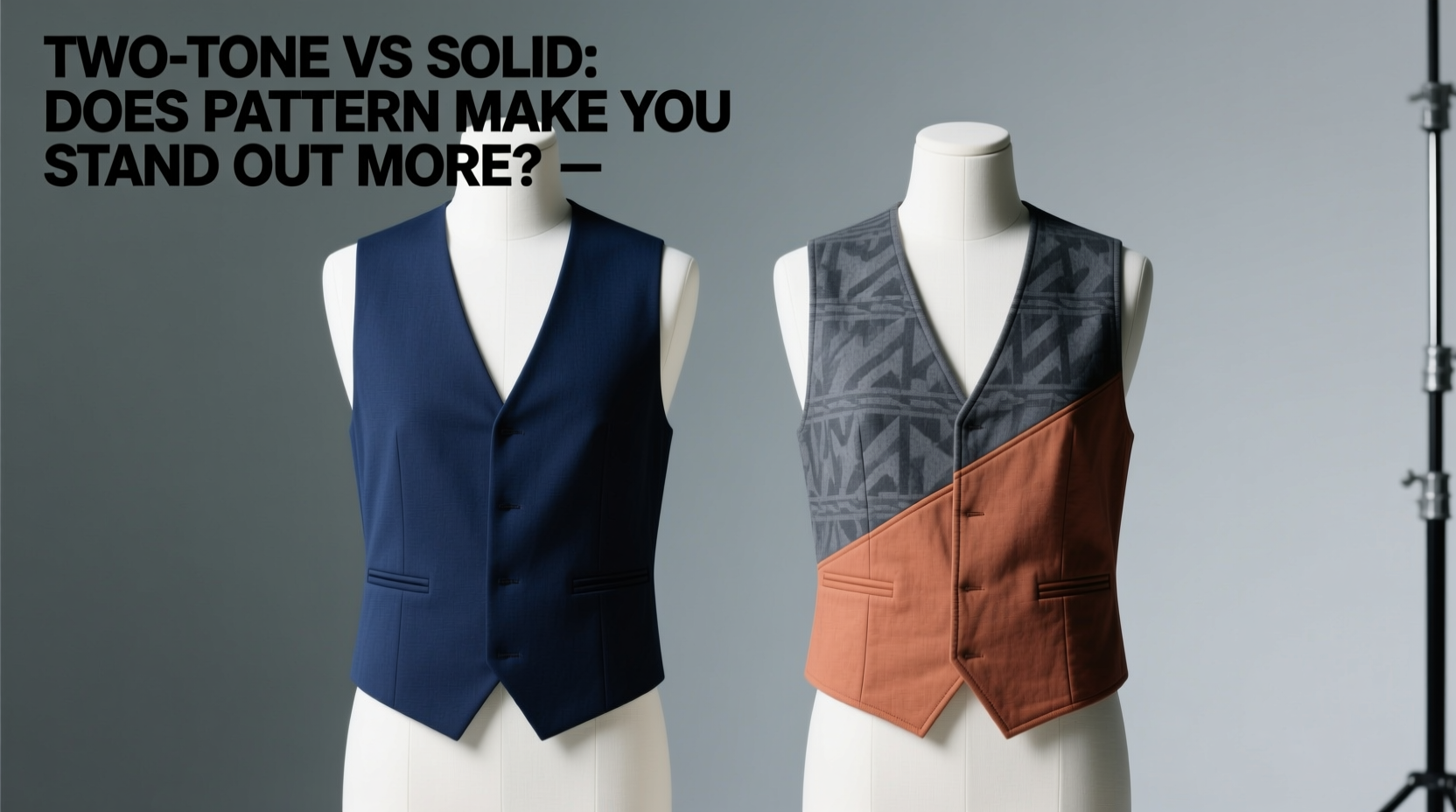
Human eyes are naturally drawn to contrast. A sudden shift in color, texture, or tone triggers attention faster than uniformity. This is rooted in evolutionary perception—our brains scan for differences as signals of change or importance. In fashion, this principle translates directly: a two-tone vest, especially one with high-contrast panels (like navy and cream or black and white), creates visual breaks that draw the eye.
Solid vests, by contrast, offer cohesion. They blend seamlessly into an outfit, creating a streamlined silhouette. While this can project professionalism and calm confidence, it may also result in blending in—especially in environments where everyone else is dressed similarly.
“Contrast doesn’t just attract attention—it communicates intent. When someone chooses a two-tone vest, they’re often saying, ‘I want to be seen.’” — Lena Ruiz, Fashion Psychologist & Consultant
In settings where individuality matters—creative industries, public speaking, networking events—this intentional visibility can be an advantage. But in formal corporate environments, too much contrast might be interpreted as disruptive unless carefully balanced.
Functional Comparison: Two Tone vs Solid Vests
| Feature | Two-Tone Vest | Solid Vest |
|---|---|---|
| Visual Impact | High – creates focal points through color blocking | Moderate – blends into overall look |
| Versatility | Lower – requires careful coordination of colors | Higher – pairs easily with various shirts and trousers |
| Durability Perception | Depends on material, but seams between panels may wear faster | Generally even wear; fewer stress points |
| Fashion Statement | Bold, modern, expressive | Classic, understated, timeless |
| Occasion Suitability | Casual, creative, standout events | Formal, business, conservative gatherings |
The data shows a clear trade-off: two-tone vests win in memorability and expressiveness, while solid vests dominate in adaptability and subtlety. Neither is objectively better—it comes down to what kind of impression you aim to leave.
When a Pattern Makes You Stand Out—And When It Doesn’t
Standing out isn’t just about wearing something different; it’s about being *noticed for the right reasons*. A two-tone vest can elevate your presence in a crowd, but only if the design is intentional and harmonious.
For example, a charcoal gray vest with a subtle burgundy lining revealed at the edges offers a hint of contrast without overwhelming. Conversely, a jarring combination like neon green and bright orange may distract rather than impress, especially in professional contexts.
Patterns and color blocking work best when they complement your skin tone, hairstyle, and overall aesthetic. A well-chosen two-tone vest can highlight your posture, frame your face, and guide attention toward your expressions—making you not just visible, but engaging.
A Real-World Example: The Conference Speaker
Consider Marcus, a marketing strategist invited to speak at a major industry conference. He owns both a deep blue solid wool vest and a two-tone piece combining slate gray and warm camel. For his talk on innovation in branding, he opts for the two-tone vest.
From the stage, the contrast catches the camera’s eye. Attendees later mention in feedback that they “noticed him immediately” and found his delivery “visually dynamic.” The vest didn’t overshadow his message—it amplified it. In follow-up meetings, several people referenced his look as “memorable but not flashy.”
In contrast, when Marcus wore the solid vest to a board meeting, he was described as “reliable” and “well-dressed,” but no one specifically remembered his outfit. Both outcomes were valid—but served different goals.
How to Choose Based on Your Goals
Selecting between a two-tone and solid vest should align with your objective in a given situation. Ask yourself: Do I want to be noticed, or do I want to be trusted? Am I expressing creativity, or projecting stability?
- Choose a two-tone vest when:
- You’re in a creative field (design, media, entertainment)
- You’re speaking publicly or being photographed
- You want to break the monotony of a standard suit
- Your personal brand leans toward boldness or innovation
- Choose a solid vest when:
- You’re in a traditional corporate or legal environment
- Consistency and professionalism are prioritized over flair
- You’re layering under a jacket where details won’t be seen
- You prefer a minimalist, timeless wardrobe
Step-by-Step: Matching Your Vest to the Occasion
- Assess the setting: Is it formal, casual, creative, or mixed?
- Review the guest list or audience: Are they likely to appreciate subtle elegance or bold statements?
- Check your shirt and outer layers: Will they clash with or complement the vest’s contrast?
- Evaluate lighting and space: In large rooms or dim lighting, contrast helps visibility.
- Finalize based on goal: Decide whether you want to blend in confidently or stand out intentionally.
Frequently Asked Questions
Does a two-tone vest work with a patterned shirt?
Proceed with caution. Combining multiple patterns can create visual clutter. If you must pair them, ensure one element is dominant and the other subtle—e.g., a subtly striped shirt with a boldly two-tone vest, or vice versa. Stick to a cohesive color palette to avoid clashing.
Are two-tone vests considered unprofessional?
Not inherently. In modern workplaces, especially those embracing creative freedom, two-tone vests are seen as stylish and confident. However, in highly traditional sectors like law or finance, they may be viewed as too informal unless executed with restraint (e.g., tonal variations in the same color family).
Can a solid vest still make a statement?
Absolutely. A solid vest in an unexpected fabric—like velvet, corduroy, or metallic weave—can be just as striking as a two-tone piece. Texture, fit, and tailoring matter as much as color. A perfectly fitted solid burgundy vest in silk-blend fabric will turn heads without relying on contrast.
Final Thoughts: Standing Out With Purpose
The debate between two-tone and solid vests isn’t about which is better—it’s about understanding the language of clothing. A two-tone vest is a sentence with emphasis; a solid vest is a well-placed period. One draws the eye, the other grounds the look.
If your goal is to be memorable, distinctive, or expressive, a thoughtfully designed two-tone vest can be your most effective accessory. But if you aim to project quiet authority or seamless integration, a solid vest remains unmatched in its elegance.
Ultimately, standing out isn’t just about what you wear—it’s about why you wear it. Choose not for trend, but for intention. When your clothing aligns with your purpose, you don’t just catch the eye—you hold attention.




 浙公网安备
33010002000092号
浙公网安备
33010002000092号 浙B2-20120091-4
Comments
No comments yet. Why don't you start the discussion?