
Building blocks have evolved far beyond childhood play. For creators, engineers, educators, and hobbyists, MOC (My Own Creation) building block sets offer a powerful medium for prototyping, storytelling, and artistic expression. Whether you're designing architectural models, kinetic sculptures, or custom robotics enclosures, selecting the right building system is foundational to your project’s success. The wrong choice can lead to frustration, instability, or unnecessary expense. This guide breaks down everything you need to consider—from compatibility and scale to durability and expansion potential—so you can confidently invest in a set that supports your vision.
Understanding MOC Building Block Systems
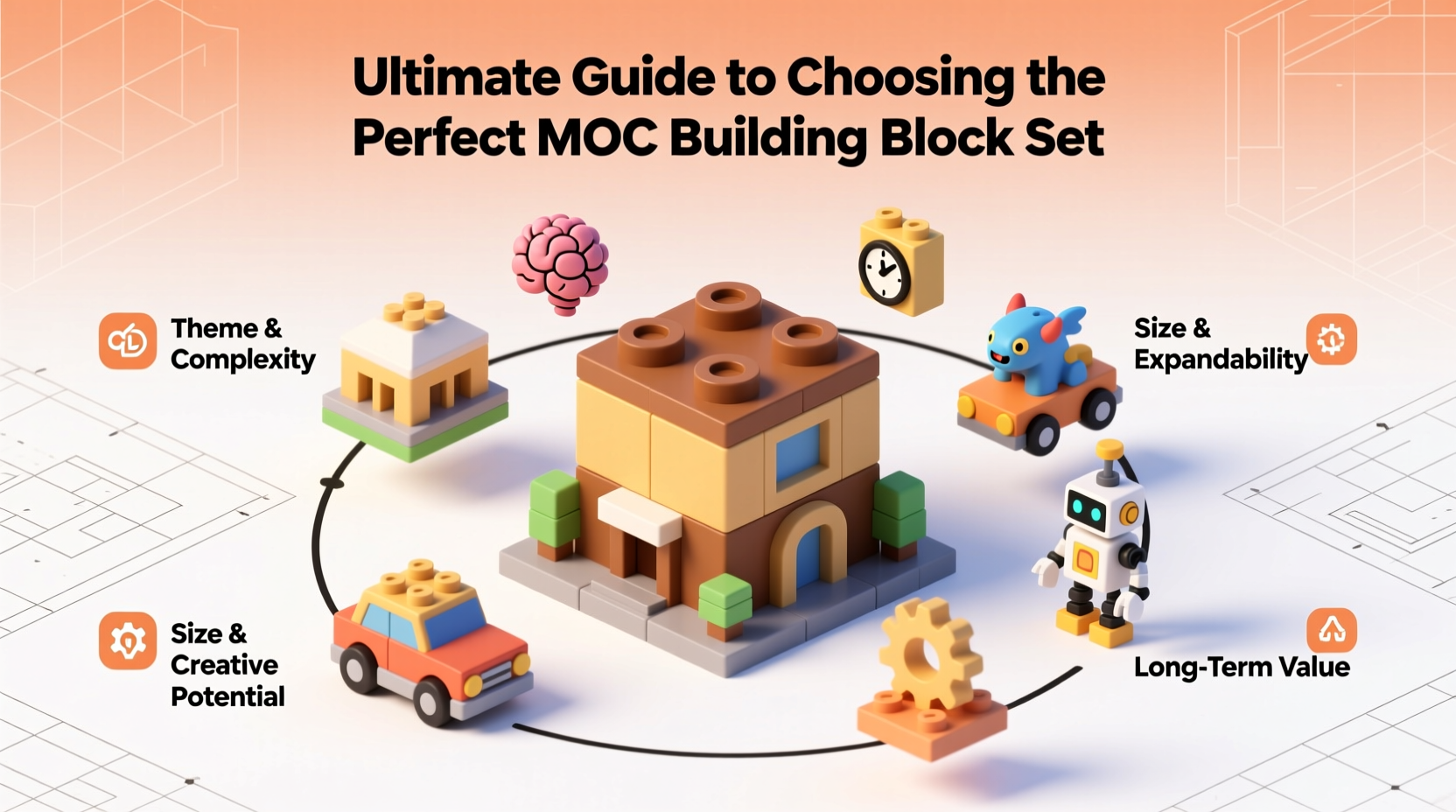
MOC stands for \"My Own Creation,\" a term widely used in enthusiast communities to describe original builds not based on official kits. While many associate these systems with a certain Danish brand, numerous third-party manufacturers now produce compatible or alternative block systems. These include brands like Mega Bloks, COGO, BanBao, and more specialized lines such as BrickForge or Pablock for advanced detailing.
The key is not just finding blocks that snap together, but identifying a system that aligns with your long-term goals. Some prioritize affordability, others precision or rare parts. Compatibility across brands varies: while most follow similar stud-and-tube mechanics, tolerances differ. This affects structural integrity and part interchangeability.
Key Factors When Choosing a Set
Selecting the ideal MOC set isn’t about quantity alone. A box of 5,000 generic bricks may seem impressive, but without variety or quality, it limits creativity. Consider these five core criteria:
- Compatibility: Will the blocks work with other systems you already own?
- Part Variety: Does the set include plates, slopes, hinges, and specialized elements like gears or connectors?
- Material Quality: Are the plastics durable, color-stable, and resistant to warping over time?
- Scale & Proportion: Is the block size appropriate for your intended model (e.g., minifigure-scale vs. microbuild)?
- Expandability: Can you easily source additional parts later?
For example, architectural modelers often prefer smaller scales using plate-heavy builds for smooth surfaces, while roboticists might prioritize beams, axles, and motor mounts found in technical sets.
Expert Insight
“Design freedom comes not from having every piece, but from understanding which pieces enable structural logic and aesthetic coherence.” — Dr. Lena Torres, Industrial Design Instructor at Zurich University of the Arts
Comparing Top MOC-Friendly Building Systems
To help clarify differences between major options, here's a comparison table highlighting critical attributes for MOC builders:
| Brand/System | Compatibility | Part Diversity | Durability | Average Cost per 100 Pieces |
|---|---|---|---|---|
| Lego Technic/Creator | High (industry standard) | Very High | Excellent | $7–$9 |
| Mega Bloks (now Mattel) | Low-Moderate | Moderate | Fair (less consistent molding) | $3–$5 |
| BanBao | Moderate-High | Good (especially basic shapes) | Good | $4–$6 |
| COGO | High | Very High (includes unique tech parts) | Very Good | $5–$7 |
| Generic Unbranded Sets | Variable (often poor) | Limited | Poor (prone to brittleness) | $2–$4 |
Note that while Lego remains the gold standard for precision and community support, alternatives like COGO and BanBao offer compelling value, especially for large-scale or temporary installations where cost efficiency matters.
Step-by-Step: Building Your Ideal MOC Kit
You don’t need to buy pre-packaged sets. Many serious creators assemble their own ideal collections piece by piece. Follow this timeline to curate a personalized MOC-ready inventory:
- Define Your Project Type – Is it static (e.g., diorama), functional (robotics), or modular (reconfigurable display)?
- Identify Core Components Needed – List essential parts: baseplates, connectors, hinges, etc.
- Choose a Base System – Pick one primary brand for consistency (e.g., Lego-compatible).
- Source Starter Bulk Lots – Use online marketplaces (BrickLink, eBay, or ToyPro) to buy mixed lots by weight or count.
- Add Specialty Parts Gradually – Once basics are covered, invest in niche items like turntables, pneumatics, or light guides.
- Organize by Function and Color – Use compartmentalized storage for quick access during builds.
- Test and Iterate – Build small prototypes to assess performance under stress or movement.
Real-World Example: From Concept to Exhibition
Consider the case of Marcus Reed, an industrial design student who created a kinetic cityscape for a university innovation showcase. His goal was a self-powered urban model with moving bridges and elevators.
Initially, he started with a budget-friendly unbranded set. However, after two weeks of failed gear alignments and cracked axles, he switched to a hybrid approach: using COGO structural beams for load-bearing sections and sourcing specific Lego motors and battery boxes through BrickLink.
The result? A fully operational model that ran continuously for 14 hours during exhibition. More importantly, his revised component strategy reduced maintenance mid-build and allowed seamless integration of electronic modules. His takeaway: “Investing in reliable core components saved me time, stress, and last-minute fixes.”
Checklist: Before You Buy Any MOC Set
Use this checklist to ensure your purchase supports both immediate needs and future flexibility:
- ☐ Confirm compatibility with existing or planned systems
- ☐ Verify availability of replacement or additional parts
- ☐ Assess material quality (ask for samples if buying wholesale)
- ☐ Check for inclusion of varied connection types (ball joints, pin holes, friction connectors)
- ☐ Evaluate packaging and sorting—will parts be easy to organize?
- ☐ Research user reviews focused on long-term durability
- ☐ Determine whether instructions or digital schematics are provided (useful for reverse engineering)
Frequently Asked Questions
Can I mix different brands of building blocks in one MOC?
Yes, but with caution. Most brick-based systems follow a 0.8mm stud diameter standard, but slight variations in plastic composition and mold precision can cause tight fits or weak connections. Test combinations under stress before finalizing designs. Brands like COGO and BanBao generally integrate well with Lego, whereas dollar-store generics often fail after repeated use.
Are secondhand sets a good option for MOC building?
Often, yes. Secondhand markets like BrickLink or Facebook groups offer cost-effective access to rare or discontinued parts. Just inspect for discoloration, warping, or worn clutch power (the ability to hold pieces firmly). Yellowed or brittle pieces should be avoided in load-bearing roles.
How do I protect my MOCs once completed?
For permanent displays, consider using removable clear acrylic cases to prevent dust accumulation. Avoid direct sunlight to prevent UV degradation and color fading. If transporting, disassemble fragile joints and pack components in foam-lined trays.
Final Thoughts: Build With Intention
The perfect MOC building block set isn't defined by size or brand prestige—it's defined by how well it serves your creative intent. Thoughtful selection today prevents compromise tomorrow. Whether you're crafting intricate steampunk machines or educational engineering kits, the foundation of every great build lies in the reliability and versatility of its components.




 浙公网安备
33010002000092号
浙公网安备
33010002000092号 浙B2-20120091-4
Comments
No comments yet. Why don't you start the discussion?