
Fraud is one of the most commonly prosecuted white-collar crimes in the United States and many other countries. While it may not involve physical violence, the consequences of a fraud conviction can be severe—ranging from substantial fines to lengthy prison sentences. Understanding how fraud sentences are determined, what factors influence jail time, and how to respond if you or someone you know is facing charges is essential for navigating this complex area of law.
Judges don’t assign sentences arbitrarily. Federal and state sentencing guidelines provide structured frameworks that weigh multiple variables, including the nature of the offense, financial loss, prior criminal history, and cooperation with authorities. Knowing these elements empowers individuals to make informed decisions during investigations and trials.
The Legal Framework Behind Fraud Sentencing
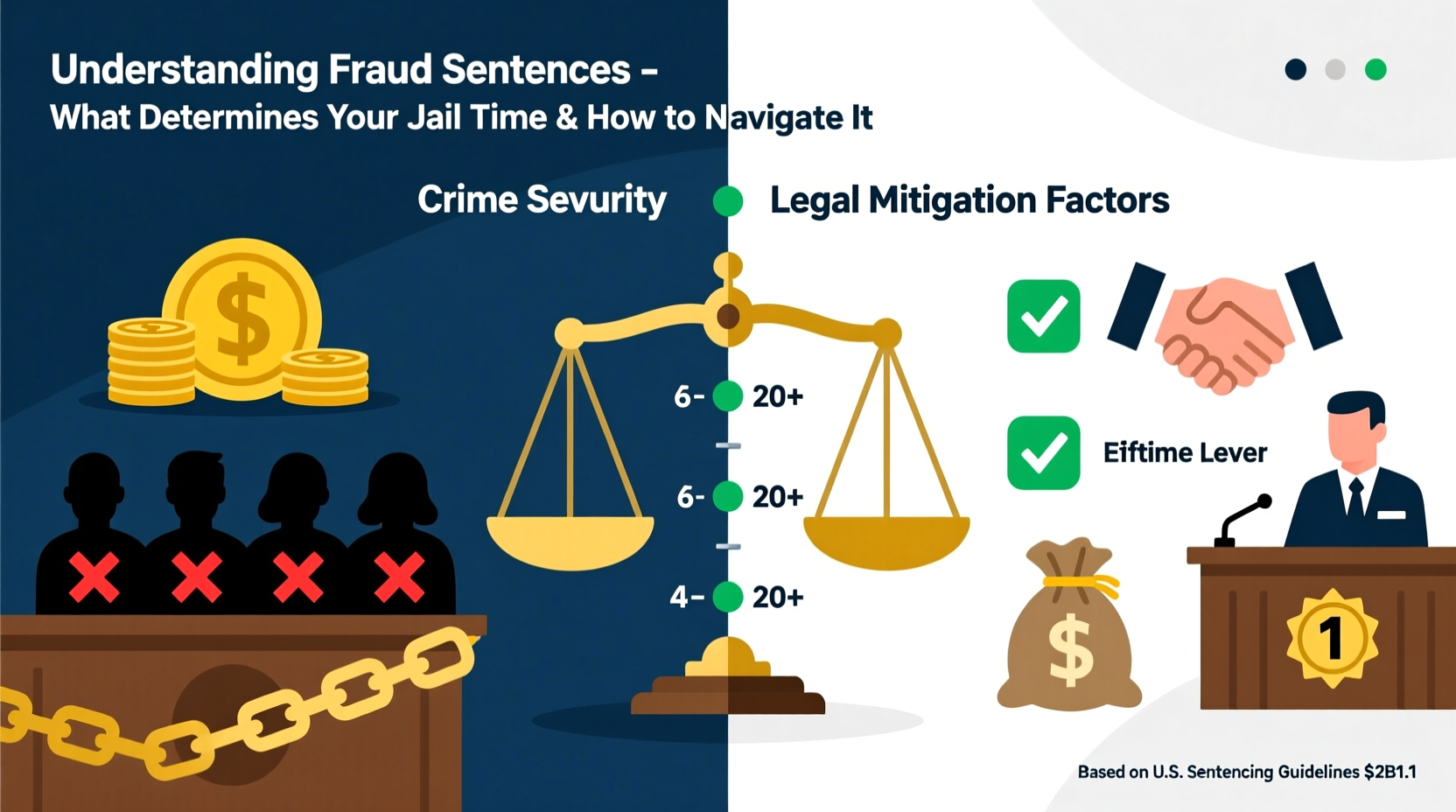
In the U.S., federal fraud cases are typically prosecuted under statutes such as wire fraud (18 U.S.C. § 1343), mail fraud (18 U.S.C. § 1341), bank fraud (18 U.S.C. § 1344), and securities fraud (15 U.S.C. § 78j). Each carries its own statutory maximum penalties, but actual sentences are determined using the U.S. Sentencing Guidelines—a standardized system designed to promote fairness and consistency across courts.
The base offense level for fraud starts at 6 or 7 points, then increases based on the amount of monetary loss involved. For example, causing $150,000 in losses adds 8 levels; $1 million adds 14. Additional enhancements apply if vulnerable victims were targeted, sophisticated means were used, or the defendant played a leadership role in the scheme.
“Sentencing in fraud cases isn’t just about punishment—it’s also about deterrence and restitution. Judges look closely at both harm caused and willingness to make amends.” — Sarah Lin, Former Assistant U.S. Attorney, Financial Crimes Division
Key Factors That Determine Jail Time
No two fraud cases are identical, and sentencing reflects that complexity. Below are the primary considerations courts use when determining incarceration length:
- Amount of Financial Loss: This is often the single most influential factor. The greater the monetary damage, the higher the offense level. Loss amounts are calculated conservatively, sometimes including intended loss even if not fully realized.
- Number of Victims: Schemes affecting dozens—or hundreds—of people typically result in harsher penalties due to increased societal harm.
- Use of Deception or Sophisticated Methods: If the fraud involved fake identities, forged documents, encrypted communications, or offshore accounts, sentencing enhancements may apply.
- Prior Criminal Record: Repeat offenders face steeper consequences. Even unrelated past convictions can increase criminal history points.
- Acceptance of Responsibility: Defendants who plead guilty early and show remorse often receive reduced sentences—typically a two- or three-level decrease under the guidelines.
- Cooperation with Authorities: Providing substantial assistance in prosecuting others can lead to significant downward departures or even immunity in rare cases.
Sentencing Guidelines Comparison Table
| Loss Amount | Base Offense Level Increase | Approximate Guideline Range (No Criminal History) |
|---|---|---|
| $5,000 – $15,000 | +4 levels | 0–6 months |
| $15,000 – $40,000 | +6 levels | 6–12 months |
| $150,000 – $250,000 | +8 levels | 10–16 months |
| $1M – $2.5M | +14 levels | 24–30 months |
| $25M+ | +22 levels | 10+ years |
Note: These ranges assume minimal criminal history and acceptance of responsibility. Aggravating factors like leadership roles or targeting elderly victims can add years.
Real Case Example: The Small Business Loan Scheme
Mark T., a 42-year-old business owner in Ohio, applied for multiple Economic Injury Disaster Loans (EIDL) during the pandemic by falsifying employee counts and revenue figures. He claimed over $480,000 in aid he wasn't entitled to, funneling funds into personal expenses.
When investigators traced inconsistencies in his filings, Mark was indicted for wire fraud. His initial exposure under the guidelines was 30–37 months. However, after retaining counsel, he accepted responsibility, admitted guilt within weeks of indictment, and agreed to repay $300,000 immediately.
His attorney presented evidence of mental health struggles and lack of prior record. The judge granted a downward departure, citing cooperation and repayment efforts, sentencing Mark to 18 months in prison followed by three years of supervised release.
This case illustrates how proactive steps—even after wrongdoing—can meaningfully reduce penalties.
How to Navigate the System: A Step-by-Step Guide
If you're under investigation or have been charged with fraud, timing and strategy are critical. Follow these steps to protect your rights and improve potential outcomes:
- Remain Silent Until You Have Legal Counsel: Anything you say can be used against you. Do not speak to investigators without an attorney present.
- Hire a Skilled White-Collar Defense Lawyer: Look for attorneys experienced in federal fraud cases, preferably with prosecutorial background.
- Assess the Evidence and Potential Exposure: Work with your lawyer to understand the scope of the allegations, estimated loss amounts, and possible defenses.
- Evaluate Cooperation vs. Trial: Weigh the risks of going to trial versus negotiating a plea deal. Over 90% of federal cases end in pleas.
- Prepare for Sentencing Early: Begin gathering character references, financial records, and proof of restitution ability long before sentencing.
- Consider Restitution and Repayment Plans: Demonstrating good faith efforts to repay victims strengthens arguments for leniency.
- Attend Sentencing Prepared: Submit a personal statement, letters of support, and documentation showing rehabilitation or mitigating circumstances.
Action Checklist: Responding to Fraud Charges
- ✅ Contact a white-collar criminal defense attorney immediately
- ✅ Avoid discussing the case with anyone except your lawyer
- ✅ Preserve all relevant documents and electronic records
- ✅ Begin assessing assets available for restitution
- ✅ Prepare a timeline of events for your legal team
- ✅ Gather personal and professional references
- ✅ Explore options for voluntary disclosure or cooperation
Frequently Asked Questions
Can I go to jail for unintentional fraud?
Intent matters significantly. Fraud requires knowingly making false statements or engaging in deceptive practices. Honest mistakes or accounting errors generally do not constitute criminal fraud unless there's evidence of willful blindness or deliberate concealment.
Do first-time offenders always avoid prison?
Not necessarily. While first-time offenders with minor losses and strong mitigation factors may receive probation, those responsible for large-scale fraud—even without prior record—often serve prison time. The court weighs total harm, sophistication, and acceptance of responsibility.
How does restitution affect my sentence?
Full or partial restitution demonstrates accountability and can lead to lower offense levels. Courts view repayment as a sign of remorse and are more likely to impose shorter sentences or alternative punishments like home confinement when restitution is made promptly.
Conclusion: Taking Control After a Fraud Charge
Facing fraud charges is daunting, but understanding how sentencing works puts you in a stronger position to respond effectively. Jail time is not predetermined—it’s shaped by choices made after the fact. From securing competent counsel to cooperating responsibly and making amends, every step influences the outcome.
The legal system allows room for redemption, especially when defendants act with transparency and integrity moving forward. Knowledge, preparation, and timely action are your most powerful tools.




 浙公网安备
33010002000092号
浙公网安备
33010002000092号 浙B2-20120091-4
Comments
No comments yet. Why don't you start the discussion?