
Vanilla extract is a staple in kitchens around the world, prized for its rich, warm aroma and deep flavor. But if you’ve ever read the ingredients label, you’ve likely noticed something unexpected: alcohol. Most pure vanilla extracts contain at least 35% alcohol—sometimes more. This raises questions. Why is alcohol in vanilla extract? Does it affect the taste? Is it safe to use in recipes, especially for children or those avoiding alcohol? The answers lie in both science and culinary tradition.
The Role of Alcohol in Vanilla Extract
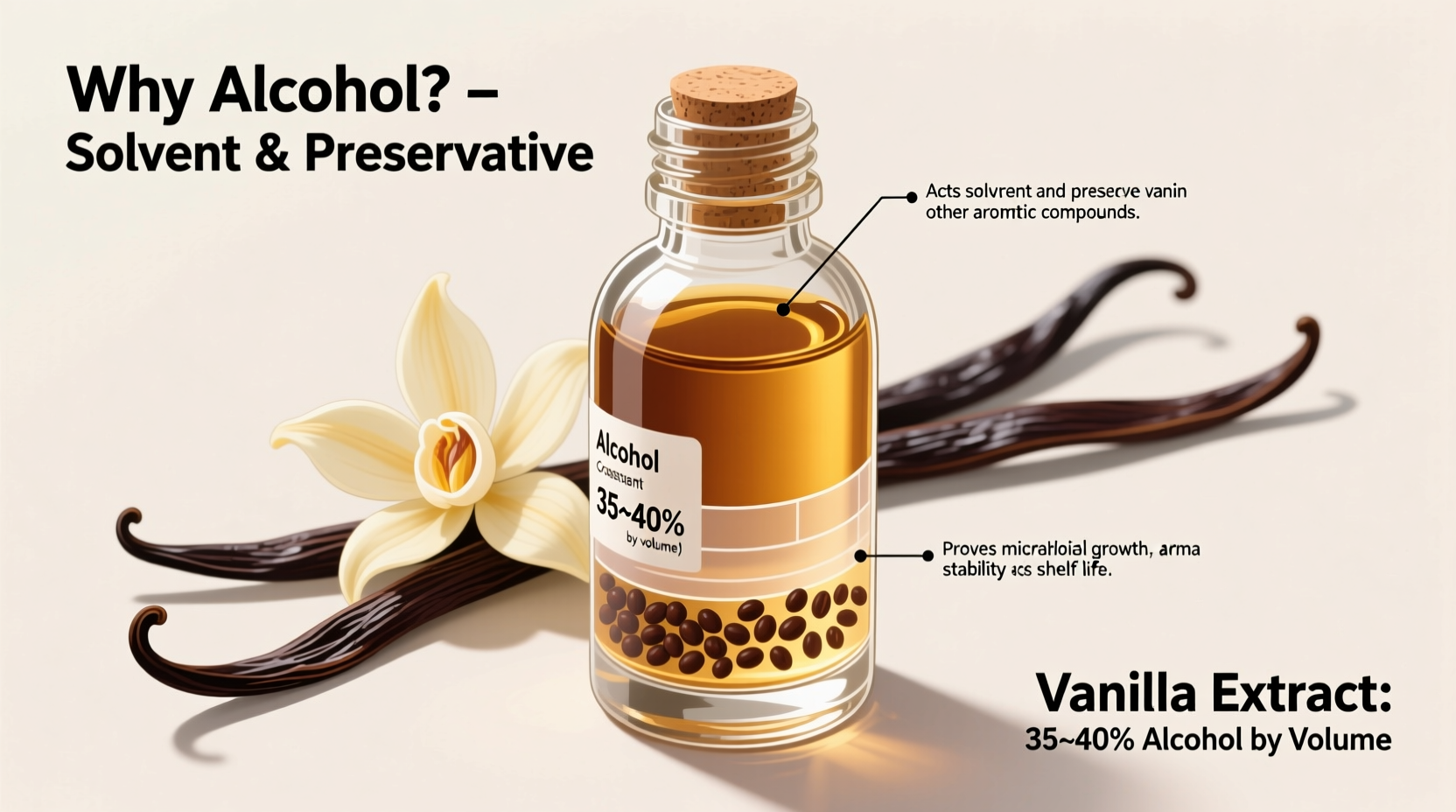
Alcohol isn’t added to vanilla extract as a preservative or filler—it’s essential to the extraction process. When vanilla beans are cured and steeped, their complex flavor compounds must be drawn out efficiently. Ethanol, the type of alcohol used in food-grade extracts, is uniquely effective at dissolving vanillin (the primary flavor compound in vanilla) and hundreds of other aromatic molecules found in the bean.
Water alone cannot extract these compounds fully, and oils don’t provide the same solubility or stability. Alcohol acts as a solvent, pulling out flavor during the maceration period and preserving it over time. The U.S. Food and Drug Administration (FDA) actually mandates that pure vanilla extract contain a minimum of 35% alcohol by volume to qualify for that label. This standard ensures potency and consistency across brands.
“Alcohol is not just a carrier—it’s an active participant in unlocking the full spectrum of vanilla’s flavor.” — Dr. Lydia Chen, Food Chemist and Flavor Specialist
How Alcohol Affects Flavor and Stability
Beyond extraction, alcohol plays a crucial role in maintaining the quality of vanilla extract over time. It prevents microbial growth and oxidation, allowing the extract to remain shelf-stable for years without refrigeration. Unlike imitation vanilla, which often uses propylene glycol or water-based solutions, pure extract with alcohol retains its depth and complexity far longer.
The presence of alcohol also influences how vanilla behaves in recipes. Because ethanol evaporates at a lower temperature than water (173°F or 78°C), much of it burns off during baking or cooking. In dishes like custards, cakes, or sauces that are simmered or baked, up to 85% of the alcohol dissipates. However, in no-cook applications like frostings, smoothies, or whipped cream, a portion remains—though the amount is typically negligible in terms of intoxication risk.
Alcohol Content in Common Vanilla Products
| Product Type | Alcohol Content | Notes |
|---|---|---|
| Pure Vanilla Extract | 35–40% | FDA-compliant; full flavor profile |
| Double-Strength Extract | 35–40% | More concentrated; use half the amount |
| Vanilla Flavor (Artificial) | 0–10% | May contain water, glycerin, or propylene glycol |
| Alcohol-Free Vanilla | 0% | Uses glycerin or sugar syrup; less robust flavor |
| Vanilla Tincture (Homemade) | 40–50% | Stronger due to higher-proof spirits like vodka or rum |
Real-World Example: Baking for a School Event
Sarah, a home baker preparing cupcakes for her daughter’s preschool party, always uses pure vanilla extract in her recipes. Concerned about parents’ questions regarding alcohol content, she decided to test two batches—one with traditional extract and one with an alcohol-free version. After blind tasting with friends, the consensus was clear: the cupcakes made with pure extract had a deeper, more authentic vanilla flavor. The alcohol-free version tasted flat and slightly sweetened, lacking complexity.
She consulted a pediatric dietitian who confirmed that the trace alcohol remaining after baking posed no health risk to children. Reassured, Sarah continued using pure extract but added a note on her cupcake labels: “Made with real vanilla extract; alcohol content minimal after baking.” Parents appreciated the transparency, and her cupcakes became a requested favorite.
Step-by-Step: How Pure Vanilla Extract Is Made
- Curing Vanilla Beans: Freshly harvested beans undergo a months-long curing process involving sweating, drying, and conditioning to develop flavor.
- Chopping: Beans are cut into small pieces to increase surface area for extraction.
- Macerating: Beans are submerged in a solution of ethanol and water (typically 35%+ alcohol) for several weeks to months.
- Agitating: The mixture is periodically stirred or rotated to enhance extraction efficiency.
- Filtration: After steeping, the liquid is filtered to remove bean solids.
- Bottling: The final extract is bottled and aged further to allow flavors to mellow and integrate.
This method, unchanged for over a century, ensures maximum flavor yield and long-term stability—both made possible by alcohol.
Alternatives for Those Avoiding Alcohol
While alcohol-based extracts offer superior flavor, they aren’t suitable for everyone. Individuals avoiding alcohol for medical, religious, or personal reasons have options:
- Glycerin-based vanilla flavoring: Made with vegetable glycerin, this is alcohol-free and safe for most diets. However, it lacks the sharpness and depth of true extract.
- Vanilla powder: Ground, dried vanilla beans can be used directly in dry mixes or rubs. No alcohol, but less soluble in liquids.
- Vanilla bean paste: Contains ground beans and seeds suspended in a thickener. Often includes a small amount of alcohol, so check labels carefully.
- Homemade non-alcoholic extract: Simmer vanilla beans in a mix of water and glycerin, though shelf life will be shorter (2–3 months).
Frequently Asked Questions
Does vanilla extract get you drunk?
No. While pure vanilla extract contains 35% or more alcohol, the quantity used in recipes is extremely small—typically 1 to 2 teaspoons. Even in raw preparations, the total alcohol consumed is far below levels that could cause intoxication. For context, a teaspoon of vanilla extract contains roughly 1/6 of a teaspoon of pure alcohol—less than what’s found naturally in some fruit juices or kombucha.
Can I cook off all the alcohol from vanilla extract?
Most of it, yes. According to USDA data, cooking a dish for 15 minutes removes about 40% of alcohol; after 1 hour of simmering, 95% or more is gone. Baked goods like cakes or cookies retain even less due to high heat and evaporation during the process.
Is imitation vanilla better if I want to avoid alcohol?
Not necessarily. Some imitation vanilla products still contain small amounts of alcohol as a solvent. Always check the label. If alcohol must be avoided entirely, look for explicitly labeled “alcohol-free” versions, preferably based on glycerin or water.
Final Thoughts and Recommendations
Alcohol in vanilla extract isn’t a flaw—it’s a feature. It enables the full, nuanced flavor of real vanilla beans to shine through in everything from brownies to crème brûlée. Understanding its purpose helps demystify ingredient labels and empowers smarter choices in the kitchen.
For best results, keep using pure vanilla extract with confidence. Store it in a cool, dark place to preserve potency. And if you’re ever in doubt about alcohol content in a finished dish, remember: heat, time, and minimal usage make it a non-issue for nearly all eaters.




 浙公网安备
33010002000092号
浙公网安备
33010002000092号 浙B2-20120091-4
Comments
No comments yet. Why don't you start the discussion?