
Sleepwalking, or somnambulism, affects millions of people worldwide—particularly children between the ages of 4 and 8. While witnessing someone walk around with their eyes open during deep sleep can be startling, the real question arises when deciding whether to intervene. A common myth suggests that waking a sleepwalker could cause them serious harm, even heart failure. But is this true? What actually happens if you wake someone mid-sleepwalk? And more importantly, what’s the safest way to respond?
Understanding the science behind sleepwalking helps demystify the risks and guides better decision-making. Rather than relying on folklore, it’s essential to base actions on medical evidence and expert recommendations.
The Science Behind Sleepwalking
Sleepwalking occurs during non-REM (NREM) sleep, typically in the first third of the night when the body is in deep slow-wave sleep. During this phase, parts of the brain remain active while others are deeply asleep. This mixed state allows motor functions to operate—such as sitting up, walking, or even performing complex tasks—while cognitive awareness remains impaired.
Individuals who sleepwalk may have difficulty processing sensory input and often have no memory of the episode upon waking. The condition is more common in children due to developing nervous systems, but adults can also experience it, especially under stress, sleep deprivation, or certain medical conditions like sleep apnea.
“Sleepwalking represents a dissociated state of consciousness—part of the brain is awake enough to move, but not awake enough to make rational decisions.” — Dr. Rafael Pelayo, Clinical Professor of Psychiatry, Stanford Center for Sleep Sciences and Medicine
Why Waking a Sleepwalker Is Not Recommended
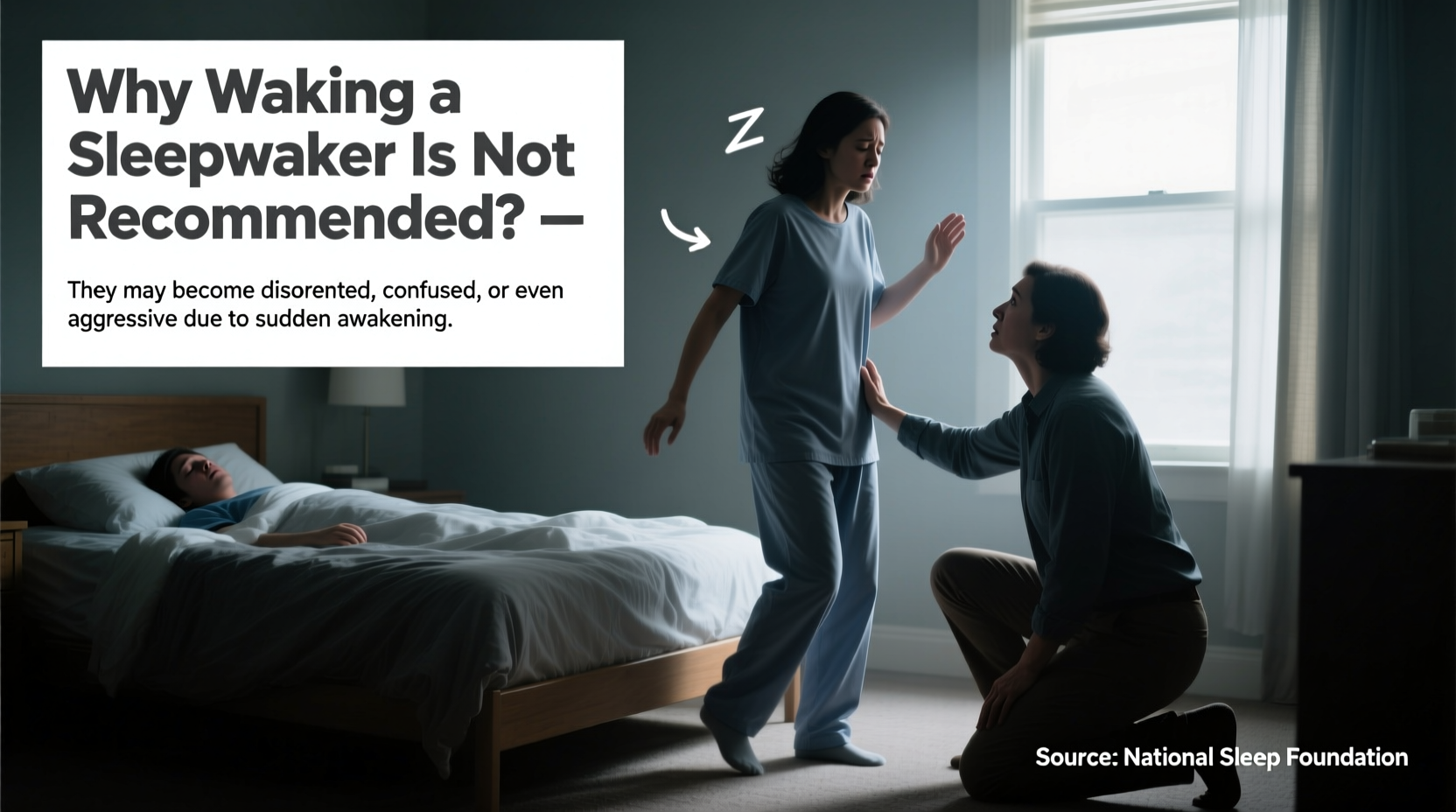
Contrary to popular belief, waking a sleepwalker will not give them a heart attack or cause permanent psychological damage. However, doing so is still discouraged—not because of physical danger, but due to the potential for confusion, disorientation, and even aggressive reactions.
When abruptly awakened from deep NREM sleep, a person experiences what’s known as “sleep inertia.” This is a physiological state marked by grogginess, impaired cognition, and sometimes emotional distress. In the context of sleepwalking, this can manifest as panic, fear, or defensive behavior—even if the person means no harm.
What Actually Happens When You Wake a Sleepwalker?
If someone does wake a sleepwalker, here’s what typically unfolds:
- Confusion: The individual may not recognize their surroundings or understand where they are.
- Fear or Panic: Sudden awakening from deep sleep can trigger an adrenaline response, leading to shouting or attempts to flee.
- Disorientation: They might speak incoherently or believe they’re in a different place or time.
- No Memory: Most sleepwalkers won’t remember the event the next day.
In rare cases, especially with adult sleepwalkers, there have been reports of violent reactions when startled. Though uncommon, these incidents underscore the importance of avoiding abrupt awakenings.
Safe Ways to Handle a Sleepwalking Episode
The best approach isn’t to wake the person, but to ensure their safety and gently redirect them. Here’s a step-by-step guide:
- Stay Calm: Your reaction sets the tone. Speak softly and avoid sudden movements.
- Remove Hazards: Clear any obstacles in their path—sharp objects, stairs, or open doors.
- Use Gentle Guidance: Place a hand lightly on their arm and say their name calmly: “Let’s go back to bed.”
- Avoid Forceful Contact: Don’t grab or shake them, which may provoke resistance.
- Monitor After Return: Once back in bed, observe briefly to ensure they settle into normal sleep.
| Action | Recommended? | Reason |
|---|---|---|
| Wake them abruptly | No | Causes confusion, panic, or aggression |
| Guide them back gently | Yes | Promotes safe return without distress |
| Shout or shake them | No | May trigger fight-or-flight response |
| Speak softly and use touch | Yes | Provides orientation without shock |
| Leave them unattended | No | Risk of injury from falls or wandering outside |
Real-Life Scenario: Handling a Teenage Sleepwalker
In suburban Ohio, 15-year-old Liam began sleepwalking after switching to a later school schedule and experiencing increased academic stress. One night, his mother found him standing in the kitchen, attempting to make toast with a knife instead of a spatula. Alarmed, she initially considered shaking him awake—but remembered reading about sleep inertia.
Instead, she approached quietly, said his name twice in a calm voice, and gently guided him by the elbow back to his room. Liam mumbled something unintelligible but followed without resistance. The next morning, he had no recollection of the event. His parents later consulted a sleep specialist, who recommended improved sleep hygiene and a consistent bedtime routine. Within weeks, the episodes decreased significantly.
This case illustrates that effective intervention doesn’t require waking the person—it requires patience, awareness, and preventive care.
When Waking May Be Necessary
While generally discouraged, there are exceptions. If a sleepwalker is in immediate danger—such as heading toward a staircase, attempting to leave the house, or handling sharp objects—a more assertive intervention may be required. In such high-risk situations, waking them may be the safest option, despite the temporary disorientation.
In these cases, prepare for a confused reaction. Have someone ready to provide reassurance once the person is awake. Afterward, document the incident and consider consulting a healthcare provider, especially if episodes are frequent or escalating.
Preventing Sleepwalking Episodes
Reducing the frequency of sleepwalking starts with addressing underlying causes. Consider the following prevention strategies:
- Maintain a regular sleep schedule—even on weekends.
- Create a calming bedtime routine (e.g., reading, warm bath).
- Reduce stress through mindfulness, exercise, or counseling.
- Avoid caffeine and heavy meals before bed.
- Treat underlying conditions like obstructive sleep apnea or restless legs syndrome.
Frequently Asked Questions
Can waking a sleepwalker cause a heart attack?
No, there is no medical evidence that waking a sleepwalker causes heart attacks or long-term physical harm. The idea is a myth. However, the shock of sudden awakening can lead to confusion or panic, which is why it’s best avoided.
Should I record a sleepwalking episode?
If episodes are frequent or concerning, video documentation can help a sleep specialist diagnose the issue. Ensure privacy and consent when recording, especially with minors. Footage can reveal behaviors like talking, eating, or complex actions performed unconsciously.
Do sleepwalkers remember anything?
Most do not. Because sleepwalking occurs during deep NREM sleep, the brain isn’t forming memories. Some adults may recall fragments, but full awareness is absent during the episode.
Conclusion: Prioritize Safety Over Myths
The belief that waking a sleepwalker is dangerous has persisted for decades, but modern sleep science shows the real risk lies in causing psychological distress, not physical harm. The goal should always be safety—both for the sleepwalker and those around them.
By understanding the nature of sleepwalking, responding with calm guidance, and addressing root causes like poor sleep or stress, families can manage episodes effectively. Knowledge dispels fear, and proper action prevents accidents.




 浙公网安备
33010002000092号
浙公网安备
33010002000092号 浙B2-20120091-4
Comments
No comments yet. Why don't you start the discussion?