
Choosing between a wheeled backpack and a traditional backpack isn’t just about style—it’s about long-term comfort, functionality, and practicality. Whether you're a student navigating campus hallways or a frequent traveler rushing through airports, your pack affects posture, energy levels, and even joint health. While both options have loyal followings, the decision should be based on lifestyle, load requirements, and physical demands. This guide breaks down the key differences, benefits, and drawbacks to help you choose the right option for school and travel.
Comfort and Physical Impact
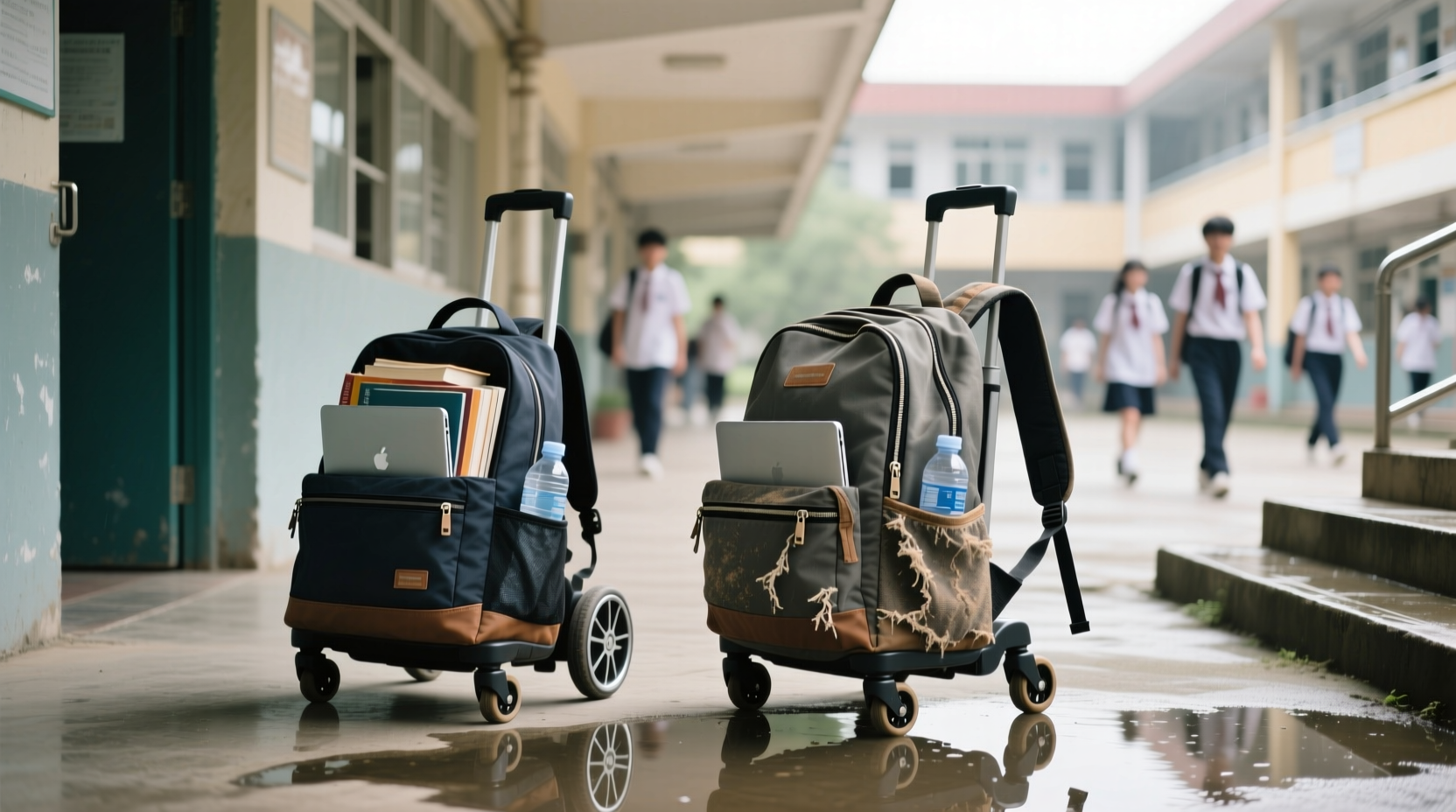
One of the most significant factors in choosing a backpack is how it impacts your body over time. Traditional backpacks distribute weight across both shoulders and the back, relying on proper fit and padding to reduce strain. However, when overloaded—common among students carrying textbooks, laptops, and supplies—they can contribute to shoulder imbalances, neck pain, and lower back issues.
Wheeled backpacks eliminate much of this burden by shifting weight onto the ground. They’re especially beneficial for individuals with chronic back pain, spinal conditions, or those who carry heavy loads daily. The American Academy of Pediatrics recommends that children and teens carry no more than 10–20% of their body weight. For many students, that limit is exceeded regularly, making rolling packs an appealing alternative.
“Kids with heavy book loads are at real risk for musculoskeletal strain. A well-designed wheeled backpack can significantly reduce spinal stress.” — Dr. Lena Torres, Pediatric Orthopedic Specialist
That said, pulling a wheeled bag still engages the upper body. Over extended distances or uneven terrain, arm, wrist, and shoulder fatigue can set in. On cobblestone streets, stairs, or crowded subways, the convenience quickly diminishes.
Portability and Mobility: Where Each Shines
Mobility depends heavily on environment. In structured settings like schools with elevators, smooth floors, and lockers, wheeled backpacks perform well. But in chaotic urban commutes, hiking trails, or multi-level campuses, they become a liability.
Traditional backpacks win in versatility. They allow hands-free movement, easy stair climbing, and quick access during transit. You can toss them under seats, wear them while biking, or hike up hills without hesitation. Wheeled models struggle in these scenarios. Rolling becomes impossible on gravel, grass, or steep inclines, forcing users to carry them like duffels—often heavier due to built-in frames and wheels.
Weight, Durability, and Long-Term Use
Wheeled backpacks typically weigh more than standard ones due to reinforced frames, wheel assemblies, and retractable handles. That added base weight means less capacity for actual contents before reaching personal lifting limits. A typical wheeled backpack weighs 3–5 lbs empty, compared to 1–2.5 lbs for a durable regular model.
Durability varies. Wheels and zippers on rolling packs endure high stress and are common failure points. Replacement parts are often unavailable, leading to premature disposal. Regular backpacks, while subject to strap wear and fabric tears, are generally easier to repair and maintain. High-quality materials like Cordura nylon or ballistic polyester extend lifespan regardless of type.
| Feature | Wheeled Backpack | Regular Backpack |
|---|---|---|
| Average Empty Weight | 3–5 lbs | 1–2.5 lbs |
| Max Recommended Load | 25–35 lbs | 20–30 lbs |
| Lifespan (with moderate use) | 2–4 years | 3–6 years |
| Repairability | Low (wheels/handle issues) | High (replace straps, patch fabric) |
| Best For | Schools with smooth floors, short commutes | Travel, hiking, urban commuting |
Real-World Example: A College Student’s Experience
Maya, a sophomore at a large urban university, switched from a regular backpack to a wheeled model after developing shoulder pain during her freshman year. Her campus has wide sidewalks and elevators in all academic buildings. At first, the change was a relief—her textbooks and laptop rolled smoothly from class to class.
But problems emerged during winter. Snow and slush clogged the wheels, making the pack difficult to pull. When she took a study abroad semester in Lisbon—a city of steep hills and cobblestone streets—the backpack became nearly unusable. She ended up carrying it by the handle for blocks at a time, straining her wrist. By semester’s end, the left wheel had cracked, and the handle wobbled loose.
Back on campus, Maya returned to a high-support regular backpack with a chest strap and ventilated back panel. Though she still carries heavy loads, improved weight distribution and better posture have reduced discomfort. Her experience highlights a crucial point: context determines success more than design alone.
Cost and Value Comparison
Wheeled backpacks are generally more expensive. Entry-level models start around $70, while premium versions with locking wheels, TSA-approved compartments, and waterproofing exceed $200. Regular backpacks range from $30 for basic models to $180 for technical outdoor designs.
However, value isn’t just about price. Consider total cost of ownership: replacement frequency, repair costs, and indirect health impacts. A $100 wheeled backpack that fails in two years may cost more over time than a $60 regular pack that lasts five with minor repairs.
- Wheeled pros: Reduced back strain, organized packing, ideal for flat terrain.
- Wheeled cons: Higher initial cost, limited terrain use, harder to store, shorter lifespan.
- Regular pros: Lightweight, versatile, affordable, easy to repair.
- Regular cons: Can cause strain if overloaded, requires stronger core/posture awareness.
When to Choose Which: A Practical Checklist
Use this checklist to determine the best fit for your needs:
- Do you carry more than 20 lbs daily? → Consider a wheeled option.
- Are your routes mostly indoors or on paved paths? → Wheeled backpacks work well.
- Do you frequently climb stairs, walk on uneven ground, or take public transit? → Regular backpacks are more practical.
- Do you travel by plane often? → Regular backpacks double as under-seat carry-ons more easily.
- Are you sensitive to back or shoulder pain? → Try an ergonomic wheeled model with padded straps for backup carrying.
- Is storage space limited? → Wheeled packs are bulkier and harder to stow.
- Do you value simplicity and low maintenance? → Regular backpacks require less upkeep.
Frequently Asked Questions
Can I carry a wheeled backpack like a regular one?
Yes, most wheeled backpacks come with shoulder straps, allowing dual-use. However, because they’re designed primarily for rolling, the straps are often less padded and ergonomically inferior to dedicated backpacks. Extended carrying can be uncomfortable.
Are wheeled backpacks allowed on planes?
Yes, but with caveats. Most meet carry-on size requirements, but airlines may ask you to carry them if overhead bins are full. Tipping them upright in tight aisles can be awkward. Some travelers prefer compact regular backpacks for smoother boarding.
Which type is better for middle or high school students?
It depends on the school environment. Schools with single-floor layouts and smooth corridors may suit wheeled packs. However, for students climbing multiple staircases or walking long distances between classes, a lightweight, properly fitted regular backpack with good lumbar support is usually the better long-term choice.
Final Recommendation: Match the Bag to Your Life
There’s no universal winner in the wheeled vs. regular backpack debate. The best choice aligns with your daily routine, physical needs, and travel habits. Wheeled backpacks offer real benefits for reducing spinal load in controlled environments. But their limitations in mobility, durability, and adaptability make them situational tools rather than all-purpose solutions.
For most travelers and students facing varied terrain and unpredictable schedules, a high-quality regular backpack remains the more reliable, economical, and flexible option. Prioritize features like padded shoulder and back panels, chest or waist stabilizer straps, and balanced compartment layout to maximize comfort and minimize strain.
If you opt for a wheeled model, invest in one with replaceable wheels, a sturdy telescoping handle, and convertible shoulder straps. Use it where it performs best—on smooth surfaces—and switch to carrying only when necessary.




 浙公网安备
33010002000092号
浙公网安备
33010002000092号 浙B2-20120091-4
Comments
No comments yet. Why don't you start the discussion?