
It starts subtly. You pick up your guitar, but instead of excitement, there’s a quiet resistance. Your paintbrush feels heavy. The book you’ve been reading for weeks gathers dust on the nightstand. What once brought joy now feels like an obligation—or worse, nothing at all. This isn’t failure. It’s not a sign that you’ve outgrown your interests. It’s a signal: something has shifted, and your relationship with your hobby needs attention.
Boredom with a long-standing hobby is more common than people admit. Whether it’s knitting, coding, hiking, or playing chess, even the most passionate pursuits can lose their luster. But boredom doesn’t mean the end—it might actually be the beginning of deeper engagement. Understanding why the spark faded is the first step toward rekindling it.
The Hidden Causes of Hobby Burnout
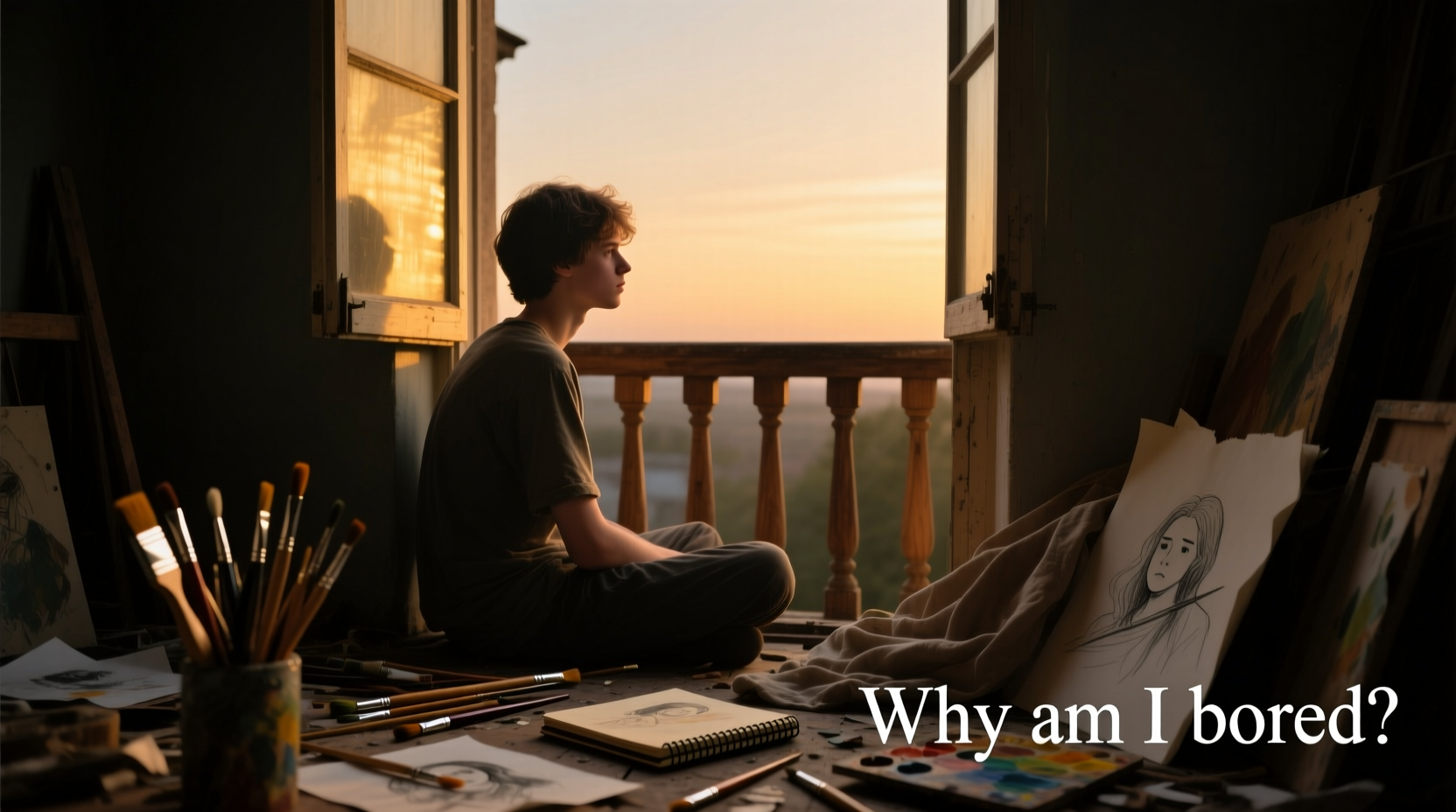
Hobbies are supposed to be escapes—activities we do purely for enjoyment. Yet when they start feeling stale, it’s often because they’ve absorbed pressures from other areas of life. The freedom that defines a hobby gets replaced by expectation, routine, or comparison.
One major cause is **over-investment in outcomes**. When you start measuring your hobby by results—likes on your art Instagram, speed in your coding projects, or mastery of a musical piece—the activity shifts from intrinsic joy to performance. You’re no longer doing it “just because”—you’re doing it to prove something. That pressure erodes spontaneity.
Another factor is **routine without variation**. The brain thrives on novelty. Doing the same thing the same way week after week, even if enjoyable at first, eventually triggers habituation. Think of it like listening to your favorite song on repeat: after 50 plays, it loses its magic. Hobbies need evolution to stay engaging.
External stress also plays a role. If you're overwhelmed at work or dealing with personal challenges, your mental bandwidth shrinks. Activities that require creativity or focus may feel exhausting rather than refreshing. In this state, hobbies don’t fail you—your capacity to enjoy them does.
Reassessing Your Why: A Reality Check
Before trying to fix the problem, ask a simple but powerful question: Why did I start this hobby in the first place?
Many people begin hobbies during transitional periods—a new city, post-college, during recovery, or as a form of self-expression. Over time, the original motivation fades, but the activity continues out of habit. Without reconnecting to purpose, repetition becomes meaningless.
For example, someone might have taken up photography to document travel adventures. Years later, they’re still editing photos—but only of their backyard. The context has changed, but the hobby hasn’t adapted. The thrill of capturing new places is gone, yet they keep shooting anyway, wondering why it feels flat.
This misalignment between current practice and original intent breeds disconnection. To regain interest, you must either rediscover your initial reason or redefine what the hobby means to you now.
“Passion isn’t a constant flame—it’s a fire that needs tending. Sometimes it smolders so low you think it’s out. But with the right fuel, it reignites.” — Dr. Lena Patel, Psychologist specializing in motivation and behavior change
Strategies to Reignite Your Passion
Reconnecting with a hobby isn’t about pushing harder. It’s about changing your approach. Here are five evidence-backed strategies to restore meaning and excitement.
1. Shift From Mastery to Exploration
We often treat hobbies like skills to perfect. But the pursuit of mastery can kill curiosity. Instead of aiming to “get better,” aim to “discover more.”
If you play piano, don’t just practice scales. Try improvising a melody based on your mood. If you garden, plant one experimental species you’ve never grown before. Introduce randomness. Let yourself be bad at something new within your hobby. Curiosity—not competence—is the engine of sustained interest.
2. Change the Context
Environment shapes experience. Doing the same activity in the same place conditions your brain to expect the same outcome. Break the pattern.
- Write in a café instead of at your desk.
- Photograph your neighborhood at night instead of during the day.
- Knit while watching a documentary instead of in silence.
New sensory inputs refresh old routines. Even small changes can make familiar activities feel novel again.
3. Set Micro-Challenges, Not Goals
Goals imply an endpoint. “Finish this painting” or “run a 5K” are useful, but they create finish lines. Once crossed, motivation drops. Micro-challenges, on the other hand, are playful experiments with no deadline.
Examples:
- “Draw only with my non-dominant hand for 10 minutes.”
- “Write a story using only dialogue.”
- “Cook a meal using only three ingredients.”
These aren’t about achievement—they’re about surprise. They reintroduce play, which is essential for intrinsic motivation.
4. Engage With the Community Differently
Social comparison can drain joy. Scrolling through expert-level craft posts or viral TikTok dances can make your own efforts feel inadequate. But community doesn’t have to be a source of pressure—it can be inspiration.
Instead of consuming others’ content passively, try these alternatives:
- Comment thoughtfully on someone’s work.
- Join a beginner-friendly forum or local meetup.
- Share your process, not just polished results.
When you shift from spectator to participant, connection replaces envy.
5. Take a Strategic Break
Paradoxically, stepping away can deepen attachment. An intentional pause—what psychologists call a “deliberate disengagement”—allows emotional reset.
Unlike quitting, a break has a return plan. Tell yourself: “I’m not doing this for three weeks, but I’ll revisit it on [date].” This removes guilt and gives space for subconscious reevaluation. Often, absence creates appreciation.
A Real Example: How Sarah Rediscovered Her Love for Painting
Sarah, a graphic designer in her mid-30s, had painted every weekend for eight years. Watercolors were her sanctuary. But over six months, she found herself canceling sessions, leaving brushes unwashed, avoiding her studio.
She assumed she’d lost interest—until she tried a micro-challenge suggested in an online art group: “Paint with coffee instead of watercolor.” On a whim, she spilled brewed coffee on paper, added salt, and watched textures emerge. It wasn’t pretty, but it was fun.
That experiment led her to explore unconventional materials: tea, ink, even dirt from her garden. She stopped posting online and started keeping a messy sketchbook just for herself. Within two months, she wasn’t just painting again—she looked forward to it.
Her turning point wasn’t effort; it was permission. Permission to play, to be imperfect, to redefine what painting meant to her beyond aesthetics or skill.
Do’s and Don’ts: Reconnecting With Your Hobby
| Do | Don't |
|---|---|
| Reflect on what initially drew you to the hobby | Assume boredom means you should quit |
| Experiment with new techniques or tools | Compare your progress to experts or influencers |
| Take a planned break if needed | Guilt-trip yourself for losing interest temporarily |
| Focus on how the activity makes you feel, not the output | Force consistency at the cost of joy |
| Reconnect with your hobby in small, low-pressure ways | Set ambitious comeback goals like “paint every day” |
Your Personal Re-engagement Checklist
Use this checklist to assess and revive your hobby relationship:
- ☐ Identify when the boredom started—was there a life change?
- ☐ Write down your original reason for starting the hobby.
- ☐ List one thing you enjoyed most about it at its peak.
- ☐ Try one micro-challenge related to your hobby this week.
- ☐ Change where, when, or how you do the activity.
- ☐ Take a 2–3 week break with a scheduled return date.
- ☐ Share your process (not just results) with one person.
- ☐ Delete or mute social accounts that trigger comparison.
Frequently Asked Questions
Is it normal to lose interest in a hobby I once loved?
Yes, it’s completely normal. Interests evolve with your life circumstances, energy levels, and priorities. Temporary disengagement doesn’t mean you’ve failed or that the hobby was wrong for you. It often signals a need for renewal, not abandonment.
Should I try a new hobby instead of fixing the old one?
Not necessarily. Jumping to a new hobby can provide short-term excitement, but the same burnout patterns may repeat if underlying habits—like over-focusing on results or neglecting play—aren’t addressed. Consider revitalizing your current hobby first. If it still doesn’t resonate after genuine experimentation, exploring something new is perfectly valid.
How long should I wait before deciding to quit?
There’s no timeline. Instead of asking “how long,” ask “what would make this enjoyable again?” Give yourself space to test small changes. If, after several attempts to refresh the experience, you still feel indifferent, it may be time to let go—without guilt. Hobbies are meant to serve you, not the other way around.
Conclusion: Reigniting Joy Starts With Permission
Boredom with a hobby isn’t a dead end—it’s a pivot point. It invites you to examine not just what you do, but why and how you do it. The spark isn’t gone; it’s buried under expectations, repetition, or unmet needs.
Reigniting passion doesn’t require grand gestures. It begins with small acts of curiosity, a willingness to play, and the courage to redefine what the hobby means to you now. Let go of perfection. Embrace experimentation. Allow yourself to want something different.




 浙公网安备
33010002000092号
浙公网安备
33010002000092号 浙B2-20120091-4
Comments
No comments yet. Why don't you start the discussion?