
Olympic fencing is a sport of precision, speed, and split-second decisions. To the casual viewer, one of the most curious aspects of the competition is the thin wire trailing from each fencer’s back—commonly known as the fencing cord or body cord. This seemingly simple piece of equipment plays a crucial role in ensuring fairness, accuracy, and safety during bouts. But why are fencers tethered at all? What purpose does this cord serve, and how does it integrate into the modern electronic scoring system that defines contemporary fencing?
The answer lies in the evolution of the sport from its historical roots to its current high-tech format. Today’s fencing matches rely on electronic apparatus to register touches accurately, eliminating human error and subjective judgment. The tethering of fencers is not a restriction but an essential component of this technological infrastructure.
The Role of the Body Cord in Scoring
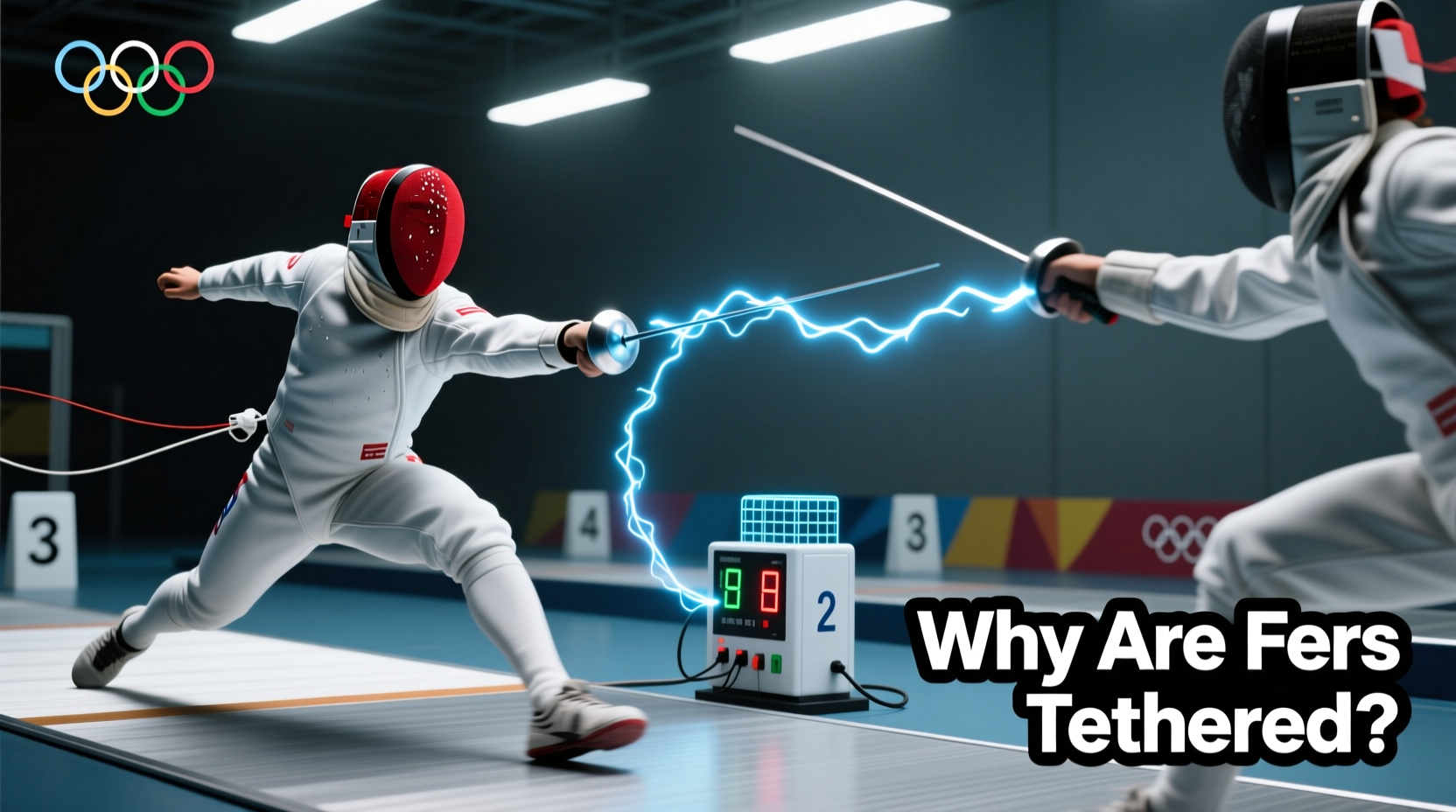
Fencing uses three weapons: foil, épée, and sabre. Each has different rules regarding valid target areas and priority, but all three use electronic systems to detect when a touch lands. The body cord—officially called the \"body wire\"—connects the fencer’s weapon to the reel system at the end of the strip, which in turn links to the scoring box (or scoring machine).
When a fencer makes contact with their opponent, the circuit is completed through the weapon, the body cord, and the floor reel. The scoring machine then registers the touch, lighting up either green or red depending on which fencer landed the hit. In foil and sabre, additional logic determines whether the touch was on-target and who had the right of way. In épée, any touch counts, and double hits are allowed.
Without the body cord, this entire system would collapse. There would be no reliable way to determine if a touch occurred, where it landed, or when—making competitive fencing nearly impossible at elite levels.
How the Electronic System Works by Weapon
The function of the body cord varies slightly depending on the weapon used. Understanding these differences helps clarify why tethering remains necessary despite advances in wireless technology.
| Weapon | Target Area | Circuit Type | Role of Body Cord |
|---|---|---|---|
| Foil | Torso only | Closed circuit (requires grounding via lamé) | Transmits signal from weapon through conductive vest to scoring machine |
| Épée | Entire body | Open circuit (tip completes connection) | Sends signal when tip depresses under pressure (no lamé needed) |
| Sabre | Above waist (excluding hands) | Time-gated circuit (registers slashes and thrusts) | Connects weapon to metallic lamé and head cord to confirm on-target hits |
In foil, the body cord runs from the weapon handle through the sleeve and down the back, connecting to a socket near the waist. It interfaces with the lamé—a conductive jacket covering the valid target area. When the opponent's blade contacts the lamé, the circuit closes, signaling a valid touch.
In épée, the circuit is open until the spring-loaded tip compresses upon impact. Because the entire body is a valid target, there’s no need for a lamé; the body cord simply transmits the completed circuit directly from the weapon.
Sabre combines elements of both: it detects cuts and thrusts using a time-sensitive circuit. The body cord connects not only to the weapon but also to a separate head cord that links the mask to the system, ensuring slashes to the head are registered correctly.
Why Not Go Wireless?
Given the prevalence of wireless technology in sports—from smart watches to real-time biometrics—it’s natural to ask why fencing hasn’t adopted wireless scoring systems. After all, being physically tethered can seem archaic, especially when athletes sprint forward and backward across the 14-meter strip.
The primary reason is reliability. In high-stakes Olympic competitions, even a millisecond delay or dropped signal could alter the outcome of a bout. Wired systems offer consistent, low-latency data transmission with minimal interference. Wireless signals, while improving, remain vulnerable to environmental factors such as crowd density, nearby electronics, and signal congestion.
“Electronic accuracy is non-negotiable in modern fencing. The wired system provides a level of certainty we can’t risk losing with current wireless tech.” — Dr. Lena Moreau, Sports Technology Analyst, International Fencing Federation (FIE)
Additionally, power supply is a concern. Body cords draw minimal energy from the scoring machine itself, whereas wireless units would require onboard batteries. Battery failure mid-match would be unacceptable in elite competition.
That said, research into secure, ultra-low-latency wireless protocols continues. Some training systems already use wireless sensors for coaching feedback. However, until such systems meet FIE certification standards for competition integrity, the tether will remain standard.
Step-by-Step: How a Touch Is Registered During a Bout
To fully appreciate the importance of the body cord, consider the sequence of events when a fencer lands a hit:
- Initiation: A fencer executes an attack, extending their arm and making contact with their opponent’s weapon or body.
- Contact Detection: The weapon’s tip (in foil/épée) or blade edge (in sabre) makes physical contact with the opponent’s conductive surface (lamé, mask, or clothing).
- Circuit Completion: The electrical circuit is closed through the weapon, transmitted via the body cord, and routed through the retractable reel system embedded in the strip.
- Signal Processing: The scoring machine receives the signal and analyzes duration, pressure (for épée), and location (on/off target).
- Visual Feedback: Colored lights illuminate—one red, one green—to indicate which fencer scored. A white or yellow light may indicate an off-target hit (in foil).
- Referee Decision: The referee interprets the lights in context of right-of-way rules (in foil and sabre) to award the point.
This entire process takes place in less than a tenth of a second. The body cord ensures that every step happens without interruption or ambiguity.
Real Example: The 2020 Tokyo Olympics Sabre Final
In the men’s team sabre final between South Korea and Italy, a critical moment arose in the ninth bout when a rapid exchange ended with both fencers registering hits within milliseconds. The scoring machine showed green and red lights simultaneously, indicating a double touch. However, because sabre follows right-of-way rules, only one fencer could earn the point.
Replays confirmed that the Korean fencer initiated the attack first. His body cord remained fully connected throughout the lunge, ensuring the initial signal was captured cleanly. Meanwhile, the Italian fencer’s cord briefly snagged on his heel during recovery, causing a micro-interruption. Though not enough to cancel the touch, it delayed the signal just long enough for the system to register him as the secondary attacker.
The call went to Korea, securing them the gold medal. Post-event analysis highlighted the flawless performance of the wired system—even under extreme motion, the cords maintained uninterrupted connectivity, proving once again their indispensable role in elite decision-making.
Frequently Asked Questions
Can a broken cord disqualify a fencer?
No, a malfunctioning or broken cord does not lead to disqualification. Instead, the bout is paused, and the fencer is given time to replace or reconnect the cord. Officials may investigate whether repeated issues suggest equipment negligence.
Do fencers feel restricted by the cord?
Experienced fencers adapt quickly. The reels are designed to extend and retract smoothly, minimizing drag. Most report that after warm-up, they no longer notice the tether. It becomes part of the rhythm of movement.
Are there different types of body cords?
Yes. While standardized for competition, body cords vary slightly by weapon. Foil and sabre cords have two prongs (2-pin), while épée cords have three (3-pin) to support the different circuit designs. Using the wrong type results in improper scoring and is not permitted in official matches.
Checklist: Preparing Your Body Cord for Competition
- Inspect for frayed wires or bent pins before every match
- Ensure the connector clicks securely into the weapon and reel socket
- Test continuity with a multimeter or tester device
- Carry at least two spare cords to tournaments
- Keep cords untangled and stored in a protective case
- Verify compatibility with your weapon type (2-pin vs. 3-pin)
Conclusion
The tether that binds Olympic fencers is far more than a relic of outdated design—it is the lifeline of a precise, fair, and technologically advanced sport. From completing electrical circuits to enabling split-second judgments, the fencing cord ensures that every touch is seen, recorded, and respected. As much as strength, agility, and strategy define success in fencing, so too does the integrity of this unassuming wire.
Understanding the mechanics behind the tether transforms how we watch the sport. No longer a curiosity, it becomes a symbol of the seamless fusion between human skill and engineered precision. Whether you're a competitor, coach, or fan, appreciating the role of the body cord deepens your connection to one of the world’s oldest martial arts—now reborn as a modern spectacle of speed and science.




 浙公网安备
33010002000092号
浙公网安备
33010002000092号 浙B2-20120091-4
Comments
No comments yet. Why don't you start the discussion?