
In various corners of global discourse—online forums, social media, or even casual conversations—one may encounter a disturbing claim: that Somalis are “ugly.” This assertion is not only factually baseless but also rooted in deep-seated biases, colonial legacies, and racial hierarchies. Beauty is inherently subjective, yet when entire ethnic groups are collectively dismissed as unattractive, it reflects systemic prejudice rather than aesthetic truth. This article examines the origins of such perceptions, unpacks the socio-political forces behind them, and challenges the flawed logic of racialized beauty standards.
The Myth of Universal Beauty Standards
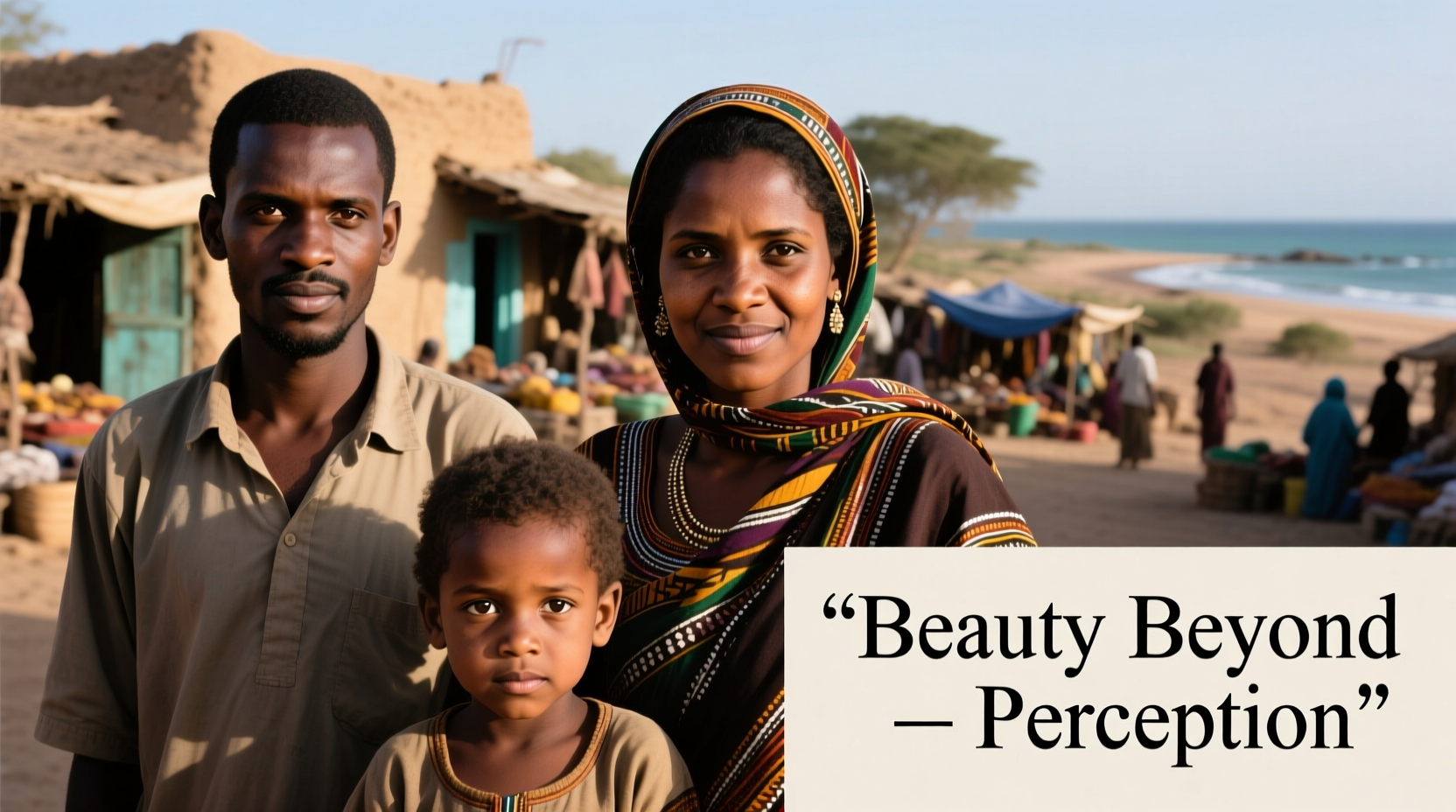
There is no objective metric for human beauty. What one culture reveres, another may overlook. Somali features—high cheekbones, full lips, dark skin, and strong facial symmetry—are celebrated within East Africa and among diaspora communities. However, Western-centric ideals, often privileging lighter skin, narrower noses, and straighter hair, have dominated global media for decades. These narrow norms marginalize diverse appearances, including those common among Somali people.
The idea that Somalis are “ugly” emerges not from observation but from comparison against an artificial standard—one historically shaped by colonialism, Eurocentrism, and media monopolies. When Hollywood and fashion industries consistently underrepresent or misrepresent African peoples, it distorts public perception and reinforces harmful stereotypes.
Colonial Legacies and Racial Hierarchies
To understand modern prejudices, one must confront history. European colonial powers in the 19th and 20th centuries constructed pseudoscientific racial hierarchies to justify domination. Africans were systematically dehumanized, depicted as primitive, uncivilized, and physically inferior. Somali people, despite their rich Islamic heritage, advanced trade networks, and distinct Cushitic features, were often lumped into derogatory categories alongside other Black African populations.
Anthropologists of the era used skull measurements and facial angles to falsely rank races, placing Europeans at the top and Africans at the bottom. Though discredited today, these ideas seeped into popular consciousness and persist in subtle forms. The notion that darker skin or broader noses are “less beautiful” echoes this outdated racism.
“Racial aesthetics are political. To call a group ‘ugly’ is not a matter of taste—it’s a continuation of exclusionary power structures.” — Dr. Amina Farah, Cultural Anthropologist, University of Nairobi
Media Representation and Stereotyping
Modern media continues to amplify bias. Somali individuals are rarely portrayed in mainstream entertainment outside narratives of conflict, poverty, or terrorism. When visibility occurs, it is often through a lens of crisis rather than cultural richness or personal achievement. This lack of balanced representation fosters one-dimensional views, making it easier for audiences to project negative assumptions—including on appearance.
In contrast, when Somali models like Iman, Halima Aden, and Fadumo Dayib gain international acclaim, they challenge these stereotypes. Their success demonstrates not only individual beauty but also the power of representation in reshaping collective perception.
| Somali Public Figure | Field | Impact on Perception |
|---|---|---|
| Iman | Fashion Model | Pioneered inclusivity in high fashion; redefined beauty standards globally |
| Halima Aden | Model & Activist | Broke barriers with hijab in runway shows; challenged Western norms |
| Fadumo Dayib | Politician & Academic | Highlighted Somali resilience and intellectual presence internationally |
Colorism and Intra-African Prejudice
Prejudice against Somali appearance isn’t limited to external sources. Colorism—the preference for lighter skin—exists across Africa and the diaspora, often perpetuated through family dynamics, marriage customs, and social status. In some communities, darker skin is unfairly associated with lower class or rural origins, despite Somalia being home to a range of complexions.
This internalized bias can lead to self-rejection and even influence how Somalis view one another. Children may be teased for their nose shape or skin tone, absorbing messages that their natural features are undesirable. Breaking this cycle requires education, pride in heritage, and active resistance to colorist ideologies.
Mini Case Study: From Self-Doubt to Empowerment
Leyla, a second-generation Somali-American raised in Minneapolis, recalls being called “too dark” by a classmate in middle school. For years, she avoided photos and used skin-lightening creams secretly. It wasn’t until college, after attending a lecture on African aesthetics and joining a Somali cultural group, that she began to reclaim her identity. She now runs a blog celebrating Afro-Cushitic beauty and has collaborated with local artists to showcase traditional Somali adornment.
Leyla’s journey reflects a broader shift: when individuals confront societal lies about their worth, they can transform shame into strength.
Reclaiming Somali Beauty: A Step-by-Step Guide
Changing perception starts with action. Here’s how individuals and communities can challenge harmful narratives:
- Educate on Somali heritage – Share knowledge about ancient Puntite civilizations, Islamic scholarship, and Somali poetry traditions that emphasize dignity and elegance.
- Amplify positive representation – Support Somali creators, models, and public figures through likes, shares, and collaborations.
- Challenge derogatory comments – Whether online or in person, respond firmly to racist remarks about appearance.
- Promote inclusive beauty standards – Advocate for diverse casting in media and celebrate natural African features in schools and workplaces.
- Encourage self-affirmation – Teach youth to value their lineage and appearance through storytelling and role models.
Checklist: Building a Positive Identity Amid Bias
- ✅ Identify and question internalized beliefs about beauty
- ✅ Follow and support Somali influencers and artists
- ✅ Discuss racial stereotypes openly with family and friends
- ✅ Celebrate traditional Somali attire, hairstyles, and jewelry
- ✅ Report hate speech or discriminatory content online
- ✅ Mentor young people to embrace their heritage with pride
Frequently Asked Questions
Is it true that Somalis have unique physical traits?
Yes. Many Somalis belong to the Cushitic ethnic group, which has distinct anthropological features such as lean builds, aquiline noses, and dark skin with warm undertones. These traits are adaptations to the Horn of Africa’s environment and are shared across related populations in Ethiopia, Djibouti, and northern Kenya.
Why do some people think dark skin is less attractive?
This belief stems from historical racism and colonialism, not biology. Light skin was associated with elite classes who didn’t labor outdoors, while dark skin was linked to slavery and servitude. Modern science confirms that all skin tones are equally beautiful and biologically suited to their environments.
Can beauty standards change?
Absolutely. As seen with the global rise of Afrocentric fashion, natural hair movements, and inclusive advertising, beauty norms are evolving. Change takes time, advocacy, and consistent representation—but progress is possible.
Conclusion: Beauty as Resistance
Labeling an entire nation as “ugly” is not criticism—it is dehumanization. Behind such rhetoric lie centuries of racial ideology, media neglect, and cultural erasure. But Somali beauty has never needed validation from oppressive systems. It lives in the grace of a nomadic elder, the confidence of a hijabi model on a Paris runway, and the laughter lines of a mother reciting poetry in Somali.
True beauty is resilience. It is identity reclaimed, pride restored, and voices amplified. The fight against prejudice begins with refusing to accept lies about our worth. It continues when we teach the next generation that their skin, their nose, their language—and their soul—are not flaws, but legacies.




 浙公网安备
33010002000092号
浙公网安备
33010002000092号 浙B2-20120091-4
Comments
No comments yet. Why don't you start the discussion?