
As the holiday season approaches, many homeowners strive for the perfect ambiance—soft, warm glows in the living room, vibrant twinkles on the tree, and elegant outlines along rooftops. A key part of achieving this atmosphere is controlling brightness through dimming. Yet, if you've ever tried to dim your Christmas lights only to find flickering, buzzing, or no response at all, you're not alone. The truth is, not all Christmas lights are designed to work with dimmers. Understanding why—and how to upgrade your setup—can transform your holiday display from frustrating to flawless.
Why Most Christmas Lights Aren’t Dimmable
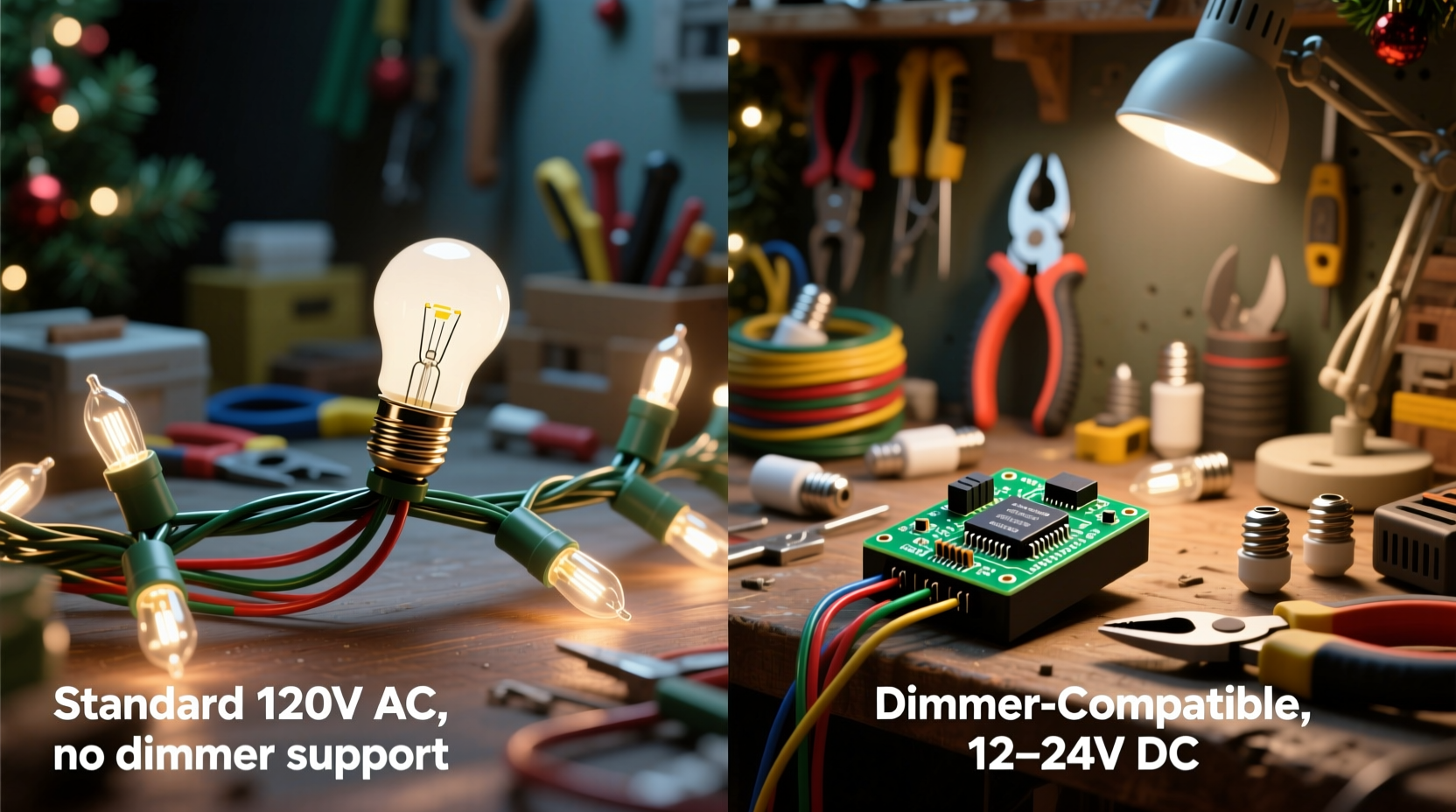
The primary reason many Christmas lights can't be dimmed lies in their electrical design and intended use. Traditional incandescent mini-lights and most modern LED sets are engineered for simplicity, durability, and cost-effectiveness—not compatibility with variable voltage systems like dimmer switches.
Incandescent strings rely on a specific voltage to heat the filament and produce light. When connected to a standard dimmer, which reduces voltage using phase-cutting techniques (like TRIAC-based dimmers), the inconsistent power delivery can cause uneven brightness, audible buzzing, or premature burnout. For LEDs, the issue is more complex. Most low-voltage LED strings come with built-in rectifiers and drivers that expect full-line voltage. Introducing a dimmer disrupts the driver’s ability to regulate current, often resulting in flickering or complete failure.
Additionally, manufacturers rarely label lights as \"dimmable\" unless they’ve specifically engineered the circuitry to handle reduced voltage. Even when packaging claims “dimmable,” it may only refer to compatibility with proprietary remotes or smart controllers—not standard wall dimmers.
Types of Christmas Lights and Their Dimming Compatibility
Not all lights behave the same under dimming conditions. Below is a comparison of common types and their typical performance when paired with dimming systems.
| Light Type | Dimmable? | Notes |
|---|---|---|
| Traditional Incandescent Mini-Lights | Rarely | Filament requires stable voltage; prone to flicker and shortened lifespan when dimmed. |
| Standard LED String Lights | No | Driver circuits fail under phase-cut dimming; may flicker or shut off. |
| Dimmable LED Strings (labeled) | Yes | Designed with compatible drivers; require matching dimmer type (ELV, TRIAC, or PWM). |
| Smart LED Lights (Wi-Fi/Bluetooth) | Yes (via app) | Brightness controlled internally; do not use with wall dimmers. |
| Rope Lights (LED or Neon) | Sometimes | Only if labeled dimmable; older neon types incompatible with modern dimmers. |
The takeaway is clear: unless explicitly labeled “dimmable” and matched with the correct control system, most off-the-shelf Christmas lights will not perform well—or safely—on a dimmer circuit.
How to Upgrade Non-Dimmable Lights for Brightness Control
You don’t need to replace every string to gain control over brightness. With careful upgrades, even non-dimmable lights can be adapted—safely and effectively.
Step-by-Step Guide to Upgrading Your Lights
- Identify Your Light Type: Determine whether your lights are incandescent or LED, and check for any labeling regarding dimming. If unsure, assume they are not dimmable.
- Choose a Compatible Controller: Instead of using a wall dimmer, opt for an external brightness controller:
- For LED strings: Use a 12V or 24V DC PWM (Pulse Width Modulation) dimmer if the lights run on low voltage.
- For plug-in strings: Use a smart plug with dimming support (e.g., Lutron Caséta, Philips Hue Outdoor Plug) that works with dimmable-rated lights.
- Add a Smart Lighting System: Replace or pair existing strings with smart LED options such as:
- Philips Hue Lightstrips
- Twinkly RGB LED strings
- Govee Wi-Fi LED ropes
- Use a Dedicated Dimmable Power Supply: For custom installations (e.g., under eaves or behind railings), install a dimmable LED driver that matches your light’s voltage and current requirements. This powers multiple strings uniformly and supports smooth dimming.
- Install a Compatible Wall Dimmer (if applicable): Only after confirming all connected lights are rated for dimming, replace your standard switch with a compatible dimmer:
- TRIAC dimmers for leading-edge (incandescent-style) loads
- ELV (Electronic Low Voltage) dimmers for trailing-edge LED systems
- Test and Monitor: After installation, test the system at various brightness levels. Watch for flickering, overheating, or inconsistent behavior—signs of incompatibility.
“Attempting to dim non-dimmable LEDs is one of the most common causes of early holiday lighting failure. The driver isn’t built to interpret partial waveforms, so it either shuts down or degrades rapidly.” — Mark Reynolds, Residential Lighting Engineer
Practical Tips for a Safe and Effective Dimming Setup
Upgrading your lights involves more than just swapping parts—it requires understanding load limits, electrical safety, and compatibility. Here are key tips to ensure success:
- Always verify wattage limits. Overloading a dimmer or controller can lead to overheating.
- Use outdoor-rated components if installing lights outside. Moisture resistance is critical for long-term reliability.
- Keep wire connections dry and secure. Use weatherproof junction boxes for permanent setups.
- Label circuits clearly. If you have multiple lighting zones, knowing which ones are dimmable prevents accidental mismatches.
Mini Case Study: The Johnson Family Porch Makeover
The Johnsons loved their classic C9 bulb outline along the roofline but found the lights too bright for evening gatherings. They attempted to install a standard wall dimmer, only to see the bulbs flicker violently and half the string go dark. After consulting an electrician, they learned their LED C9s were not dimmable.
The solution? They replaced the entire string with Govee Smart C9 LEDs, which connect via Wi-Fi and offer 20 brightness levels through an app. They kept the original layout but gained full control over ambiance. Now, they set brightness to 30% for cozy nights, 100% for holidays, and even schedule gradual dimming at bedtime—all without touching a switch.
Their energy use dropped by 15%, and the new lights lasted through three seasons without a single failure. The initial investment paid off in both aesthetics and convenience.
Checklist: How to Safely Upgrade to Dimmable Holiday Lights
- ☐ Identify current light type (incandescent, LED, smart)
- ☐ Check manufacturer specs for dimming capability
- ☐ Calculate total wattage of the lighting circuit
- ☐ Choose a compatible dimmer or smart controller
- ☐ Verify voltage match between lights and power source
- ☐ Install in dry, accessible location with proper ventilation
- ☐ Test at multiple brightness levels before final mounting
- ☐ Label the circuit breaker or outlet for future reference
Frequently Asked Questions
Can I make non-dimmable LED lights dimmable with a converter?
No. There is no safe or reliable converter that can retrofit a non-dimmable LED string to work with standard dimmers. The internal driver must be designed for variable input. Attempting modifications can void warranties and create fire hazards.
Why do my dimmable Christmas lights still flicker?
Flickering usually indicates a mismatch between the dimmer type and the light’s driver. For example, using a leading-edge (TRIAC) dimmer with trailing-edge (ELV) LEDs causes instability. Ensure both devices are rated for the same dimming method. Also, check for loose connections or overloaded circuits.
Are smart Christmas lights worth the extra cost?
For most households, yes. Smart lights offer precise brightness control, scheduling, color customization, and integration with voice assistants. While more expensive upfront, their longevity, energy efficiency, and versatility often justify the investment—especially for annual displays.
Conclusion: Illuminate with Control and Confidence
Understanding why some Christmas lights aren’t dimmable is the first step toward creating a safer, more beautiful holiday display. The limitations stem from design choices focused on affordability and mass production—not user flexibility. But with informed upgrades, you can take full control of your lighting environment.
Whether you choose smart LEDs, compatible dimmers, or dedicated controllers, the goal remains the same: seamless, flicker-free brightness adjustment that enhances your home’s festive spirit. Don’t settle for all-or-nothing lighting. Invest in compatibility, prioritize safety, and enjoy a display that shines exactly how you want it to—bright for celebrations, soft for quiet moments.




 浙公网安备
33010002000092号
浙公网安备
33010002000092号 浙B2-20120091-4
Comments
No comments yet. Why don't you start the discussion?