
The fuzzy yellow ball at the heart of every tennis match isn’t just a design choice—it’s a carefully engineered component critical to the sport’s physics, playability, and fairness. At first glance, the soft, fibrous outer layer may seem purely aesthetic, but it plays a vital role in how the ball moves through the air, bounces on the court, and interacts with racket strings. Understanding why tennis balls are fuzzy reveals a fascinating intersection of aerodynamics, material science, and sports engineering.
Tennis, as a game of precision and speed, demands consistency in ball behavior. The fuzz—technically known as the nap—is not random fluff; it’s a tightly woven wool or nylon felt covering designed to manage airflow, control bounce, and optimize player experience. Without this layer, the game would be drastically different: faster, less predictable, and far more difficult to control.
The Role of Fuzz in Aerodynamics
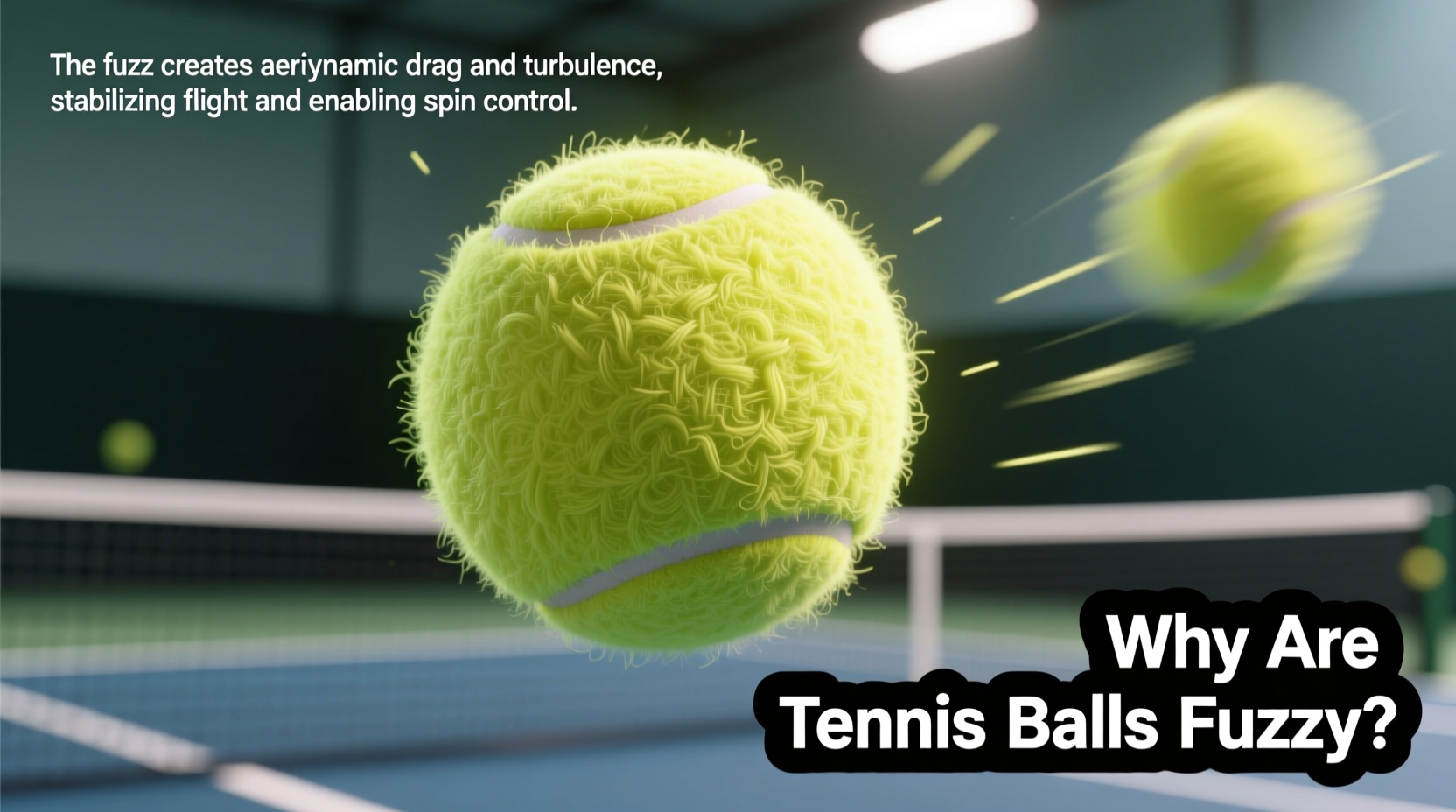
One of the primary reasons tennis balls are covered in fuzz is to manipulate air resistance. A smooth sphere moving through the air creates turbulent wake behind it, increasing drag and destabilizing its flight path. The fuzzy surface disrupts this airflow by creating a thin boundary layer of trapped air around the ball. This phenomenon, known as the “dimple effect” (similar to golf balls), reduces overall drag and stabilizes trajectory.
When a tennis ball travels at high speeds—often exceeding 100 mph during serves—the fuzz helps maintain a consistent flight pattern. It prevents the ball from fluttering unpredictably, allowing players to anticipate placement and adjust their strokes accordingly. Over time, as the fuzz wears down, the ball becomes smoother, increasing speed and reducing stability—a key reason why balls are changed regularly in professional matches.
How Fuzz Affects Bounce and Court Interaction
The texture of the ball's surface directly influences how it rebounds off various court types. On clay, hard, and grass courts, friction between the ball and ground alters spin response, bounce height, and pace. The fuzz increases surface area and grip, enabling controlled interaction with the court.
- Clay courts: High-abrasion surface shreds fuzz quickly, slowing the ball and producing higher bounce. Fresh balls are essential for maintaining play quality.
- Hard courts: Moderate wear; fuzz helps absorb impact slightly, balancing speed and control.
- Grass courts: Low friction and fast conditions mean minimal fuzz wear initially, but moisture can compress the nap, altering rebound dynamics.
As the fuzz flattens or sheds, the ball loses its ability to generate optimal friction. This leads to lower, skidding bounces and reduced responsiveness to spin—critical factors in baseline rallies and net approaches.
Material Composition and Manufacturing Process
Modern tennis balls consist of a hollow rubber core pressurized with nitrogen or air, wrapped in a felt made from a blend of wool, nylon, or synthetic fibers. The felt is stitched around the core using a precise T-shaped seam, ensuring even distribution and durability.
Wool is preferred in premium balls due to its resilience and moisture-wicking properties, while nylon offers cost-effective durability. The color—typically optic yellow since the 1970s—is chosen for high visibility against most backgrounds, including television screens.
Manufacturers like Wilson, Dunlop, and Penn adhere to strict ITF (International Tennis Federation) regulations governing weight (56.0–59.4g), diameter (6.54–6.86 cm), and bounce (135–147 cm when dropped from 100 inches). The fuzz must withstand a minimum number of impacts without excessive degradation.
“The felt isn’t just cosmetic—it’s integral to energy dissipation and rotational control. You can’t have competitive tennis without it.” — Dr. Alan P. Mathers, Sports Biomechanics Researcher, University of Bath
Evolution of the Fuzzy Ball: From Leather to Felt
In the 15th century, tennis balls were made of leather stuffed with hair or chalk, offering poor bounce and no aerodynamic refinement. By the mid-1800s, rubber cores emerged, revolutionizing consistency. However, these early rubber balls were extremely lively and difficult to control.
The addition of a cloth covering began as a way to reduce glare and improve grip. By the 1920s, manufacturers standardized a loose-weave woolen felt, which unintentionally improved flight characteristics. It wasn't until wind tunnel testing in the 1960s that scientists confirmed the aerodynamic benefits of the nap, leading to deliberate engineering of the fuzz structure.
In 1972, the ITF officially mandated optic yellow for tournament balls after studies showed superior visibility on TV broadcasts—a change accelerated by the rise of televised sports. Today, research continues into sustainable materials and longer-lasting fuzz compositions.
Practical Implications for Players: When to Replace Balls
Recreational players often overlook ball condition, but experienced competitors know that worn fuzz degrades performance. Signs it’s time to replace a ball include:
- Flattened or matted nap
- Uneven bounce (tested on a flat surface)
- Loss of internal pressure (feels soft when squeezed)
- Visible fraying or seam separation
| Ball Condition | Flight Stability | Bounce Height | Spin Response |
|---|---|---|---|
| New (full fuzz) | High | Consistent (~140cm) | Strong grip on strings |
| Moderately used | Medium | Slightly reduced | Reduced bite |
| Worn (bald spots) | Poor (erratic) | Low/skidding | Minimal spin transfer |
Step-by-Step: How to Test Tennis Ball Readiness
- Drop the ball from shoulder height (approx. 100 inches) onto a hard surface.
- Observe the rebound: it should reach between 53–58 inches (135–147 cm).
- Inspect the surface for flattened areas or exposed seams.
- Compare feel: new balls are firmer due to internal pressure.
- If two or more signs of wear are present, retire the ball from serious play.
Frequently Asked Questions
Do all tennis balls have the same type of fuzz?
No. Fuzz composition varies by brand and intended use. Professional-grade balls typically use a higher wool content for better durability and playability, while recreational balls may use more nylon. High-altitude balls also feature modified felt to compensate for thinner air.
Why do some tennis balls last longer than others?
Durability depends on both the felt quality and core construction. Premium balls use tighter weaves and reinforced seams. Additionally, playing surface matters—clay courts wear down fuzz faster than grass or indoor carpet.
Can you restore the fuzz on a worn tennis ball?
No. Once the nap is compressed or shed, it cannot be restored. Some players briefly heat balls to temporarily revive pressure, but this does not repair the felt. Replacement is the only effective solution.
Checklist: Maintaining Optimal Ball Performance
- ✅ Use fresh balls for competitive matches
- ✅ Rotate multiple balls during long sets
- ✅ Store unused balls in sealed containers
- ✅ Avoid leaving balls in extreme temperatures
- ✅ Replace balls showing visible wear or inconsistent bounce
- ✅ Choose ball type based on court surface (e.g., extra-duty for hard courts)
Real-World Example: The Wimbledon Ball Change Rule
At Wimbledon, one of tennis’s most prestigious tournaments, officials change the balls after the first seven games and then every nine games thereafter. This ensures consistent speed and bounce throughout the match. During the 2019 final between Novak Djokovic and Roger Federer, commentators noted that earlier ball changes helped maintain rally length and shot accuracy on the fast grass surface. Had worn balls been used, the match dynamics could have shifted dramatically, favoring aggressive serve-and-volley tactics over baseline exchanges.
This protocol underscores how seriously top-tier events treat ball condition—not as a minor detail, but as a cornerstone of fair and skill-based competition.
Conclusion
The fuzz on a tennis ball is far more than a quirky visual trait—it’s a scientifically refined feature that governs how the game is played. From stabilizing flight to modulating bounce and enhancing spin, the felt covering ensures that tennis remains a balanced, strategic sport where skill prevails over unpredictable variables. Whether you're a weekend player or a seasoned competitor, recognizing the importance of ball condition empowers you to make smarter choices about equipment and gameplay.




 浙公网安备
33010002000092号
浙公网安备
33010002000092号 浙B2-20120091-4
Comments
No comments yet. Why don't you start the discussion?