
The New York Mets are one of Major League Baseball’s most recognizable franchises, known for their orange and blue uniforms, passionate fanbase, and dramatic moments at Citi Field and its predecessor, Shea Stadium. But have you ever wondered why they’re called the “Mets”? The answer goes beyond a simple abbreviation—it’s rooted in New York’s baseball heritage, civic pride, and a deliberate effort to reconnect with fans after a painful departure.
The name “Mets” is short for “Metropolitans,” but its significance stretches further than phonetics. It represents a revival, a reclamation of identity, and a symbolic bridge between eras of New York baseball. To understand the full story, we need to trace the team’s origins, the void left by departed legends, and the thoughtful process that led to one of sports’ most enduring nicknames.
The End of an Era: The 1957 Exodus
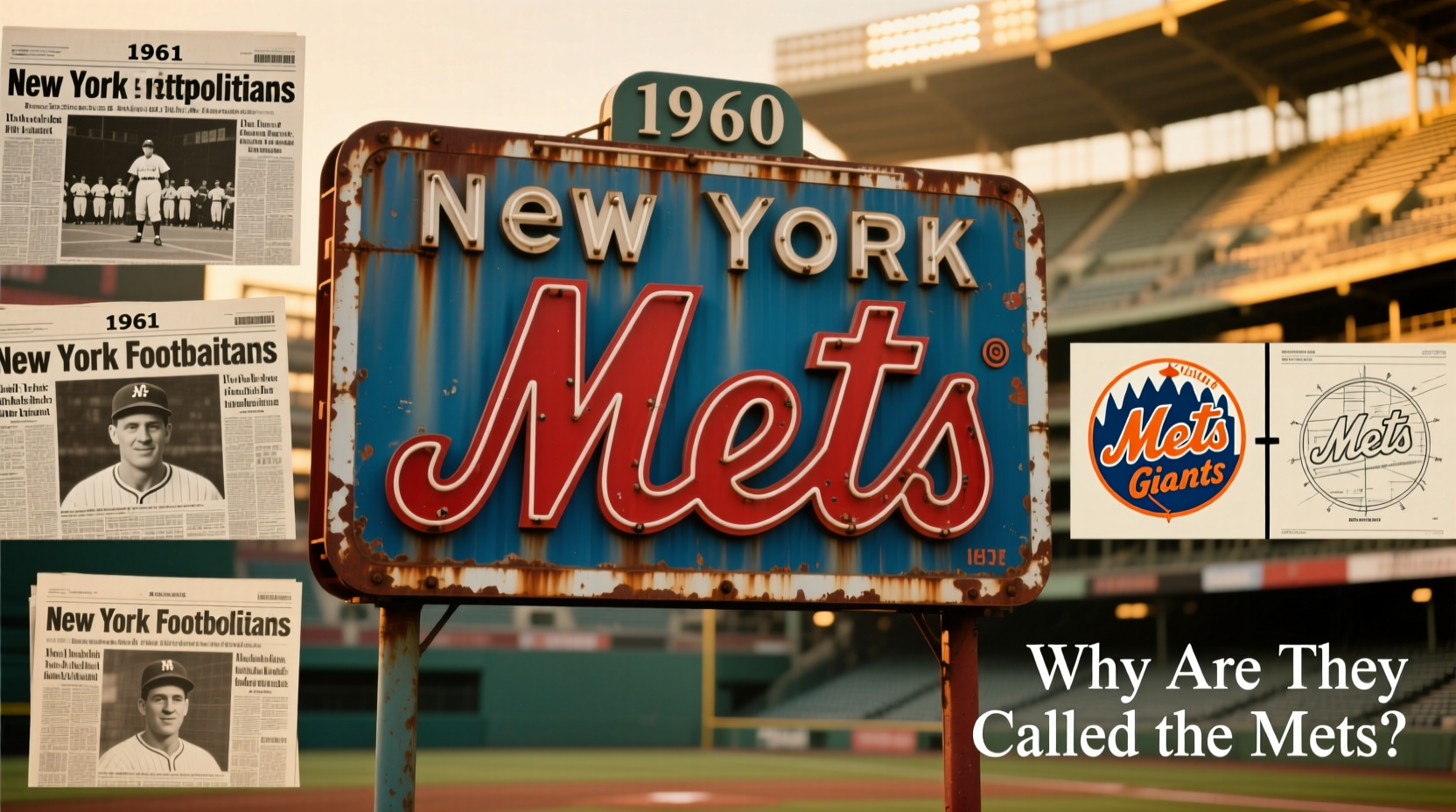
To grasp why the Mets were named as they were, it’s essential to revisit 1957—a year that reshaped New York’s sporting soul. That season marked the final games for two beloved National League teams: the Brooklyn Dodgers and the New York Giants. Both clubs announced they would be relocating—Dodgers to Los Angeles, Giants to San Francisco—leaving millions of heartbroken fans without a National League presence in the city.
For decades, New Yorkers had lived and breathed through these rival franchises. Their departure created not just a competitive vacuum but a cultural wound. While the American League’s Yankees remained dominant, many fans felt alienated by the Bronx-based team’s long-standing success and perceived lack of connection to boroughs like Brooklyn and Queens.
By the early 1960s, civic leaders and baseball executives recognized the need for a new National League team—one that could honor the past while building a fresh future. Enter: the Continental League.
The Birth of a Franchise: From Concept to Reality
In 1959, attorney William A. Shea championed the creation of the Continental League, an ambitious third major league intended to challenge MLB’s monopoly. Though the league never played a game, its threat prompted Major League Baseball to expand. In 1961, the National League awarded an expansion franchise to New York—the first since the Federal League’s brief existence in 1914–1915.
This new team needed more than players and a stadium; it needed a name that resonated with the city’s spirit. Team owner Joan Whitney Payson and her associates launched a public naming contest, inviting fans to submit ideas. Thousands of entries poured in, ranging from the creative (“Skyscrapers”) to the nostalgic (“Bees,” recalling the old Brooklyn nickname) to the whimsical (“Skyliners”).
But none captured the essence quite like “Mets”—a contraction of “Metropolitans.” The term had historical weight: in the late 19th century, New York’s first professional baseball team was known as the Metropolitans, playing in the American Association from 1883 to 1887 before joining the National League. Reviving the name honored baseball tradition while signaling a new metropolitan era.
Why \"Mets\" Stuck: Simplicity, Sound, and Symbolism
The choice of “Mets” wasn’t just about nostalgia—it was strategic. The name met several key criteria:
- Brevity: Easy to say, spell, and remember.
- Local Identity: Evoked “metropolitan,” tying directly to New York City’s global image.
- Uniqueness: Unlike “Giants” or “Dodgers,” it didn’t compete with existing team identities.
- Modern Feel: Shortened names were becoming popular in sports (e.g., “Rams,” “Jets”).
Moreover, “Mets” subtly echoed the city’s transit system—the Metropolitan Transportation Authority—and everyday language. It felt familiar, urban, and inclusive. As sportswriter Roger Kahn once noted:
“The name ‘Mets’ was perfect—not too clever, not too cute. It said, ‘We belong here.’”
From day one, the branding leaned into this identity. The team adopted the colors of both departed clubs—blue from the Dodgers, orange from the Giants—symbolizing unity and reconciliation. Even the original logo featured a stylized “NY” crest reminiscent of classic New York police insignias, grounding the team in civic pride.
A Timeline of Naming and Brand Evolution
The evolution of the Mets’ name and visual identity reflects broader shifts in sports marketing and fan culture. Here’s a concise timeline:
- 1961: Name officially announced as “Mets,” short for “Metropolitans.”
- 1962: First season at the Polo Grounds; team wears blue-and-orange pinstripes.
- 1964: Move to Shea Stadium; logo refined with clean block letters and skyline motif.
- 1998: Uniform redesign modernizes script, but core colors and name remain unchanged.
- 2012: 50th anniversary celebrates “Mets” legacy with throwback uniforms and retrospectives.
- Present: “Mets” remains among the shortest, most recognizable team names in MLB.
This consistency has been critical. While other expansion teams changed names or relocated, the Mets maintained continuity—proof that a well-chosen name can endure generations.
Common Misconceptions About the Name
Despite its straightforward origin, several myths persist about the name “Mets.” Let’s clarify them:
| Misconception | Reality |
|---|---|
| “Mets” stands for “Metropolitan Baseball Club.” | No official documentation supports this acronym. It’s a backronym, not the origin. |
| The name was chosen solely for brevity. | While brevity helped, historical resonance and fan sentiment were equally important. |
| It was always the front-runner in the naming contest. | “Mets” emerged from internal deliberation after no winning entry stood out publicly. |
Expert Insight: The Power of a Sports Name
Naming expert Dr. Laura Bennett, who has consulted for multiple professional leagues, explains:
“A successful team name must balance uniqueness with familiarity. ‘Mets’ works because it’s rooted in local history but feels modern. It’s also linguistically efficient—two syllables, strong consonants, easy to chant in a stadium.”
She adds that shorter names tend to perform better in merchandising and media visibility. “You don’t say ‘the Metropolitan Baseball Team’ when you’re yelling from the bleachers. You say ‘Let’s go, Mets!’—and that energy matters.”
Mini Case Study: The 1969 Miracle Mets
The true test of a team’s name isn’t just in its origin—but in what it comes to represent. Nowhere is this clearer than in the 1969 season, when the Mets defied 100-to-1 odds to win the World Series.
Just seven years after being labeled a joke expansion team, the Mets became champions. Pitchers Tom Seaver and Jerry Koosman led a scrappy roster to victory over the heavily favored Baltimore Orioles. Overnight, “Mets” transformed from a hopeful experiment into a symbol of resilience and underdog triumph.
Fans across Queens and beyond embraced the name with renewed pride. Chants of “Let’s go, Mets!” echoed in subways and schoolyards. The name, once a nod to history, now carried its own legacy—one of perseverance, community, and unexpected glory.
FAQ
Is “Mets” an official abbreviation or a nickname?
“Mets” is the official team name, though it originated as a shortened form of “Metropolitans.” Legally and commercially, the team is registered as the New York Mets.
Have the Mets ever considered changing their name?
No serious consideration has ever been given to renaming the team. Executives and fans alike view “Mets” as integral to the franchise’s identity.
Why do some people call them the “Amazin’ Mets”?
The nickname “Amazin’ Mets” was popularized by sportswriters in the 1960s, especially during the improbable 1969 championship run. It plays on the team’s surprising success and has since become an affectionate moniker.
Checklist: What Makes a Great Sports Team Name?
Based on the Mets’ success, here are key qualities to consider when naming any sports team:
- ✅ Rooted in local history or geography
- ✅ Short, memorable, and easy to pronounce
- ✅ Distinct from rivals and other franchises
- ✅ Works well in headlines, chants, and logos
- ✅ Has emotional resonance with the community
- ✅ Scalable across merchandise and media
Conclusion: More Than Just a Name
The New York Mets are called the “Mets” because the name carries layers of meaning—historical depth, geographic pride, and emotional restoration. It wasn’t chosen randomly or merely for convenience. It was a deliberate act of healing, a way to stitch together a fractured baseball city and give fans a new reason to believe.
Today, “Mets” stands not just for “Metropolitans,” but for moments of magic at Shea, heartbreak in extra innings, and the enduring hope that next year might finally be *the* year. It’s a reminder that great names aren’t just labels—they’re invitations to belong, to cheer, and to remember.




 浙公网安备
33010002000092号
浙公网安备
33010002000092号 浙B2-20120091-4
Comments
No comments yet. Why don't you start the discussion?