
When an interviewer asks, “Why are you the ideal candidate?” they’re not just looking for confidence—they want substance. This question is your opportunity to synthesize your skills, experience, and values into a compelling narrative that aligns perfectly with the role and company. The best answers don’t just list qualifications; they tell a story of fit, impact, and intention. Crafting this response requires strategy, self-awareness, and precision.
Understanding the Question’s True Intent
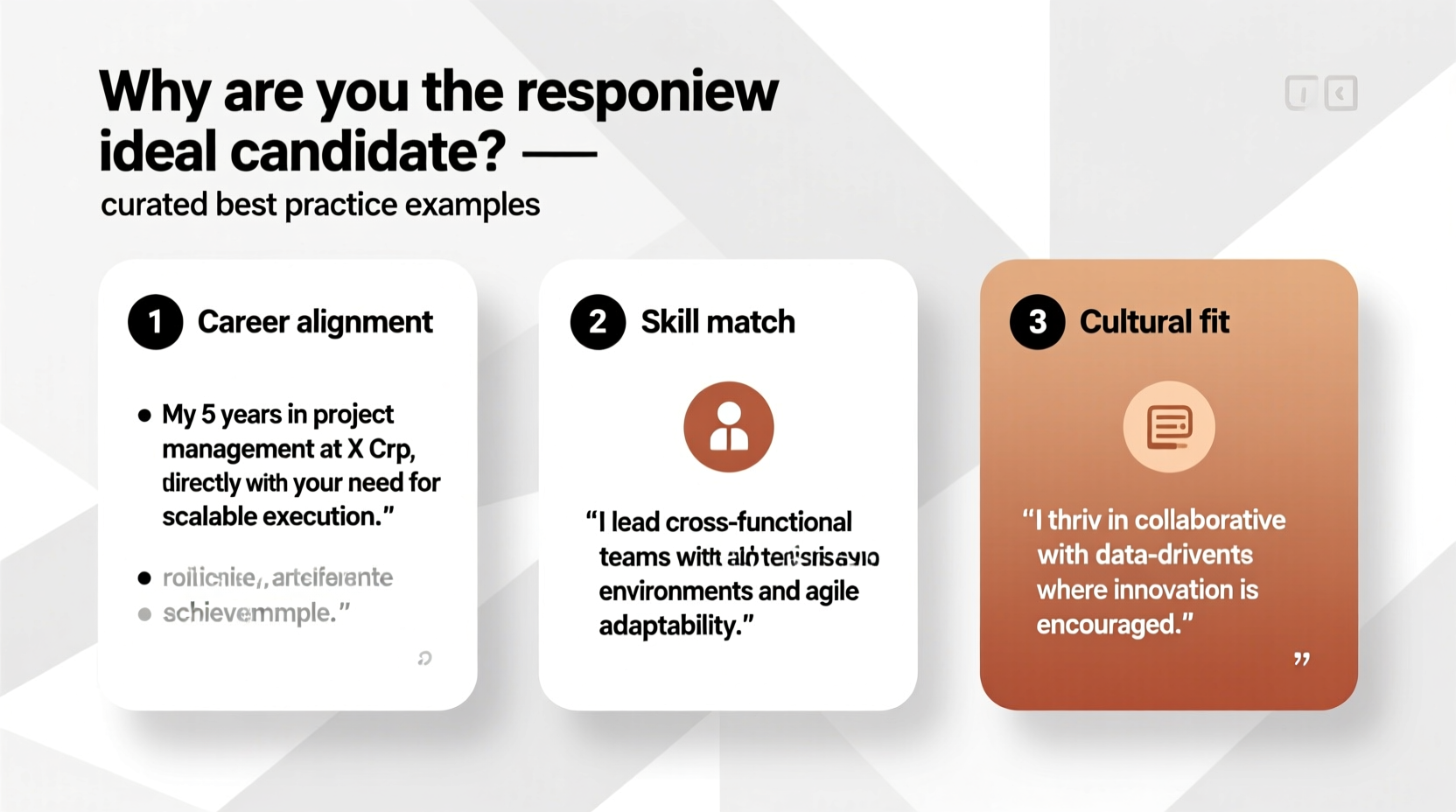
On the surface, “Why are you the ideal candidate?” seems like a test of self-promotion. In reality, it’s a strategic probe into how well you understand the job, the organization, and your own value proposition. Hiring managers use this moment to assess:
- Your ability to connect personal achievements to business outcomes
- How clearly you’ve researched the company and role
- Whether you can communicate with clarity and confidence
- If your motivations align with the team’s culture and goals
A strong answer demonstrates that you’ve done more than read the job description—you’ve internalized it. You’re not just qualified; you’re uniquely equipped to deliver results where others might hesitate or falter.
Structuring Your Answer for Maximum Impact
The most effective responses follow a clear, three-part structure: alignment, proof, and vision.
- Alignment: Start by showing you understand the role’s core challenges and priorities.
- Proof: Provide 1–2 concise examples that demonstrate relevant success.
- Vision: Conclude by expressing how you’ll contribute moving forward.
This framework keeps your answer focused, evidence-based, and forward-looking—exactly what hiring managers want.
Example Answer for a Marketing Manager Role
“I believe I’m the ideal candidate because my background in data-driven digital marketing directly addresses the growth challenges your team is facing. In my last role at NexaTech, I led a campaign that increased lead conversion by 42% in six months by overhauling our audience segmentation and retargeting strategy. I also have experience managing cross-functional teams and integrating CRM insights into campaign planning—something I noticed is a priority in your job description. If hired, I’d apply these skills to scale your customer acquisition while maintaining brand consistency across channels.”
Do’s and Don’ts When Answering This Question
| Do | Don't |
|---|---|
| Mention specific skills listed in the job posting | Say “I’m passionate” without backing it up |
| Use metrics to quantify past achievements | Focus only on what you want from the job |
| Reference something unique about the company | Recite your entire resume |
| Keep your answer under two minutes | Use vague terms like “hard worker” or “team player” |
| Align your values with the company’s mission | Compare yourself negatively to other candidates |
Real-World Example: From Generic to Standout
Consider two candidates applying for a project management position in a healthcare tech startup.
Candidate A (Weak): “I’ve managed projects before, and I’m organized and good with people. I think I’d be a great fit.”
Candidate B (Strong): “What stood out to me in your job description was the need for someone who can manage agile development cycles while navigating regulatory requirements. In my current role at MedFlow Systems, I led a HIPAA-compliant software rollout across 12 clinics, delivering it two weeks ahead of schedule by implementing daily stand-ups and risk-mitigation sprints. I also collaborated closely with legal and compliance teams to ensure documentation met audit standards. Given your focus on secure patient data and rapid iteration, I’m confident I can help maintain that balance from day one.”
The second answer wins because it shows preparation, relevance, and measurable impact—all tied directly to the employer’s needs.
“We don’t hire resumes—we hire problem-solvers who can articulate how they’ll make a difference. The candidates who explain *why* they’re ideal, not just *that* they are, get the offer.” — Lila Thompson, Senior HR Director at InnovateHealth
Step-by-Step Guide to Crafting Your Answer
Follow this five-step process to build a persuasive, personalized response:
- Analyze the Job Description: Highlight key responsibilities, required skills, and repeated keywords.
- Match Your Experience: Identify 2–3 accomplishments that mirror those needs.
- Research the Company: Visit their website, blog, and LinkedIn to understand culture and recent initiatives.
- Draft Your Response: Use the alignment-proof-vision structure to write a concise answer.
- Practice Aloud: Refine until it sounds natural, not rehearsed. Time yourself to stay under 90 seconds.
Common Mistakes That Undermine Credibility
Even experienced professionals trip up on this question. Watch out for these pitfalls:
- Overconfidence without evidence: Saying “I’m the best” without proof comes across as arrogant.
- Being too vague: Phrases like “I work hard” or “I’m a quick learner” are meaningless without context.
- Ignoring company culture: A flawless technical answer falls flat if it doesn’t reflect teamwork or innovation values.
- Repeating your resume: Interviewers have seen your CV. They want synthesis, not summary.
Instead, focus on differentiation—what makes you not just qualified, but uniquely suited?
Frequently Asked Questions
What if I don’t meet all the job requirements?
Be honest but strategic. Focus on transferable skills and learning agility. For example: “While I haven’t used Salesforce daily, I mastered HubSpot in three weeks and increased our team’s outreach efficiency by 35%. I’m confident I can achieve similar results with your tech stack.”
How long should my answer be?
Aim for 60 to 90 seconds. That’s enough time to make three key points without losing attention. Practice with a timer to refine pacing.
Can I use the same answer for different jobs?
No. Each answer must reflect the specific role and company. While your core strengths remain consistent, the way you frame them should change based on the employer’s priorities.
Action Checklist: Build Your Winning Response
- ✅ Review the job description and highlight 3 critical requirements
- ✅ Identify one major achievement for each requirement
- ✅ Research the company’s mission, values, and recent news
- ✅ Write a draft using the alignment-proof-vision structure
- ✅ Practice aloud until it feels natural and stays under 90 seconds
- ✅ Get feedback from a mentor or colleague
Final Thoughts: Confidence Rooted in Evidence
Answering “Why are you the ideal candidate?” isn’t about bravado—it’s about demonstrating a thoughtful match between your capabilities and the employer’s needs. The strongest responses feel inevitable: when you finish speaking, the listener thinks, “Yes, this person gets it.”
Great answers combine specificity, humility, and ambition. They show not just what you’ve done, but what you’re ready to do. By grounding your response in real achievements and aligning it with the company’s direction, you shift the conversation from “Are you qualified?” to “When can you start?”




 浙公网安备
33010002000092号
浙公网安备
33010002000092号 浙B2-20120091-4
Comments
No comments yet. Why don't you start the discussion?