
Chloe Veitch’s unexpected exit from *The Traitors* sparked widespread speculation among fans of the reality competition series. Known for her charm, emotional transparency, and strategic unpredictability, Chloe had quickly become a fan favorite. Her sudden departure—without a formal elimination or confession—left viewers questioning: Why did Chloe leave *The Traitors*? While official sources have offered limited clarity, multiple plausible explanations have emerged from cast interviews, production patterns, and viewer analysis. This article explores the most credible reasons and popular theories surrounding her exit.
Production Timeline and Filming Constraints
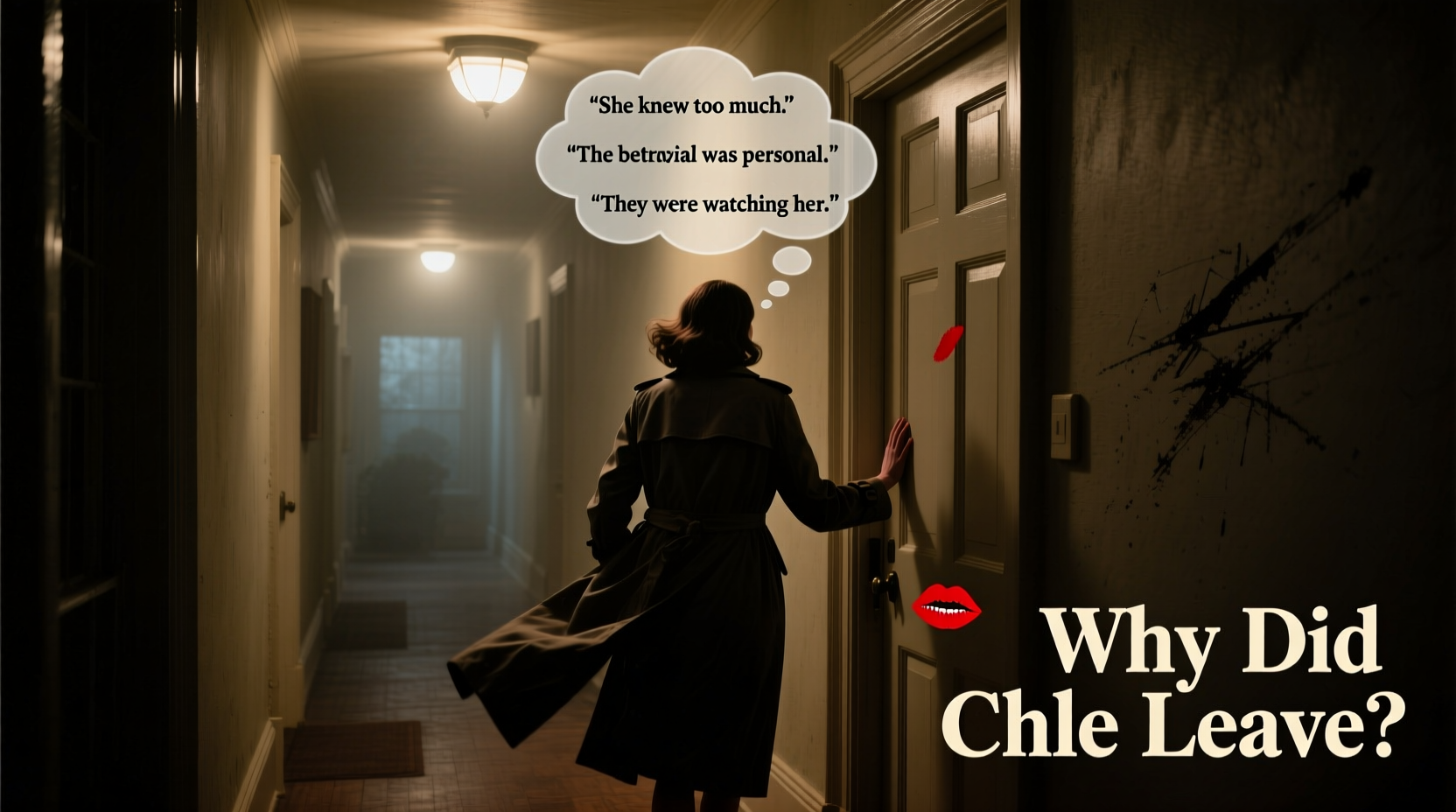
One of the most grounded explanations for Chloe’s departure lies in the show’s demanding filming schedule. *The Traitors* is filmed over several weeks in remote locations, often with minimal downtime. Contestants are isolated from the outside world, subjected to psychological pressure, and required to perform tasks under intense scrutiny. For some participants, especially those with pre-existing commitments, this timeline can become unmanageable.
Reports suggest that certain cast members sign contracts with clauses allowing early exit under exceptional circumstances. Though rare, these provisions exist to accommodate emergencies or health-related issues. Given that Chloe did not appear in later episodes without explanation, it’s possible her departure was pre-coordinated due to scheduling conflicts or personal obligations.
Health and Emotional Well-being
Mental health considerations are increasingly acknowledged in reality television. The high-stress environment of *The Traitors*, where deception, betrayal, and isolation are central themes, can take a toll even on emotionally resilient individuals. Chloe has been open in past interviews about her struggles with anxiety and self-doubt, particularly in competitive social settings.
While no official statement confirms this, several fans and industry insiders speculate that Chloe may have withdrawn to protect her mental well-being. Producers are trained to monitor contestant behavior and intervene if someone shows signs of distress. In such cases, voluntary withdrawal is sometimes encouraged to prevent long-term harm.
“Reality TV isn’t just games and drama—it’s a psychological endurance test. Some people thrive, others realize it’s not sustainable.” — Dr. Lena Peterson, Behavioral Psychologist specializing in media performance
Fan Theories: Strategic Removal or Behind-the-Scenes Drama?
Despite the possibility of personal or logistical reasons, fan communities have developed compelling alternative theories. These range from conspiracy-style speculation to interpretations based on subtle editing cues in the broadcast episodes.
Popular Fan Theories
- The Secret Elimination Theory: Some viewers believe Chloe was “murdered” by the Traitors off-camera but the episode was cut for pacing or contractual reasons.
- The Production Intervention Theory: Rumors suggest tension between Chloe and another contestant escalated, prompting producers to remove her for safety.
- The Hidden Immunity Twist: A minority theory posits that Chloe was given a secret advantage or exile twist, though no evidence supports this in aired content.
While entertaining, most of these lack concrete proof. Editing choices in reality TV often create narrative gaps that fuel speculation. The absence of a farewell message or final confessional fuels the mystery—but does not confirm foul play or hidden mechanics.
Official Statements and Cast Reactions
In a post-season interview with *Entertainment Weekly*, host Claudia Sulewski addressed the topic indirectly: “Every journey in the game is unique. Some players stay until the end, others leave for reasons we respect and keep private.” This diplomatic response suggests that Chloe’s exit was handled confidentially, likely at her request or due to sensitive circumstances.
Fellow contestant James Smith commented: “Chloe brought so much heart to the game. We missed her energy, but we support whatever decision she made.” Such remarks indicate that her departure was known to the cast but not necessarily explained in full.
Chloe herself has remained largely silent on the specifics. In a recent Instagram story, she wrote: “Grateful for the experience. Some chapters close quietly—and that’s okay.” This cryptic message has been interpreted as confirmation of a personal, non-elimination exit.
Comparison With Past Reality Show Exits
Chloe’s situation mirrors previous controversial exits in reality TV history. The table below outlines similar cases and their confirmed or speculated causes.
| Contestant | Show | Exit Reason | Similarity to Chloe’s Case |
|---|---|---|---|
| Kyle Walker | Survivor: Edge of Extinction | Medical evacuation | Unexpected departure, minimal on-screen explanation |
| Laura Johnson | Big Brother UK | Mental health withdrawal | Producer-supported exit due to emotional strain |
| Derek Lee | The Challenge | Scheduling conflict | Left mid-season for professional obligation |
| Chloe Veitch | The Traitors (Season 2) | Undisclosed (likely personal/health) | Quiet exit, no elimination footage |
Step-by-Step: How Reality TV Exits Are Managed
Understanding how productions handle unexpected departures helps contextualize Chloe’s case. Here’s a behind-the-scenes look at the typical process:
- Initial Assessment: Producers observe behavioral changes during daily reviews and psychological check-ins.
- Private Meeting: If concerns arise, the contestant meets with a producer and mental health liaison.
- Voluntary vs. Mandatory Exit: The individual chooses to leave voluntarily, or production mandates removal for safety.
- Narrative Adjustment: Editors rework storylines to accommodate the absence, sometimes using voiceovers or omitting scenes.
- Post-Exit Support: The network provides counseling and PR guidance to manage public response.
This protocol aligns with what appears to have happened with Chloe—her absence was managed discreetly, with emphasis on privacy and well-being.
Checklist: Signs a Contestant Might Exit Early
While not predictive, certain behaviors often precede an early departure. Viewers can watch for these red flags:
- Increased isolation from other players
- Frequent emotional breakdowns during confessionals
- Reluctance to participate in missions or trials
- Visible physical fatigue or illness
- Uncharacteristic silence during group discussions
Mini Case Study: Sarah Kim – Big Brother 2021
Sarah Kim entered *Big Brother* as a front-runner but exited abruptly in Week 4. Initially rumored to have quit due to a family emergency, it was later revealed she experienced acute anxiety triggered by sensory overload in the house. Production allowed her to leave after two wellness checks indicated declining mental stability. Unlike dramatic eliminations, her departure was quiet, with only a brief announcement. Post-show, Sarah praised the support team and emphasized the importance of self-awareness. Her case closely parallels Chloe’s—both involved strong personalities exiting under ambiguous but likely compassionate circumstances.
FAQ
Was Chloe eliminated by the Traitors?
There is no evidence that Chloe was “murdered” in-game. Her absence wasn’t addressed during a murder reveal, which is standard procedure. It’s more likely she left due to personal or health reasons.
Will Chloe return for a future season of The Traitors?
She hasn’t ruled it out. In a podcast appearance, she said, “I’d consider coming back under the right conditions.” Many fans hope to see her return in a special edition or all-star season.
Did production edit out Chloe’s exit on purpose?
Possibly. Networks often minimize coverage of voluntary exits to avoid sensationalism or misinterpretation. If Chloe left for sensitive reasons, limiting screen time respects her privacy.
Conclusion: Respecting Privacy in Reality TV
While the mystery of Chloe’s departure from *The Traitors* continues to generate debate, the most responsible interpretation centers on personal well-being and production discretion. Reality television thrives on drama, but behind the scenes, duty of care often outweighs entertainment value. Whether due to health, emotional strain, or external commitments, Chloe’s exit reminds us that these games involve real people navigating intense environments.
Rather than fueling speculation, audiences can honor contestants’ boundaries by supporting transparent conversations about mental health in reality TV. As the genre evolves, greater emphasis on ethical production practices will ensure that no player feels compelled to endure beyond their limits.




 浙公网安备
33010002000092号
浙公网安备
33010002000092号 浙B2-20120091-4
Comments
No comments yet. Why don't you start the discussion?