
In the critically acclaimed television series Lost, few moments shocked viewers as deeply as the sudden, brutal deaths of Ana Lucia Cortez and Libby (Dr. Leslie Arzt) at the hands of fellow survivor Michael Dawson. The events unfold in Season 2’s finale, “Two for the Road,” marking a pivotal turning point in the show’s narrative. While the act itself appears cold-blooded, understanding Michael’s actions requires examining his psychological state, the manipulative influence of the Others, and the broader storytelling goals of the series.
This moment wasn’t just about shock value—it was a culmination of trauma, desperation, and moral compromise that redefined Michael as one of the show’s most tragic figures.
The Immediate Context: Rescue and Betrayal
By Season 2, Michael is consumed by one goal: rescuing his son, Walt, who had been taken by the mysterious group known as the Others. After being captured along with Sawyer, Kate, and Jack, Michael is approached by Ben Linus (then known as Henry Gale) and offered a deal: deliver four specific people—Jack, Kate, Sawyer, and himself—in exchange for Walt’s safe return.
The Others manipulate Michael using recordings of Walt’s voice, reinforcing his belief that compliance is the only way to save his child. When he returns to the beach camp, he begins covertly sabotaging efforts to resist the Others, including withholding information and subtly steering events toward fulfilling the bargain.
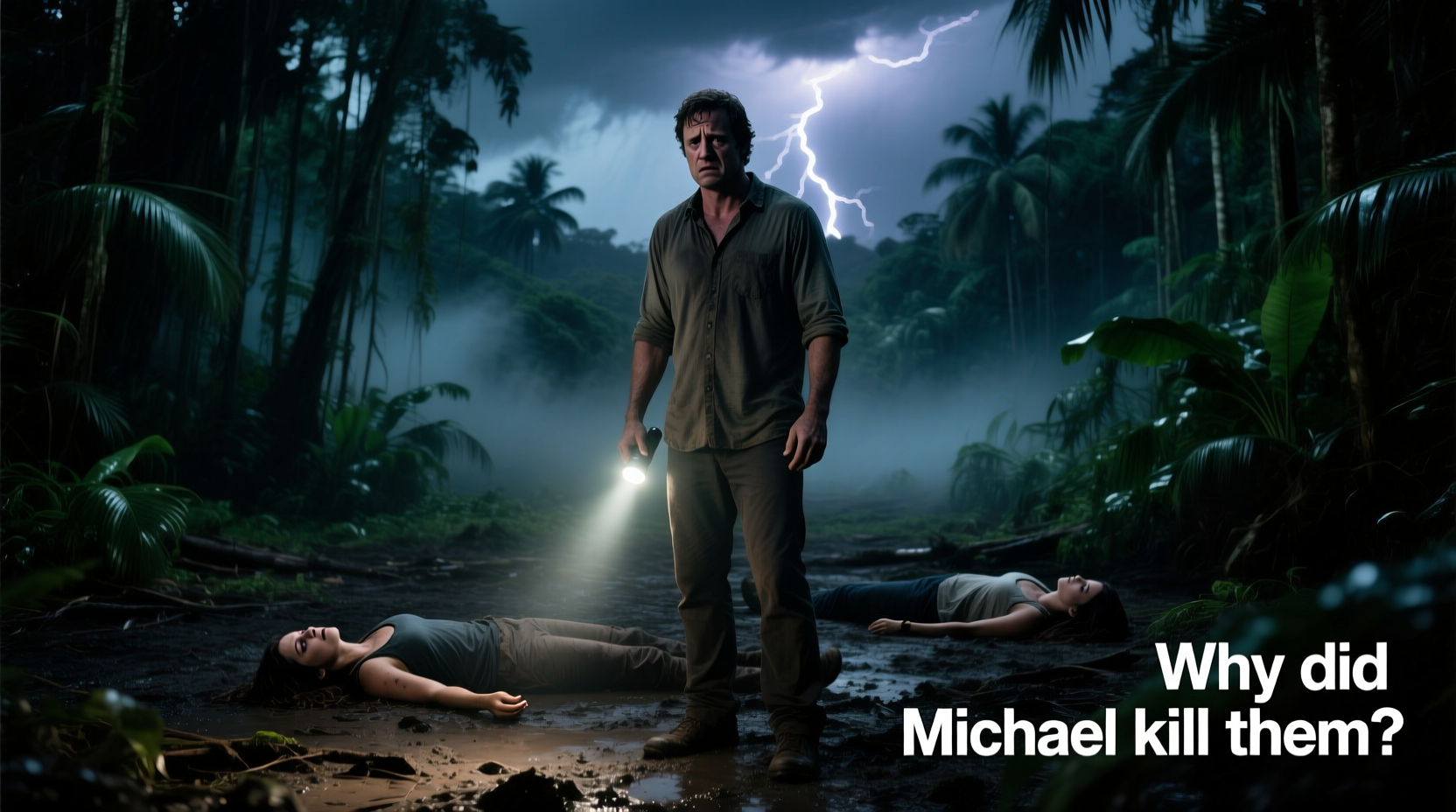
The climax occurs when Ana Lucia—a former police officer with a volatile past—and Libby begin piecing together inconsistencies in Michael’s behavior. They confront him near the Swan station, suspecting he’s involved in the recent chaos. In that tense moment, Michael pulls a gun and shoots both women dead—one of the most abrupt and emotionally jarring sequences in the series.
Michael’s Psychological Breakdown
Michael didn’t start as a villain. Introduced as a loving father struggling to survive after a plane crash, his arc illustrates how extreme grief and isolation can erode morality. His relationship with Walt is central—he blames himself for not protecting him during the crash and feels immense guilt over prior absences in his life.
While other survivors form alliances and process loss collectively, Michael becomes increasingly isolated. His captivity with the Others amplifies this. Cut off from support and bombarded with manipulated audio of Walt crying for help, Michael’s mental state deteriorates. He begins to see the others—not as friends, but as obstacles to his son’s safety.
When Ana Lucia and Libby confront him, it isn’t just suspicion they represent—it’s accountability. In that moment, Michael doesn’t see two people trying to protect the group; he sees threats to the only plan he believes can save Walt. His decision to kill them is less premeditated murder than a panicked, fractured response from a man pushed beyond reason.
“Michael’s tragedy is that he becomes exactly what he fears: a danger to the very people he once wanted to protect.” — Damon Lindelof, co-creator of Lost
Narrative Purpose: Subverting Expectations
Lost thrived on subverting audience expectations. At the time, serialized dramas rarely killed off major characters without clear foreshadowing. Ana Lucia and Libby were introduced in Season 2 as complex additions to the cast—Ana Lucia with her guarded toughness, Libby with her quiet empathy. Their deaths shattered the illusion of safety, even among the core group.
From a storytelling perspective, their deaths served multiple functions:
- They reinforced the unpredictability of life on the Island.
- They deepened the mystery around the Others and their methods of manipulation.
- They transformed Michael from a sympathetic protagonist into a morally compromised antihero.
- They created lasting emotional fallout, especially for characters like Hurley and Sayid, who had developed relationships with the victims.
Moreover, the scene is shot with minimal music and stark realism, heightening its brutality. There’s no dramatic score, no slow motion—just sudden gunfire and silence. This stylistic choice forces the viewer to sit with the horror, mirroring the survivors’ own disbelief.
Behind the Scenes: Why the Writers Made the Choice
Series co-creators Damon Lindelof and Carlton Cuse have discussed the decision in interviews and commentary tracks. One major factor was actor availability and narrative momentum. Michelle Rodriguez (Ana Lucia) and Cynthia Watros (Libby) were initially intended for longer arcs, but creative shifts led to an earlier exit.
However, rather than write them out quietly, the writers chose to make their departures impactful. Killing them via Michael added layers to his character and set up his eventual redemption arc in Season 3, where he returns to the Island seeking forgiveness.
| Character | Original Role | Reason for Exit | Narrative Impact |
|---|---|---|---|
| Ana Lucia Cortez | New leader figure, strong-willed | Creative direction shift | Heightened tension, exposed group fractures |
| Libby | Potential love interest for Hurley | Plot twist necessity | Emotional gut-punch, deepened Hurley’s trauma |
| Michael | Father figure, early protagonist | Moral complexity exploration | Transformed into tragic antihero |
Aftermath and Redemption Attempts
After the killings, Michael escapes the Island with Walt aboard the freighter *Kahana*, appearing to achieve his goal. But the cost is immense. He’s haunted by guilt, unable to reconcile his actions with his identity. In Season 3’s “Through the Looking Glass,” he confesses to Sawyer, Jack, and the others, begging them to kill him. When they refuse, he becomes a pariah—even Walt grows distant, sensing something broken in his father.
Michael’s final act comes in Season 5, when he returns to the Island under the alias “Mr. Eko” (not to be confused with the actual Mr. Eko). He helps Benjamin Linus free Jack, Kate, and Sawyer from captivity, ultimately sacrificing himself to allow their escape. Though he dies off-screen, his actions are acknowledged by Hurley, who says, “He did what he had to do.”
It’s a quiet redemption—one that doesn’t erase his crimes but acknowledges his suffering and attempt to make amends.
FAQ
Did Michael intend to kill Ana Lucia and Libby from the beginning?
No. While Michael agreed to hand over four people to the Others, there’s no indication he planned to kill anyone. The murders appear to be a reactive decision in the heat of confrontation, driven by fear of exposure.
Why didn’t the Others kill Ana Lucia and Libby themselves?
The Others preferred manipulation over direct action. By forcing Michael to commit the act, they ensured internal division among the survivors and made Michael complicit, weakening trust within the group.
Was Michael possessed or influenced by the Island?
There’s no canonical evidence of supernatural possession. Michael’s actions stem from psychological manipulation and emotional collapse, not external control by the Island’s forces.
Conclusion: A Tragedy of Love and Loss
Michael’s killing of Ana Lucia and Libby remains one of Lost’s most haunting moments—not because it was evil, but because it was human. It reflects how love, when twisted by fear and isolation, can justify unthinkable acts. Michael wasn’t a monster; he was a man broken by circumstance, manipulated by unseen forces, and desperate to reclaim a piece of his life.
The brilliance of Lost lies in its refusal to offer easy answers. Michael’s actions are indefensible, yet understandable. Ana Lucia and Libby’s deaths are tragic, but they serve a larger story about consequence, guilt, and the fragile nature of morality under pressure.
If there’s a lesson in Michael’s fall, it’s this: salvation sought through compromise often comes at a price too high to bear. And sometimes, the road back to redemption leads through sorrow, sacrifice, and silence.




 浙公网安备
33010002000092号
浙公网安备
33010002000092号 浙B2-20120091-4
Comments
No comments yet. Why don't you start the discussion?