
In the world of anime, few conventions are as instantly recognizable—or as widely parodied—as the moment a character rears back, clenches their fist, and bellows the name of their ultimate technique: “Kamehameha!” “Bankai!” “Final Flash!” These declarations punctuate battle scenes across decades of Japanese animation, from classic shonen series like *Dragon Ball* and *Naruto* to modern hits like *My Hero Academia* and *Demon Slayer*. While Western action media often favors silence or gritted determination in combat, anime embraces vocalized attacks as a core storytelling device. But why? What purpose does shouting an attack name serve beyond theatrical flair? The answer lies at the intersection of culture, narrative function, animation history, and audience psychology.
Dramatic Emphasis and Emotional Intensity
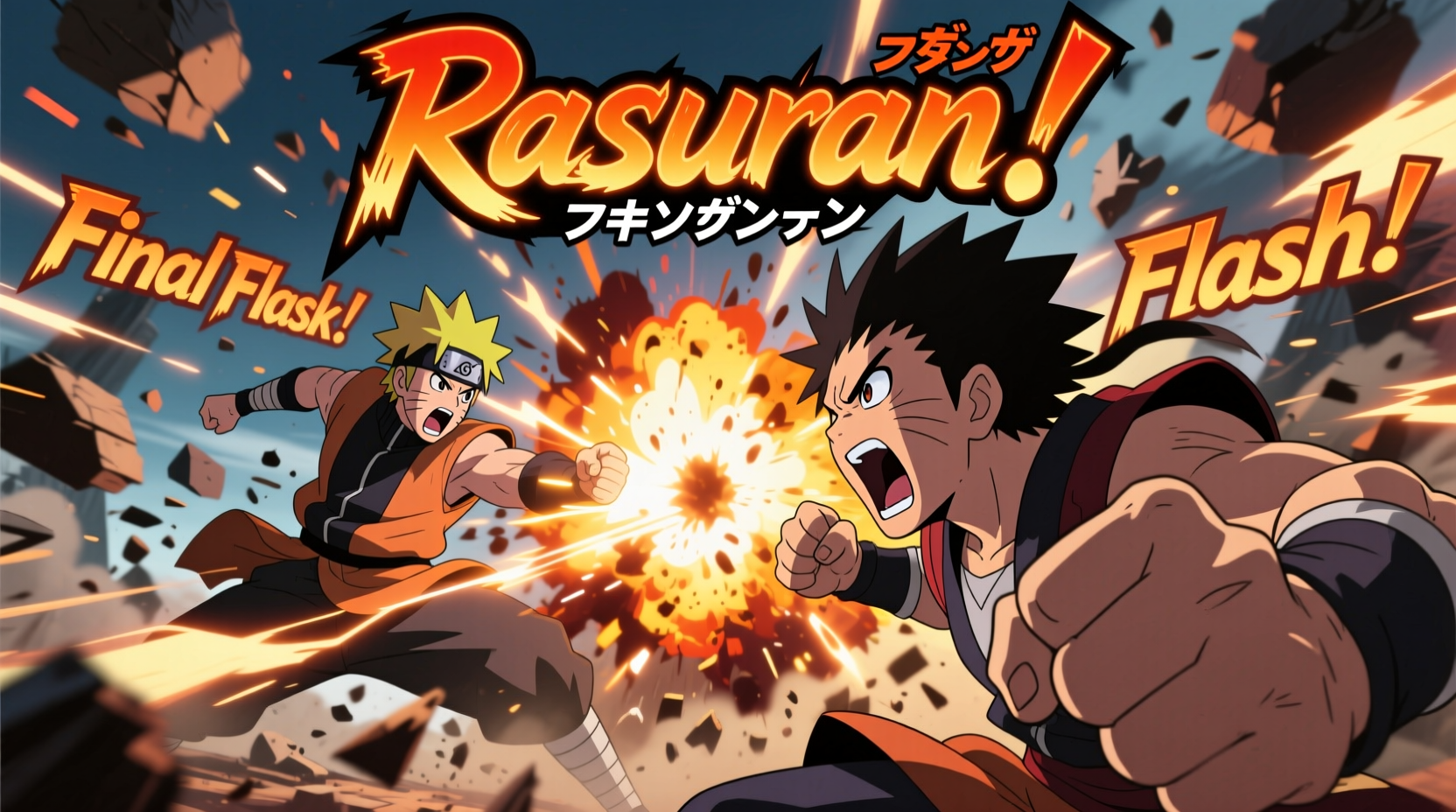
One of the most immediate reasons anime characters announce their attacks is to amplify drama. In high-stakes battles, timing, tension, and emotional weight are everything. Shouting an attack name acts as an auditory cue that something significant is about to happen. It signals escalation—a shift from standard combat to a decisive, potentially fight-ending move.
This verbal punctuation helps viewers process the rhythm of a fight. Without dialogue, many anime battle sequences would rely solely on visual cues, which can be difficult to follow given the speed and complexity of animated choreography. By naming an attack, creators give audiences a mental anchor: “Now this happens.” This enhances clarity and emotional payoff.
“Calling out techniques isn’t just about coolness—it’s about making power feel tangible. When Luffy shouts ‘Gear Second,’ you’re meant to feel the surge,” says Akira Tanaka, a Tokyo-based animation historian.
The vocalization also externalizes internal effort. Many attacks in anime require intense focus, energy accumulation, or spiritual exertion. Screaming the name becomes a physical manifestation of that strain—similar to how real athletes might grunt during exertion. It bridges the gap between supernatural ability and human relatability.
Cultural Roots in Martial Arts and Performance
The practice of announcing techniques has deep roots in Japanese martial traditions. In disciplines like kendo, judo, and karate, practitioners are trained to use kiai—a sharp, forceful shout issued at the moment of striking. The kiai serves multiple purposes: it tightens the core, focuses intent, intimidates opponents, and synchronizes breath with movement.
Anime draws heavily from these traditions, especially in genres centered around swordplay, hand-to-hand combat, or disciplined training arcs. Series like *Rurouni Kenshin*, *Bleach*, and *Fist of the North Star* reflect real-world martial values, where voice and spirit are inseparable from physical prowess. Shouting an attack name extends the concept of kiai into the realm of fictional abilities, transforming it from a functional breath control technique into a symbolic declaration of will.
Beyond martial arts, Japanese performance culture also emphasizes vocal expression. In traditional theater forms like Noh and Kabuki, actors use stylized speech, chants, and exaggerated delivery to convey emotion and status. Anime inherits this theatrical sensibility, treating fight scenes not just as action sequences but as performances—complete with dramatic monologues, poetic flourishes, and ritualized gestures.
Attack Naming Conventions Across Genres
| Genre | Typical Attack Style | Example |
|---|---|---|
| Martial Arts | Short, explosive terms | “Hadouken!” (*Street Fighter*/*anime adaptations*) |
| Magic/Fantasy | Elaborate incantations | “Adeus, Espada de Luz!” (*The Ancient Magus’ Bride*) |
| Mecha | Technical-sounding names | “Buster Rifle – Maximum Output!” (*Gundam*) |
| Superpowered Teens | Inventive compound names | “Plus Ultra Crimson Smash!” (*My Hero Academia*) |
The structure of attack names themselves often follows linguistic patterns. Many combine Japanese or pseudo-Latin roots with descriptive modifiers. For example, “Bankai” (from *Bleach*) means “final release,” while “Chidori” (“one thousand birds”) evokes the sound of electricity. These names aren’t arbitrary—they carry meaning, lore, and identity.
Narrative Function: Clarity and Character Identity
From a storytelling perspective, named attacks serve practical functions. They help differentiate characters in ensemble casts where everyone may have similar powers. When Naruto uses “Shadow Clone Jutsu” versus Sasuke’s “Chidori,” the distinct calls reinforce their unique styles and personalities.
Moreover, recurring attack names create continuity. Audiences remember when a technique first appears, how it evolves, and under what circumstances it succeeds or fails. This builds investment. Consider Goku’s “Kamehameha”—first learned as a boy, refined over decades, and eventually passed down to his grandson. The name becomes a legacy.
Shouting an attack also allows for exposition without breaking pacing. Instead of pausing to explain mechanics, anime integrates information into the callout itself. “Spirit Gun!” (*Yu Yu Hakusho*) tells viewers exactly what kind of attack it is. “Time Skip: Five Seconds!” (*Jujutsu Kaisen*) immediately conveys its function.
“In live-action, you’d need dialogue or subtitles to explain a new move. In anime, the name does half the work,” notes Mika Sato, a screenwriter for several anime adaptations.
Timeline of Attack Callouts in Anime History
- 1970s: Early mecha and tokusatsu-inspired anime introduce named special moves (*Mazinger Z*, *Cutie Honey*).
- 1980s: Dragon Ball popularizes the charging scream and named energy blasts, setting a template for future series.
- 1990s: Battle manga adaptations (*Yu Yu Hakusho*, *Sailor Moon*) expand the use of incantations and team-based attack calls.
- 2000s: Long-form shonen epics (*Naruto*, *Bleach*) institutionalize attack naming as a genre staple.
- 2010s–Present: Subversion and homage—some series parody the trope (*One Punch Man*), while others refine it with realism (*Demon Slayer* breath techniques).
Pacing, Production, and Voice Acting
Behind the scenes, attack shouts are not just creative choices—they’re production tools. Animating a powerful beam or explosion takes time and resources. Shouting an attack name provides a natural delay, giving studios space to build up to the visual climax. The sequence typically follows a pattern:
- Character assumes stance
- Energy begins to gather
- Vocal buildup (often with rising pitch) <4>Attack name shouted at peak intensity
- Visual effect unleashed
This rhythm gives animators clear beats to synchronize with. It also creates opportunities for dynamic camera angles, slow motion, and dramatic lighting shifts—all timed to the cadence of the voice performance.
Voice actors play a crucial role. Delivering an attack line convincingly requires precise timing, vocal strength, and emotional commitment. A flat or hesitant shout can undermine an entire scene. Conversely, a powerful delivery—like Bin Shimada’s iconic “Kamehameha!”—can become legendary.
Psychological and Audience Engagement Factors
There’s a psychological dimension to why fans accept—and even love—this convention. Named attacks enhance memorability. People quote them, mimic them, and bond over them. They become part of fan culture, appearing in memes, cosplay, and video games.
For younger audiences, especially, the ritual of calling out moves encourages participation. Children watching at home might stand up and shout along, turning passive viewing into interactive play. This engagement strengthens emotional connection to the characters and series.
Additionally, naming attacks gives abstract powers a sense of structure. Instead of vague “energy blasts,” techniques become skills to master—like spells in a spellbook. This supports character growth: learning a new move feels like earning a badge, and shouting its name marks that achievement.
Mini Case Study: The Legacy of “Kamehameha”
No discussion of attack shouts would be complete without examining the “Kamehameha.” Originating in *Dragon Ball* (1984), the technique was created by Goku’s mentor, Master Roshi—whose name literally translates to “Crane Hermit.” The word “Kamehameha” itself is a play on “kame” (turtle) and a rhythmic phrase suggesting wave-like force.
Over four decades, the move has appeared in countless episodes, movies, and spin-offs. Its shout—a drawn-out, rising “KA-ME-HA-ME-HA!”—has become one of the most recognizable sounds in global pop culture. It’s been referenced in Western cartoons, used in sports celebrations, and even taught in language-learning apps.
The success of “Kamehameha” illustrates how a well-designed attack call can transcend its origin. It’s not just a plot device; it’s a cultural artifact—one made possible by the very act of shouting it aloud.
Common Misconceptions and Criticisms
Not all audiences embrace the attack-shout trope. Some critics argue it breaks immersion, slows pacing, or feels childish. Others point out tactical absurdity: wouldn’t announcing your move give the enemy time to react?
While valid from a realism standpoint, these critiques miss the point of anime as a stylized medium. Anime prioritizes emotional truth over strict realism. Just as musicals feature spontaneous song, anime uses vocalized attacks as a form of expressive exaggeration.
That said, modern series are increasingly aware of these criticisms. *One Punch Man* satirizes the trope by having characters deliver long-winded attack speeches—only to be defeated instantly. *Demon Slayer* reduces verbal excess, instead using breath-focused chants that double as meditation mantras. These approaches show evolution, not rejection, of the tradition.
Checklist: Understanding Attack Shouts in Anime
- Recognize the dramatic purpose: builds tension and highlights key moments
- Trace cultural influences: kiai, martial arts, and theatrical performance
- Identify narrative benefits: clarifies abilities and reinforces character identity
- Appreciate production needs: provides timing for animation and effects
- Consider audience engagement: fosters memorability and participatory fandom
- Stay open to subversion: some series critique or reinvent the trope
Frequently Asked Questions
Do real martial artists shout during fights?
Yes. In disciplines like karate, kendo, and aikido, the kiai is a standard practice. It helps coordinate breathing, increase power, and project confidence. While not identical to shouting attack names, it shares the same principle of using voice to enhance physical performance.
Why don’t Western superheroes yell their move names?
Western action storytelling tends to favor realism and subtlety. Superheroes like Superman or Batman operate in grounded narratives where vocalizing attacks would seem out of place. Exceptions exist—such as Green Lantern’s oath or Thor’s battle cries—but they’re less systematic than in anime.
Are there anime that avoid shouting attack names?
Yes. Some series minimize or eliminate the practice for tonal reasons. *Monster*, *Death Note*, and *Paranoia Agent* feature little to no combat shouting. Even in action-heavy titles like *Psycho-Pass* or *Ghost in the Shell*, attacks are often silent or technical, reflecting a more dystopian, realistic worldview.
Conclusion: More Than Just Noise
The habit of shouting attack names in anime is far more than a quirky stereotype. It’s a multifaceted convention rooted in culture, shaped by narrative needs, and amplified by performance. It turns abstract power into something audible, visible, and shareable. It transforms fights into rituals, and techniques into legacies.
Understanding this practice enriches the viewing experience. Next time a character screams “Final Flash!” or “Bankai!”, listen closely—not just to the words, but to what they represent: effort, identity, and the enduring power of voice in storytelling.




 浙公网安备
33010002000092号
浙公网安备
33010002000092号 浙B2-20120091-4
Comments
No comments yet. Why don't you start the discussion?